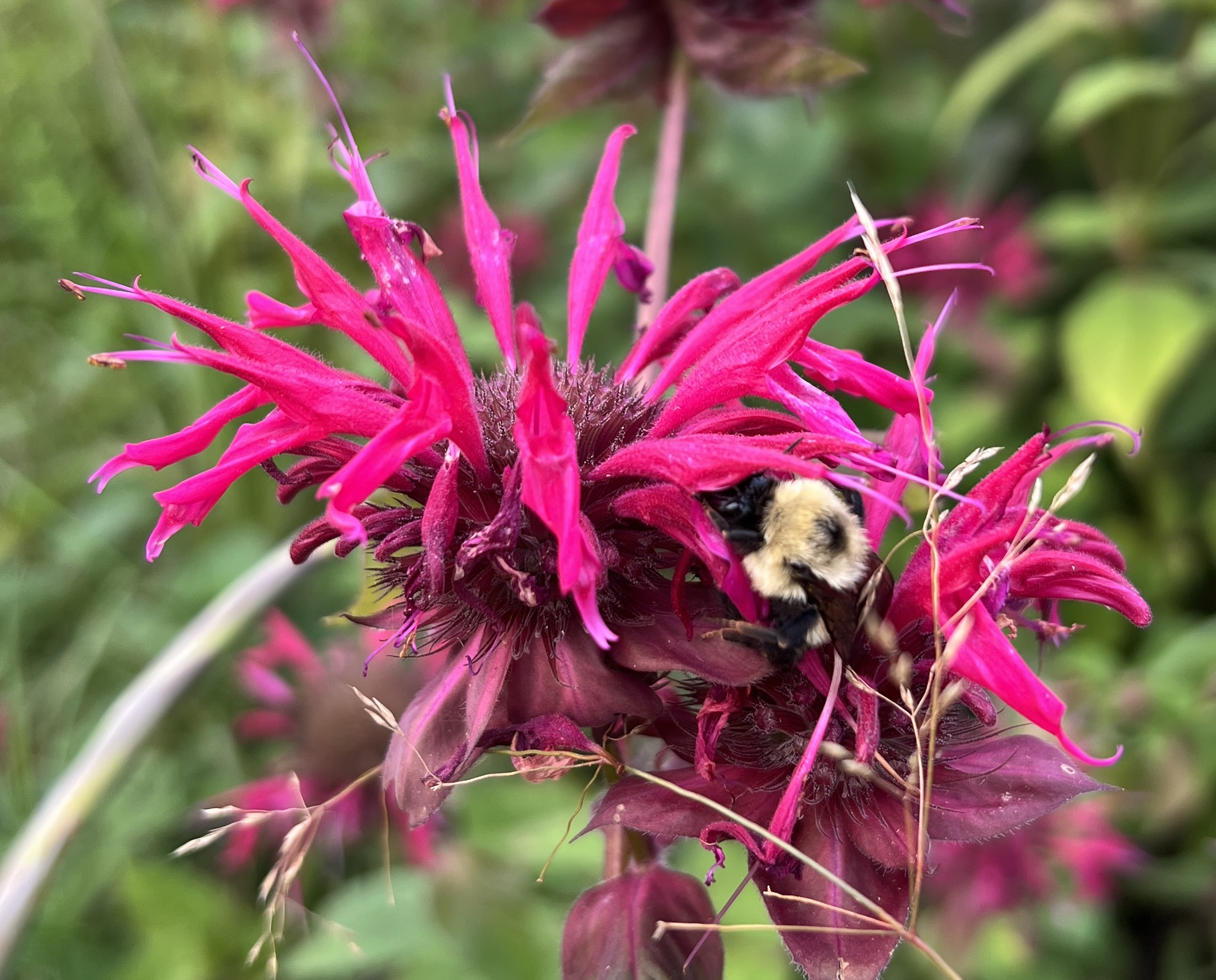
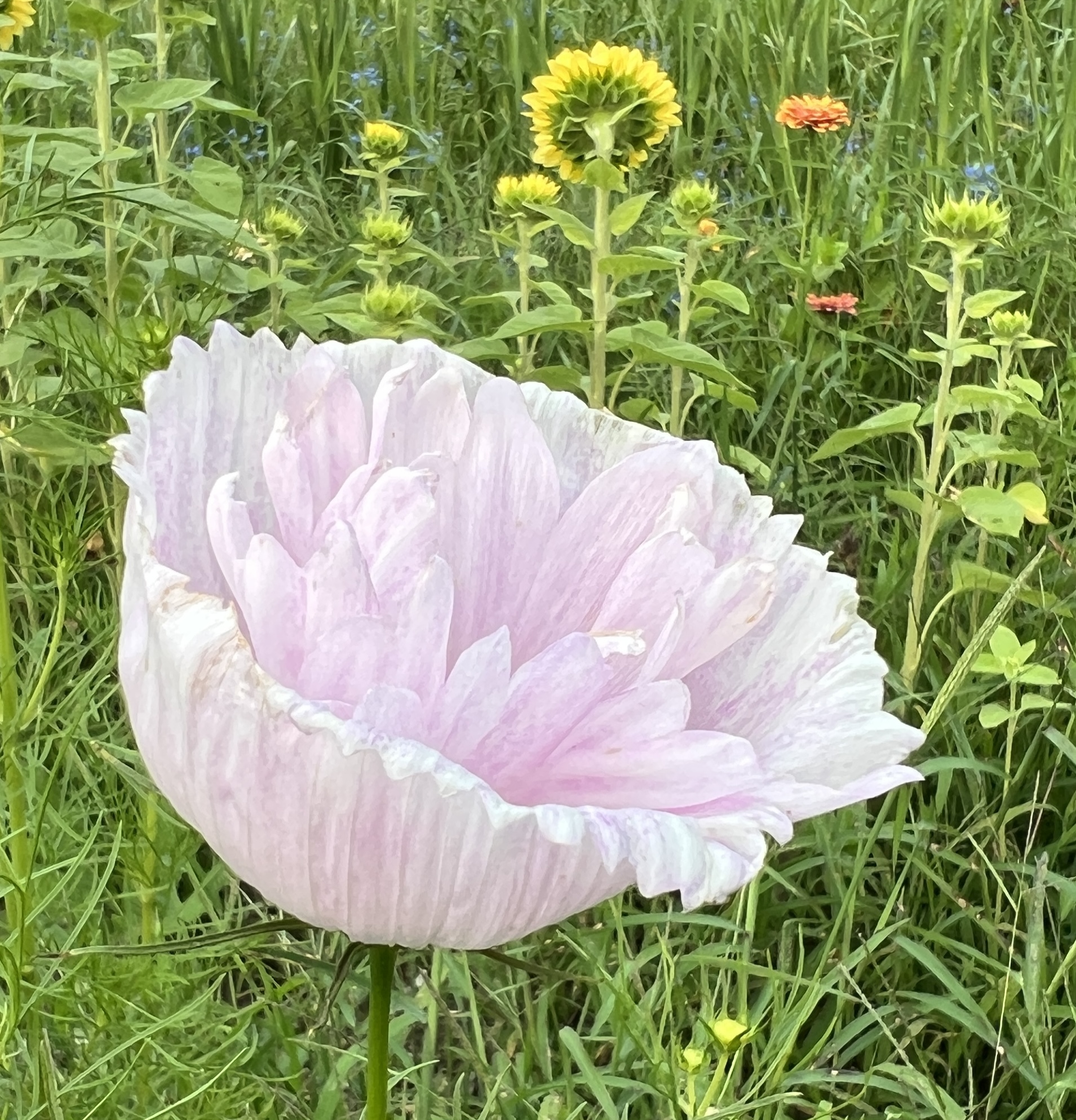
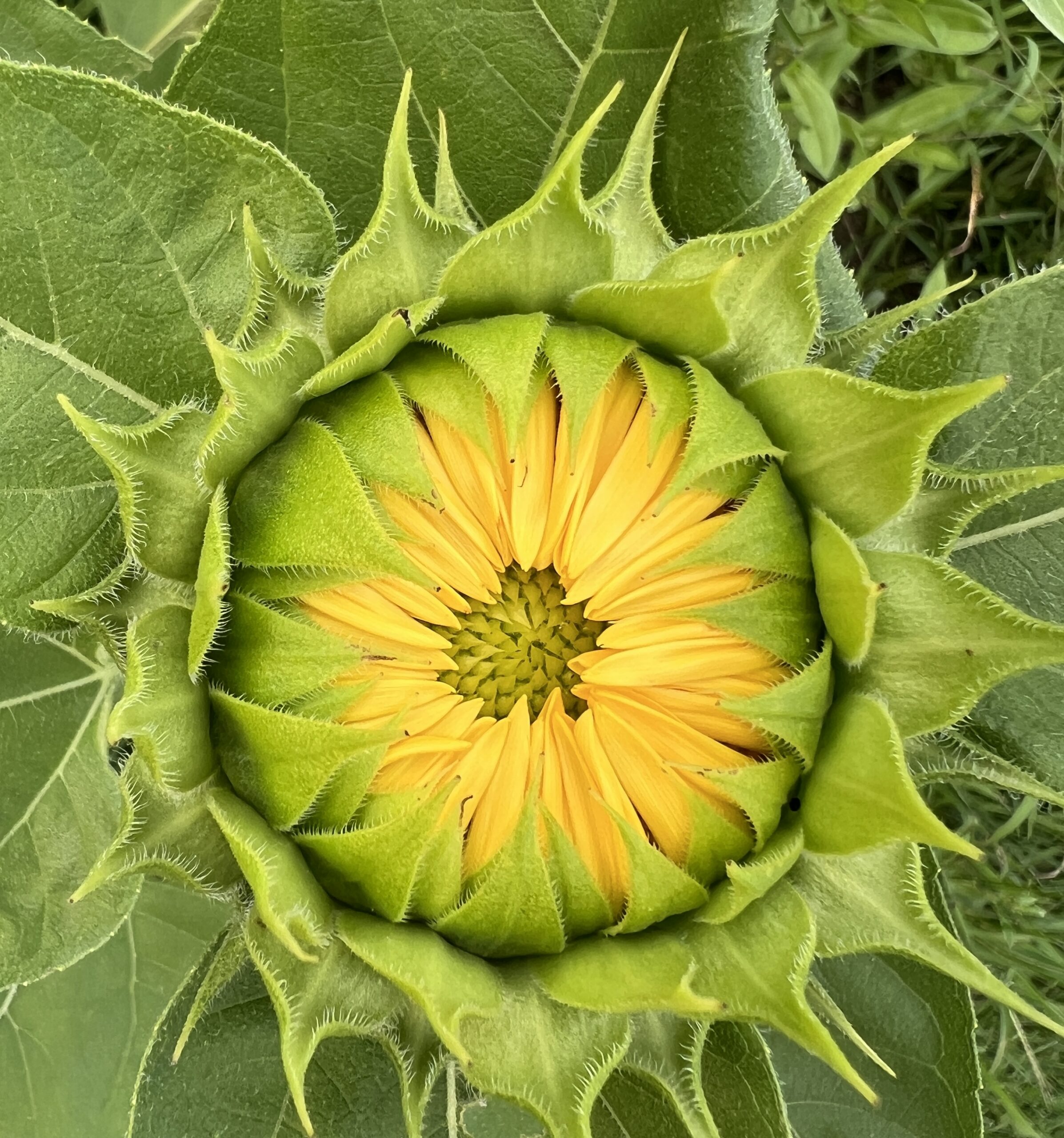
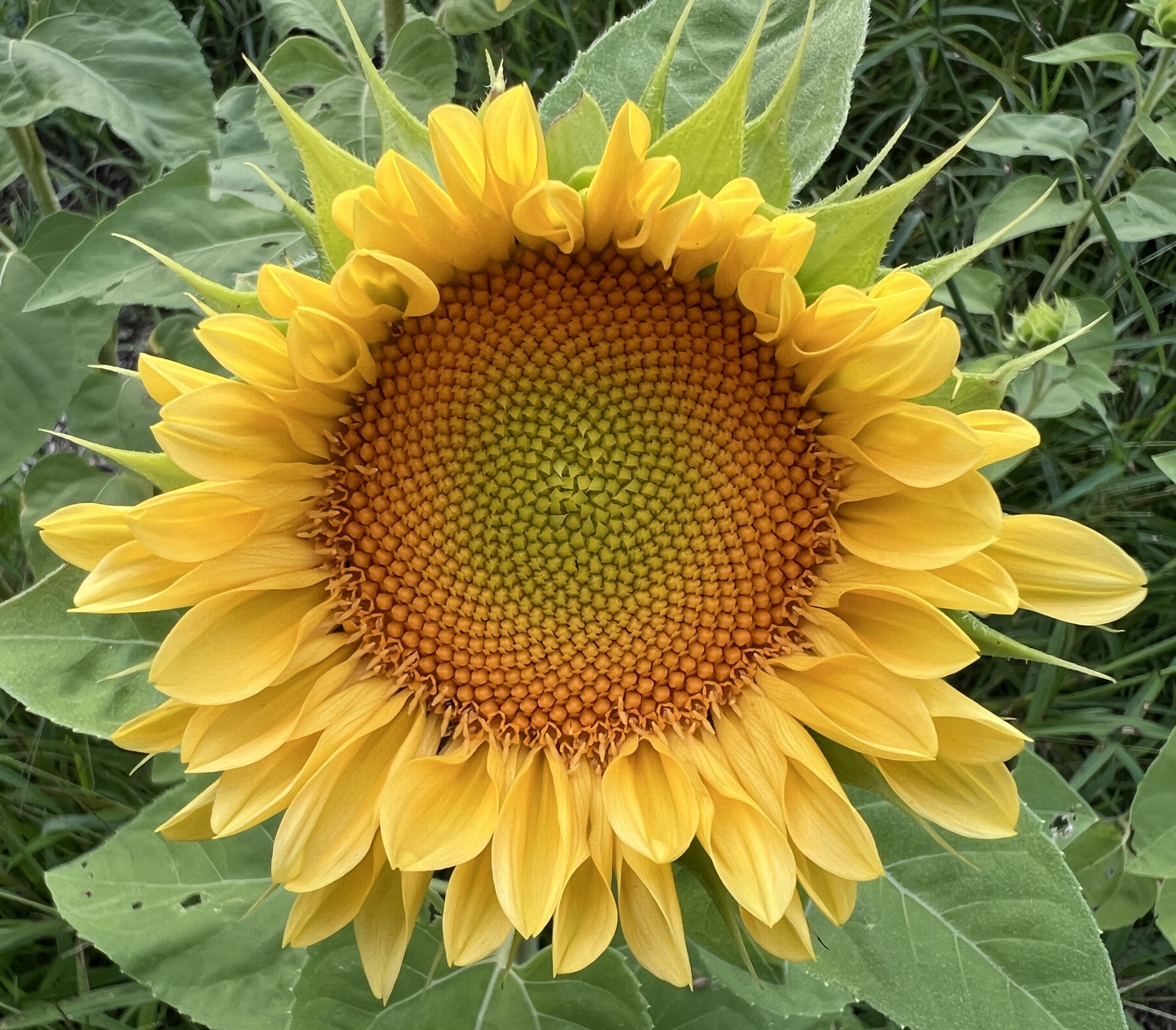
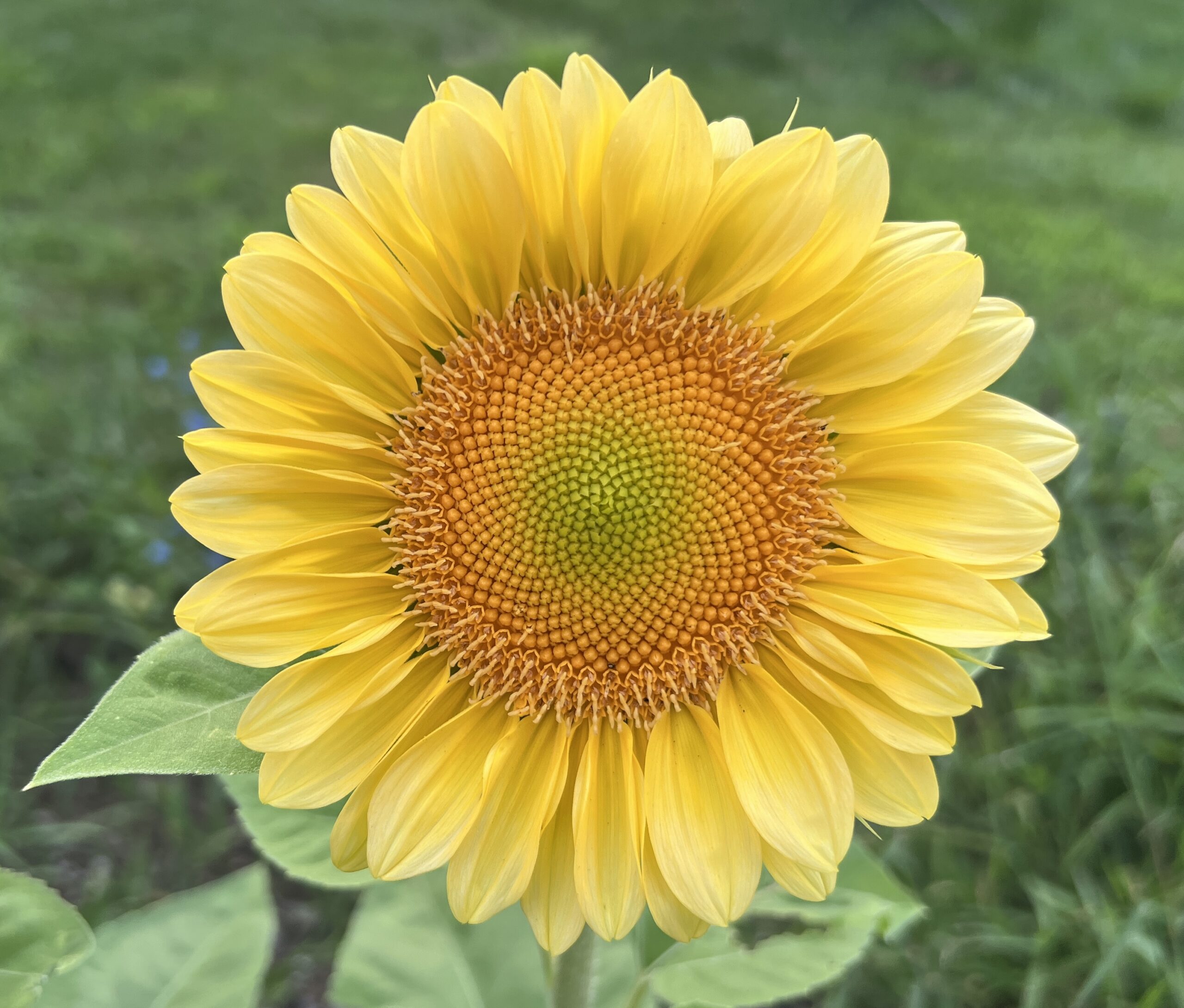
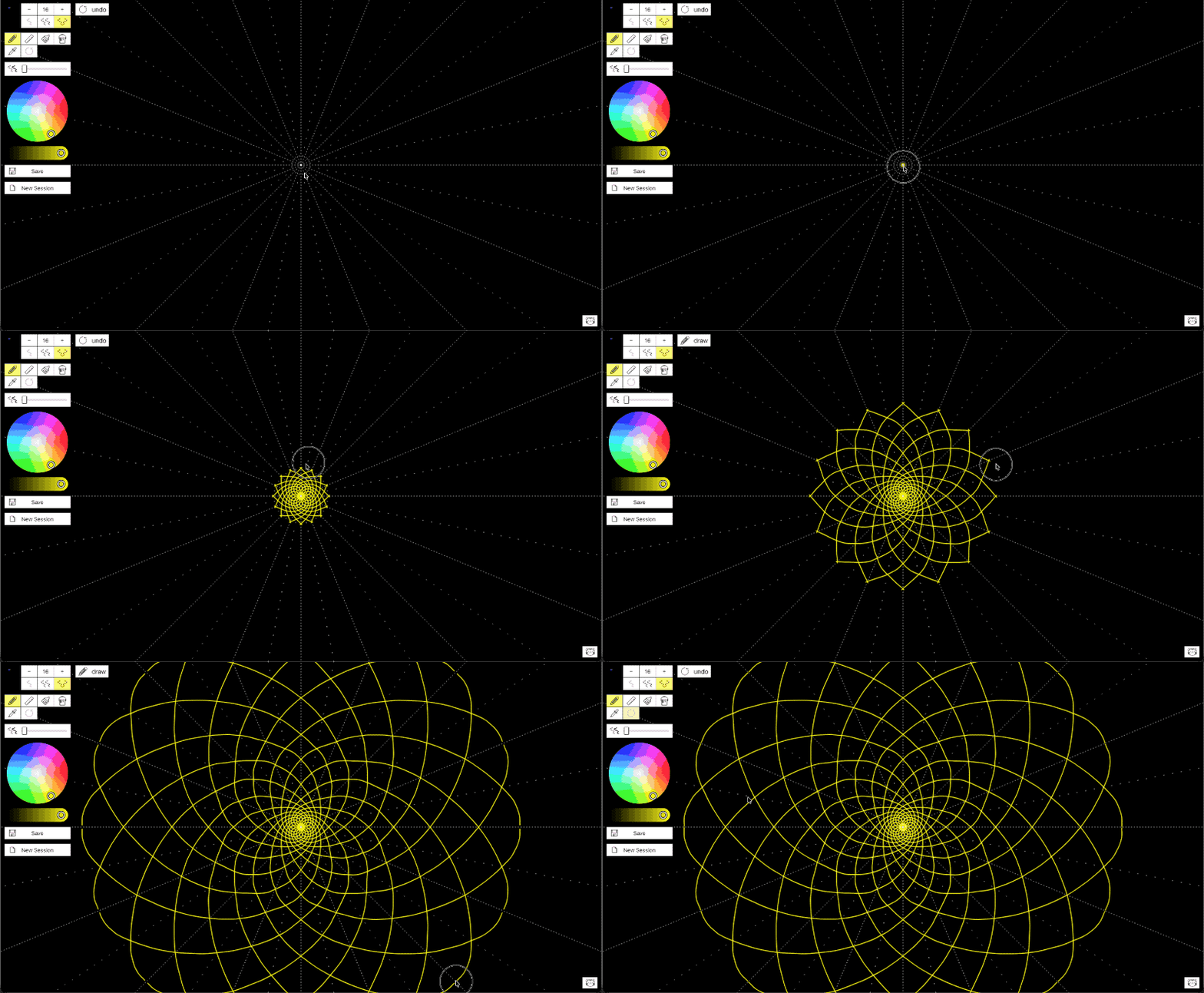
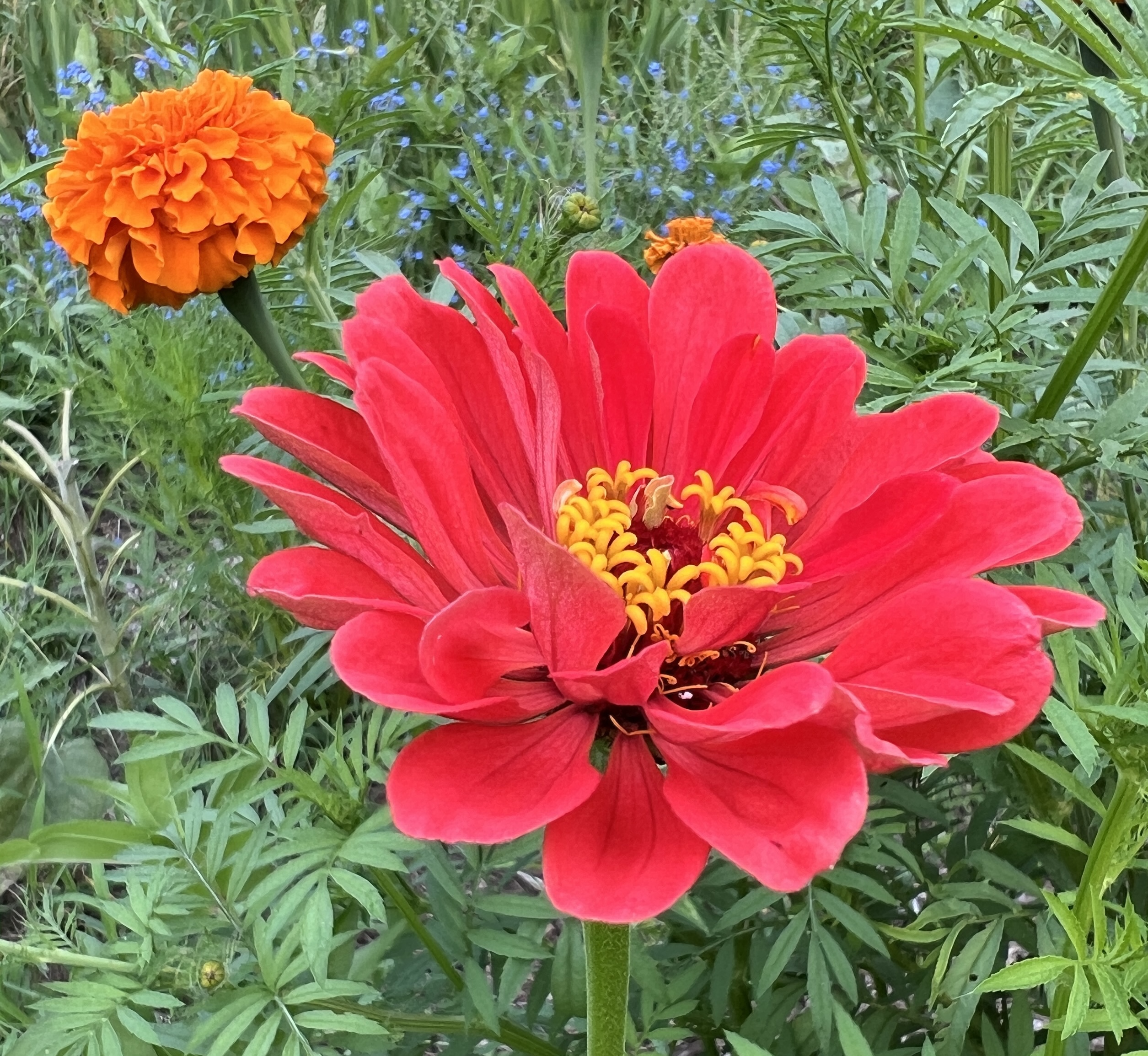
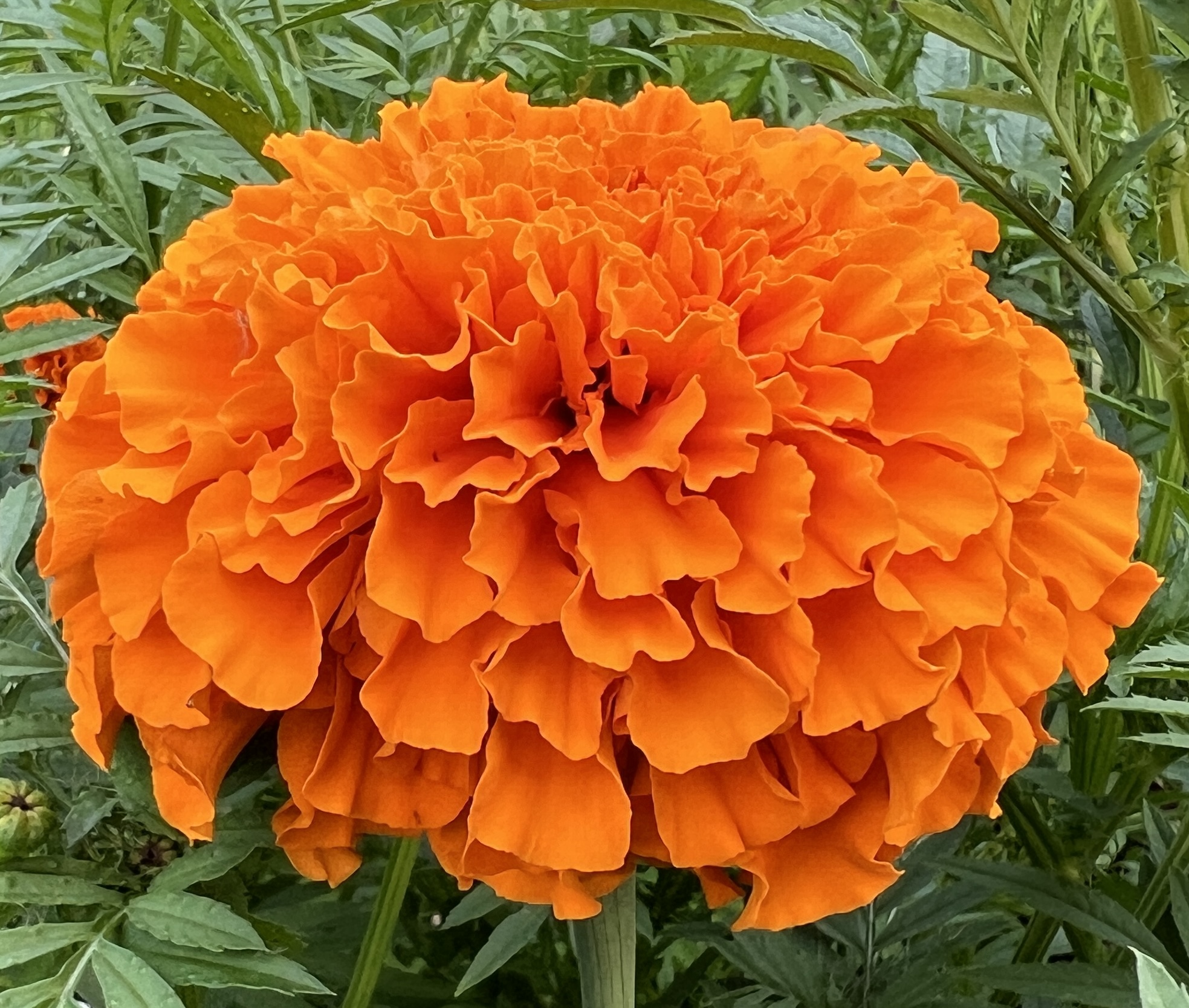
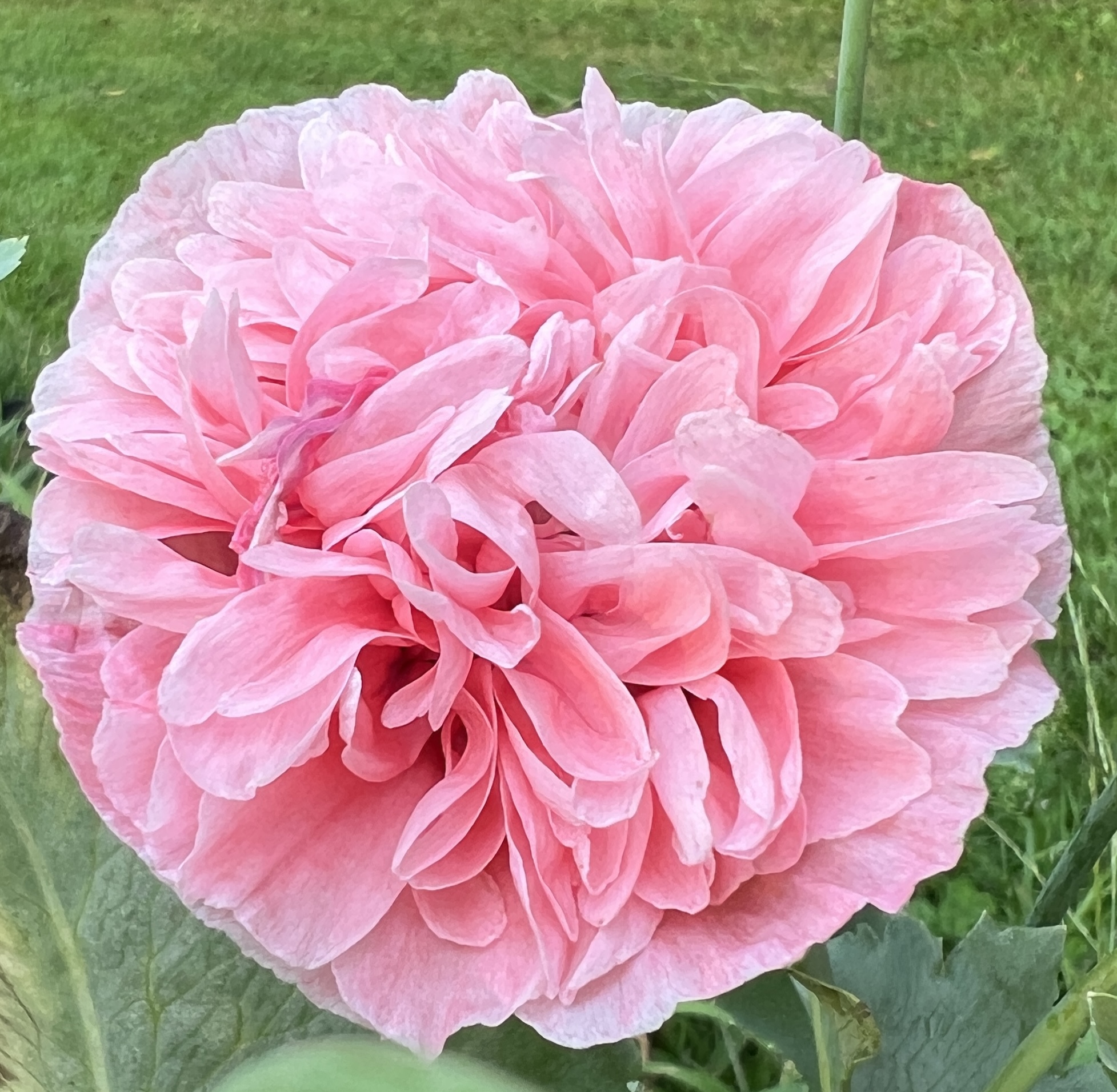
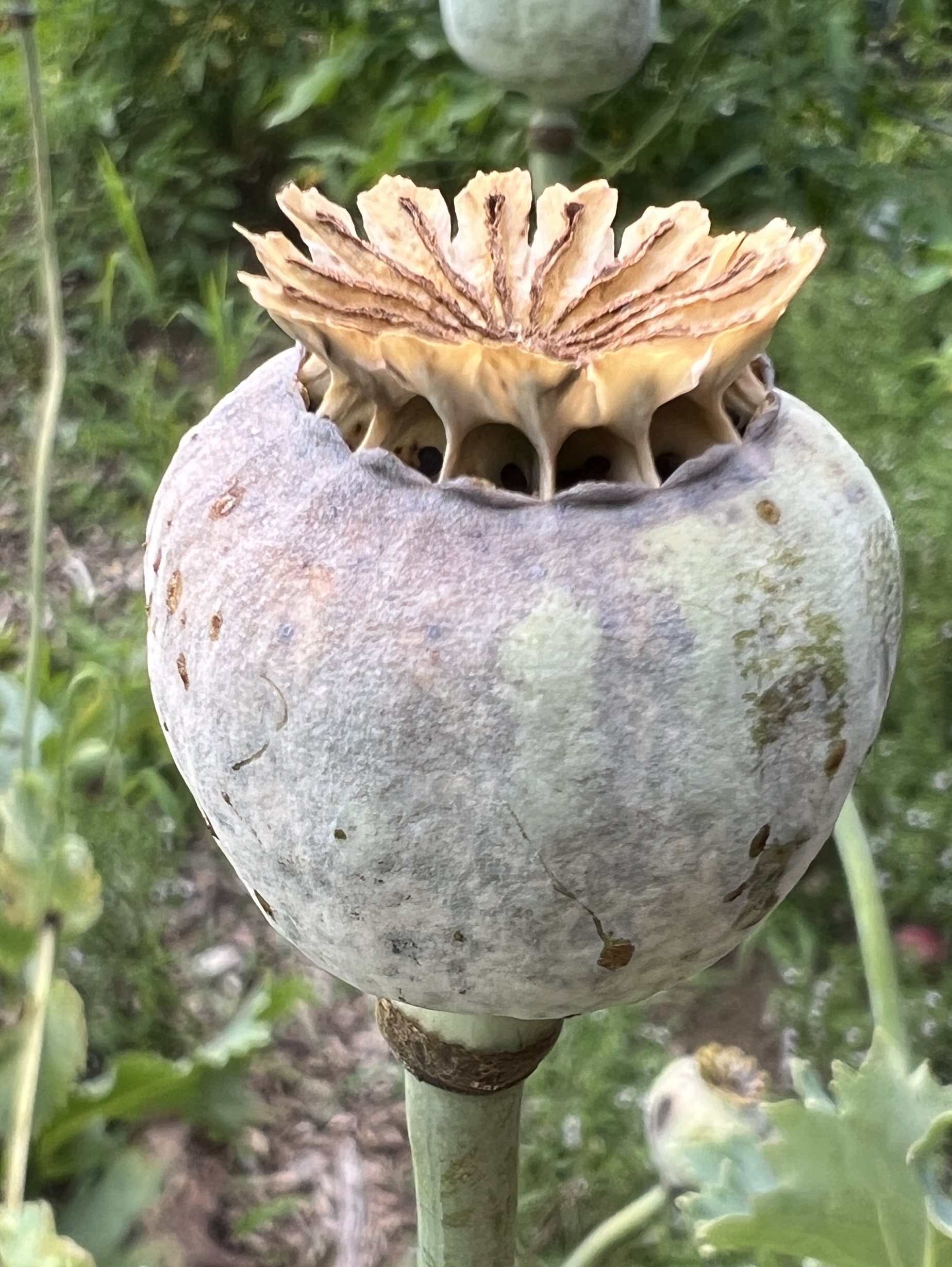
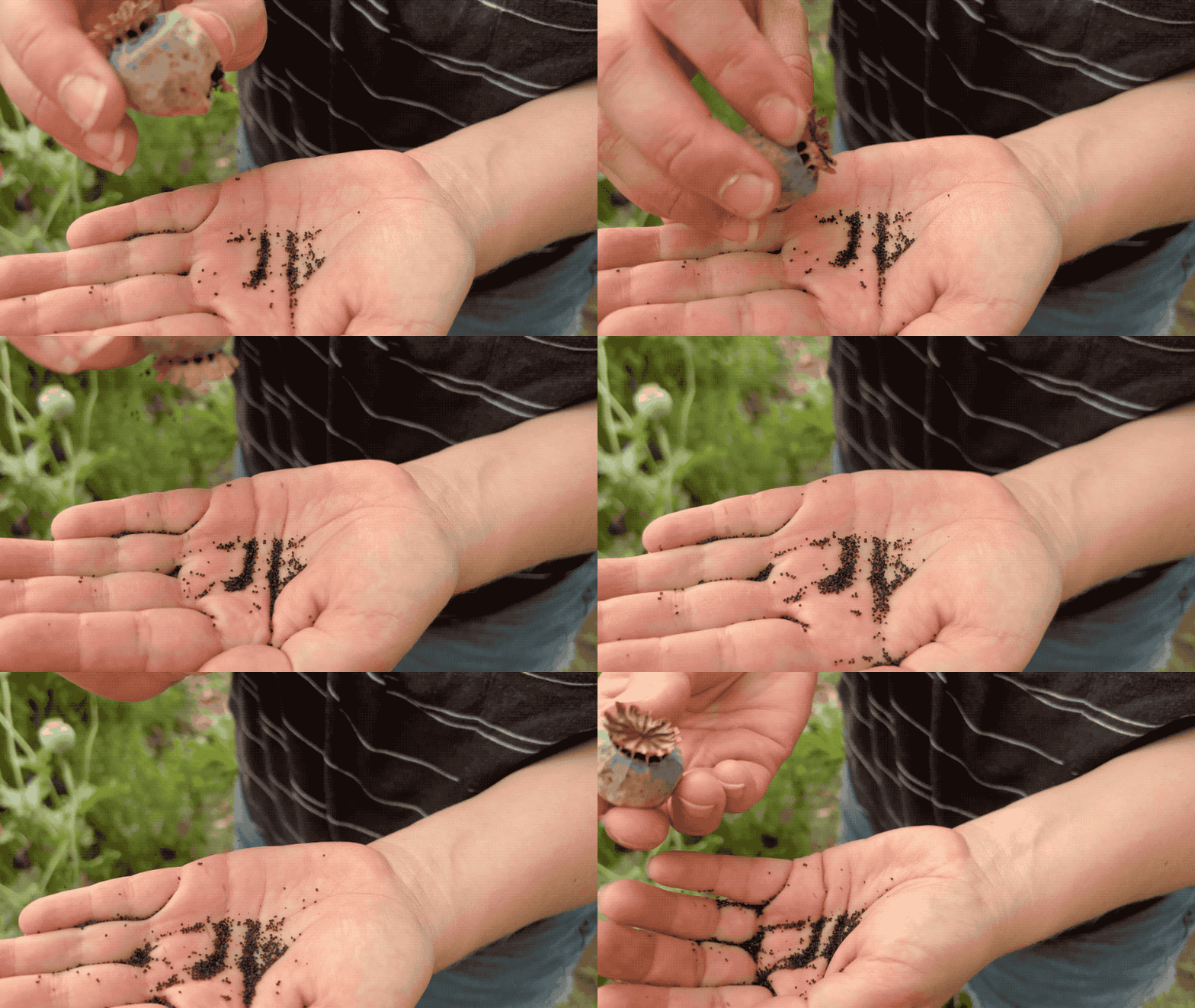
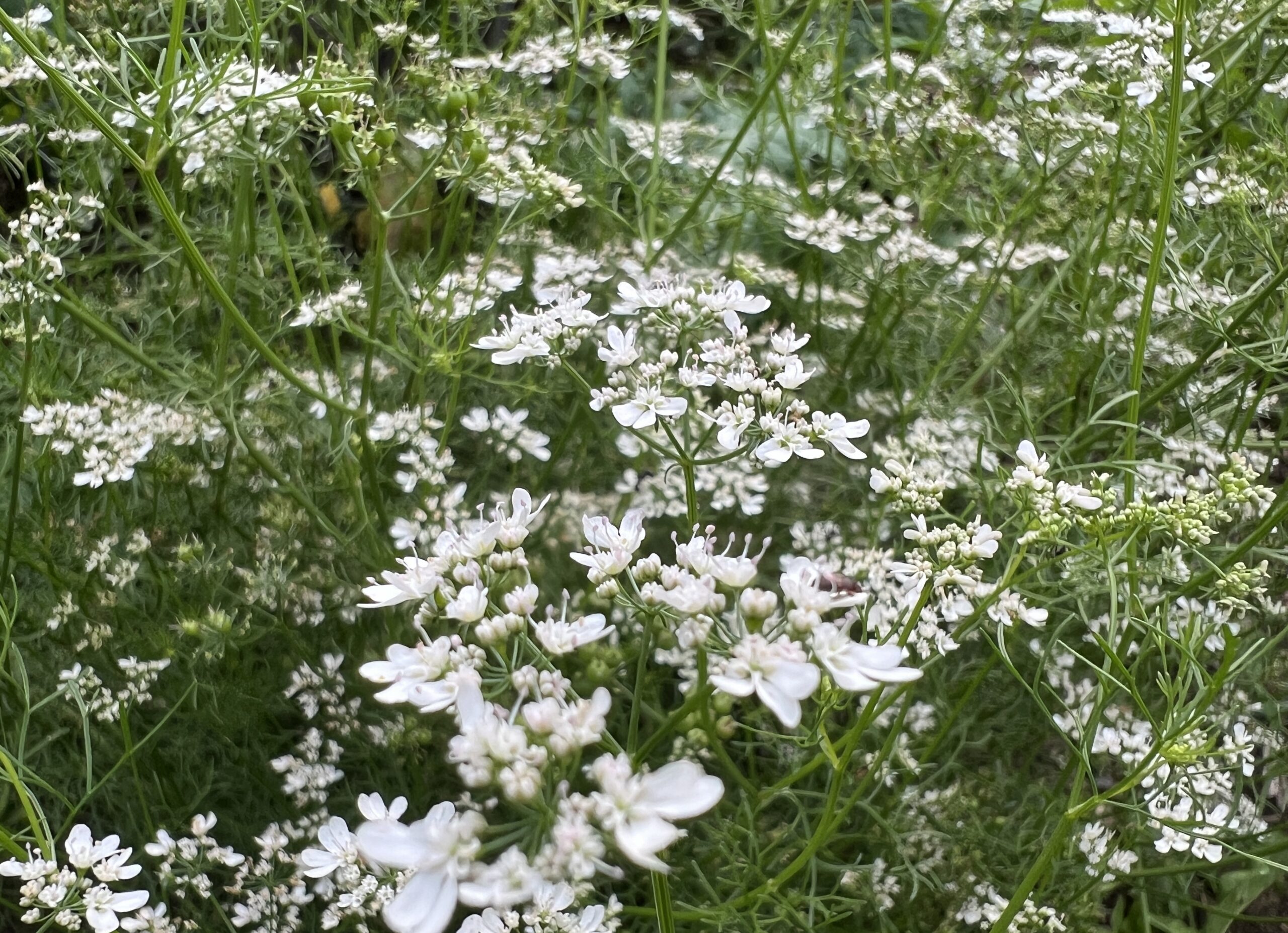
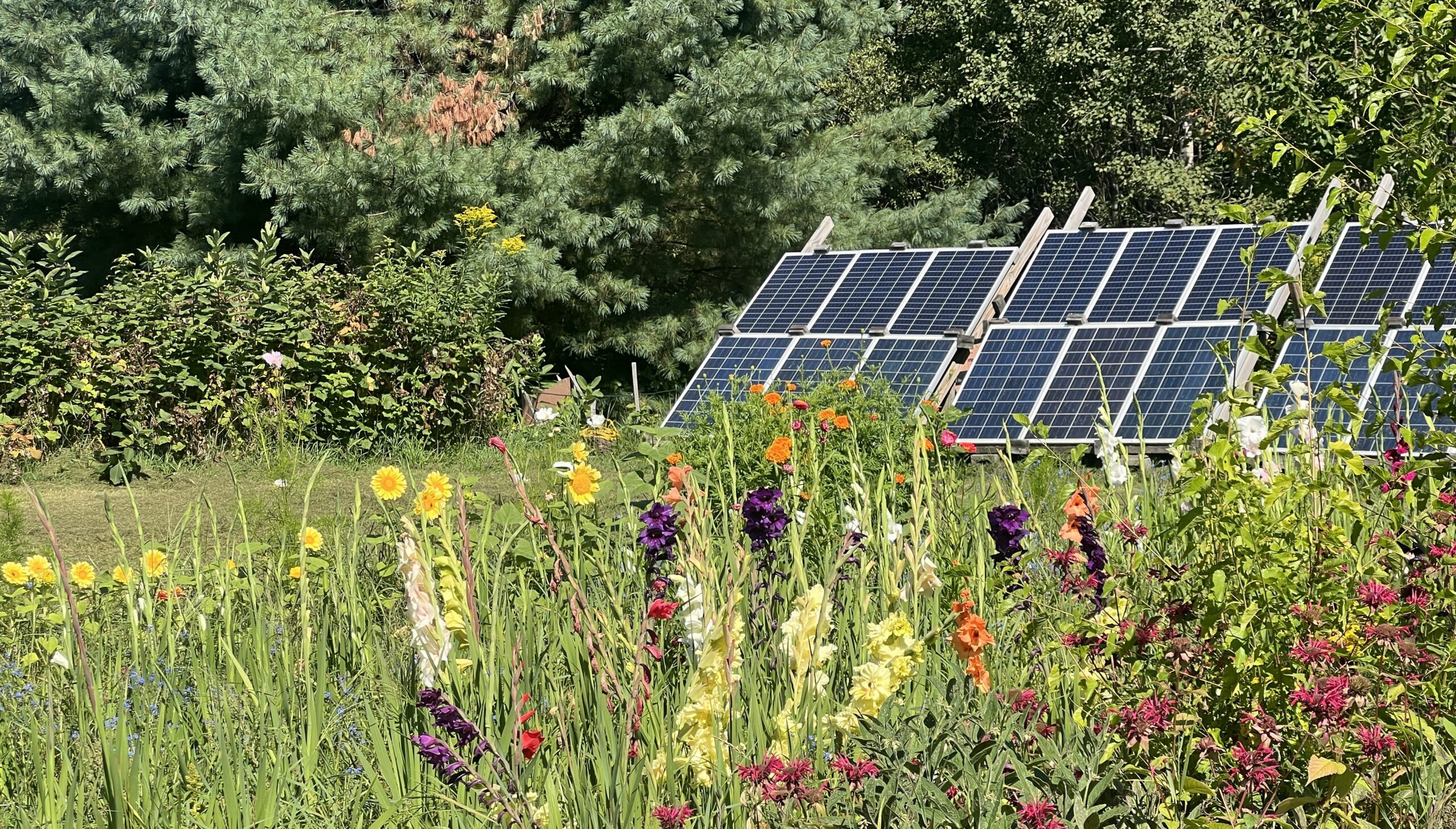
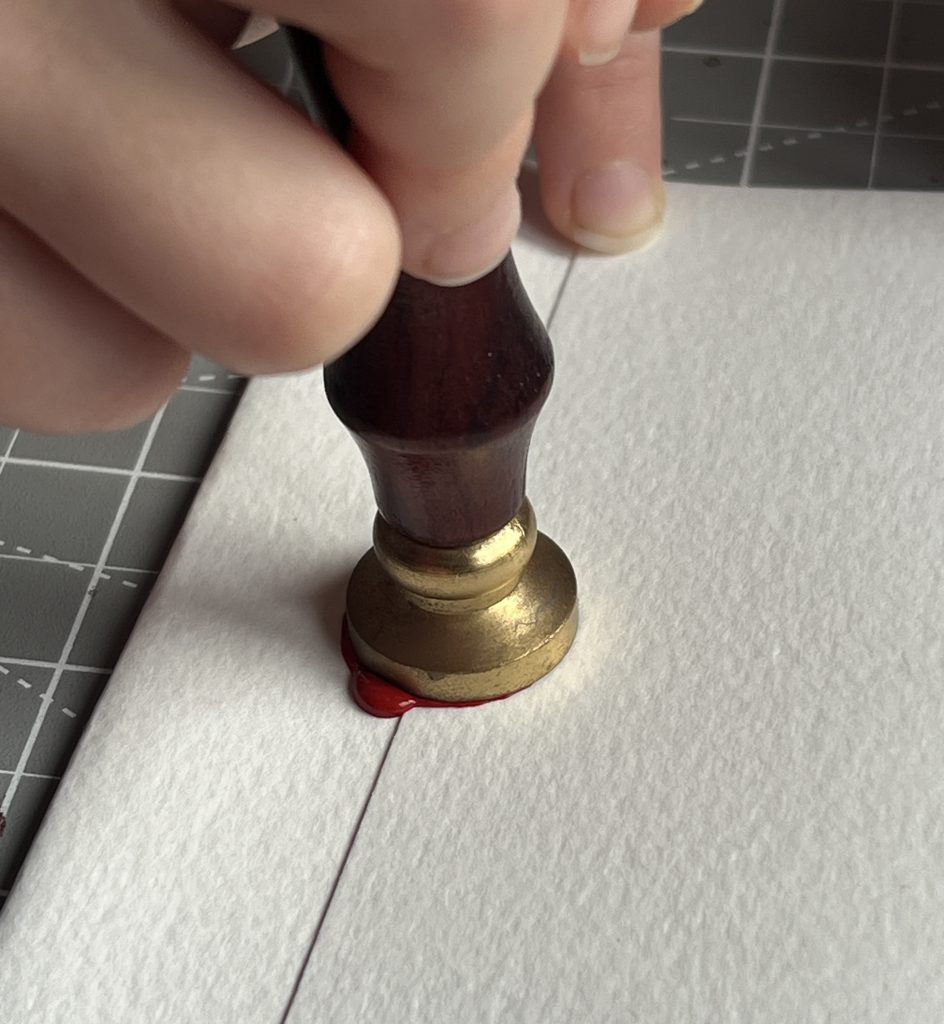
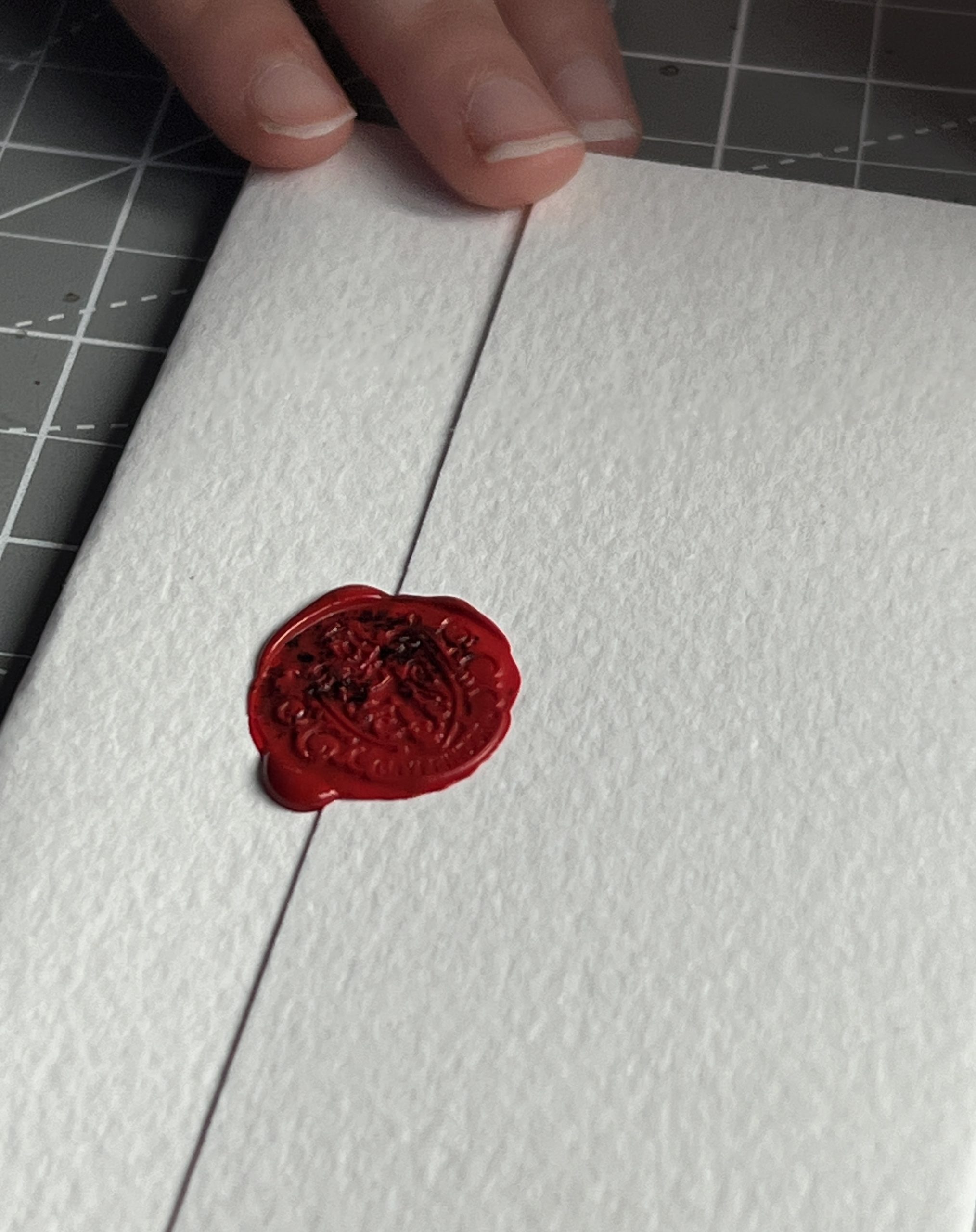
The non-berry harvests started rolling in. Along with food, Nicole grows a lot of flowers.


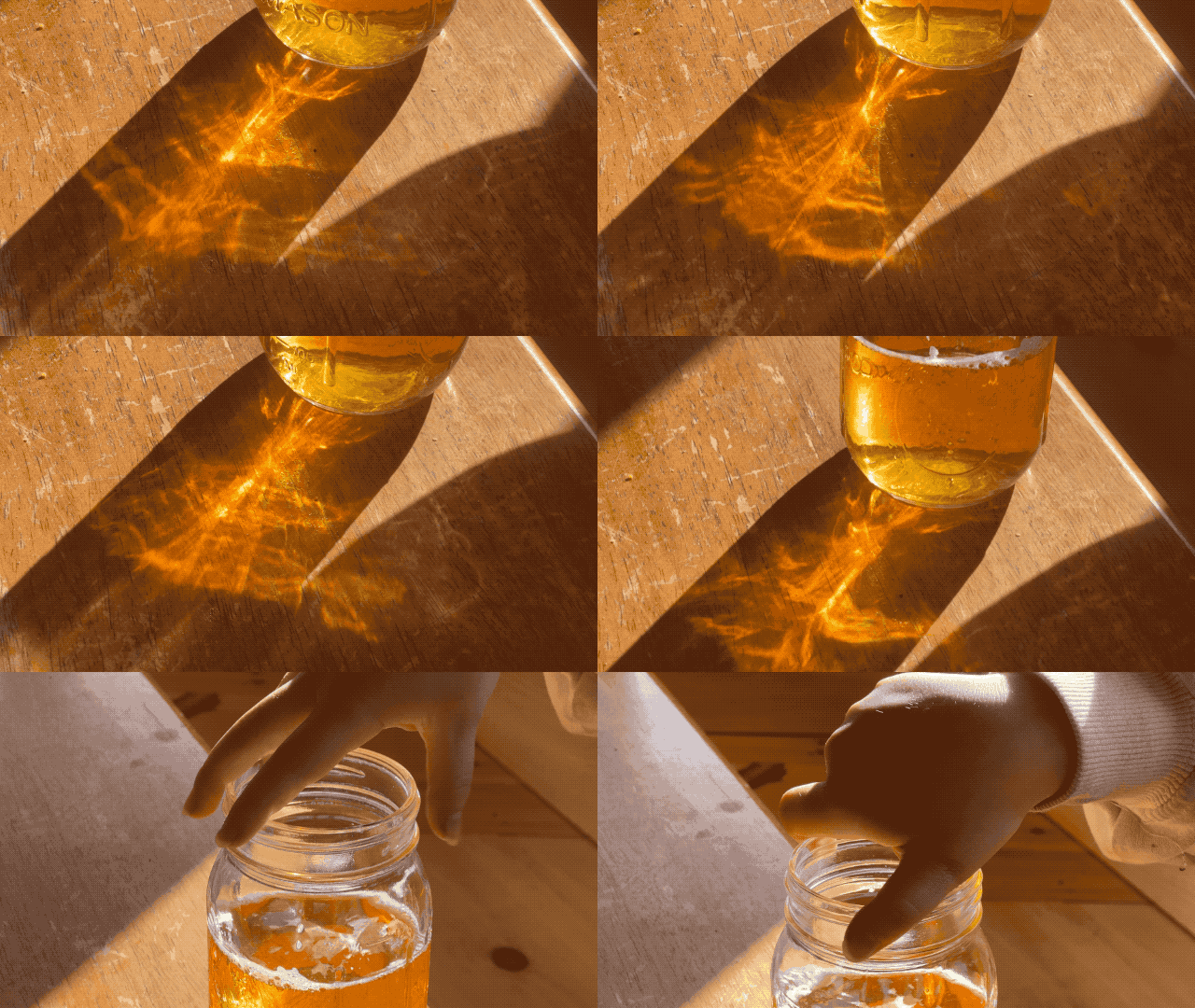
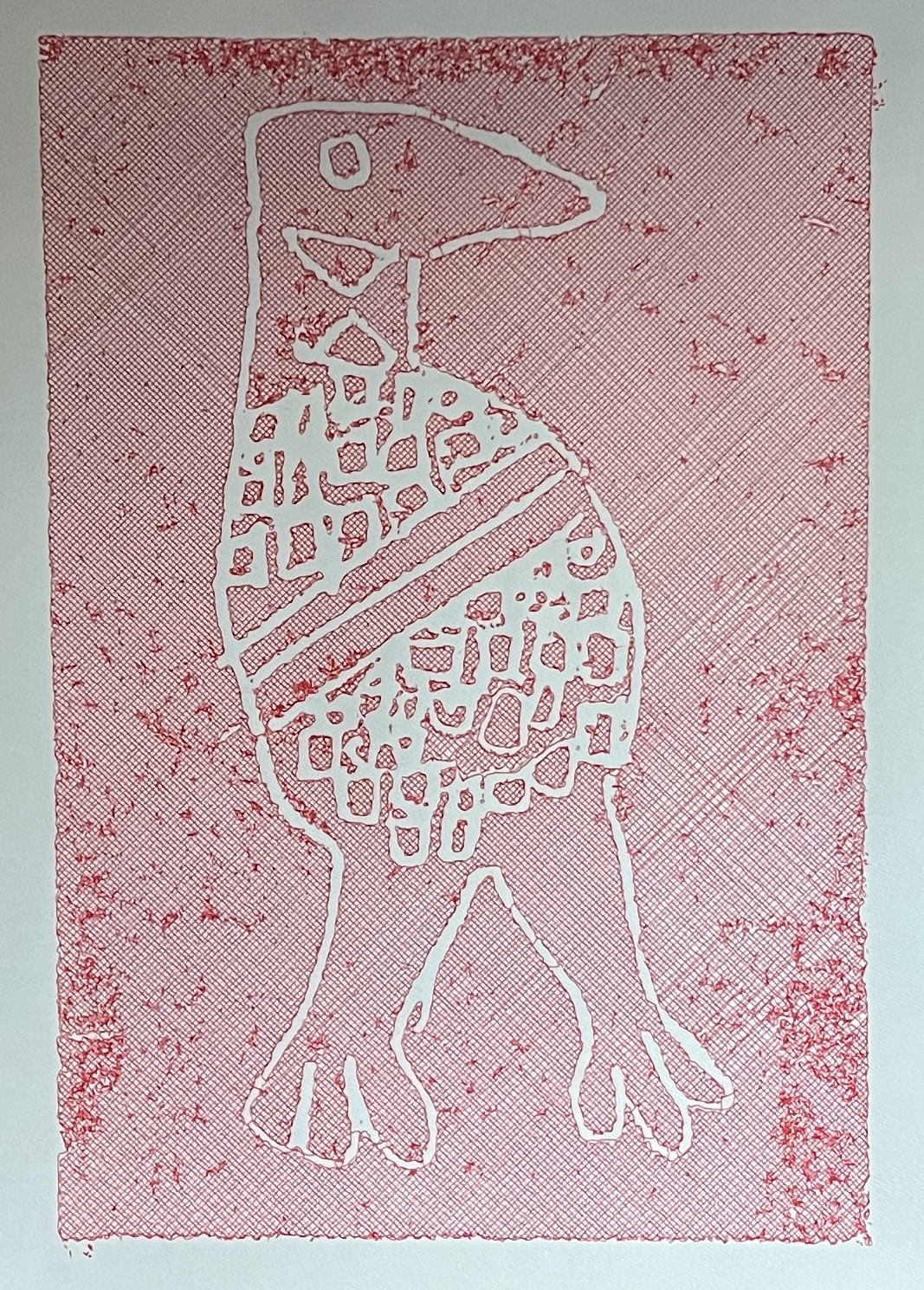
I don’t care what civilization you are, you gotta have a Sun deity.
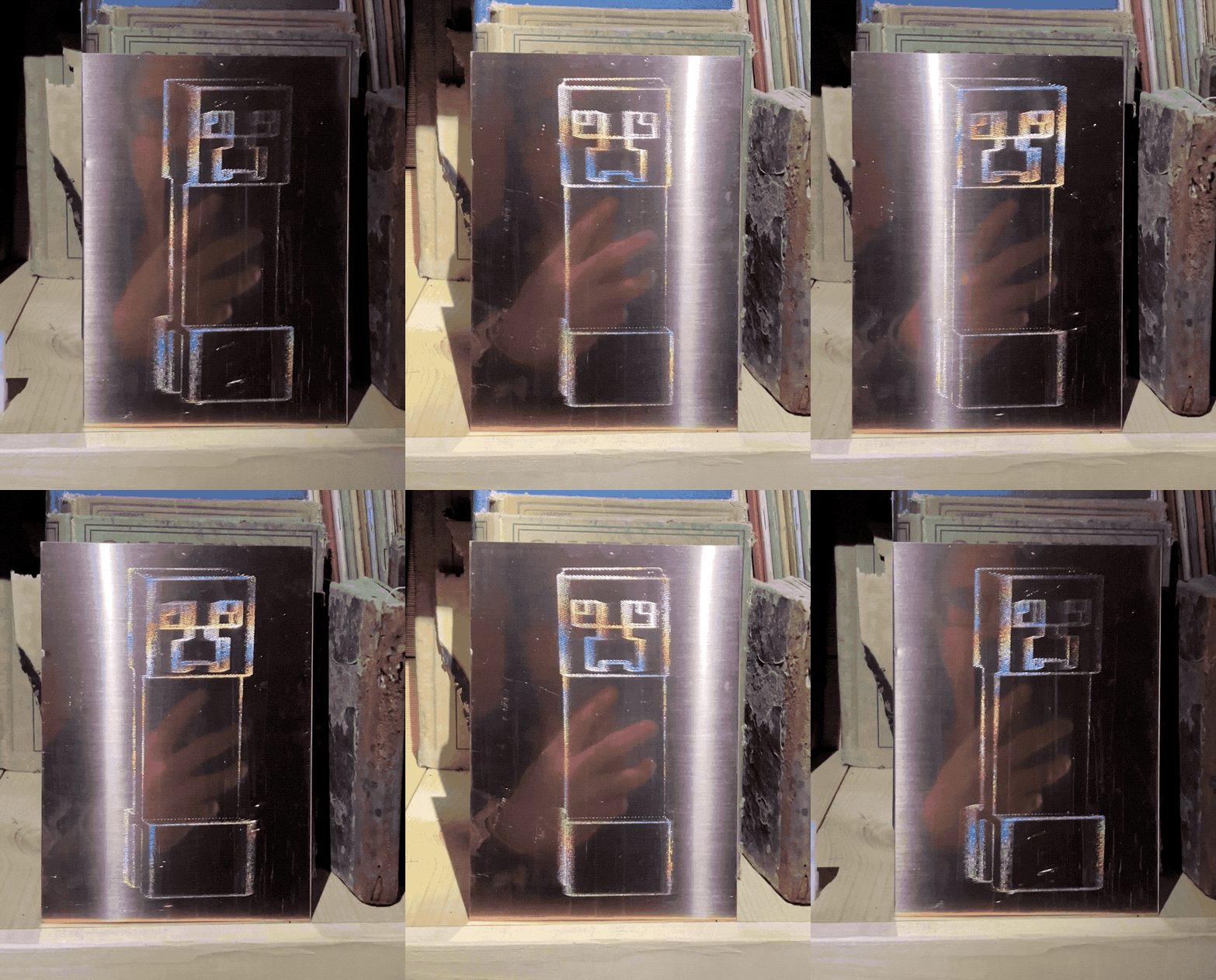
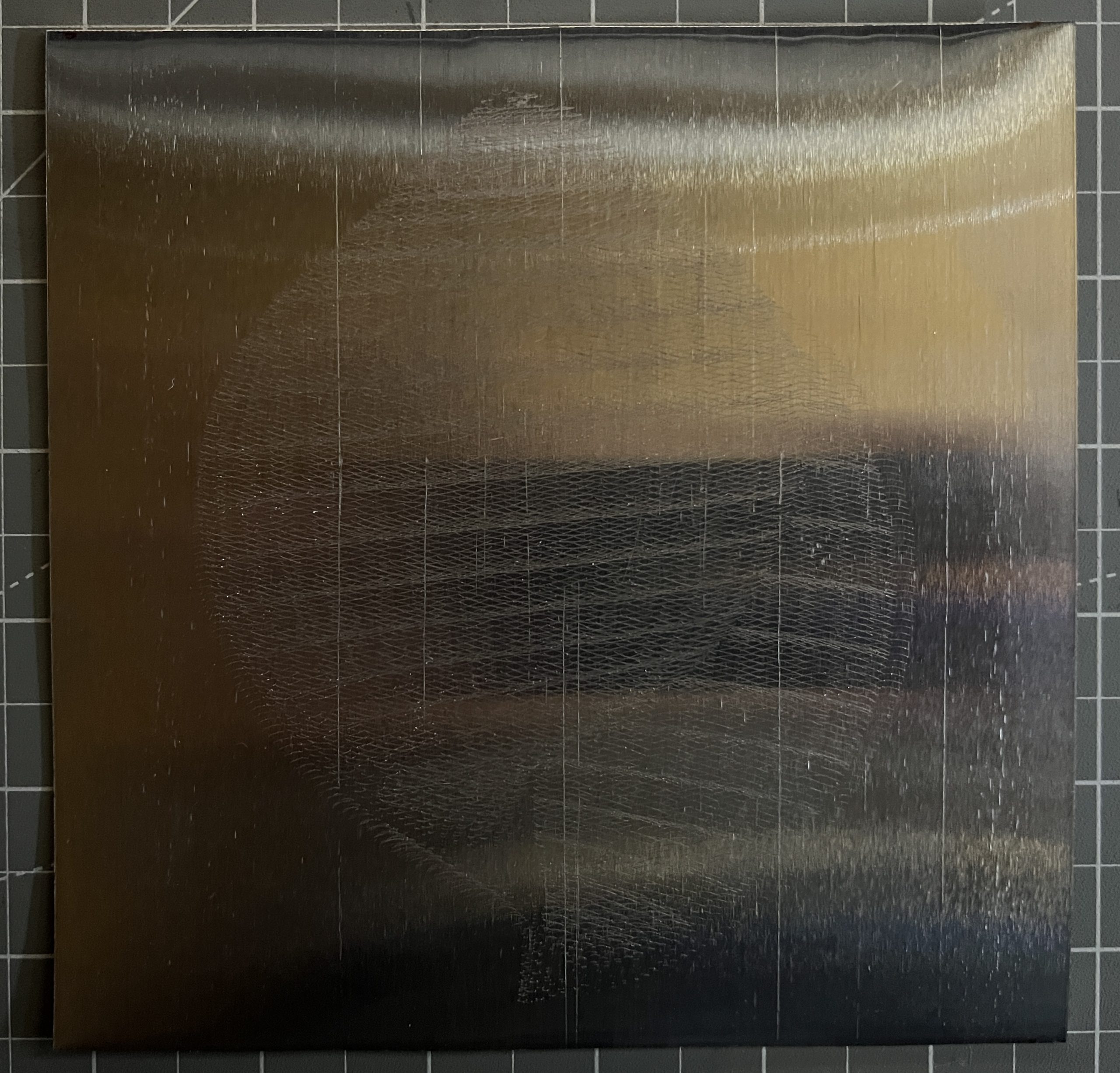
Robin found some copper flashing at the hardware store. Hell yeah I’ll etch it.
The glint is good, but it comes with a traveling vertical line that reflects the light source. I need to see if I can treat the surface to avoid that before etching. By happenstance I found that a rectilinear light source (office neon) perpendicular to the etching works better than a single light source pointed at it. It covers more vertical angles of viewing while not diffusing the horizontal effect. Running it parallel, much like a diffuse light source, ruins everything. I should draw how this stuff works a bit.
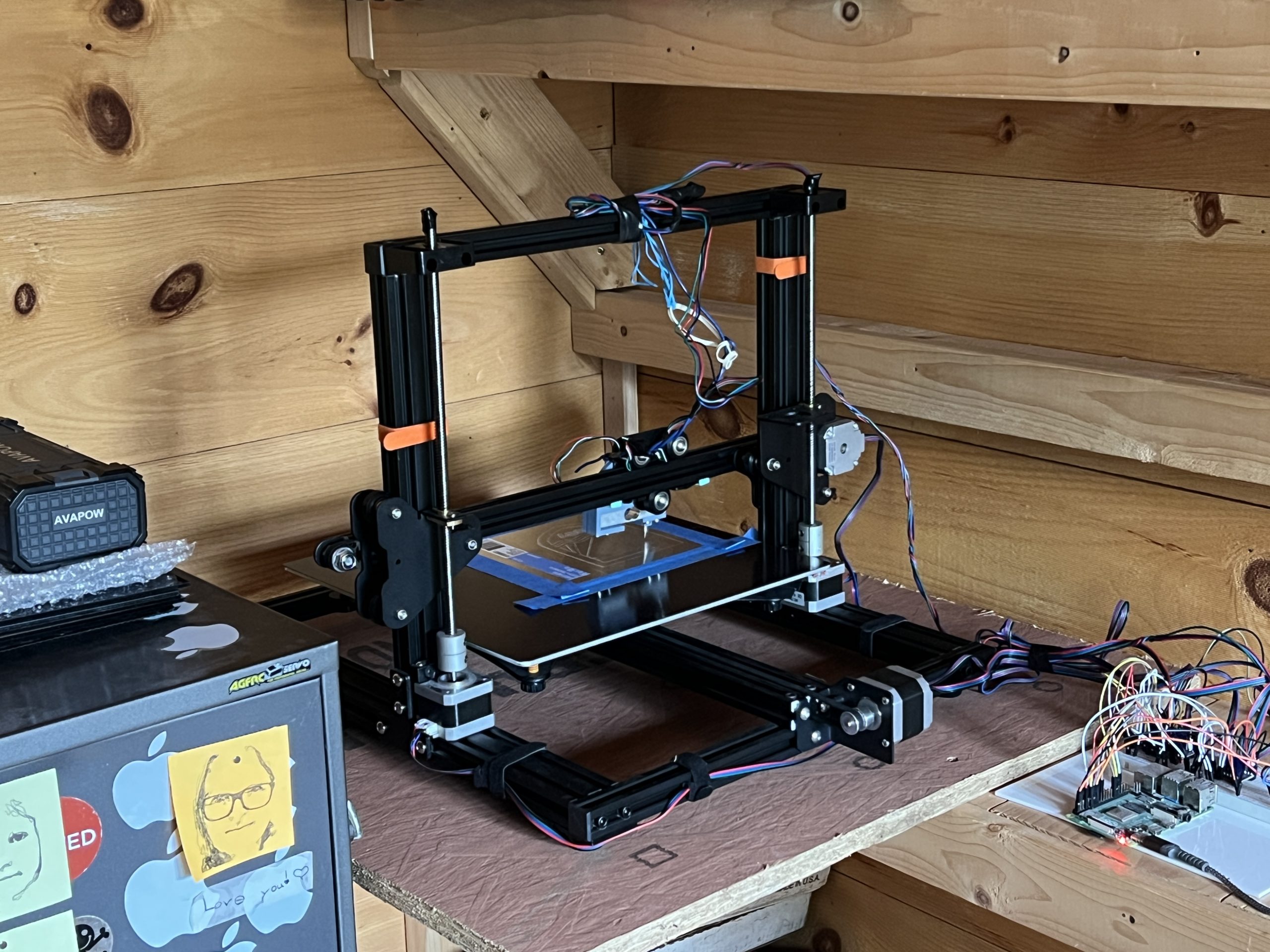
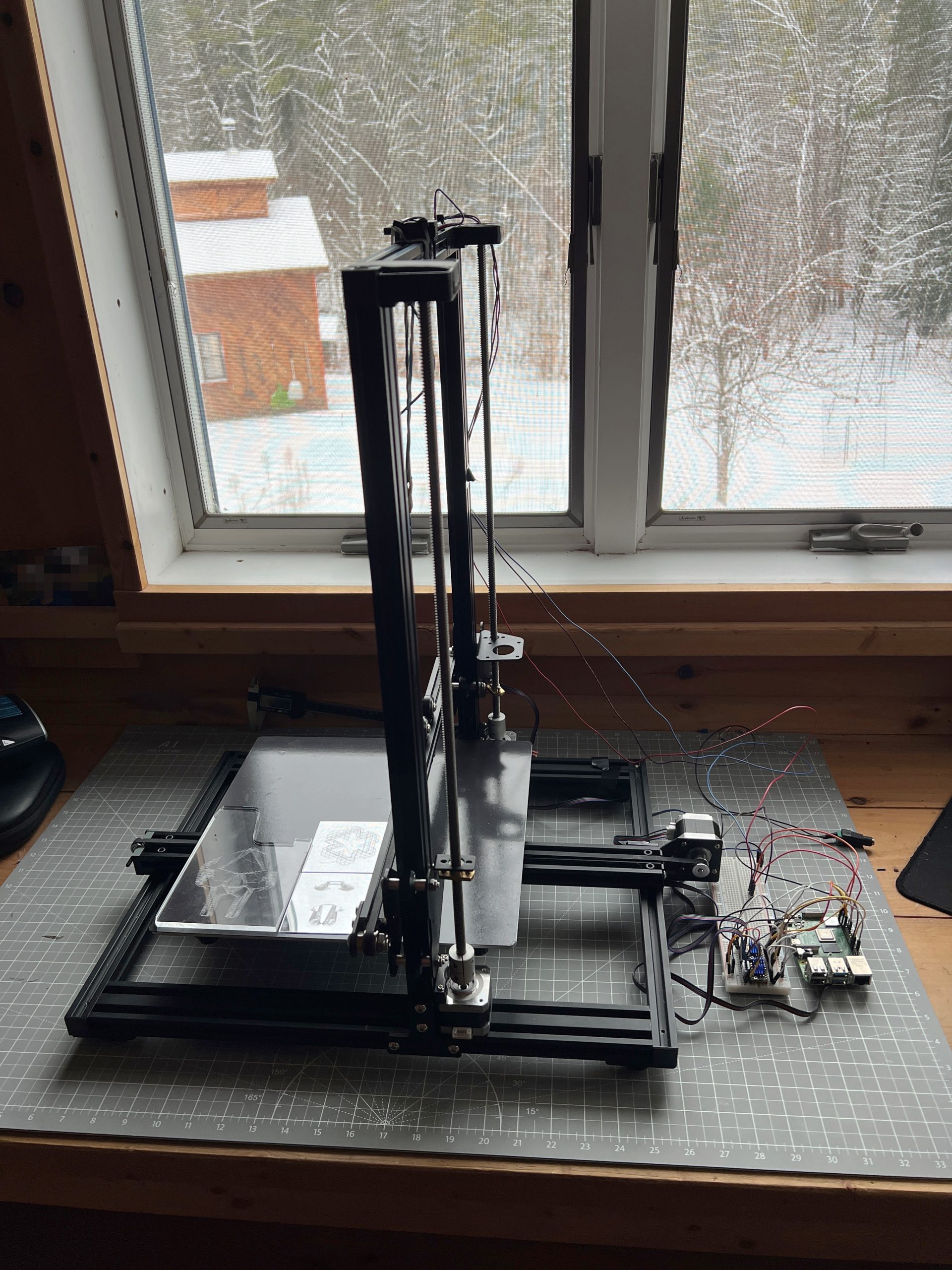
My office is a little small and barely able to contain all the machines I’ve accumulated. The 3D printer I turned into an etcher for specular holograms was obnoxiously tall, and really doesn’t need much vertical range. I chopped the aluminum extrusions so it would fit in an unused corner of the room. I’ve been doing occasional tests here and there, nothing worth showing yet. Results are very hit and miss, and finding good subjects is hard too.

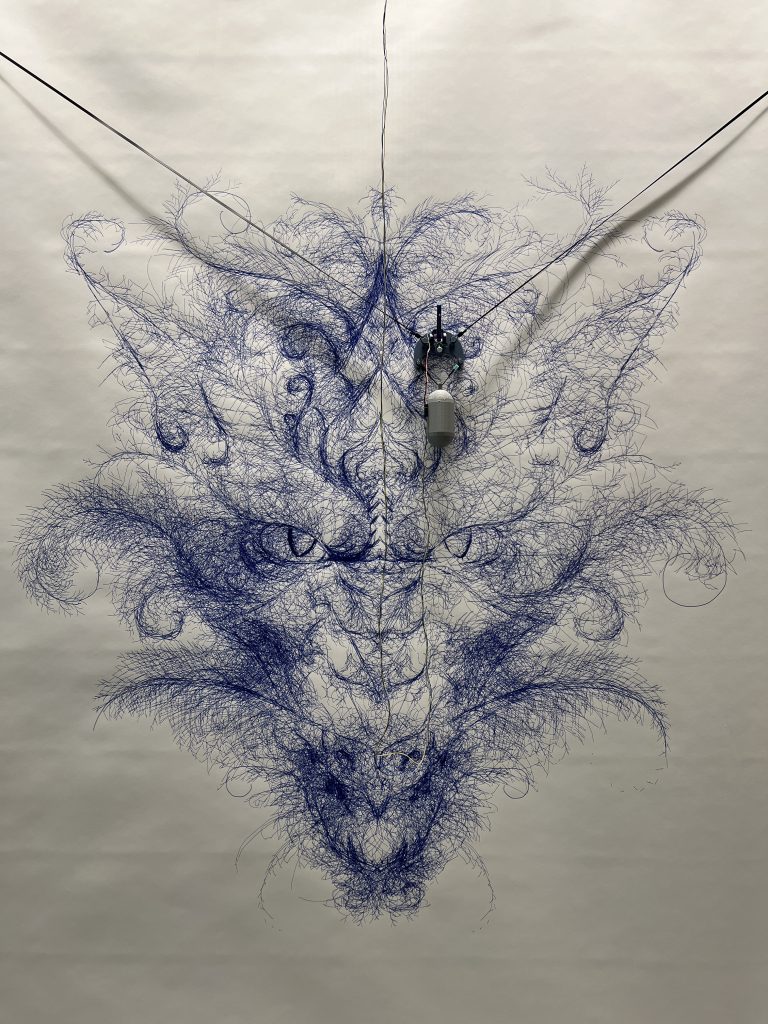
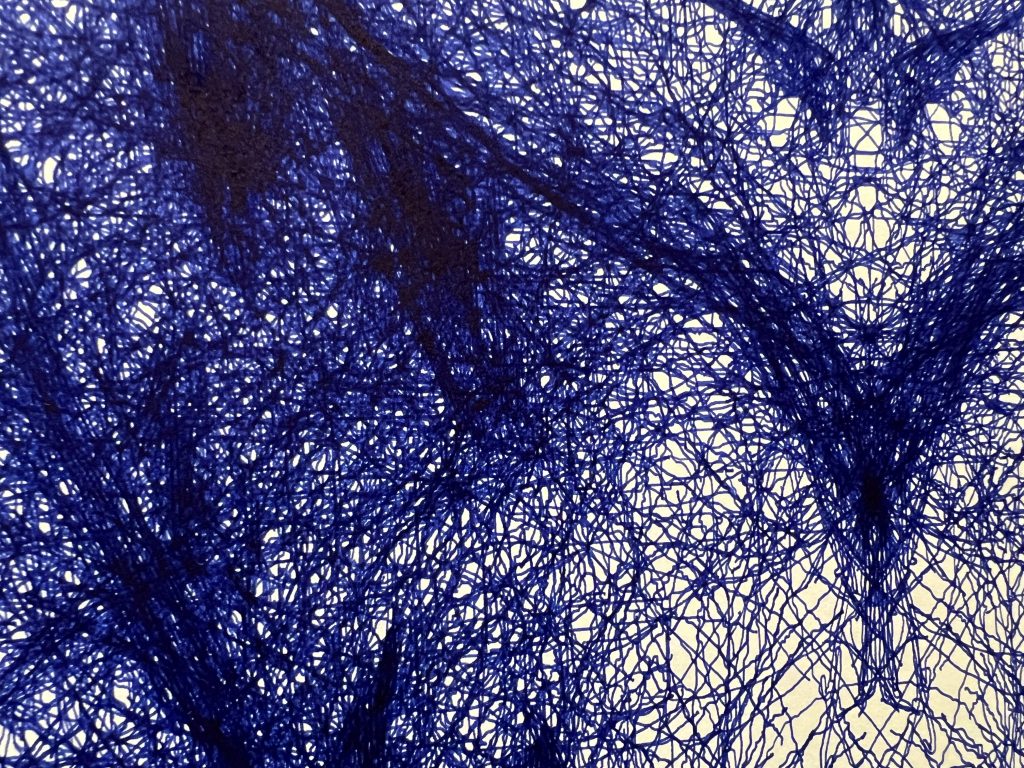
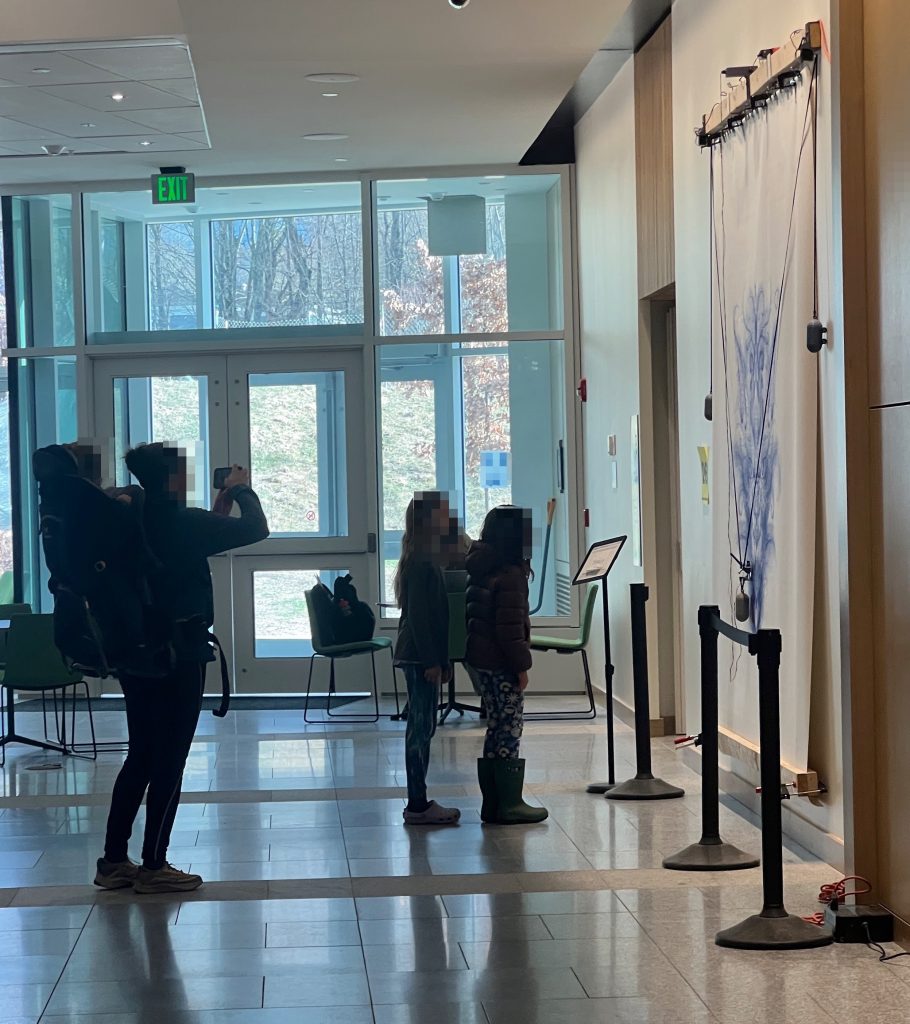
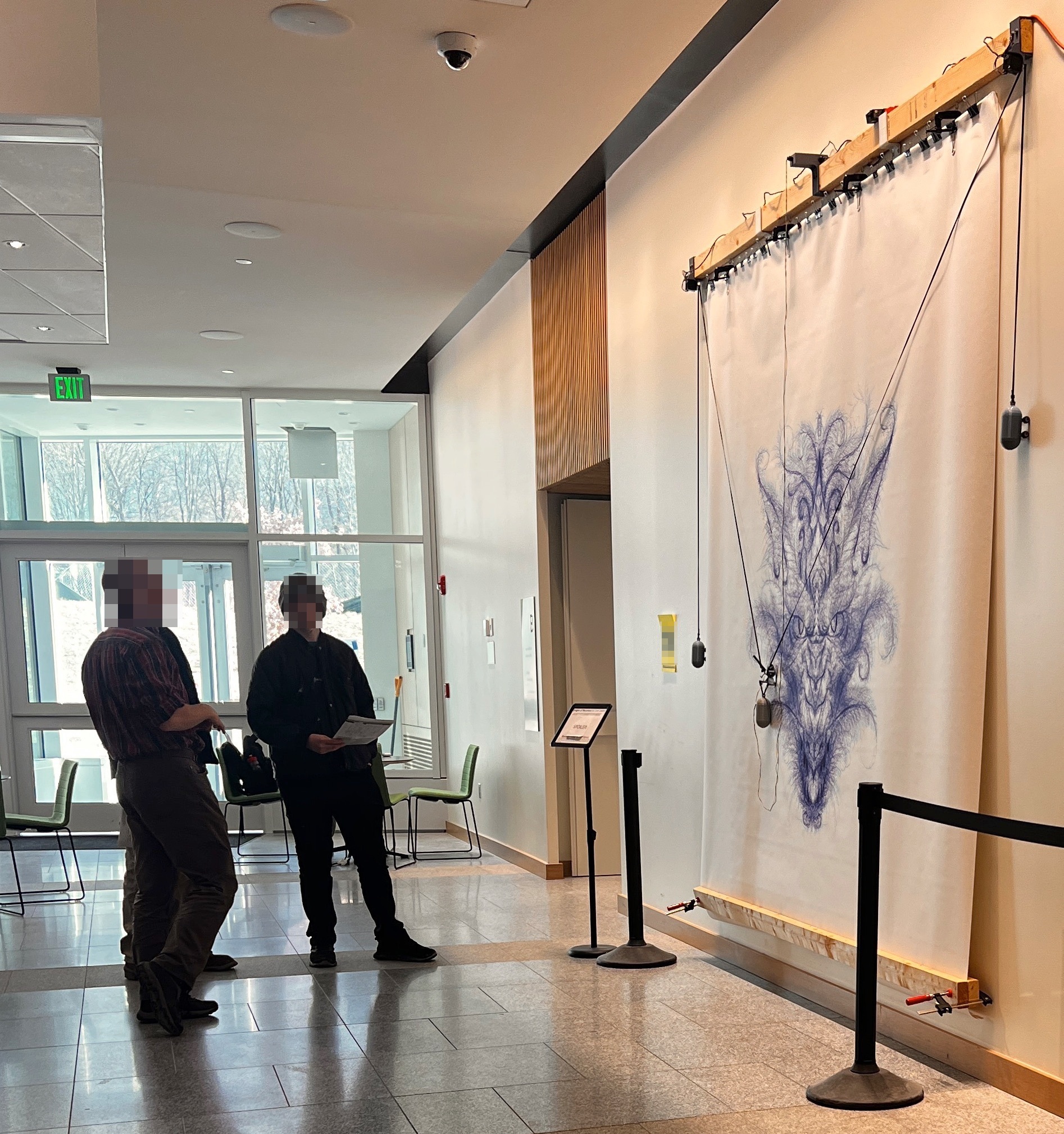
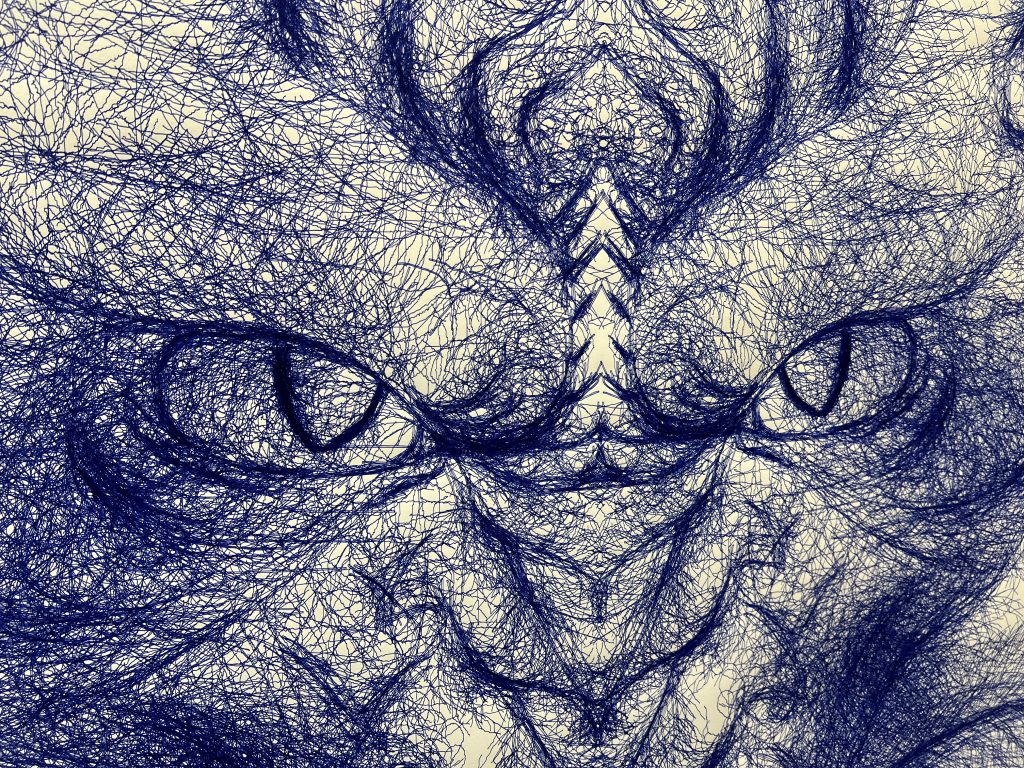
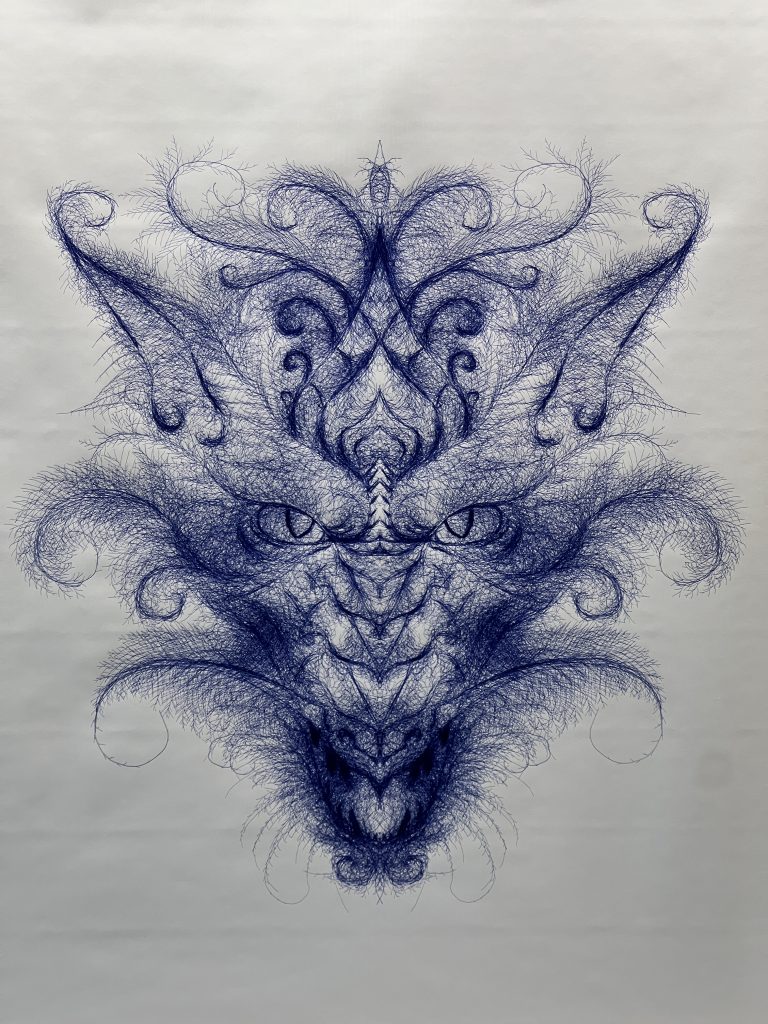
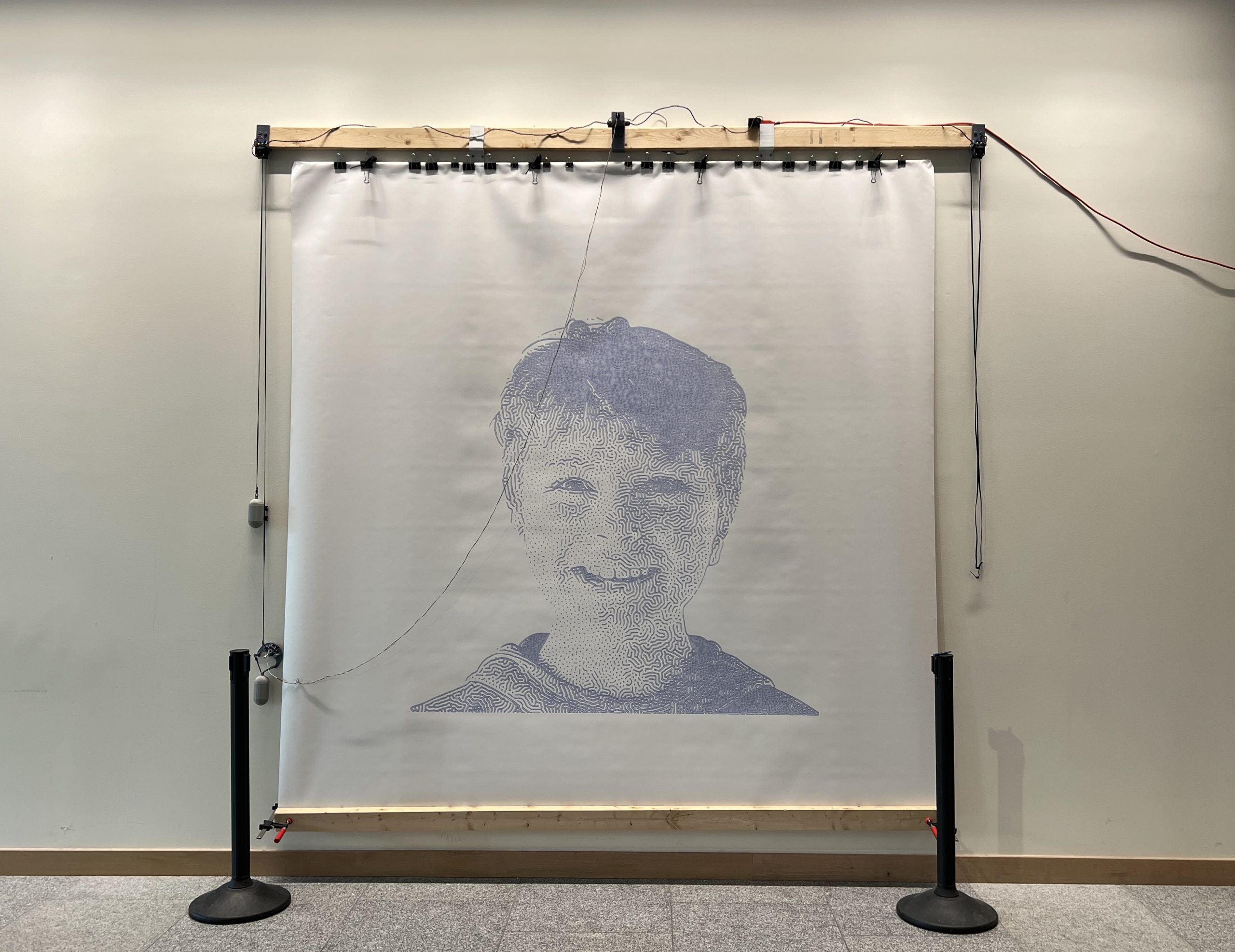
7 days, 47438 pen strokes :\. Lara’s work and a recurring dragon on this blog :). I sped up the machine to make it 7 days instead of 10, so it’s slightly more inaccurate, but more importantly I failed to anticipate that ink would run out faster. I used to have about 1.5 days between pen swaps, here it’s barely above 1 day. No harm done I got there in time, but I should have thought about it when I adjusted speed.
I lined it up with a big public event and tons of people got to see it.
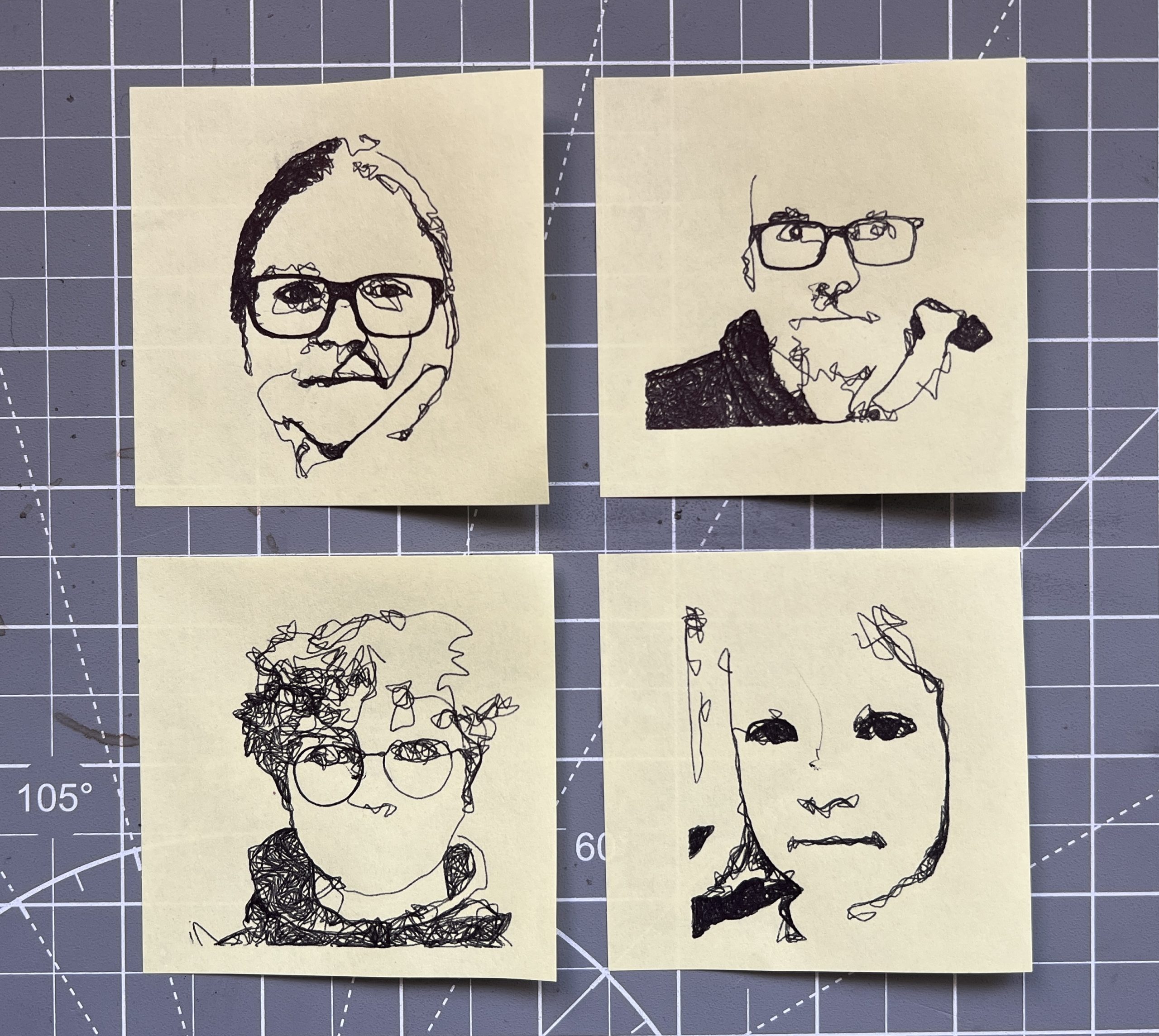
No sure if there’s anything more to say about lasers & post-it portraits, it was the now usual formula. I’ve enhanced the pipeline some to do auto-face-cropping as it is a step we usually waste lots of time on. Esther & I rehearsed over the week end. She runs the operation during the event.
Some recurring questions I get asked at these events:
“What are the machines for normally?” Nothing, their sole purpose is to drag pens and shine cat lasers.
“Is this your job?” Nope, just a side quest.
“So how does this work?” I try to see what part they’re interested in before I launch into a 3 hour tirade :).
“Did you build this?” yes.
It’s very gratifying to see people stare at your work for a while. You can see the gears turning in their heads. I’ll sit by the big machine sometimes to watch people’s reaction to it. When I swap its pen people will come up and tell me how much they like it. I’m just glad for having the opportunity to do something cool in the world.
I was invited back to the science museum to do something cool with my machines. Any time I do a public event it’s an opportunity to figure out what’s engaging and do better the next time around.
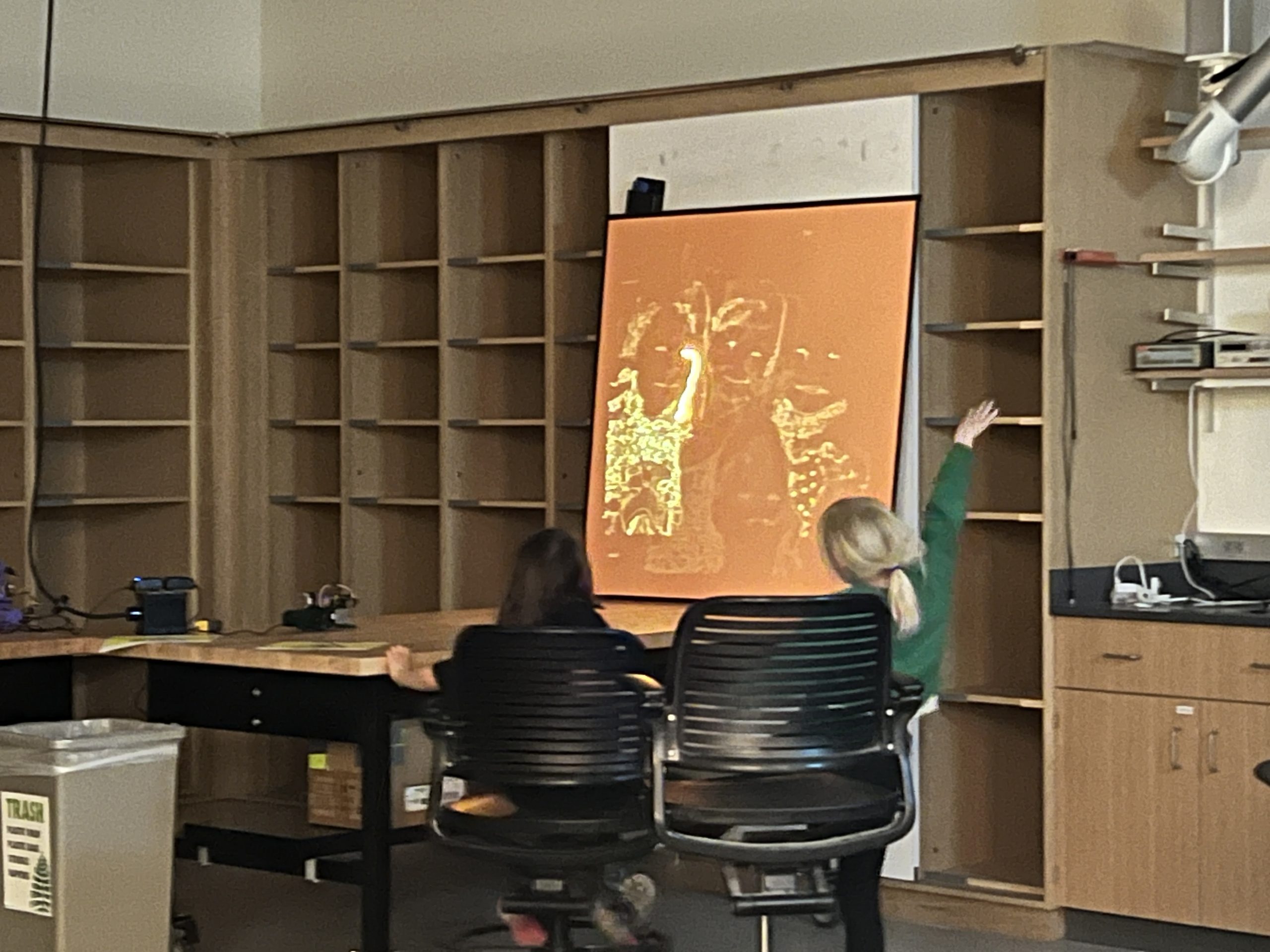
I was maybe a little too motivated and brought several machines, almost my whole apparatus, and deployed them in various modes. 1 PewtyBot, 1 Mirror PewtyBot, 1 PlottyBot & 1 SkecthyBot doing portraits, and 1 PewtyBot people could control with their phones. The laser portraits worked wonders again, but the original PlottyBot drawing post-it portraits worked even better.
People were clearly keen on getting a tangible souvenir from the evening. Having a robot draw their portraits on a Post-it note struck a chord hard. I think what I’ve learned from this event is that while the lasers throw a lot of pazzazz at you, they are more complex machines that most people don’t try to engage with beyond taking in the light show. While a pen based machine is doing the same thing you’d do with your hand so it’s more approachable to be curious about. As usual a small fraction of them were fixated beyond reason on watching the machine at work. There has to be a “drawing automaton obsession” gene present in ~10% of the population.
Unfortunately, I only had one PlottyBot doing the Post-it portraits, and they take much longer than the lasers so I spent much of the evening trying to keep track of a queue of people who wanted one.
I built 2 4’x4′ photoluminescent paper holders so I could deploy this easier. In the past, finding a decent spot on a wall for the rolls and unrolling them was difficult and time consuming. I also have plans for doing random outside events at dusk in random places this Summer, which is why having something deployable was worth the construction effort. I tried it some already at home last Summer and it’s kind of cool to have the lasers go on a warm Summer night.
I had several people ask me if this was AI :), this seems to have become the go-to explanation for anything tech based that can’t be explained easily. Much like Clarke’s law that “Any sufficiently advanced technology is indistinguishable from magic”, only now it’s AI instead of magic. I’d respond that it was just good old organic grain-raised free-range “I”.
As usual, it was very hard to capture the coolness while manning it so I don’t have much visuals to represent what went on. Ultimately it’s just me running 5 machines, a software stack and talking a lot. Suffice it to say people were into it and I’m emboldened to keep trying public events. Fun times!
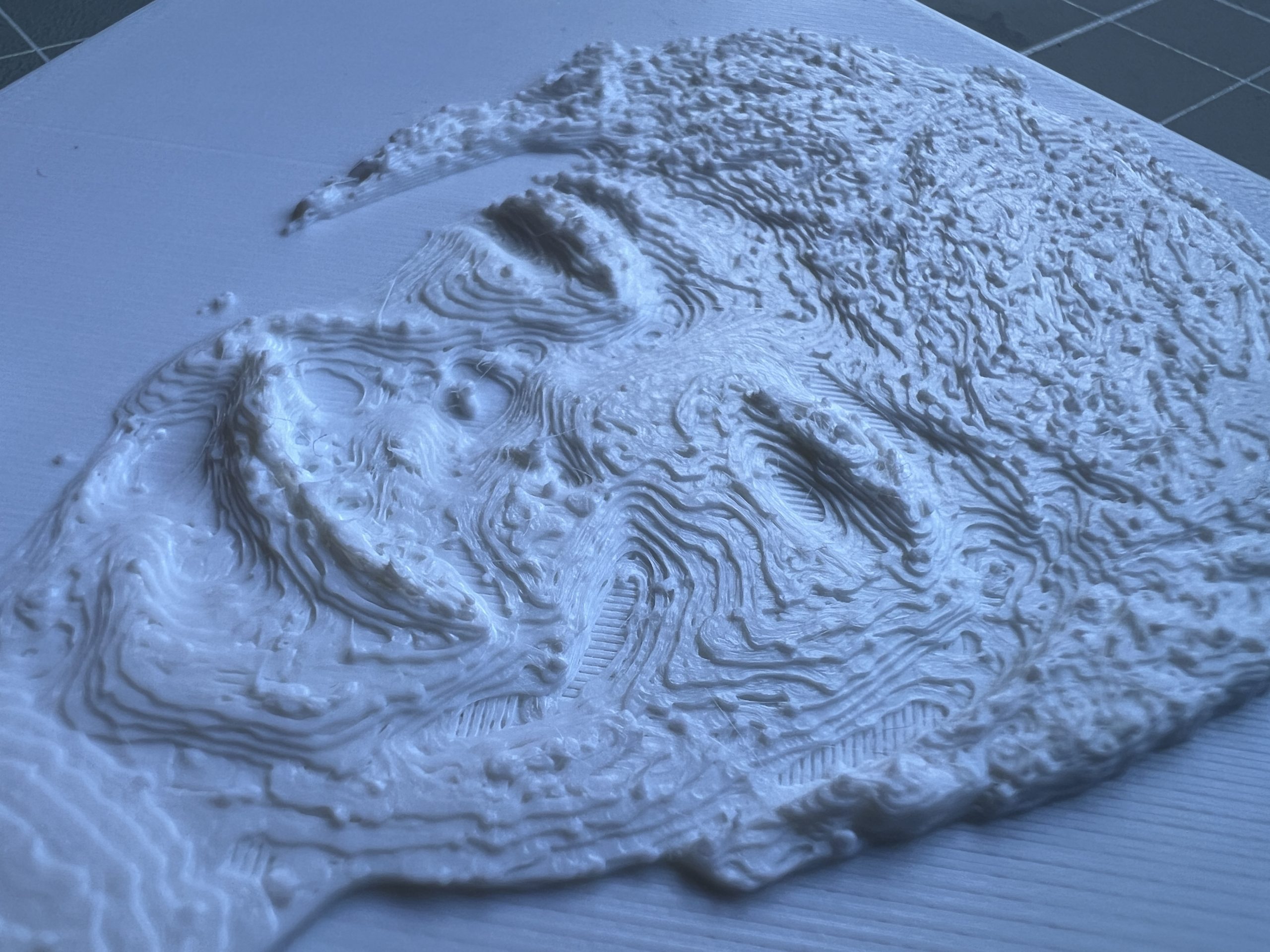
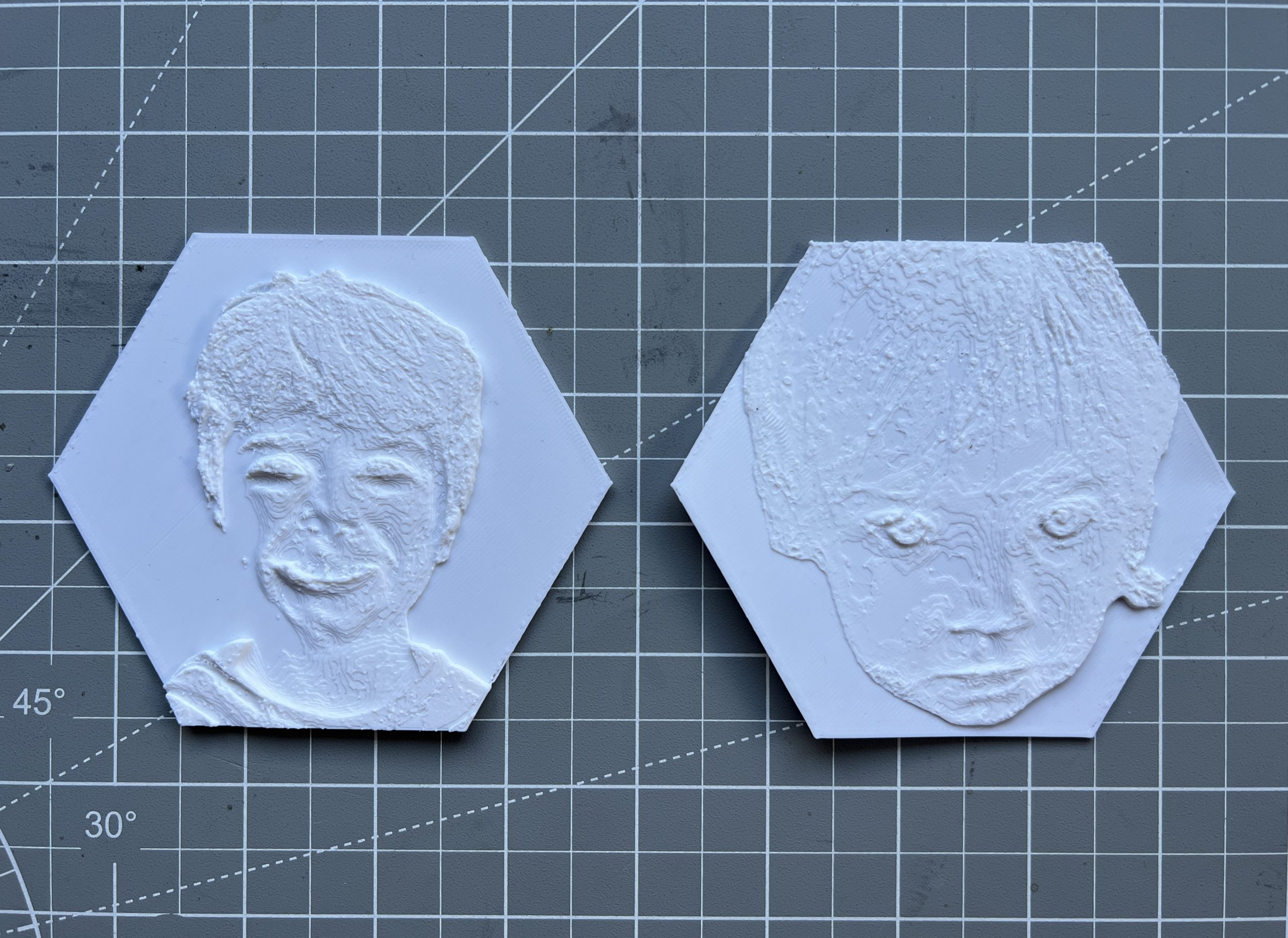
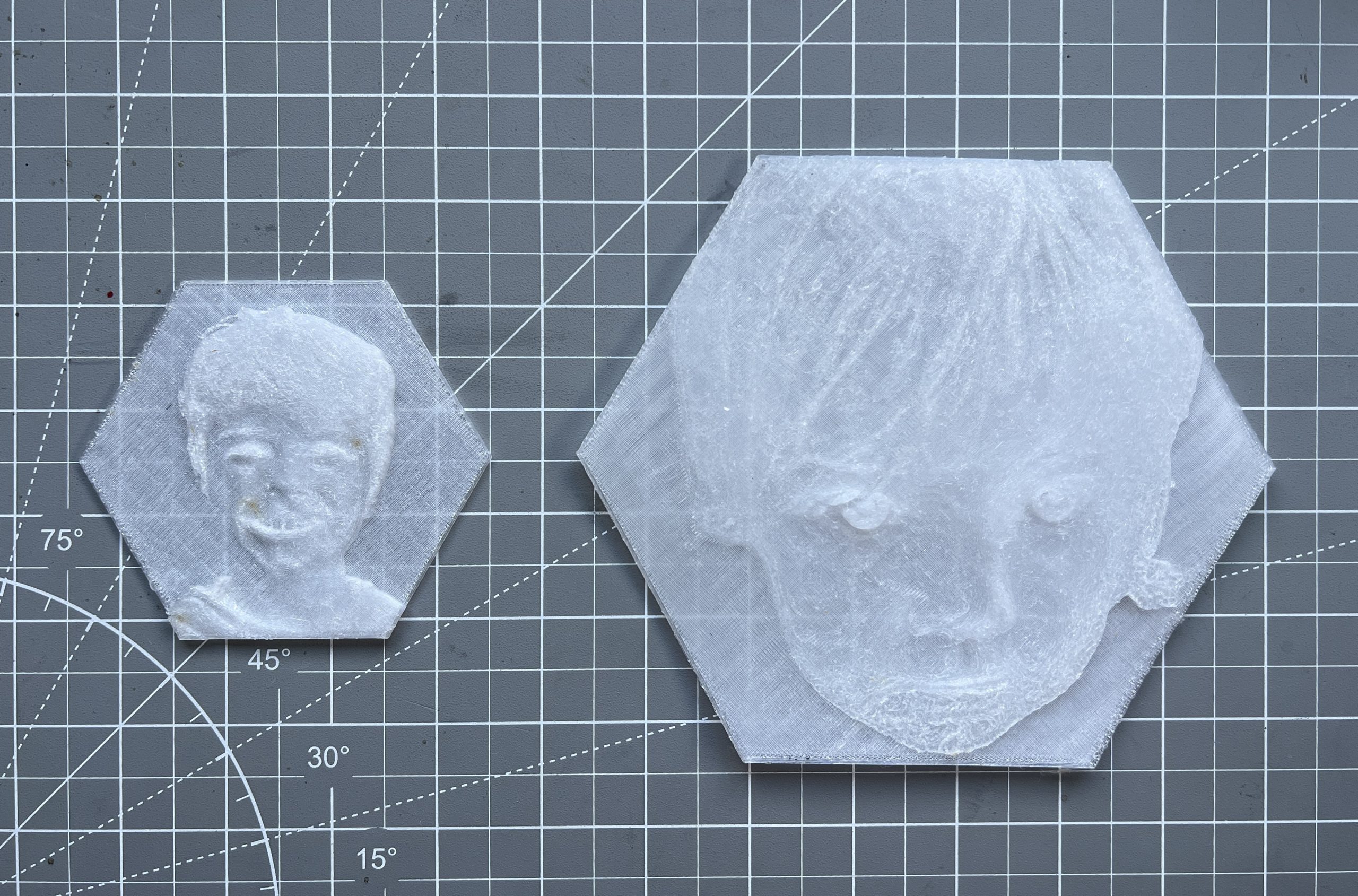
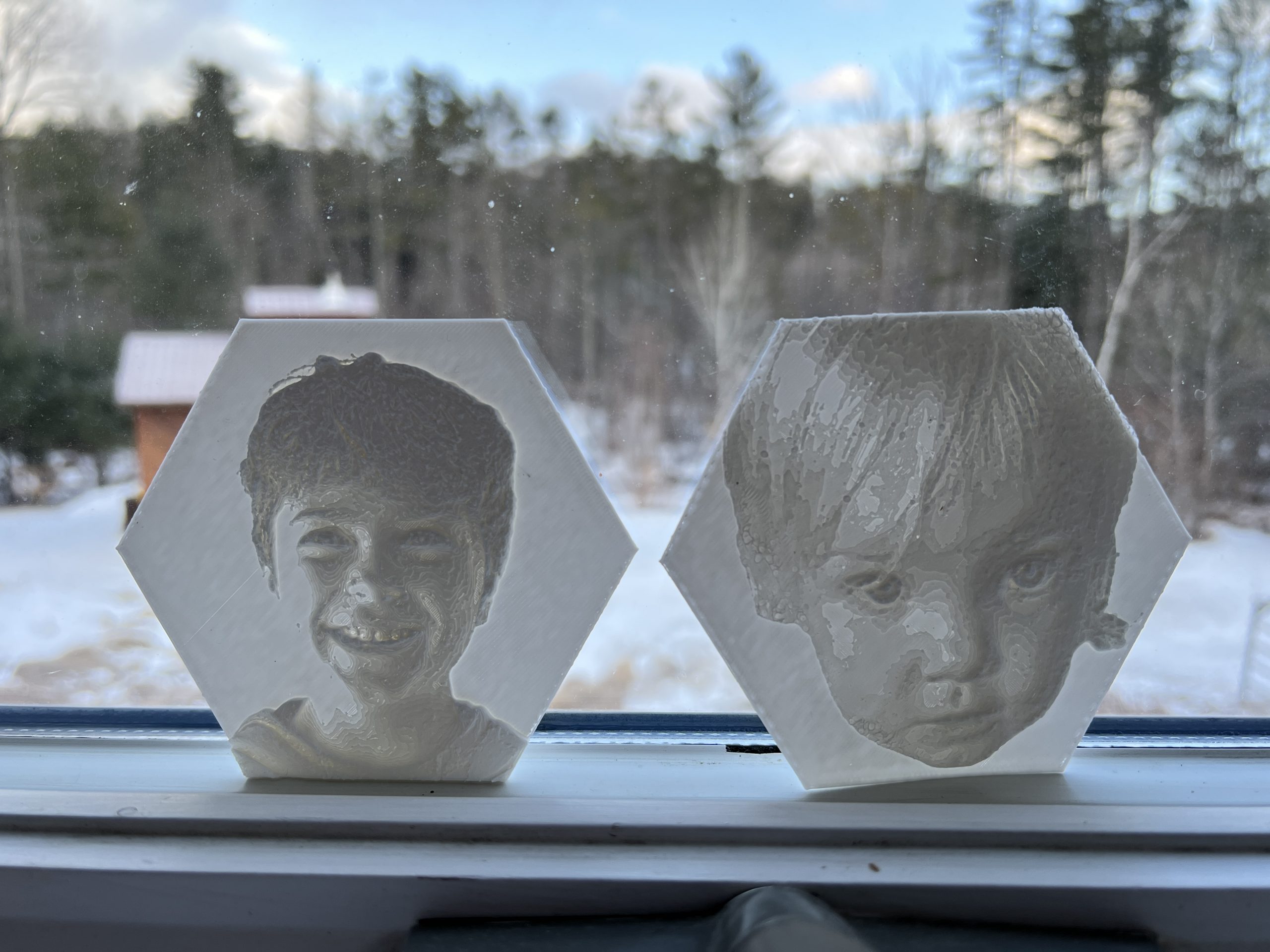
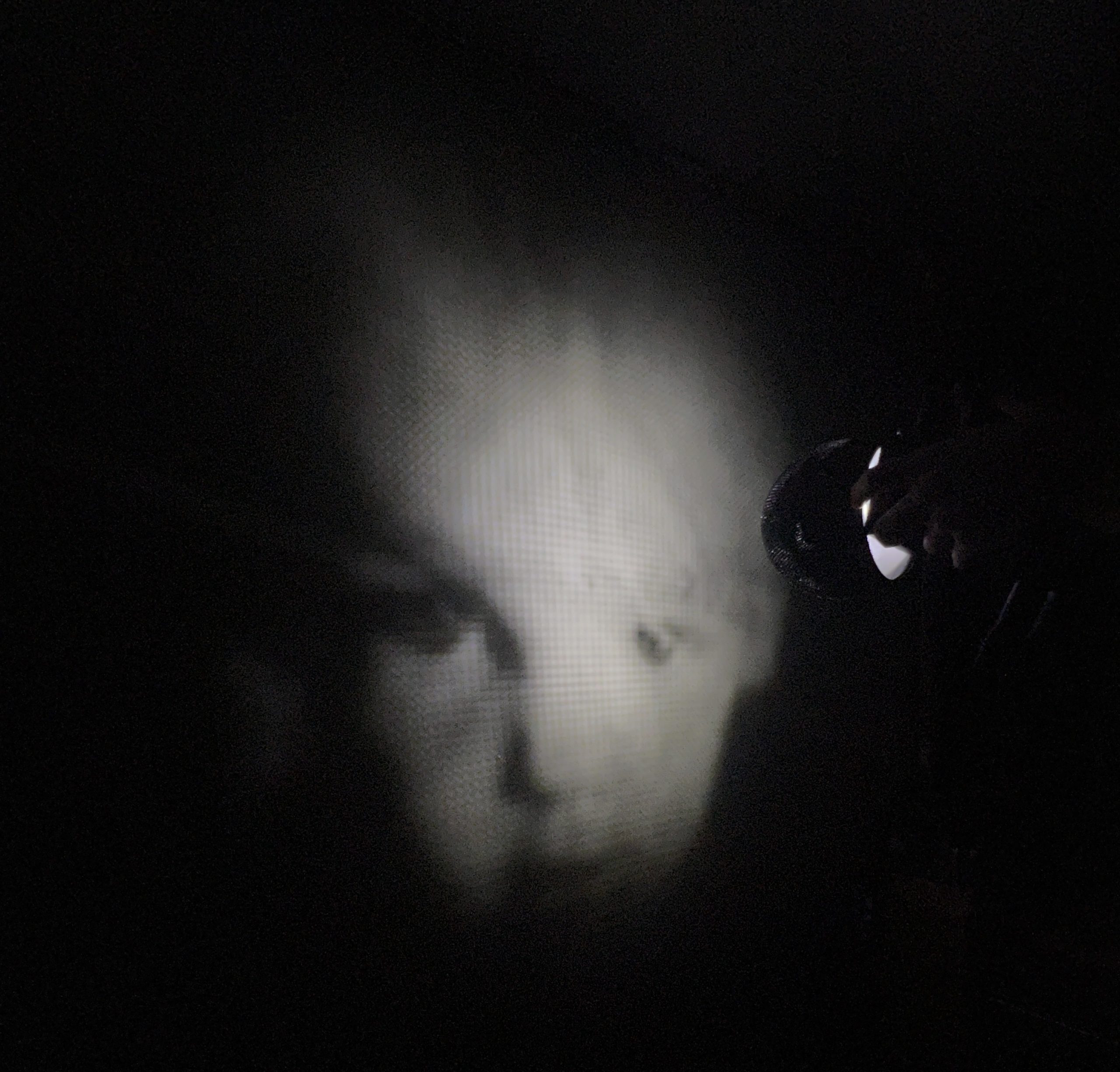
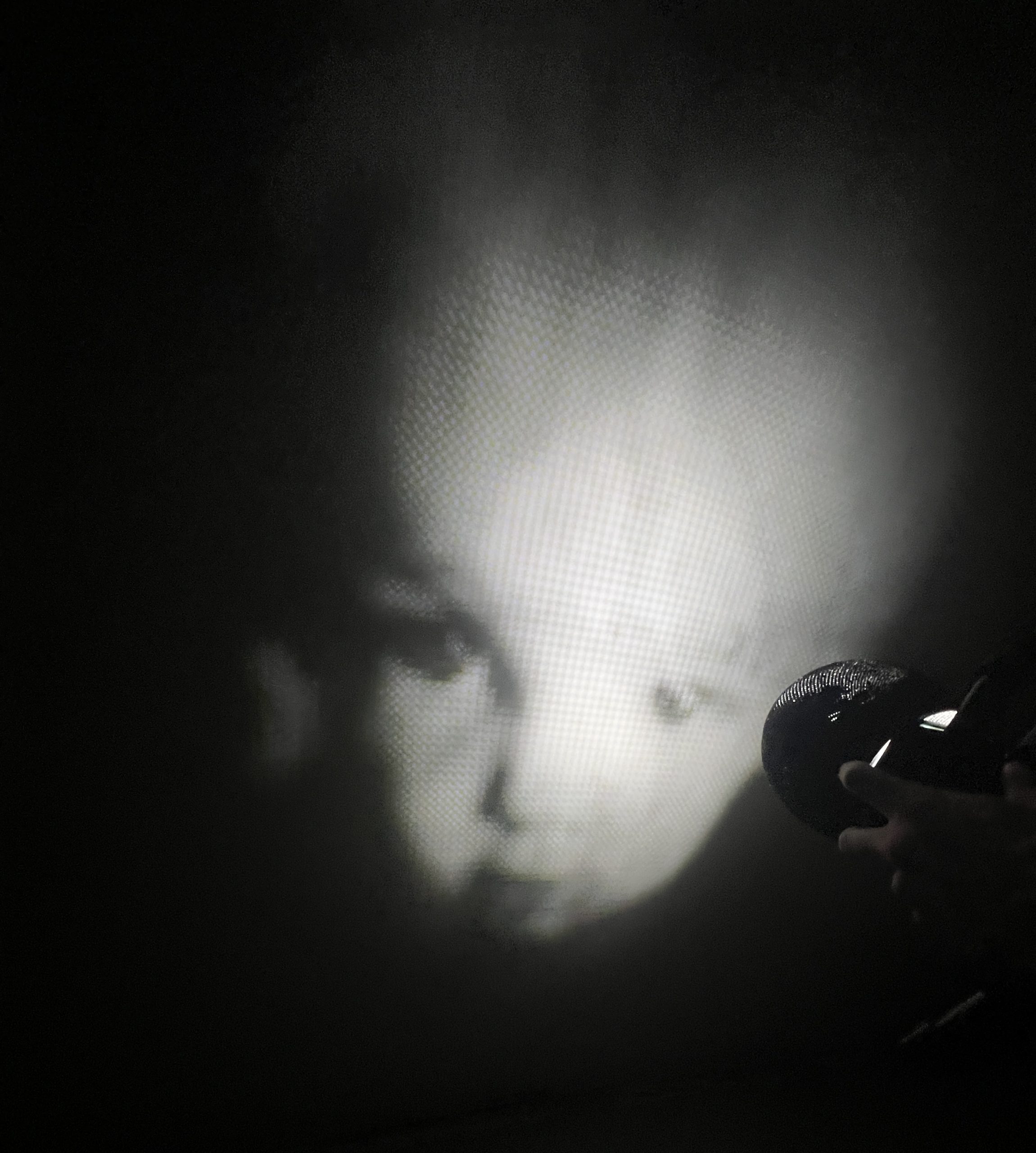
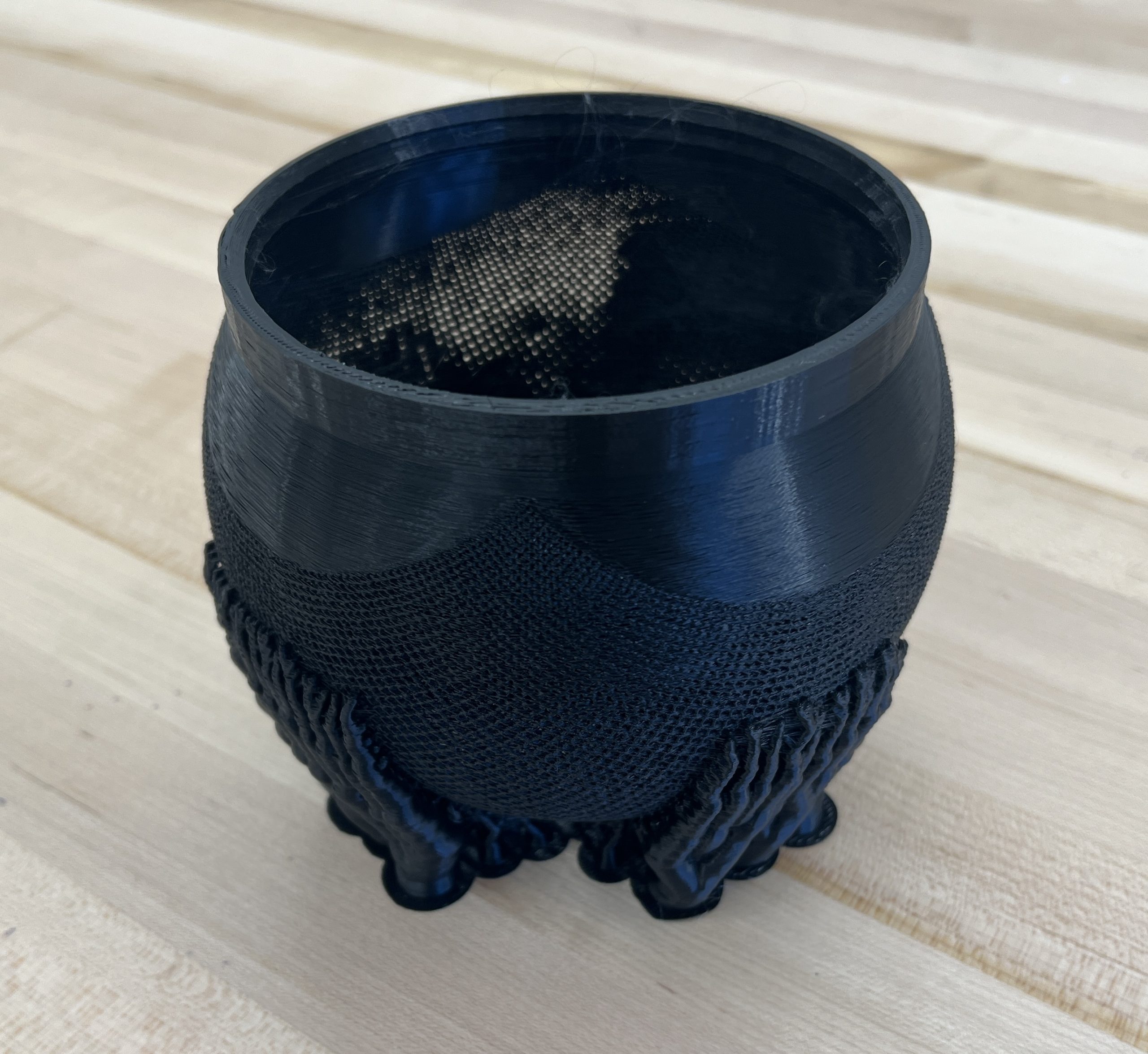
Pretty simple yet cool stuff, I’ve tried both transparent & white filament. And a very well done website helps make the STLs.
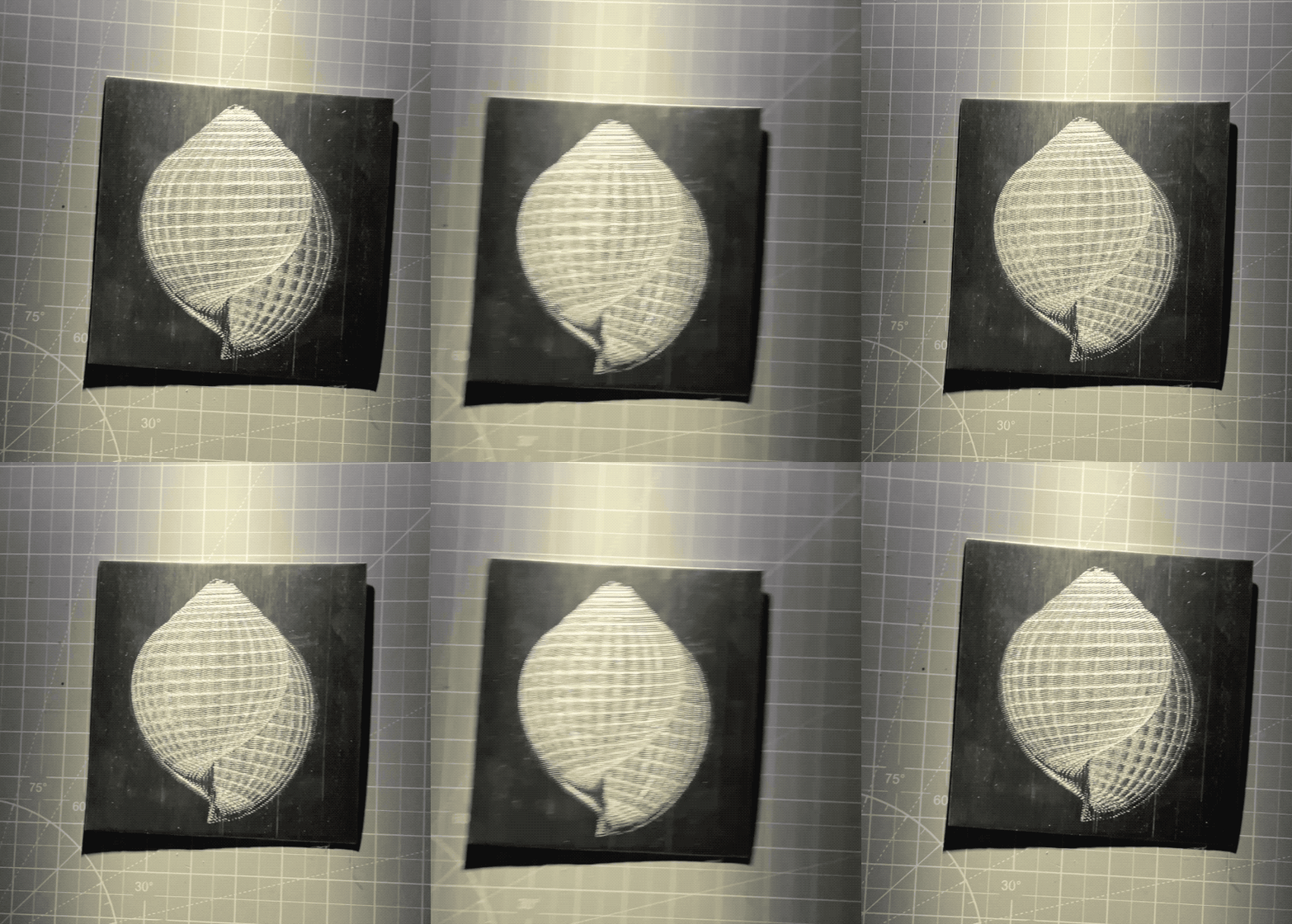
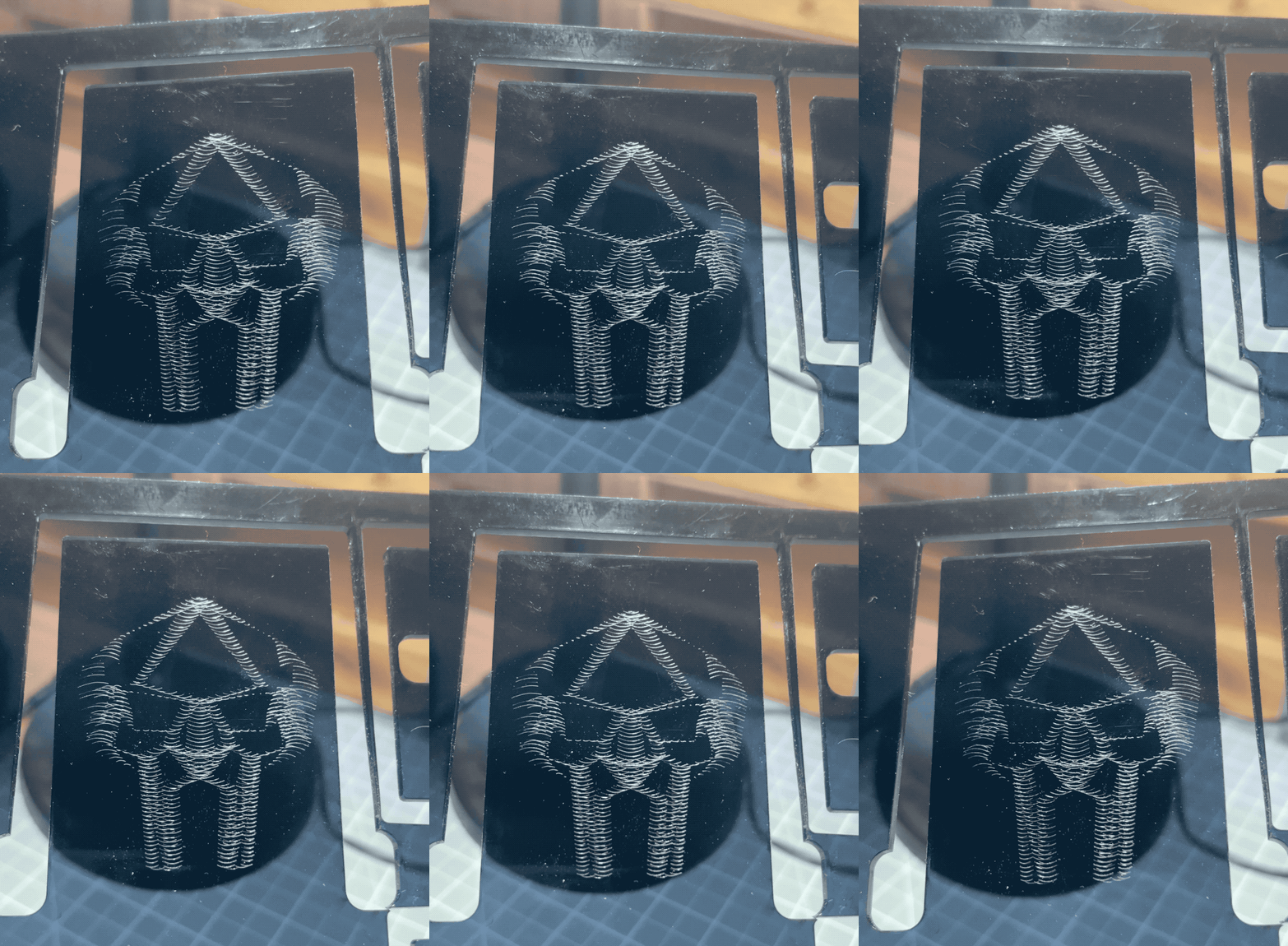
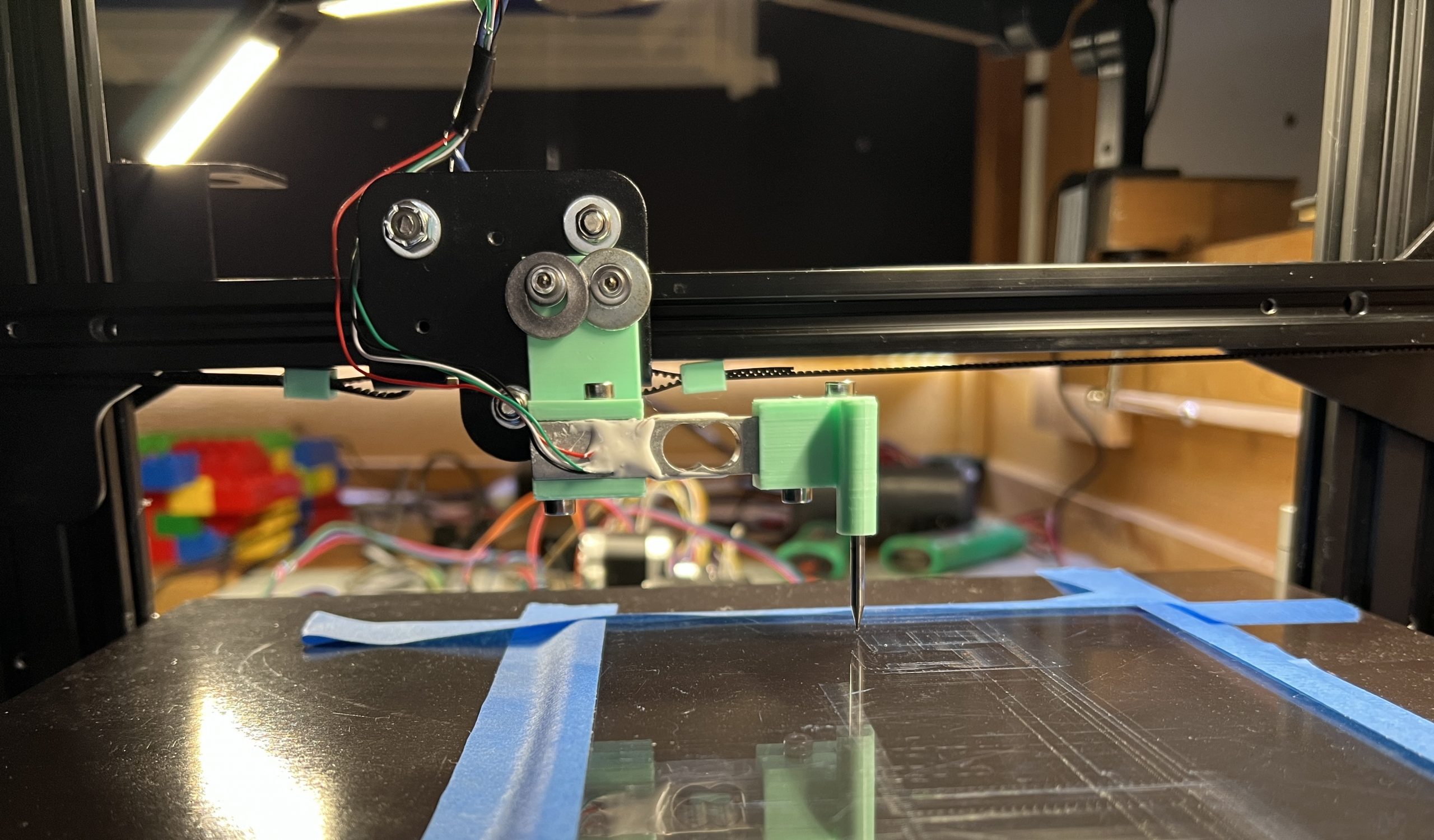
lots of trials, lots of refinements, 4 days on the etcher bed. The load cell addition makes for the most precise etching.
Without light
with light
It feels different in person. What’s funny with this specular stuff, is how enthralled I was with it when I didn’t understand how it works. But now I kind of don’t see what the big deal is. I have to remind myself it’s really cool to keep forging ahead.
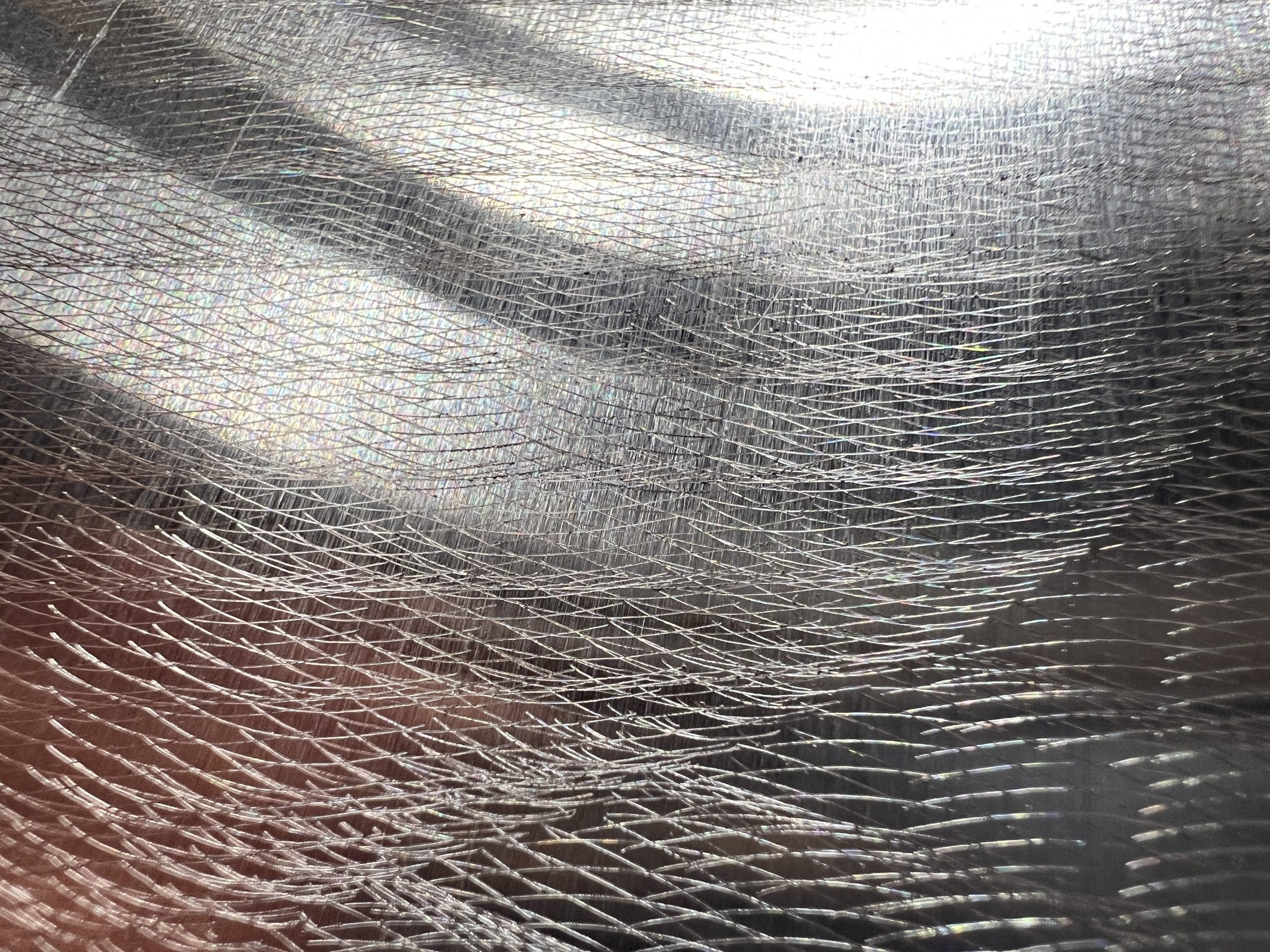
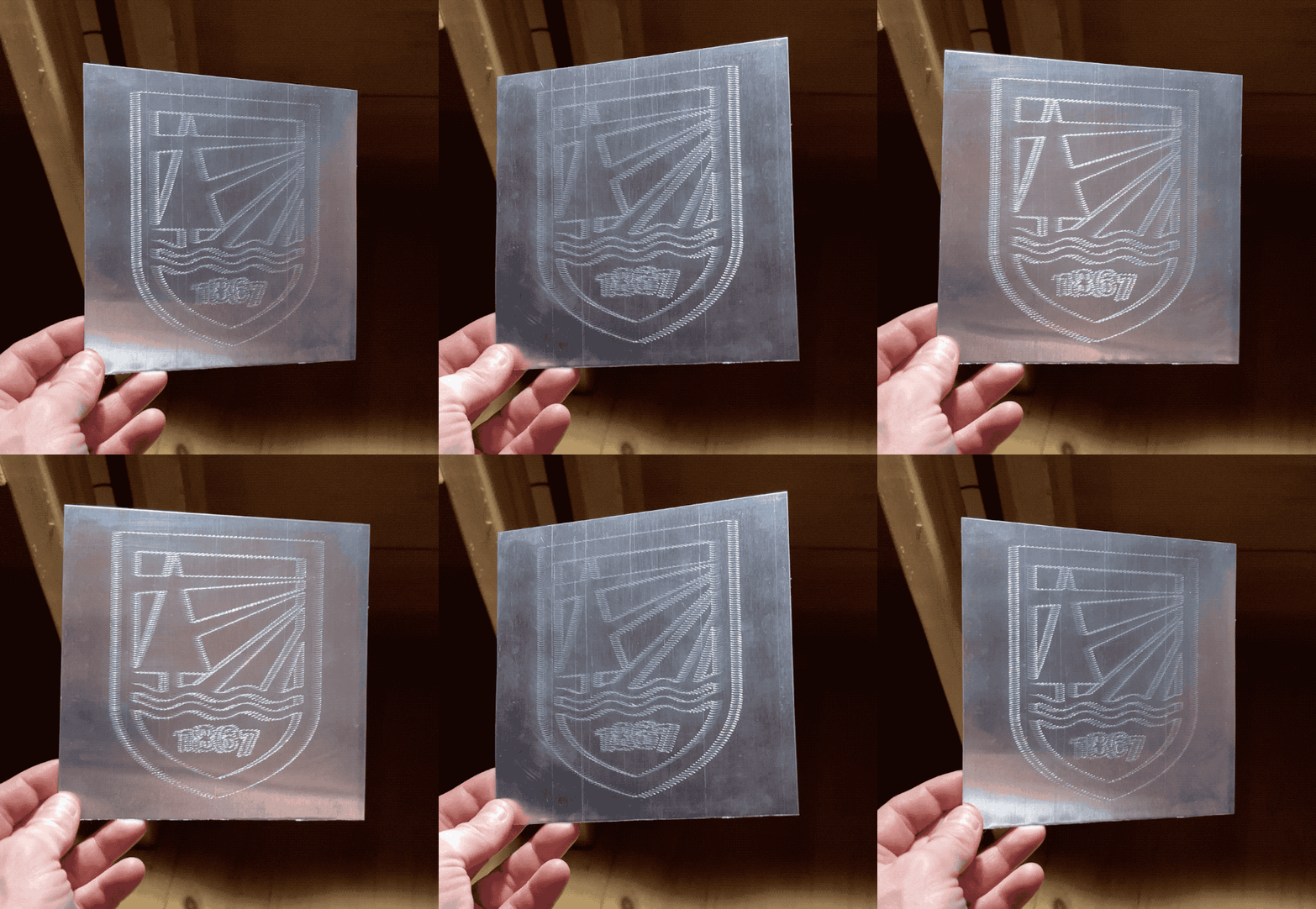
Since I can control pressure, I’m trying all sort of materials and pressures. I’m literally throwing under the tip any garbage that looks like it could yield a glint, and getting good surprises. I’m of course trying the classics like acrylic and aluminum with various pressures, again to find the best parameters.
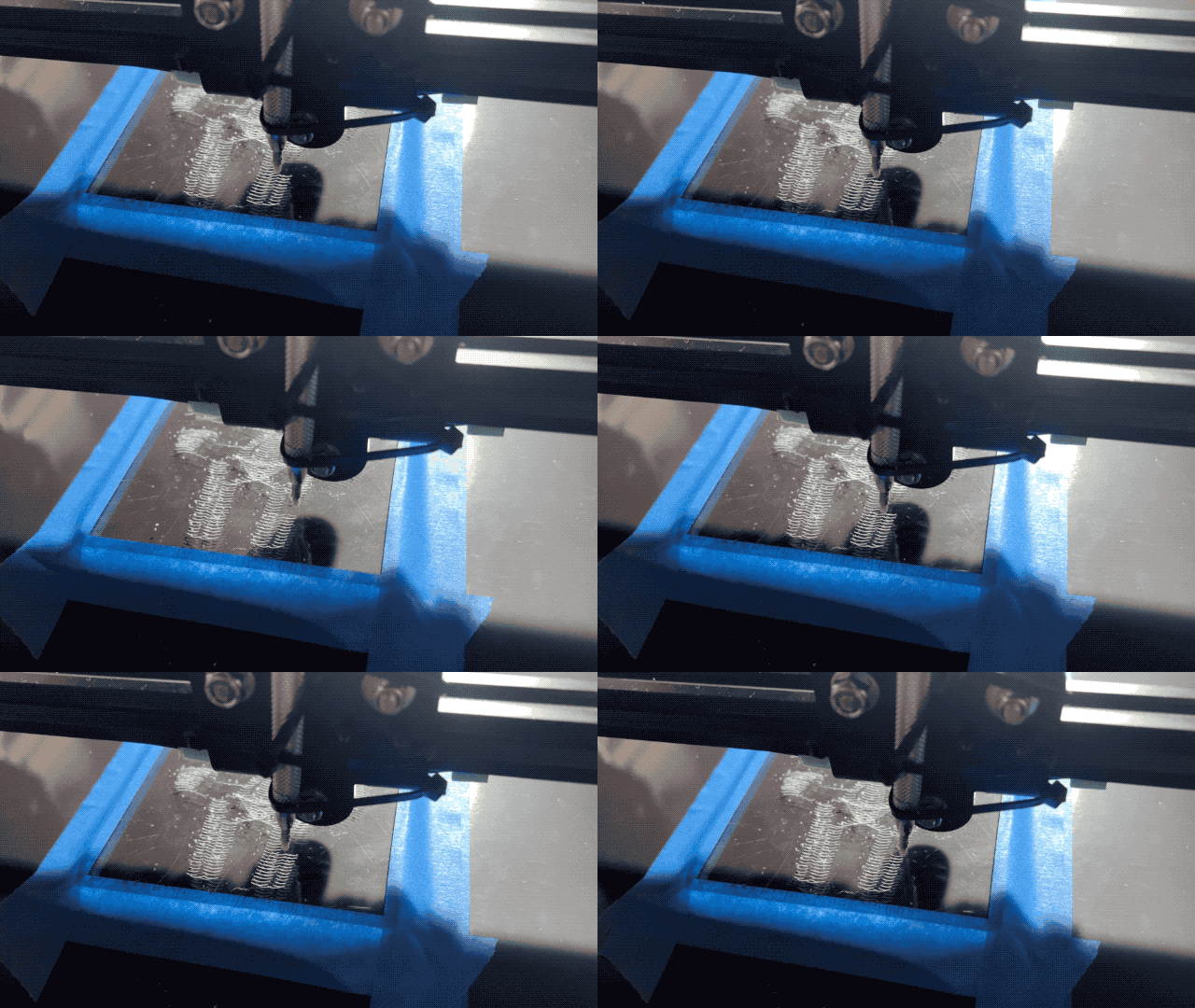
I’ve had mitigated results with my specular holographs, I ran several trials, and only one was really worthy so far. I’ve learned a few lessons, but I’ve had enough success that I want to spend time and resources refining. The way the tip action worked so far was very blunt, I rigged a servo on a 3D printer which could instead have 2 steppers driving the pen up & down action. But that was an easier first step for my plotter stack. So the obvious thing to refine first is to replace the servo with the existing steppers, which is more of a programming challenge. And that part wasn’t too bad. What was much harder though, is how to move the tip so that it presses against the medium with defined and reproducible pressure. With the variations I can’t just “count steps”, and some media (acrylic) require very little pressure, unlike aluminum which was more forgiving. So I know I want to experiment with tip pressure, which means getting a load cell. And that on the other hand was a whole can of coding worms. I won’t go into the boring details, what matters is that it’s etching!
I have the tip go very carefully down until it reaches a pressure of 20g, and then it tries to maintain it while moving. Between the incessant taring, and the slow motions, it’s made everything a thousand times slower. I don’t care though, I can do other things while it works.
The machine makes really cool noises with all the extra stuff to find the right pressure. Simply keeping an ear out while doing other things has been a great tool to debug and improve algorithms.
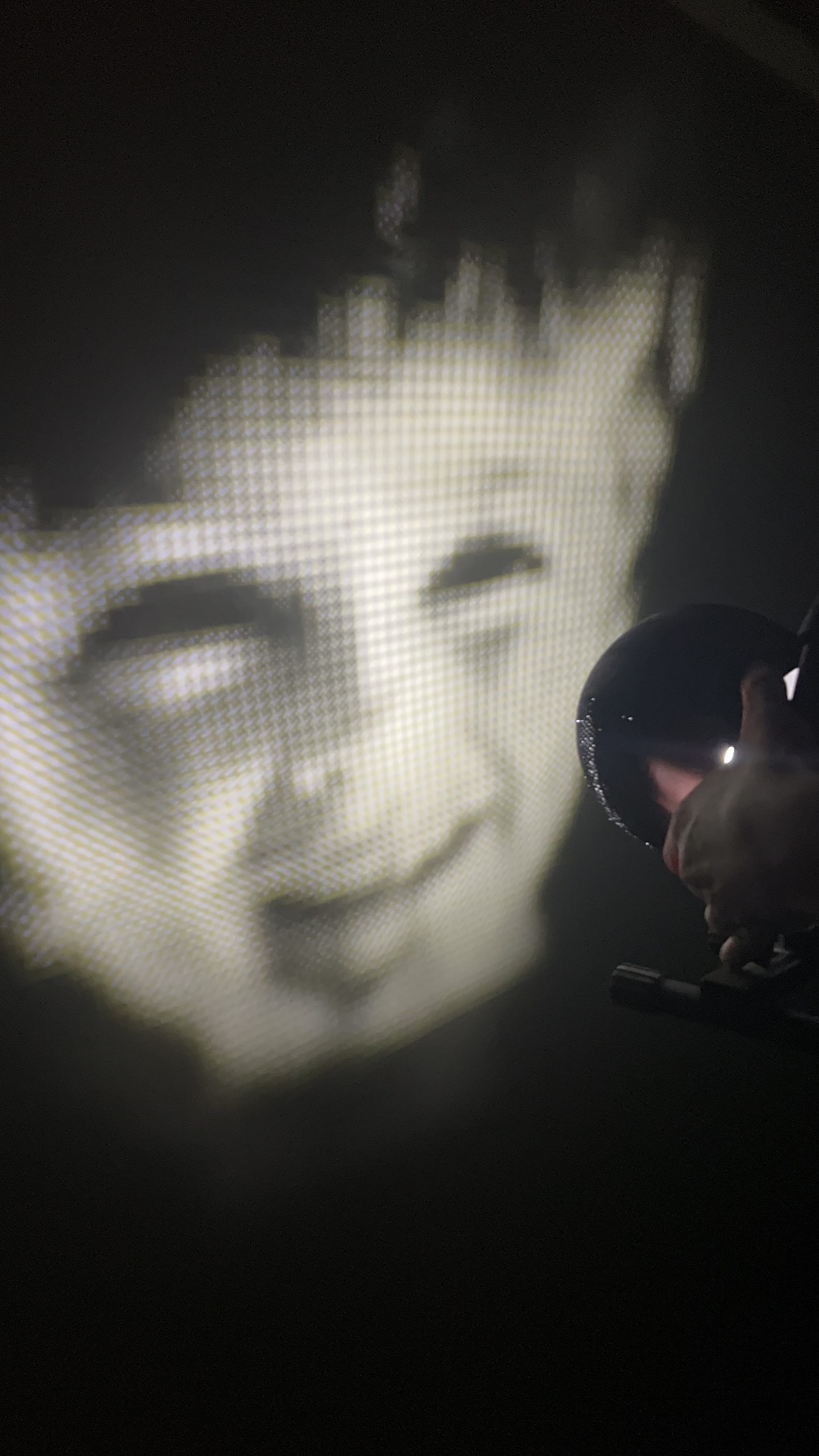
I watched Steve Mould’s video of Specular Holograms a while back, and it wasn’t until a cool student wanted to borrow my tabletop plotter to try it that I realized it was within reach. The plotter approach didn’t work, it really wasn’t designed to take the friction of a carbide tip etching surfaces. But its software stack is easily portable to anything with 2 stepper motors and a “tip” based action. So I thought it’d be a cool Christmas project to turn an old Creality 3D printer into something capable of etching specular designs.
And well, the results are mitigated so far, but I’m getting somewhere with a moving glint effect.
I need to tune the machine to barely touch the medium, and figure out model creation. Moving a tip is easy these days, unsurprisingly though there are a lot more intricacies to uncover to get good results.
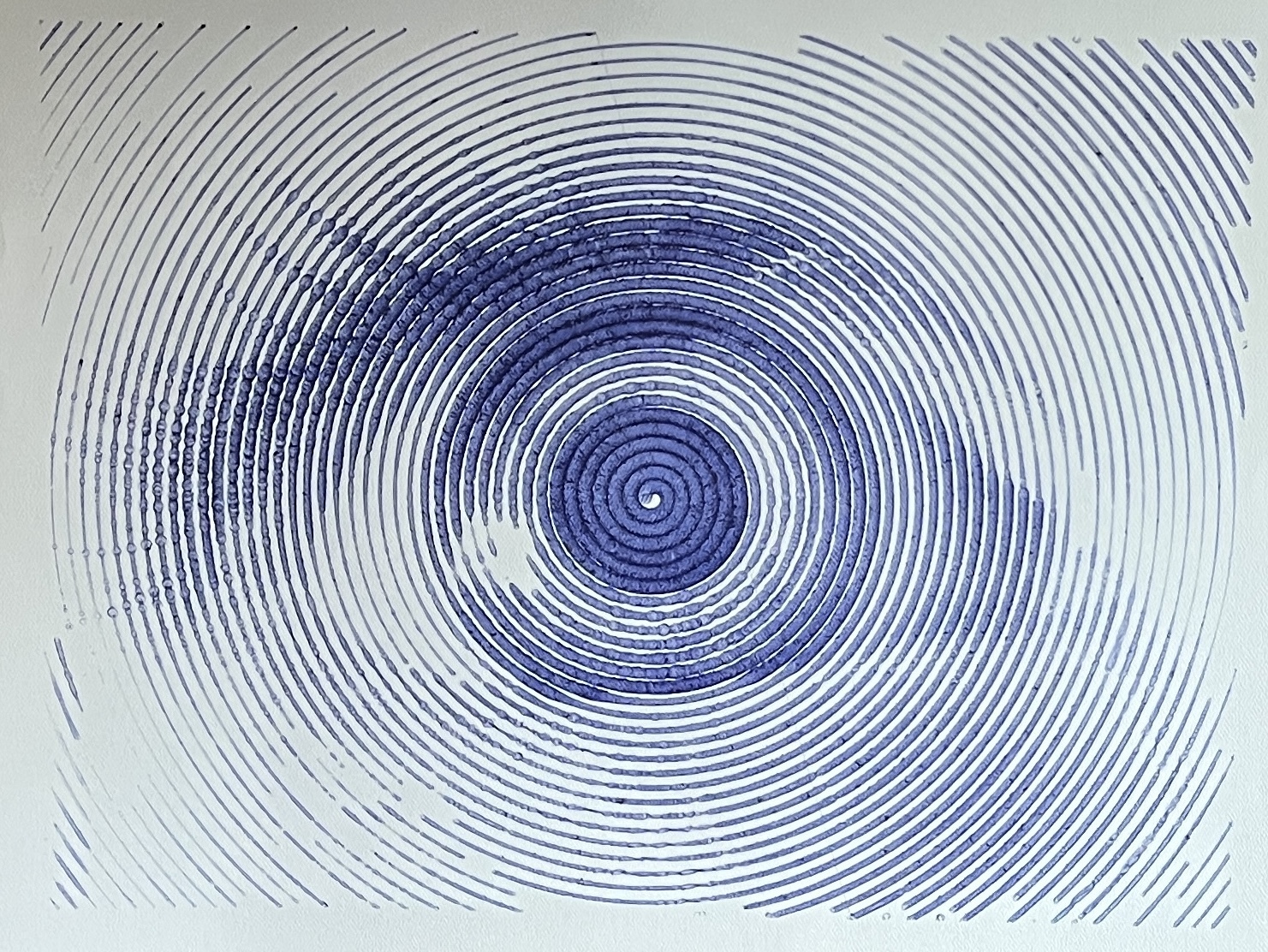
I tried for years, it wasn’t meant for plotters so I had to figure out a way to make it work. Lara‘s usual incredible work. UV ink is definitely the medium for it.
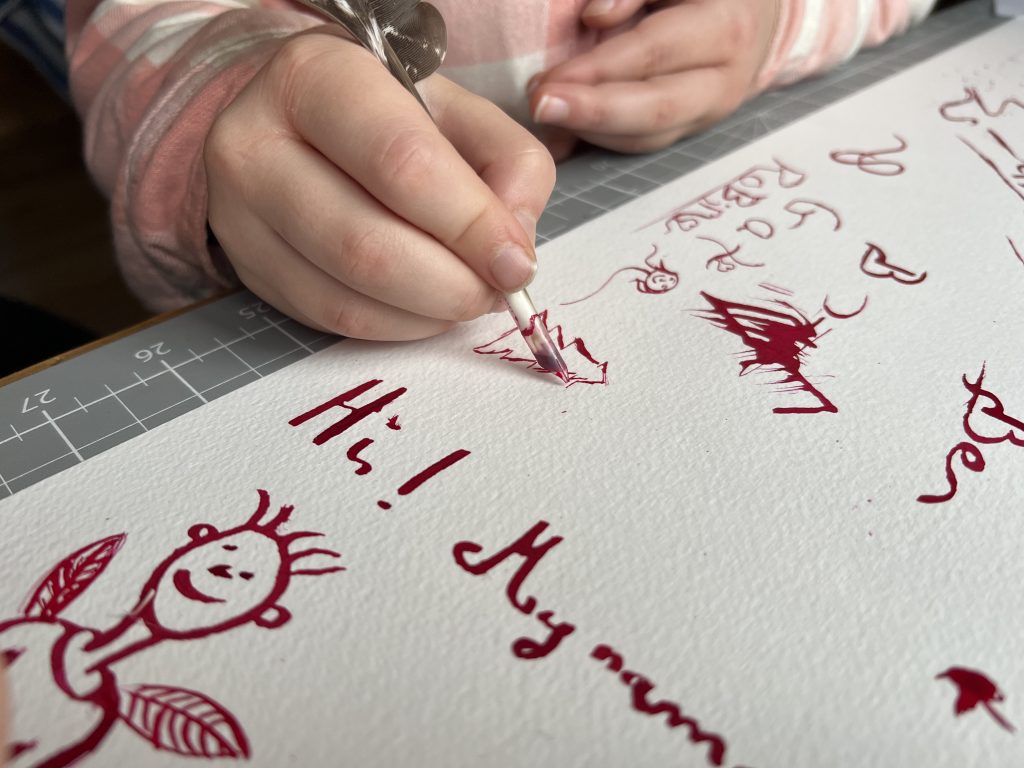
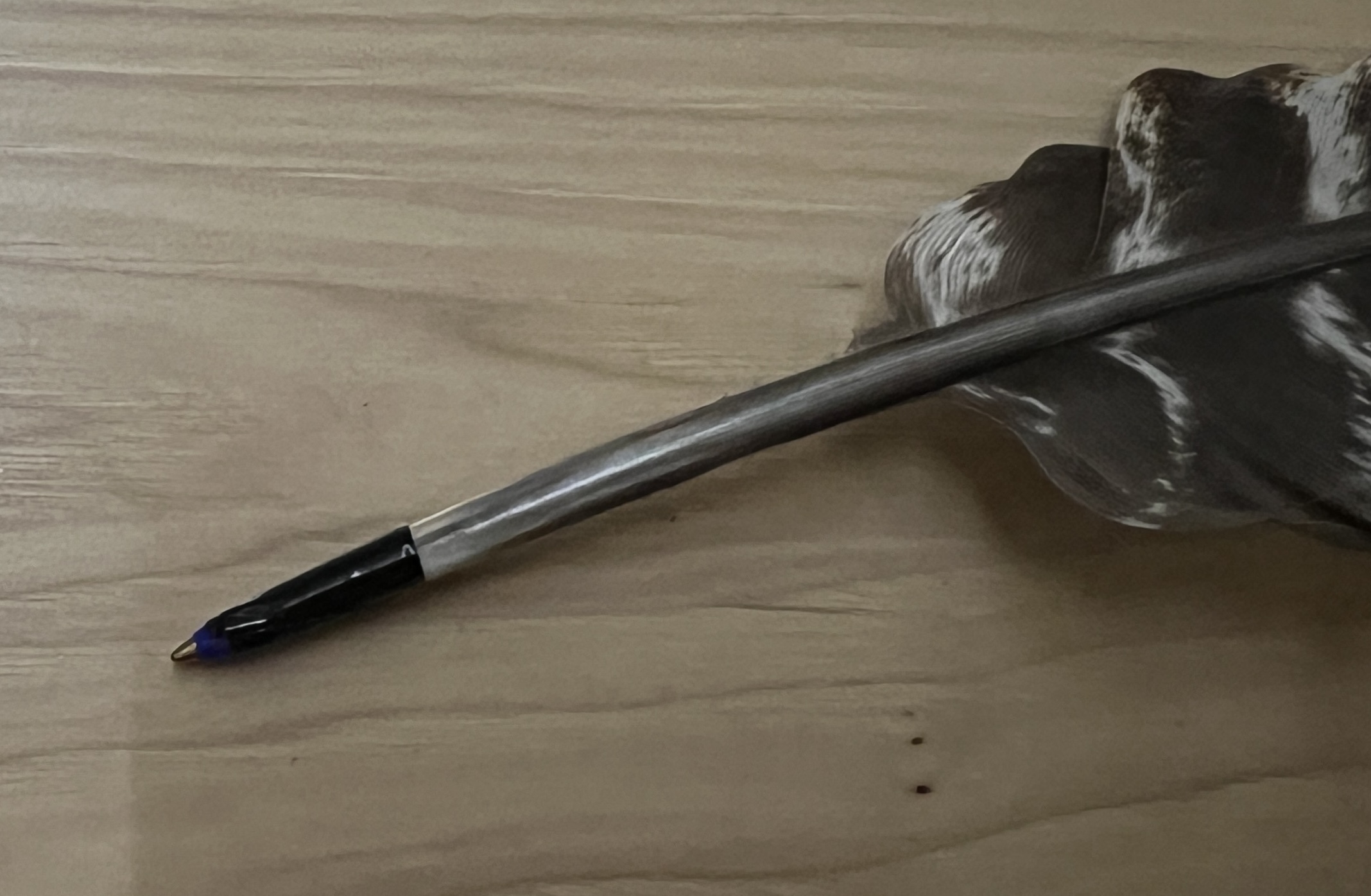
And by this I mean it works as well as any dip pen I’ve ever played with, which is to say not great (but it’s fun at least).
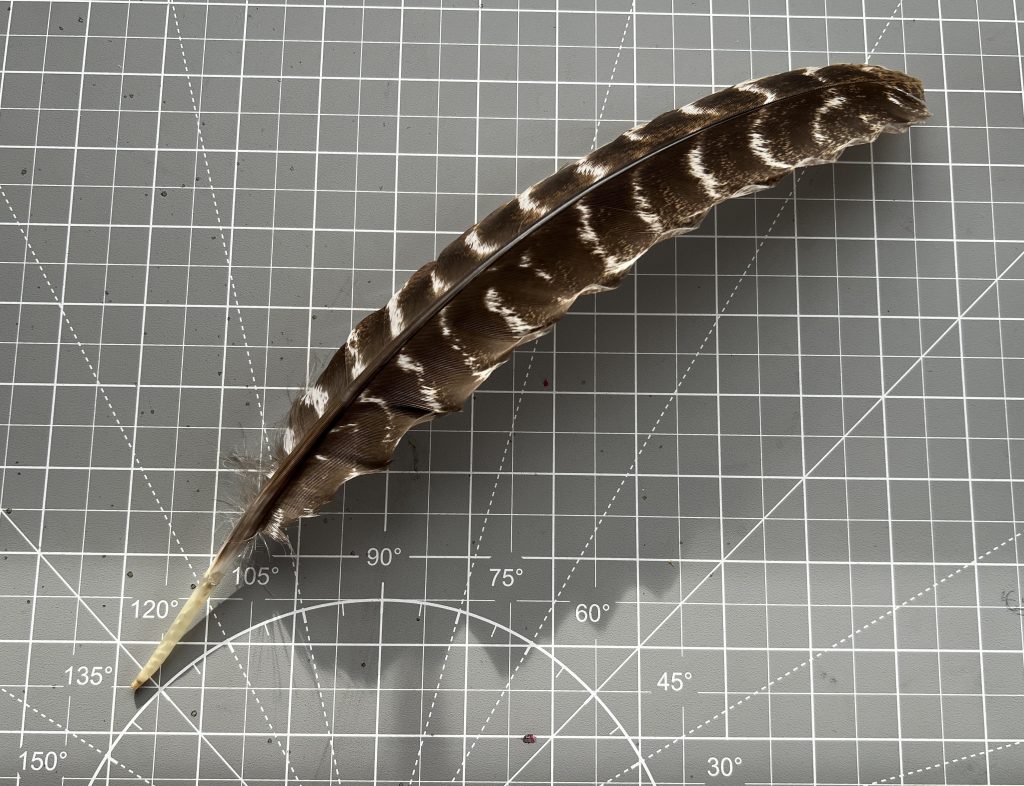
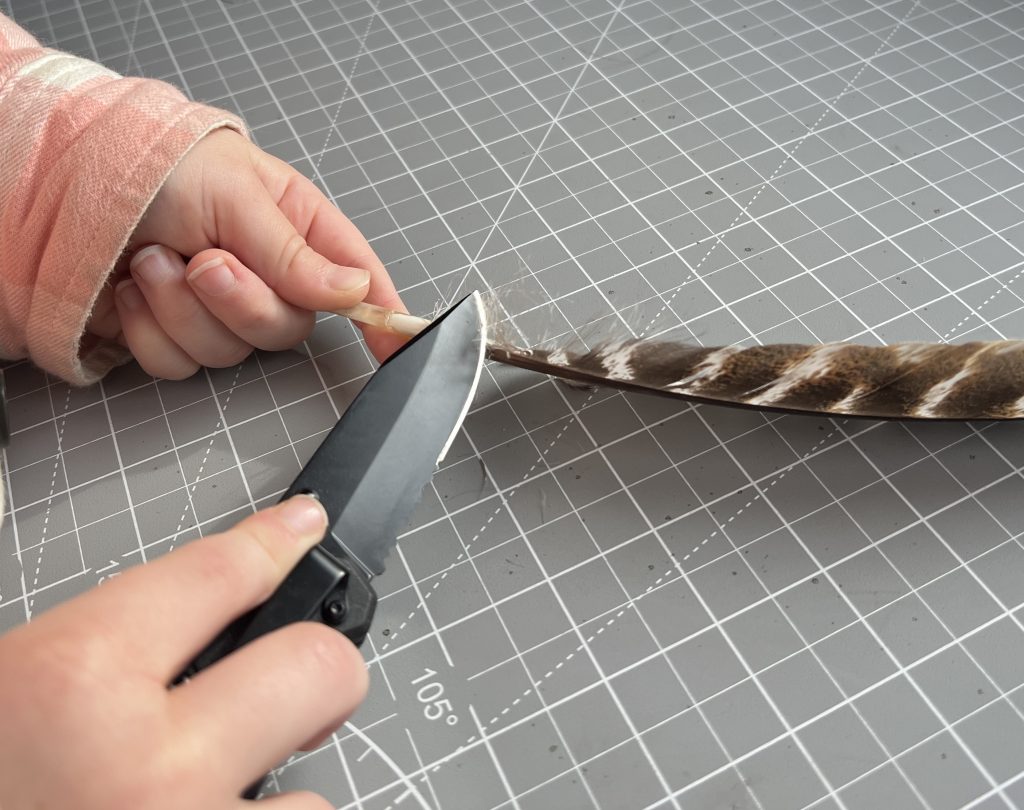
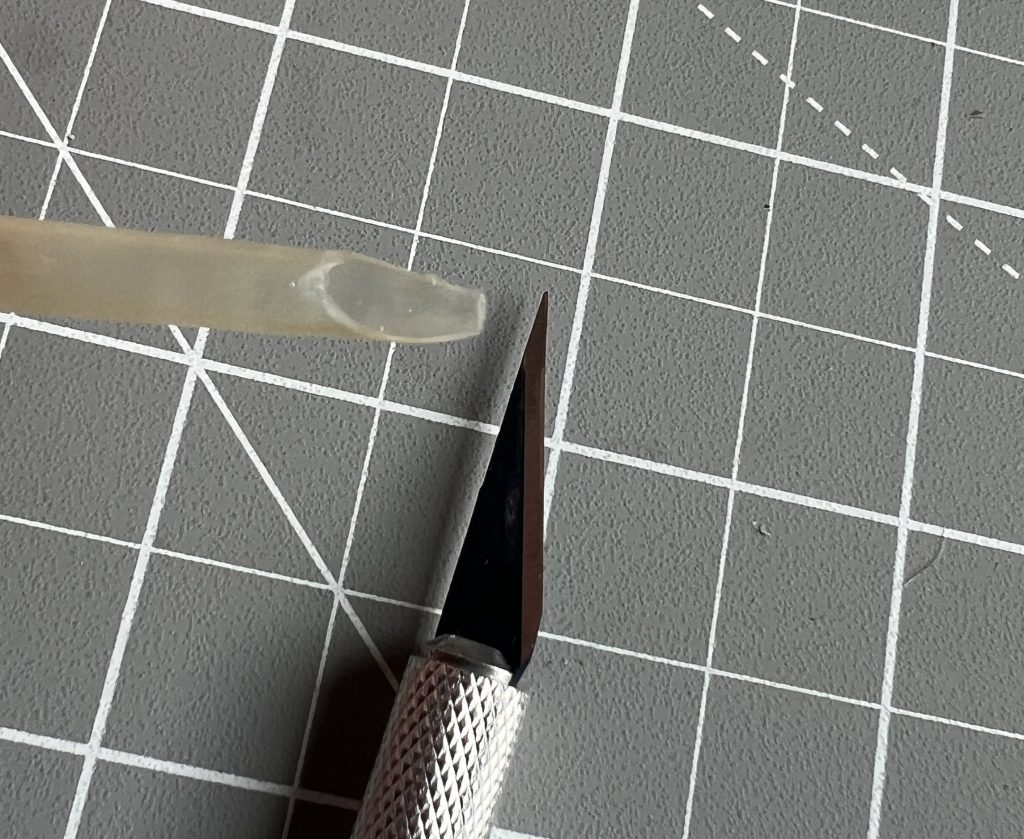
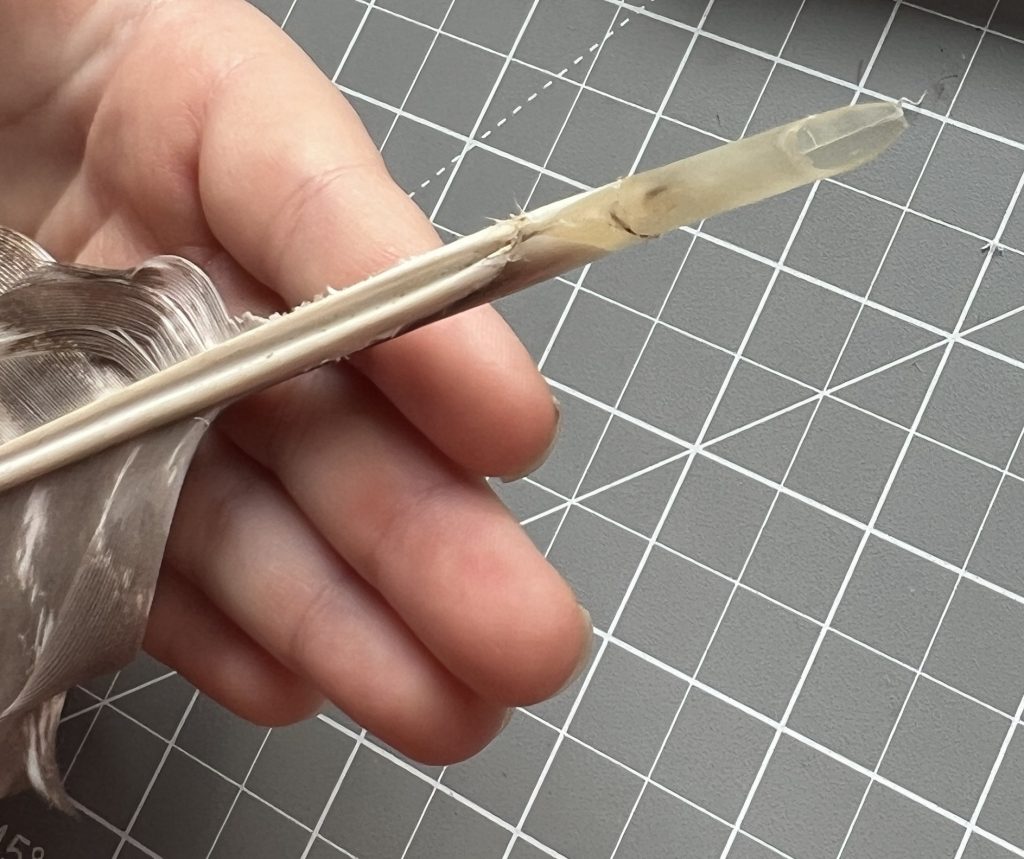
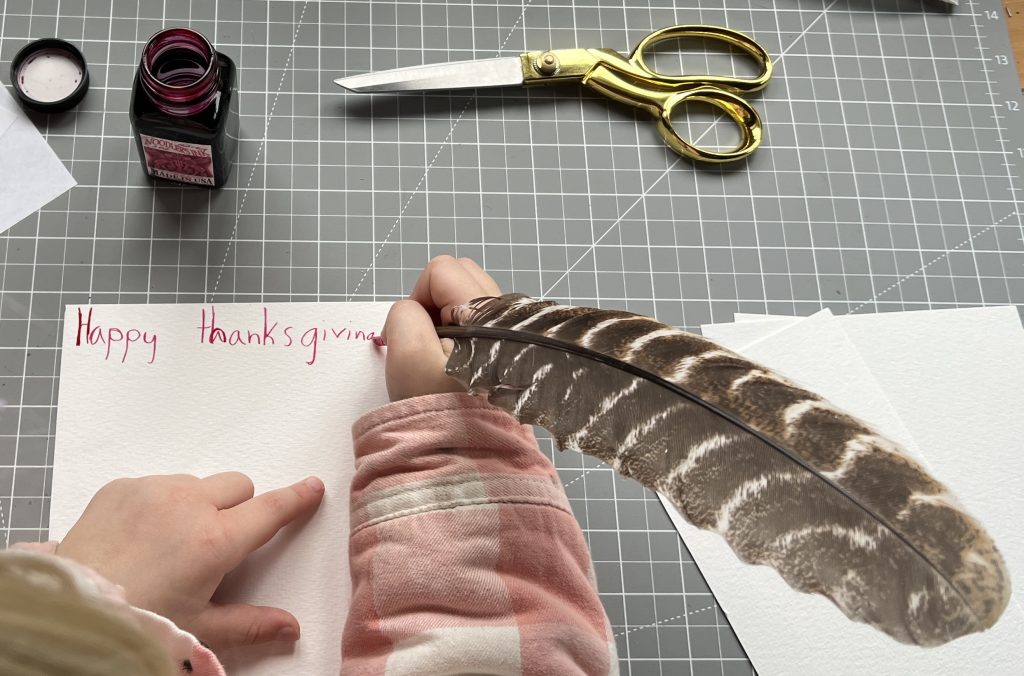
Turns out most ballpoint pens’ tip & ink reservoir fit perfectly inside a turkey feather. So the kids will be able to rock their turkey pen at school.
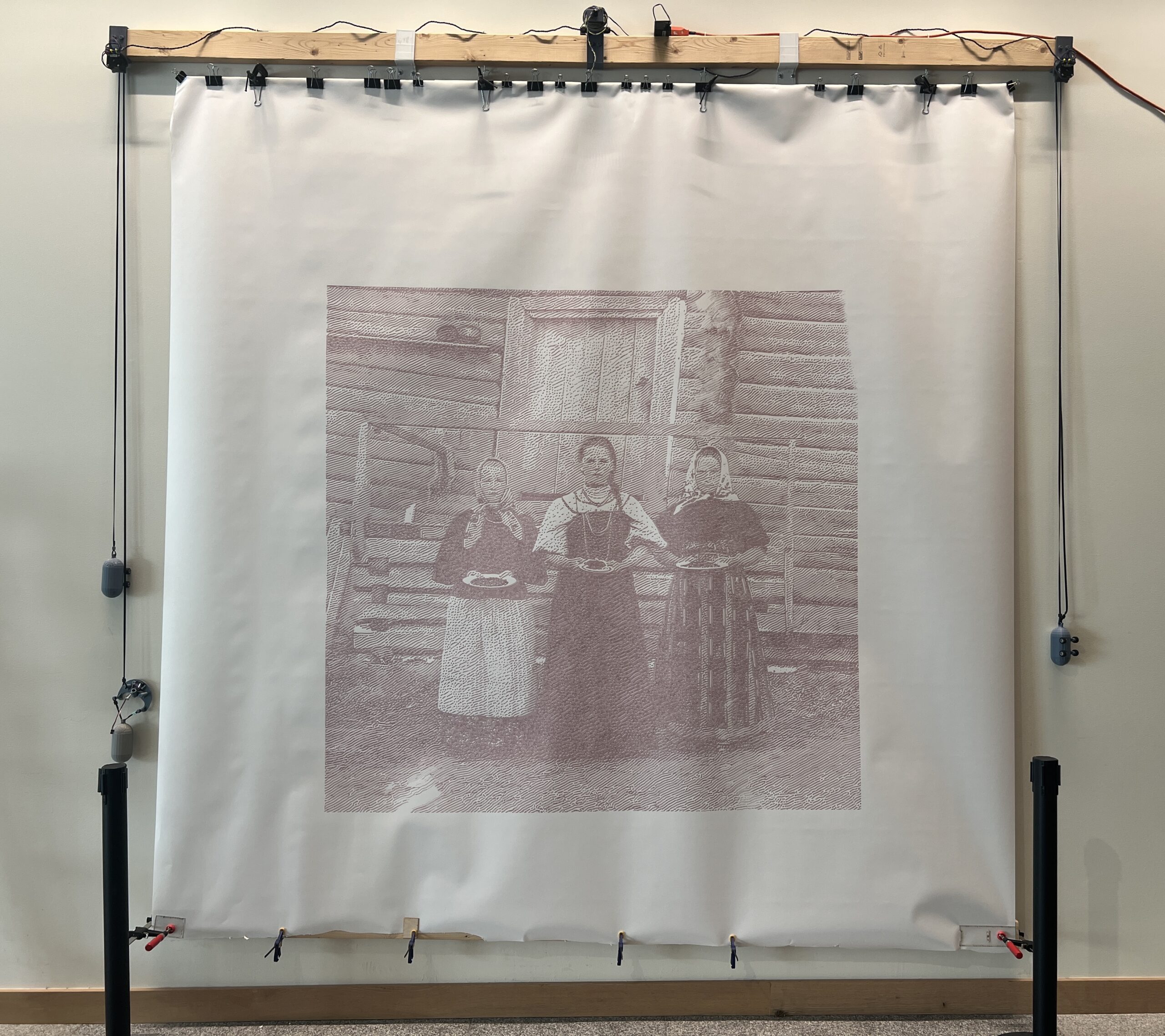
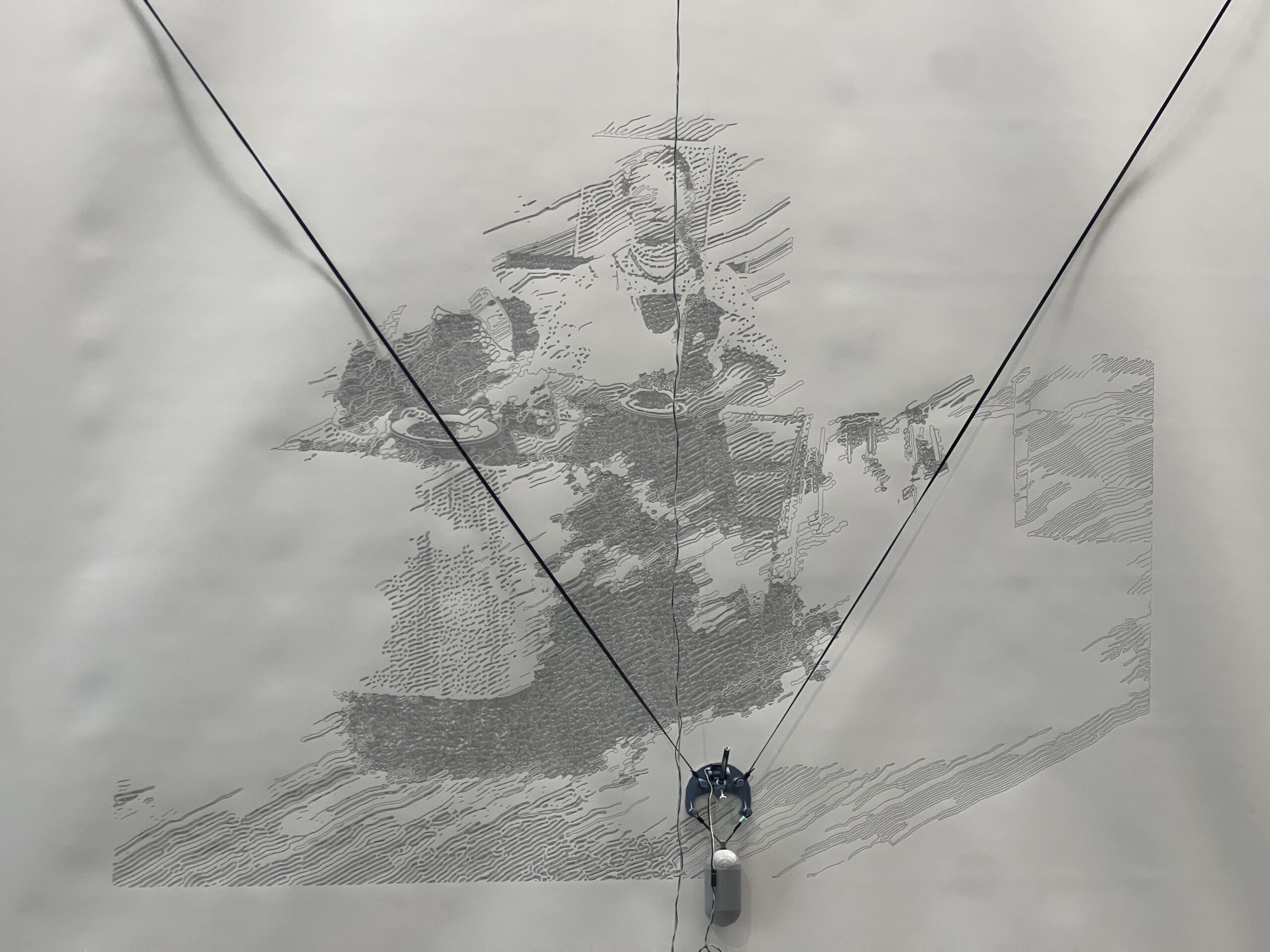
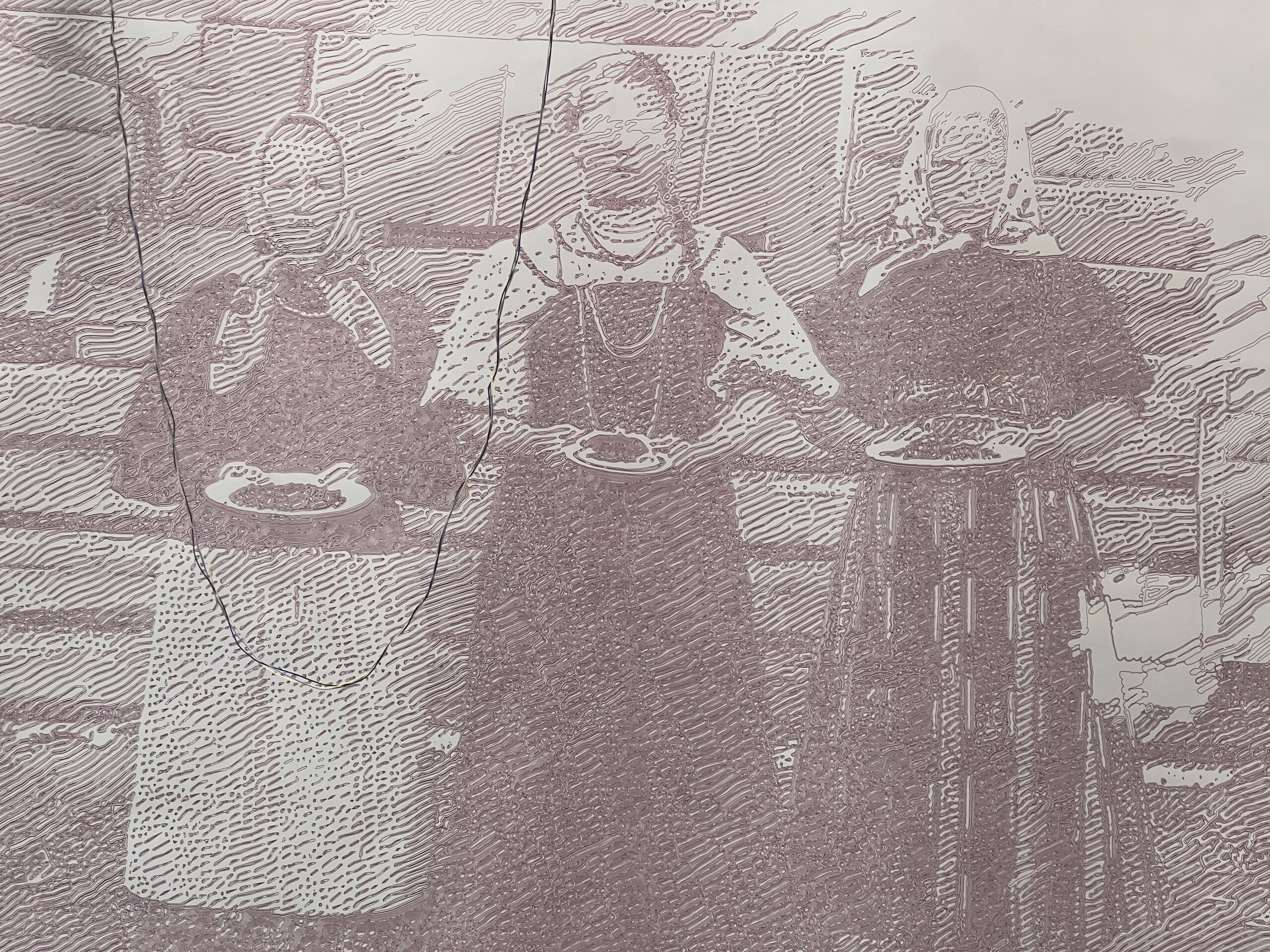
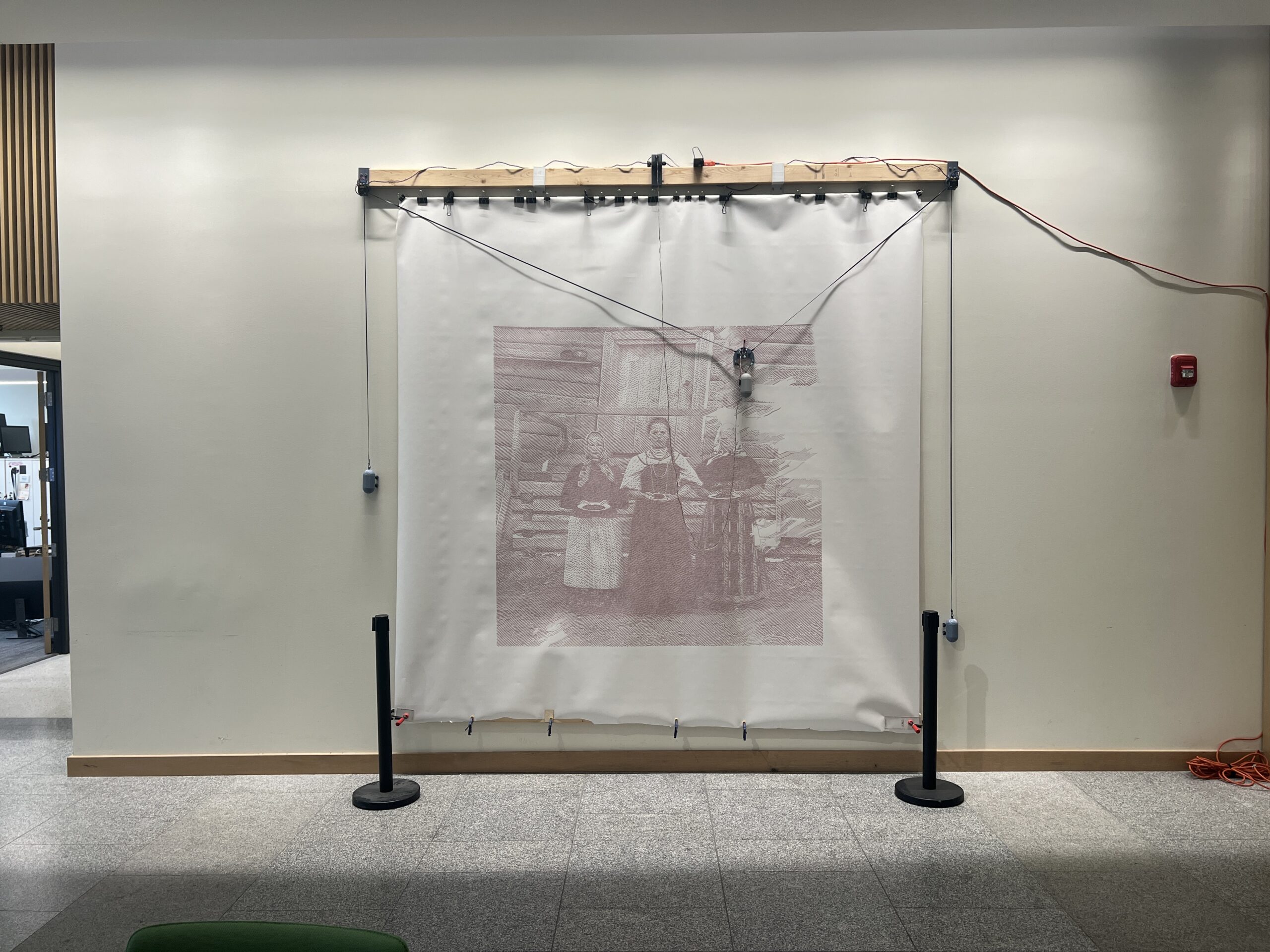
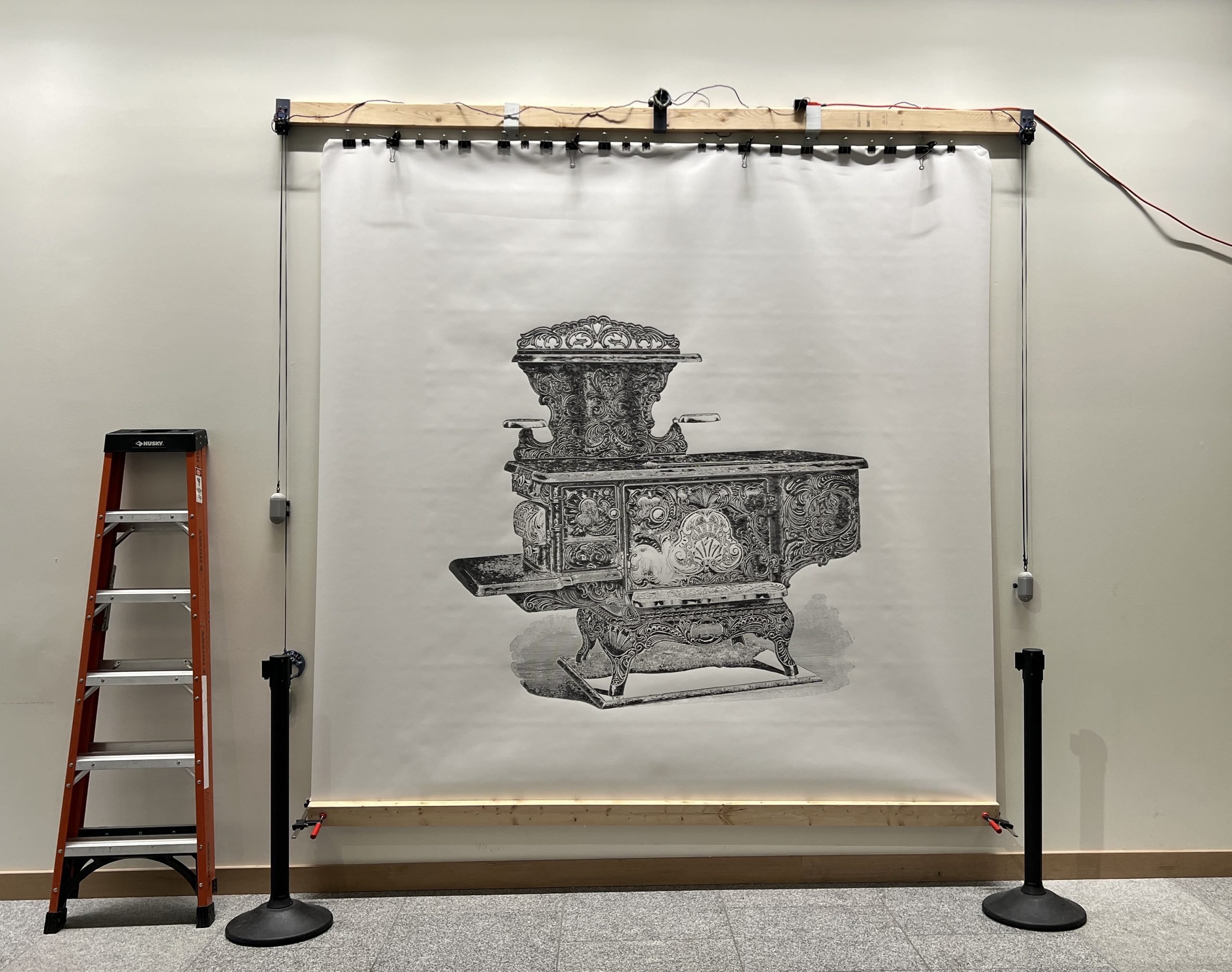
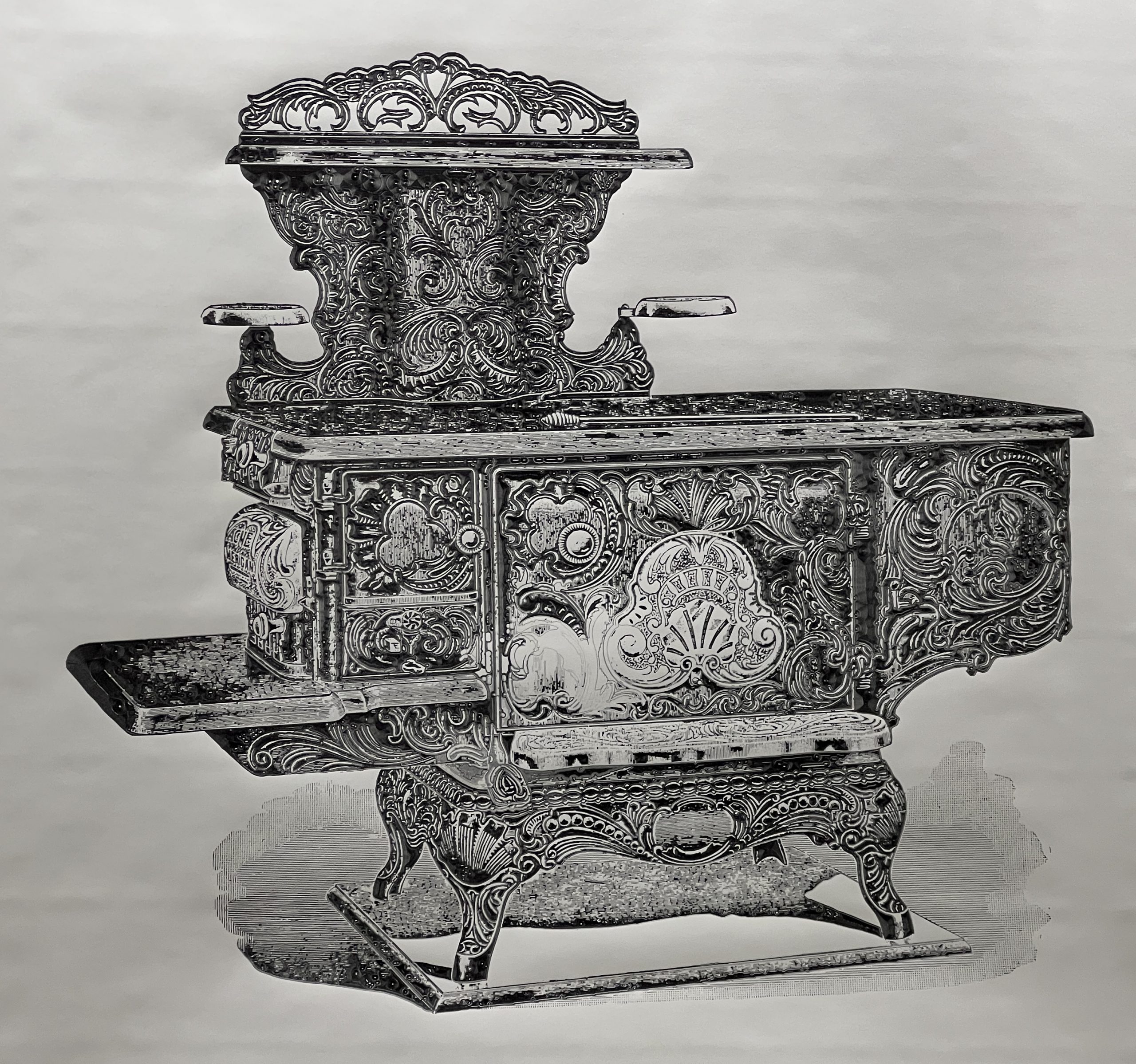
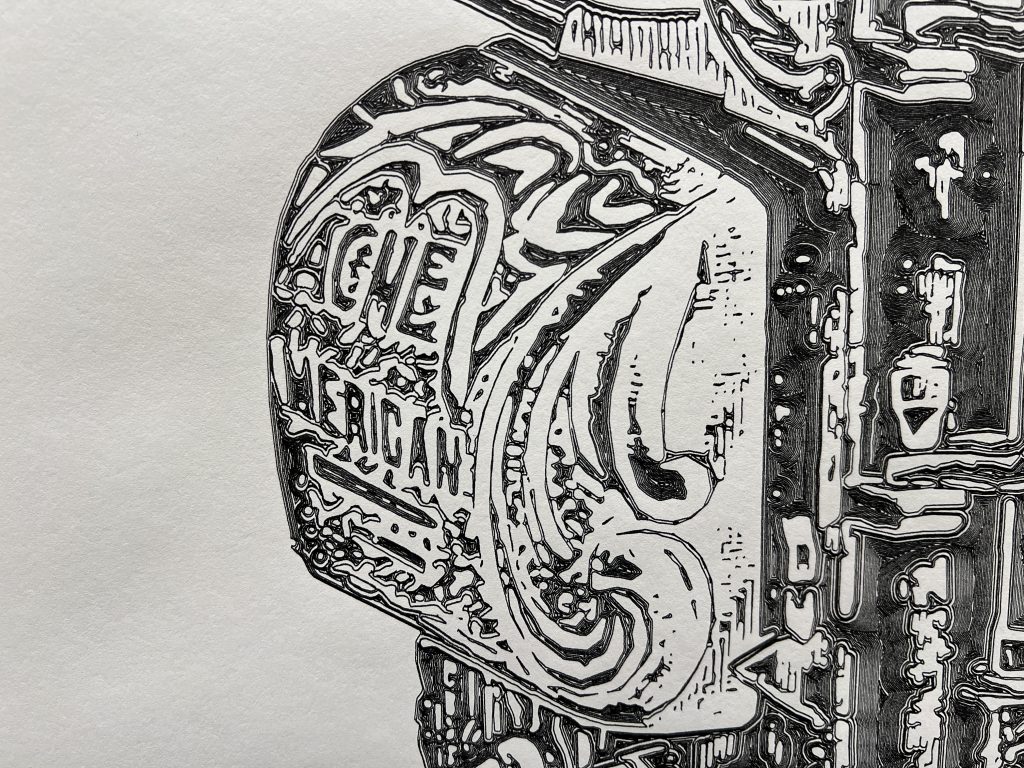
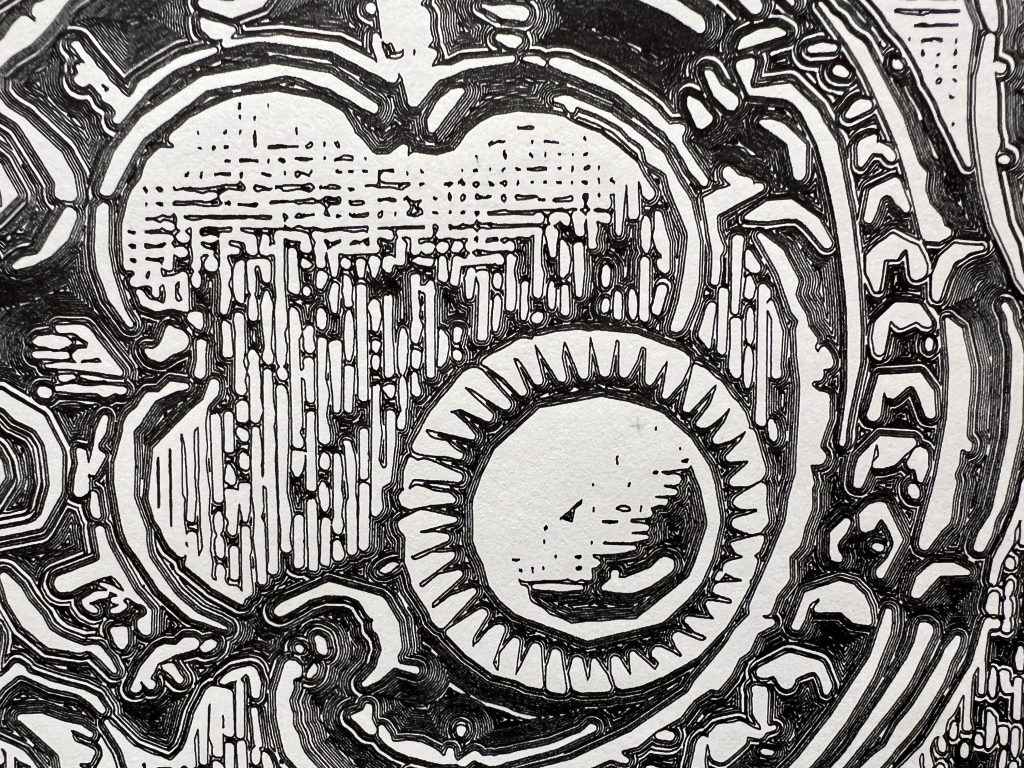
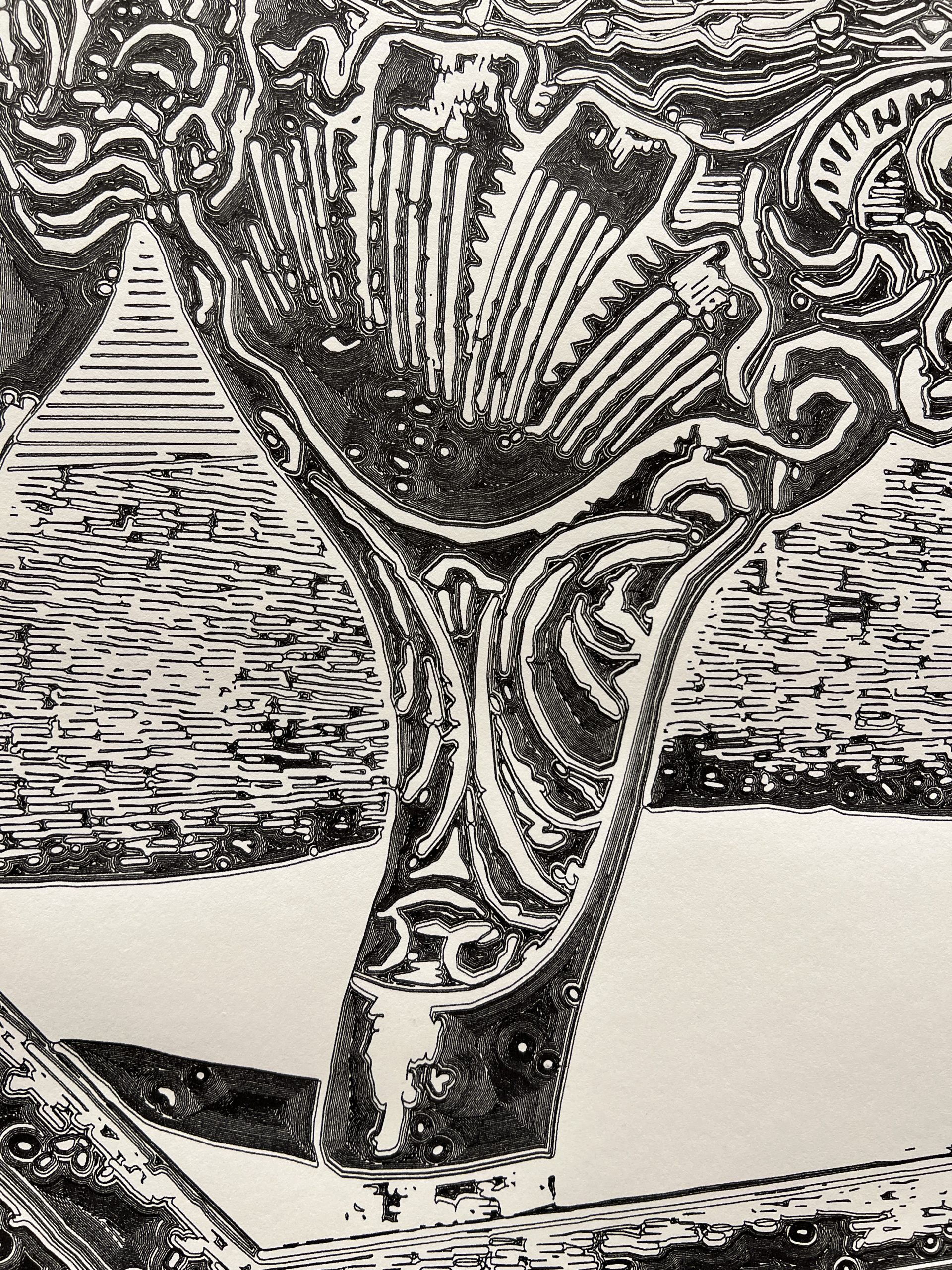
I almost didn’t run this one, it ended up being my magnum opus. It took ~180 hours and 8 pens. Unfortunately, even though I have strict protocols for marking pens which aren’t full, I had it go over the week end with one that had been used before and ran blank for a bit. It’s ok, these monster plots come with imperfections.
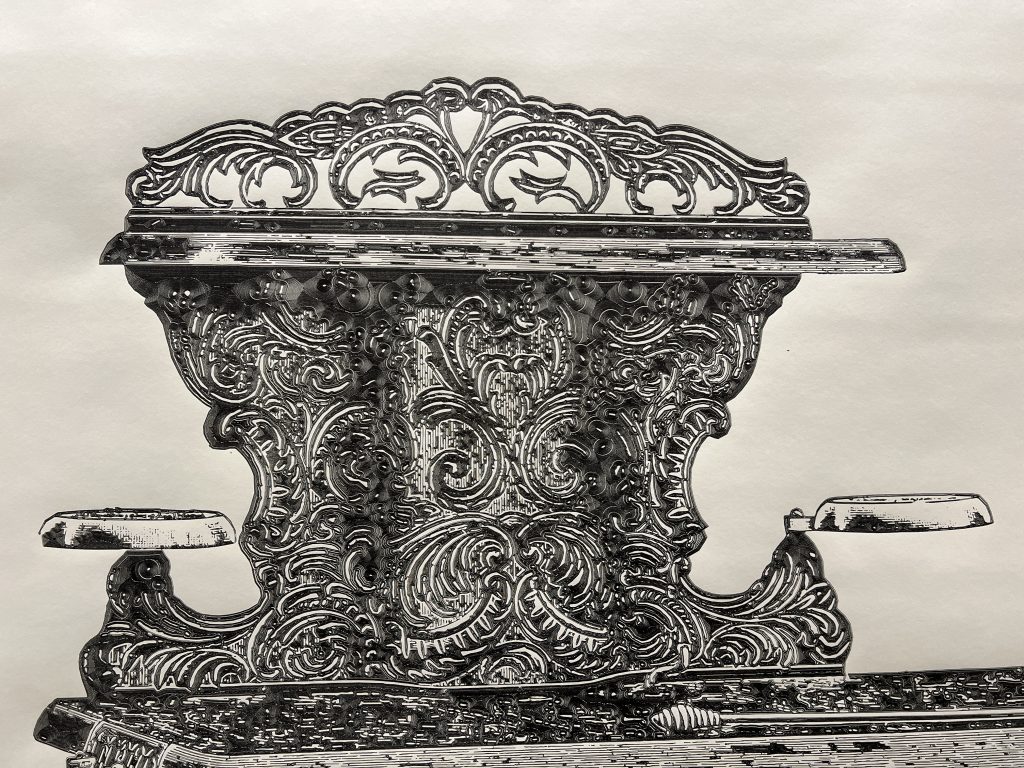
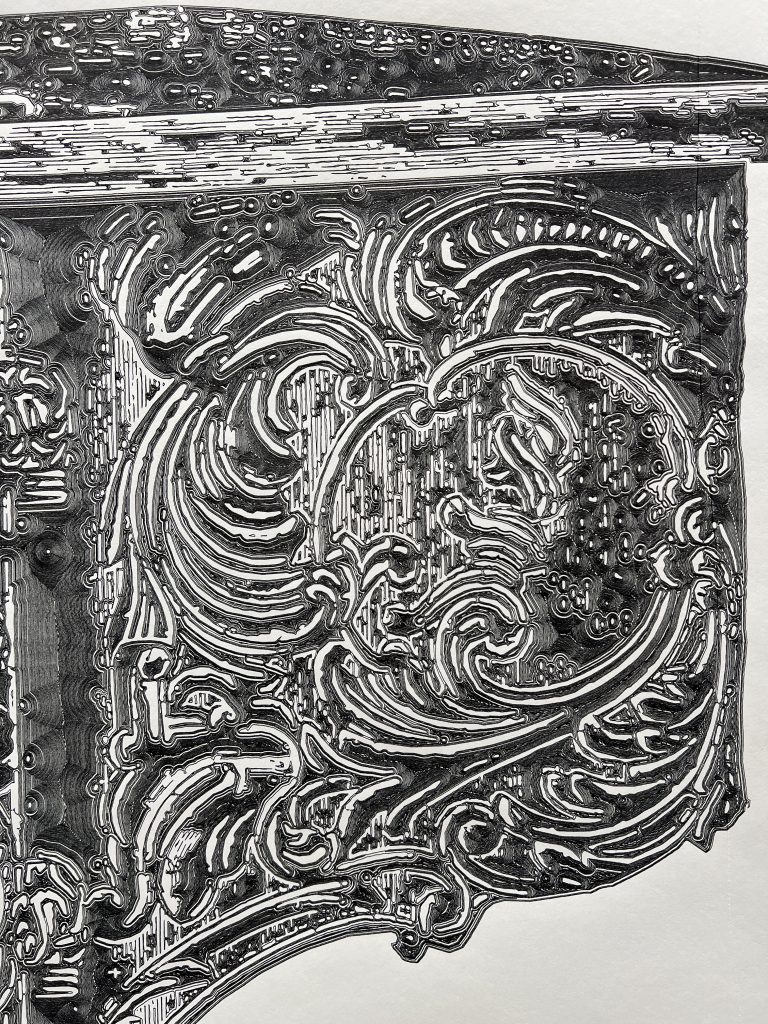
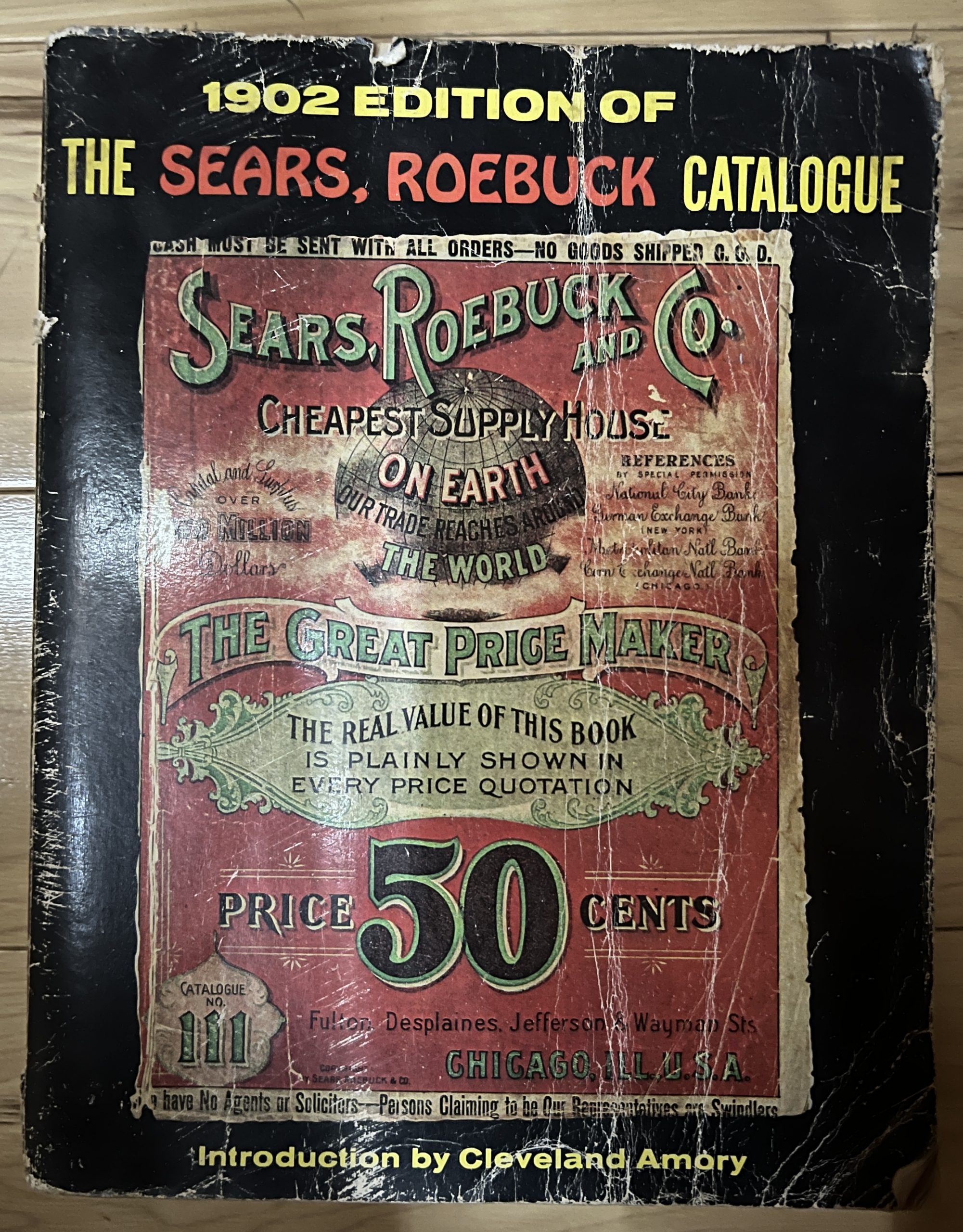
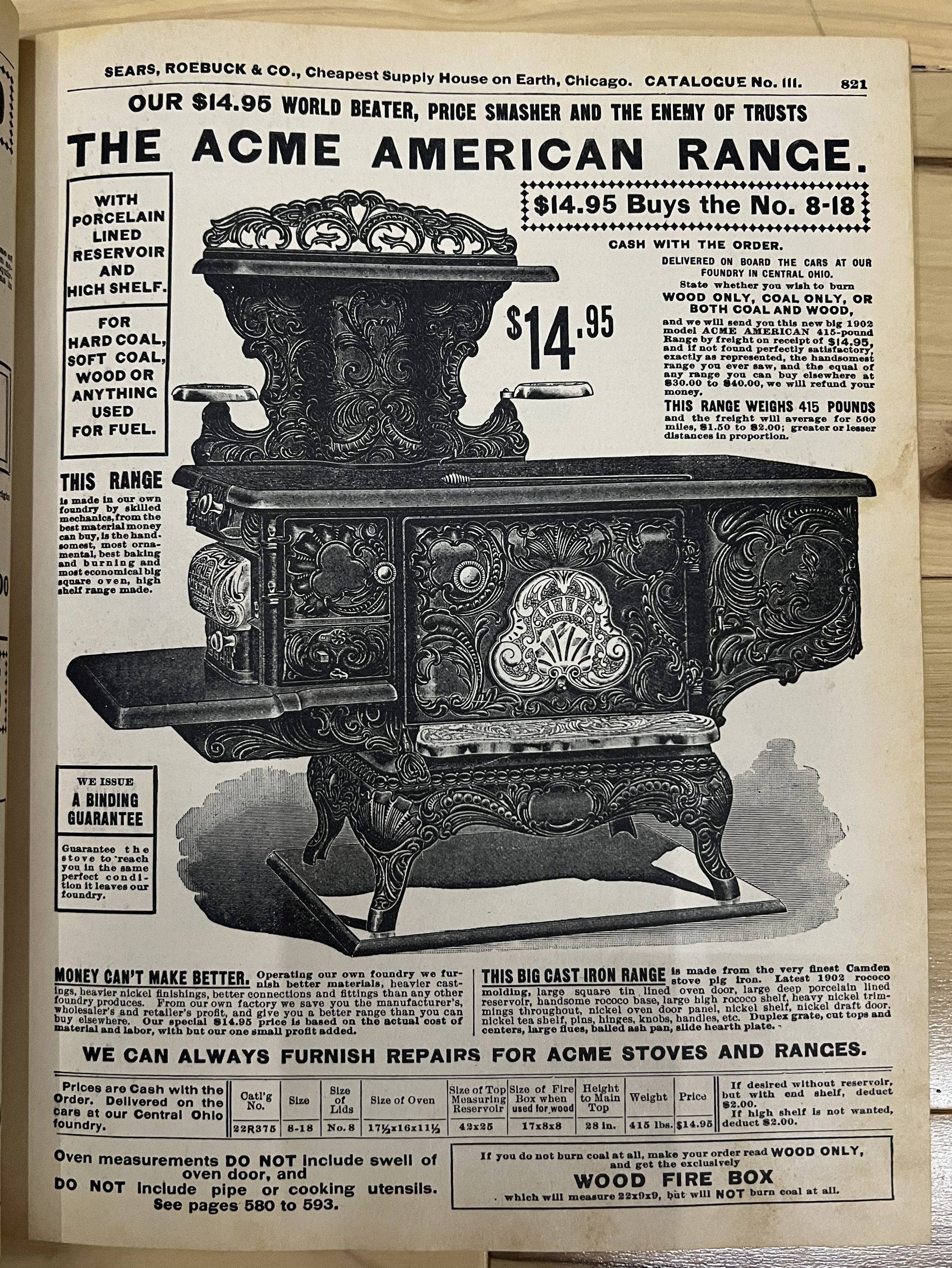
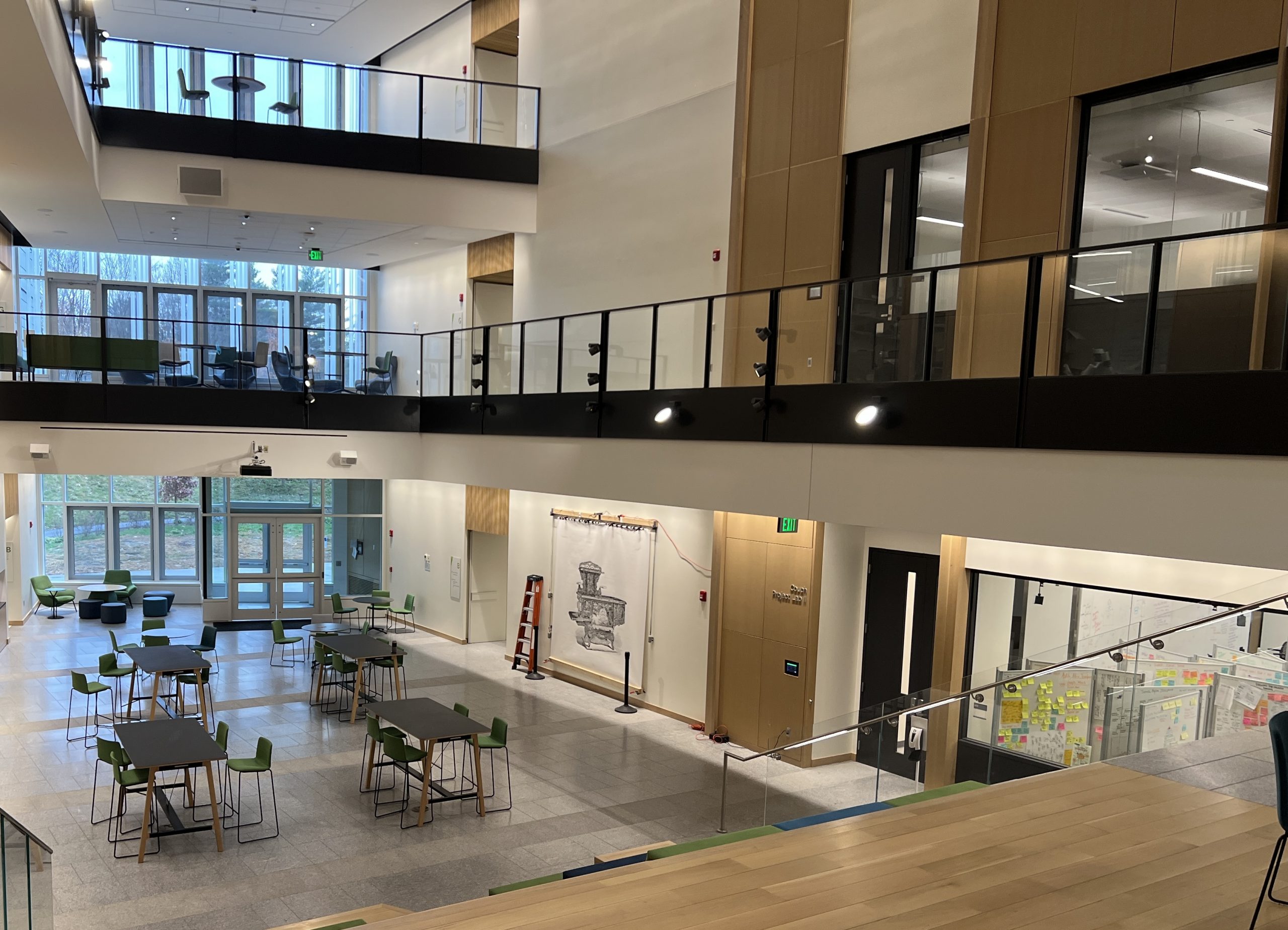
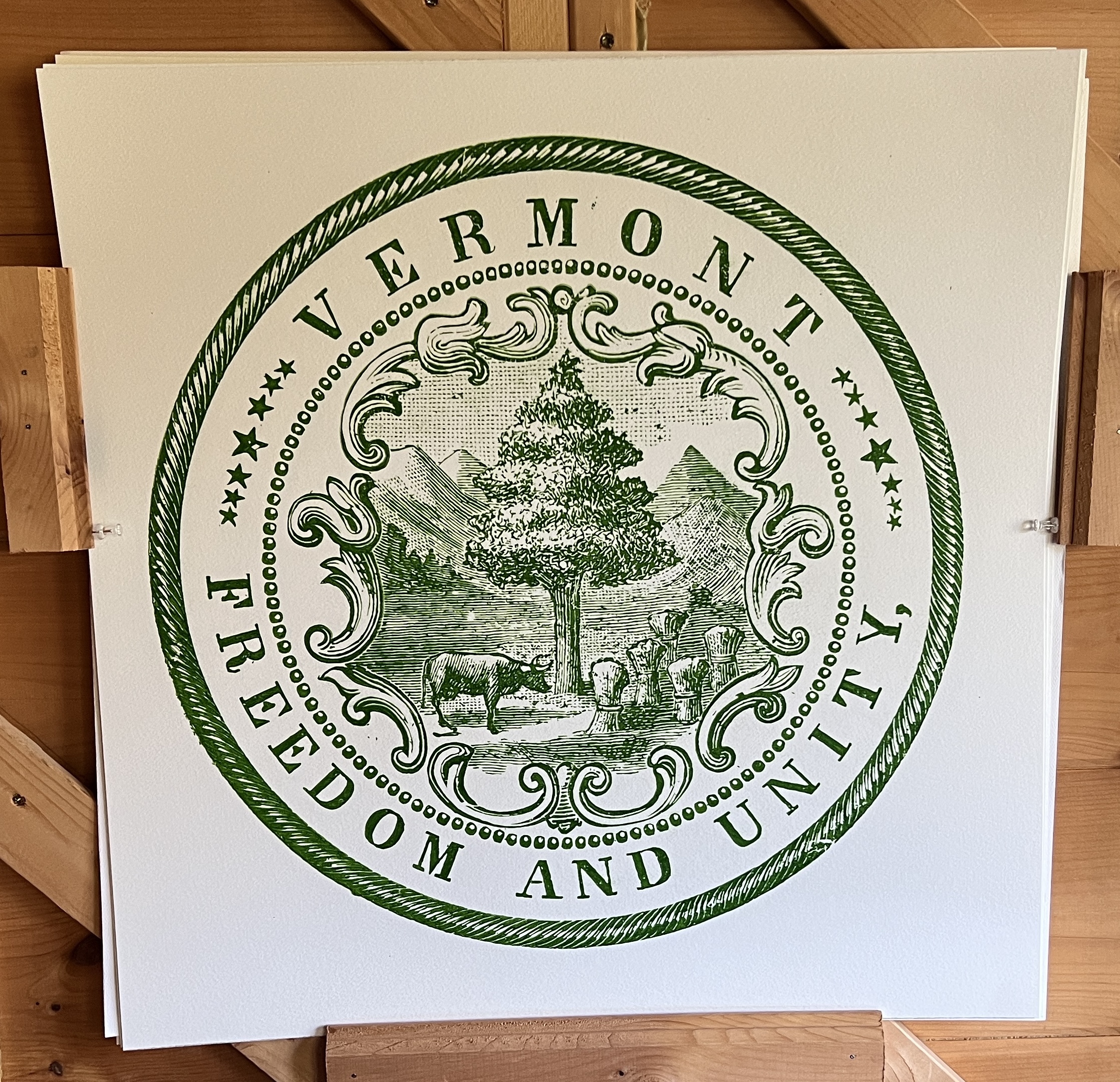
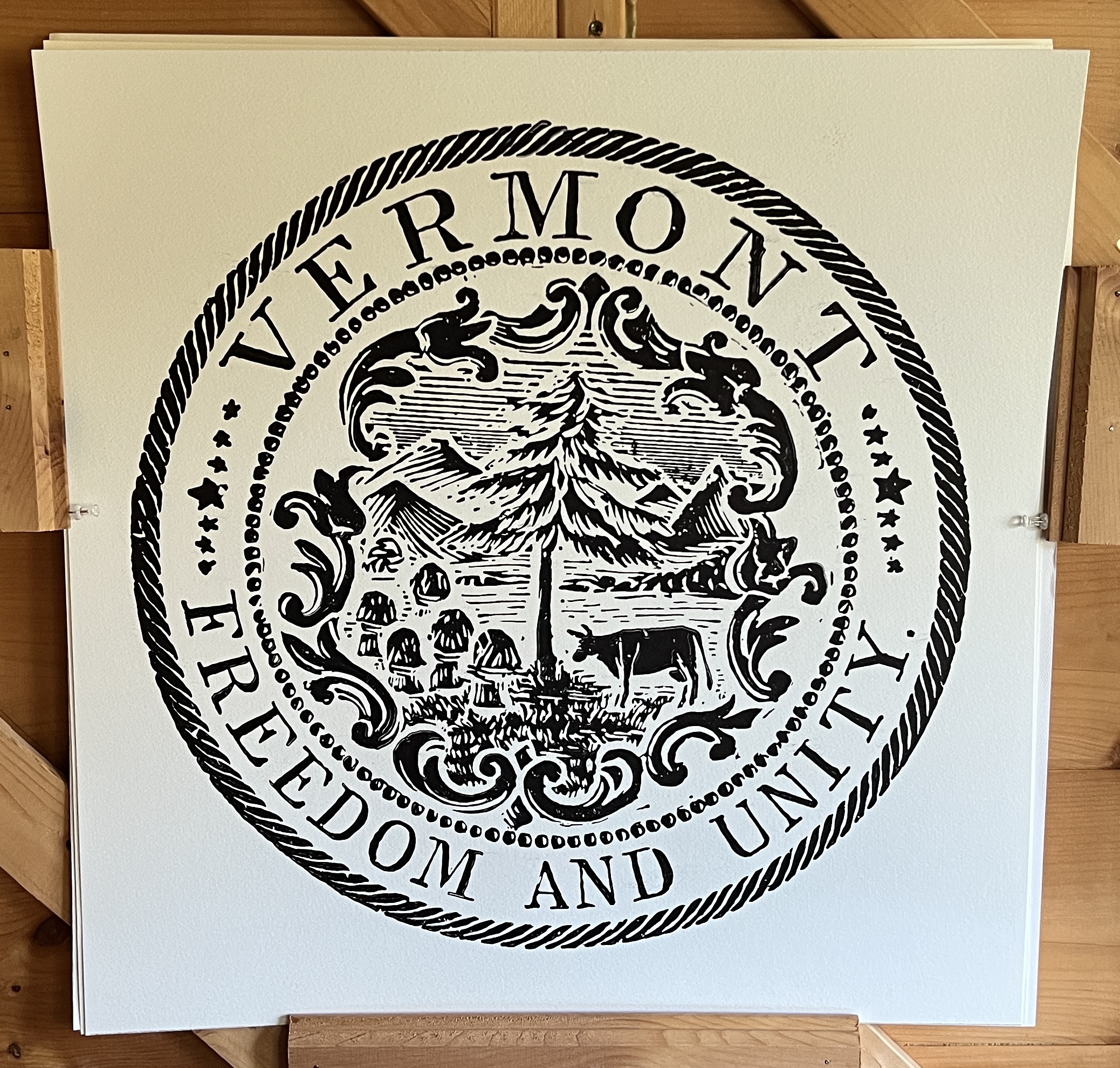
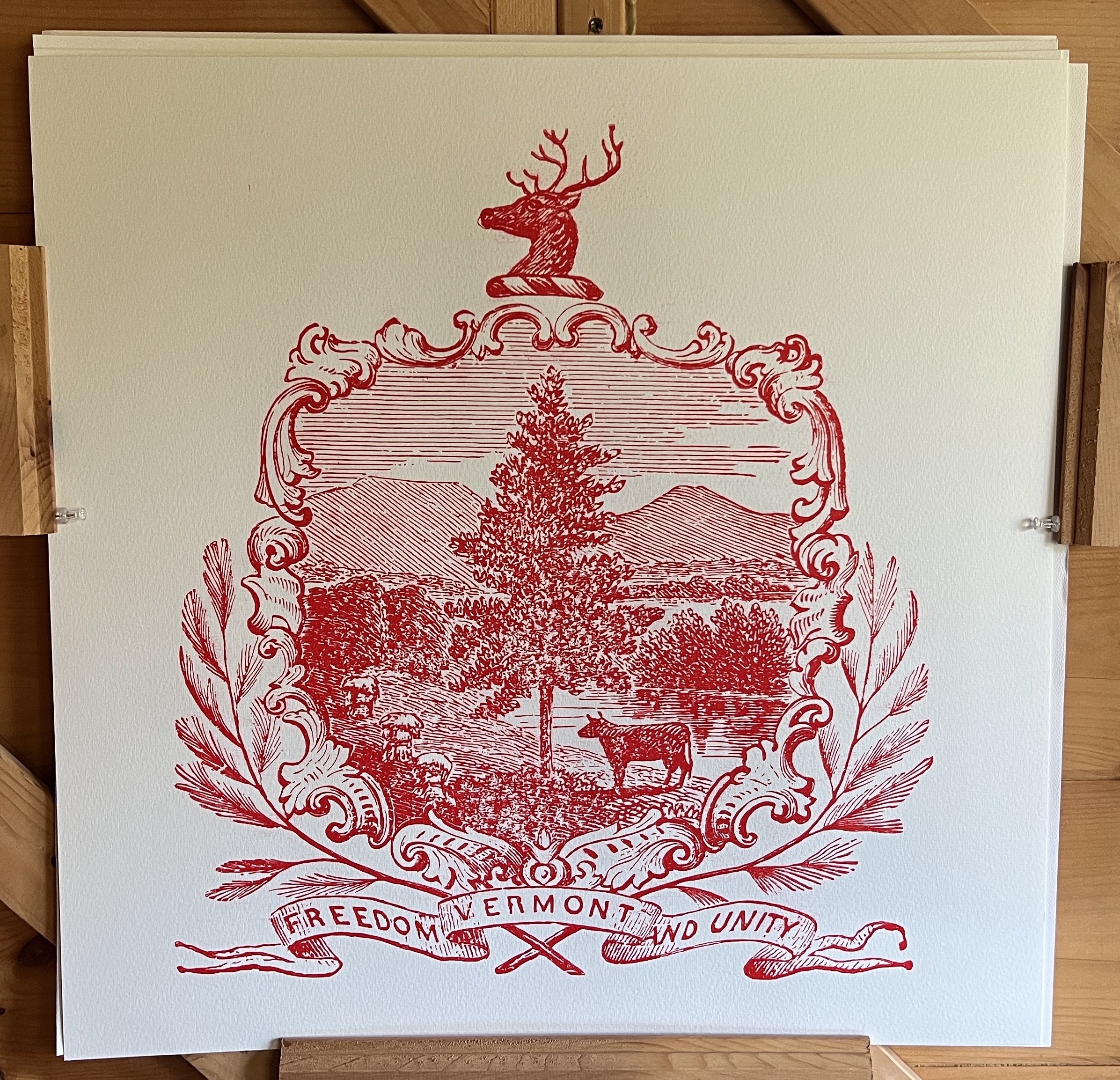
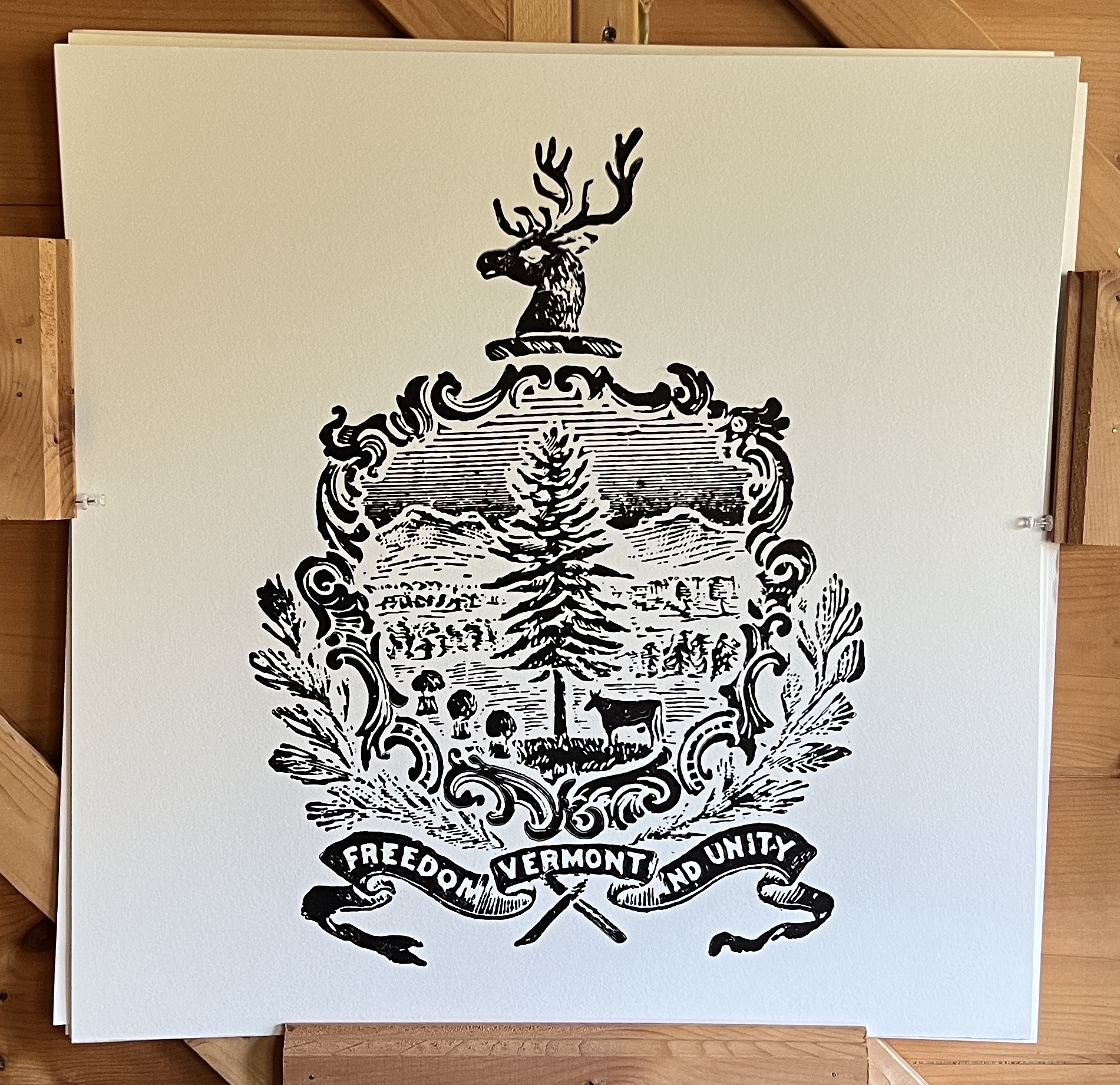
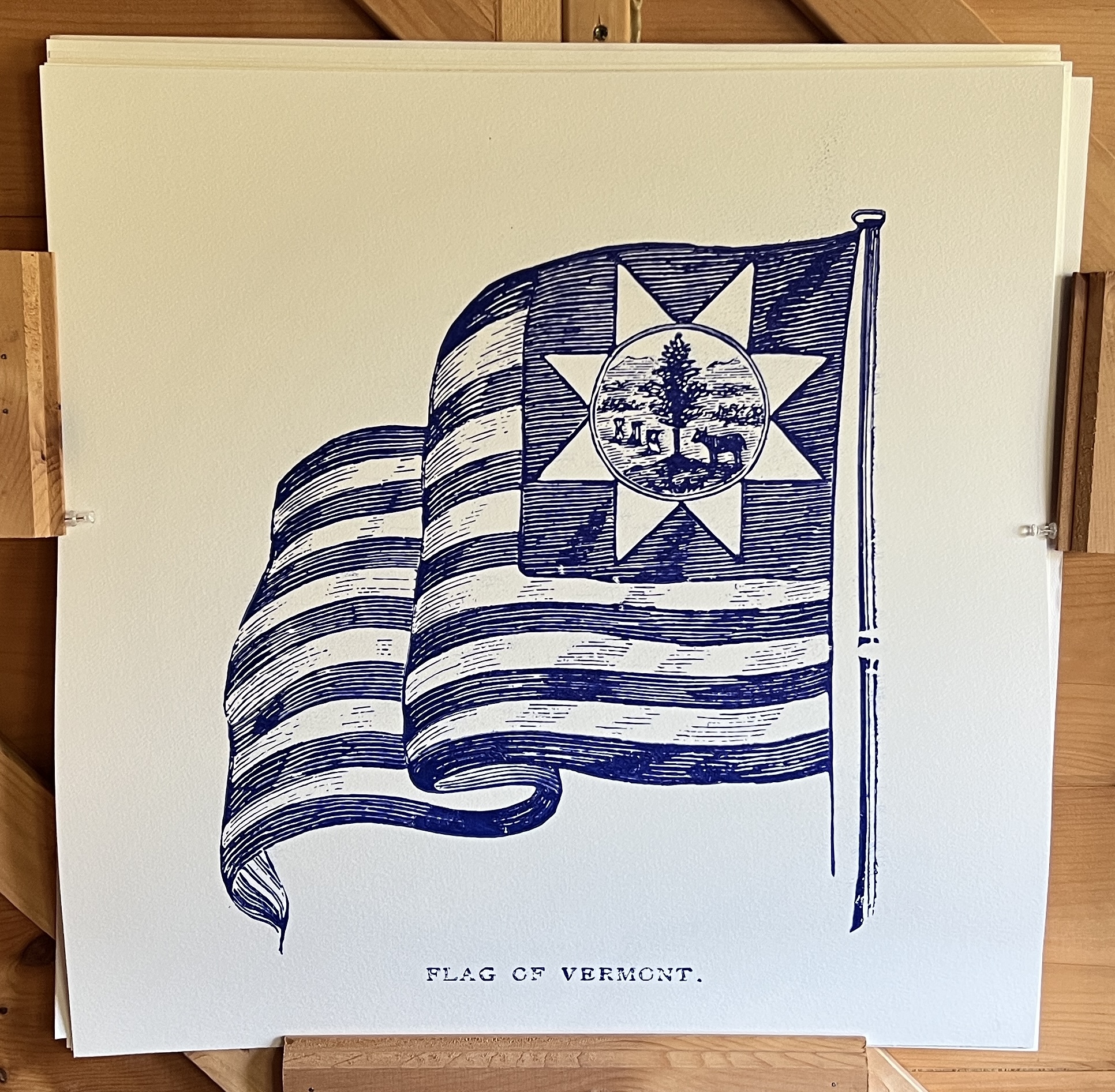
I found the image in a 1902 edition of the Sears catalog where they sold it for $14.95. I consider it an expression of culture, from a time when anything we created came with ornaments. It shines all the more in a modern building with very clean and sanitized architecture.

I had to make one: https://www.thingiverse.com/thing:2094215. Projection is shorter range than I was hoping for but it’s still fun and gets the kids thinking.
I’m plotting again after an August hiatus. The new Gondola Plotter is super quiet, so nice! I’ve made a few refinements to the software stack of course… The usual.
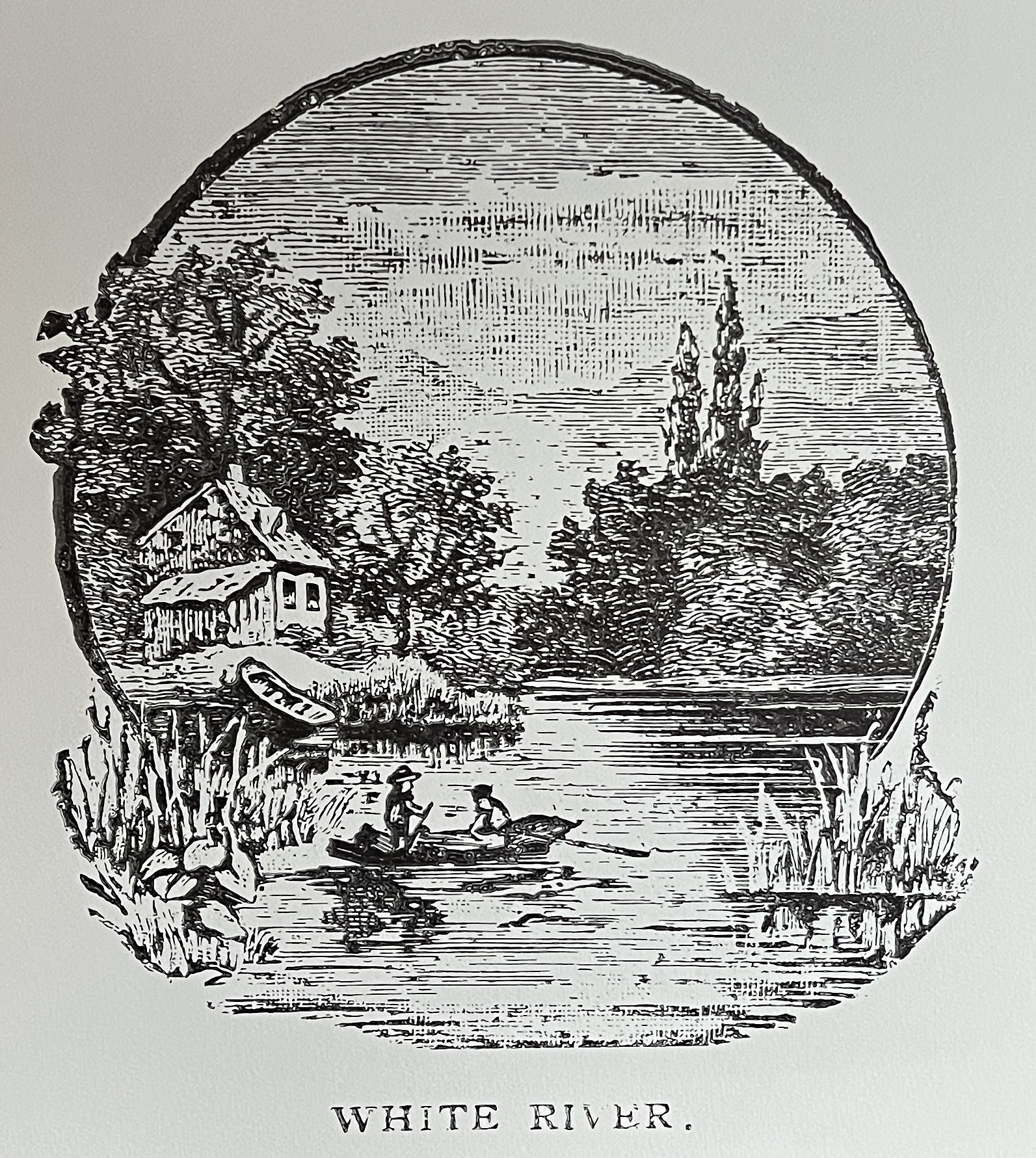
I found a bunch of really cool engravings in some very old books I found in the abandoned house. These books are worthy of some discussion on their own much like the old vinyls, but this isn’t the time.
I got ChatGPT to make me a few SVG handling tools that are really incredibly well done and will help me shed some of the apps I was using. With SVGs there really is not a single app that does all the things, so I drag a collection around just to use 1 or 2 of their function. AI is helping me write scripts to explore algorithms and replace more trivial functionality from apps.
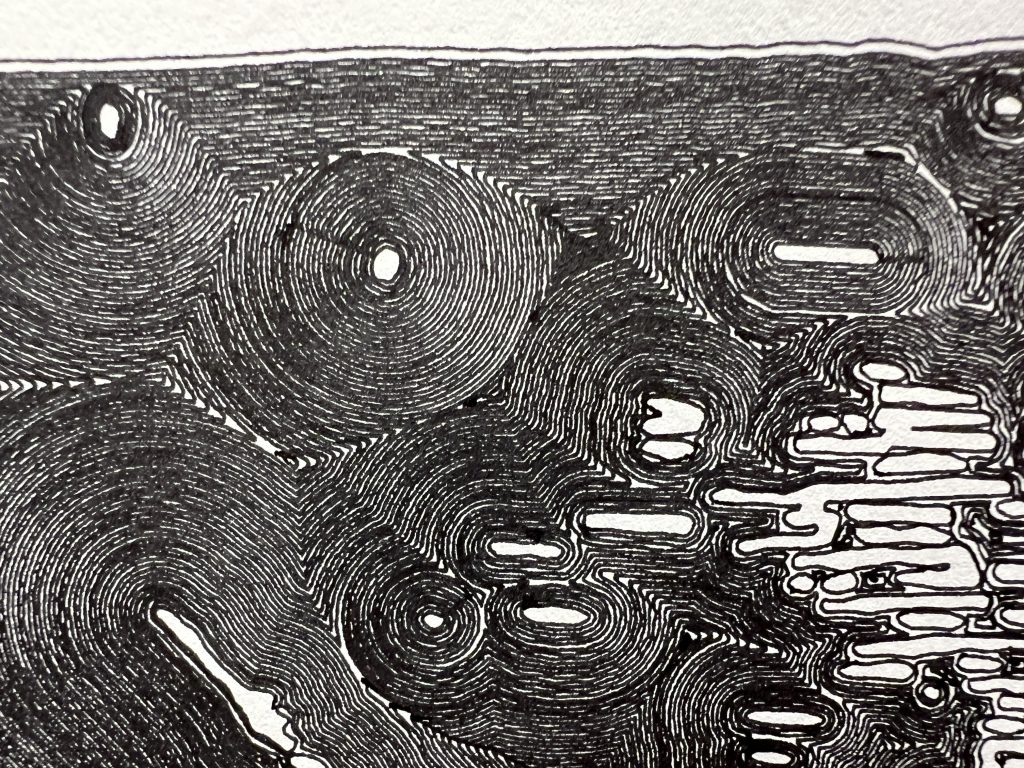
Case in point: this super cool recursive inset fill algorithm to turn fills into something a plotter can do.
I’ve been wanting to write this one for a while, but I knew it’d take me a good few days to nail it. That got turned into 30 minutes with AI. Jaw dropping. I love the effect as it echoes a lot of bored fillings of shapes I’d do as a kid getting bored in class. The cookstove above is filled with it, but it’s far too dense at this size and so it really looks like a actual fill rather than a particular effect.
A lot of my tooling these days is Python which has good libraries for handling SVGs. I used to dislike Python for their dumb purist move from 2.7 to 3 which wasted everyone’s time, and because they had managed to reimplement library hell. But I have to say venv is a successful redress to the later.
I finally built a standard sized one. I ran into a few unexpected challenges given how smooth the small one went.
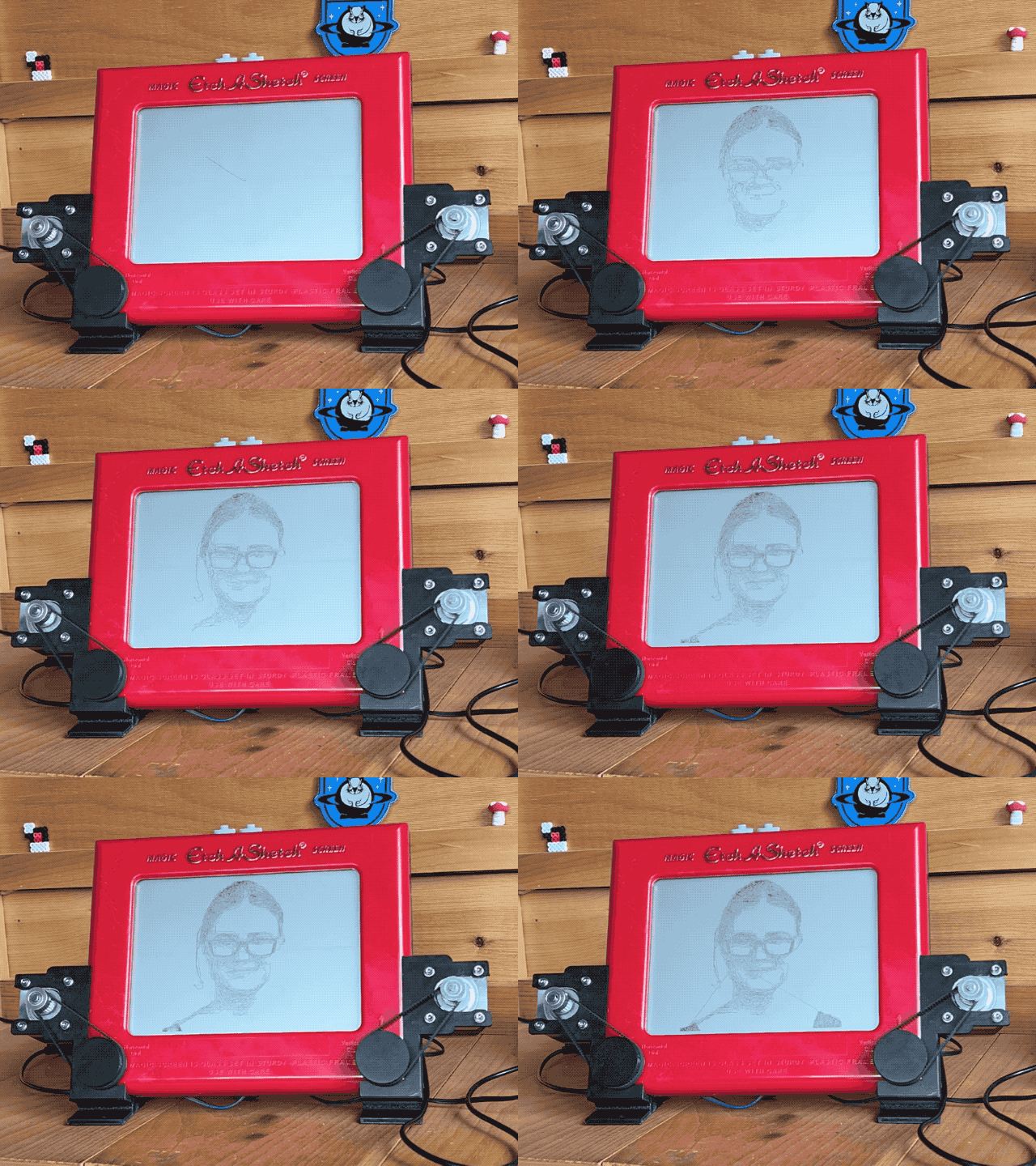
It really isn’t the most accurate machine, the belts inside aren’t timed, but it does pretty ok with some rendering algorithm and is fun.
I launched another big plot, it was a 7 day one, I swapped the servo motor for the occasion to reset the pen up/down cycles it would have, but that was a bad idea. I think I’ve learned it’s better to stick with a lucky servo that keeps performing. And so on day 5, the new servo failed. So I stopped things early, the plot still looks pretty good, you might recognize it from this post.
Bellow is the unfortunate artifact of a pen that doesn’t go off the paper. Another interesting thing I’ve learned from these large deployments, is that the slight misalignment I keep having from one plot to the next, but not enough to be a real bother, I think is due to the paper or the belts loosening over the days.
An so I bought a couple of very premium servos, it’s time to get hardware in line with the ambition. I’m hoping they’ll make a difference. They better.