Gondola PlottyBot
Before there was PlottyBot, I had designed and built a Gondola Plotter.
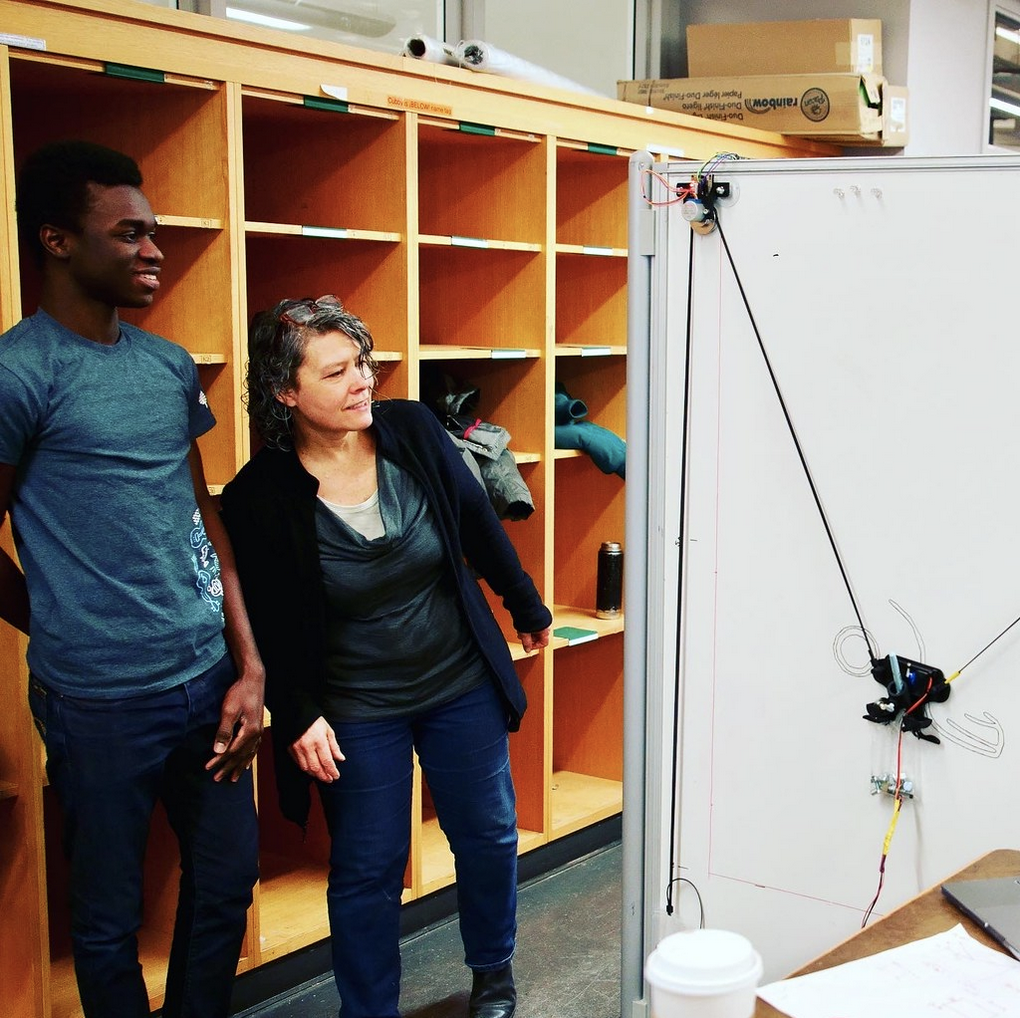
The software stack was meant for teaching, the parts meant to be cheap. It served that purpose and then I got engrossed in the tabletop plotter that became PlottyBot. In the back of my mind, I knew I’d circle back to the gondola plotter and bake in it all the lessons I learned, and port the PlottyBot software stack to it. Well, it’s now done, and I have great plans for it. For now I deployed it on a small wall for stress testing it and making sure it’s ready for prime time. I parameterized the PlottyBot software stack so that it can either run the tabletop or the gondola plotter. Live remote drawing, super complex plots, handwriting, it’s all there.
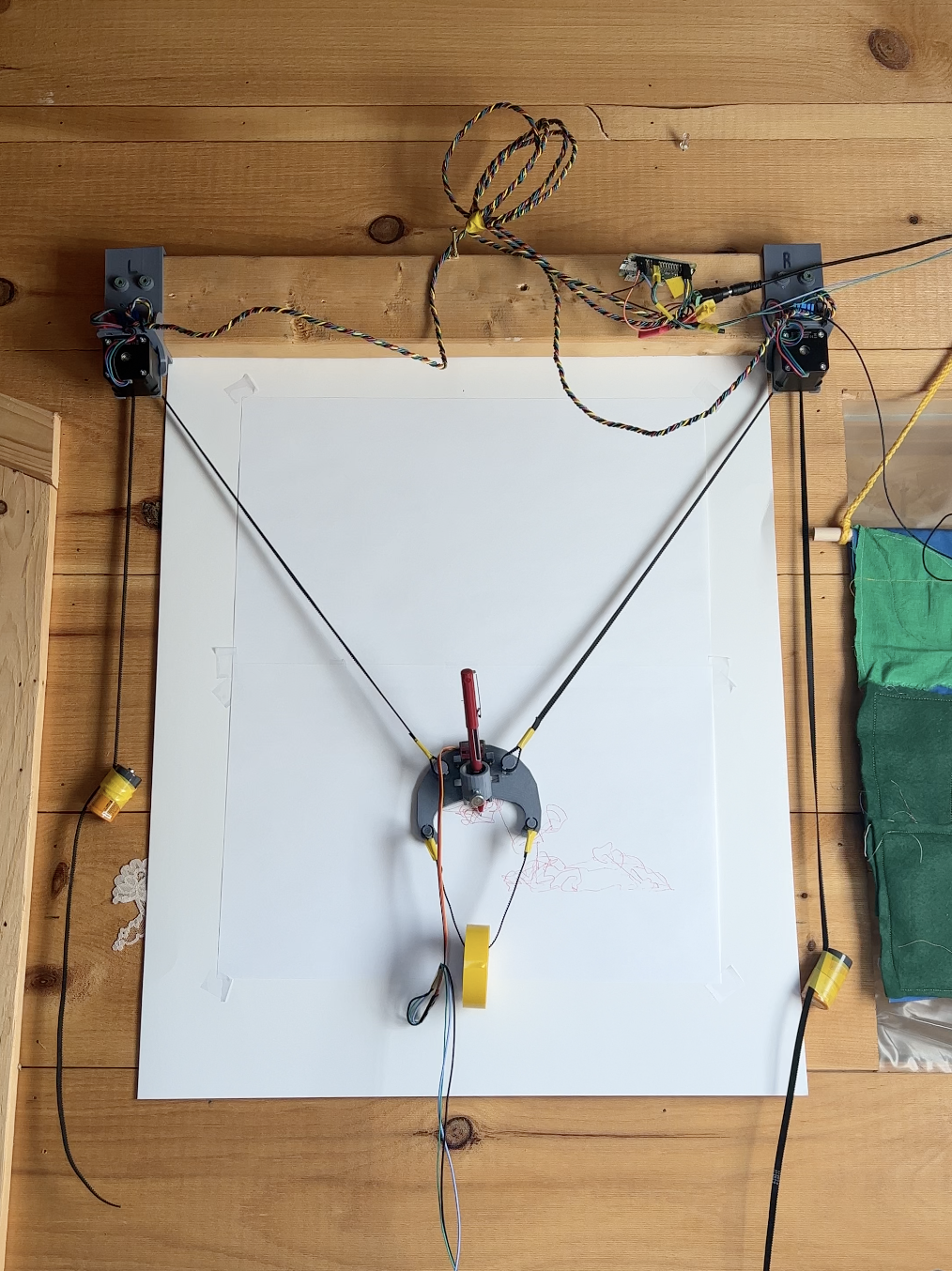
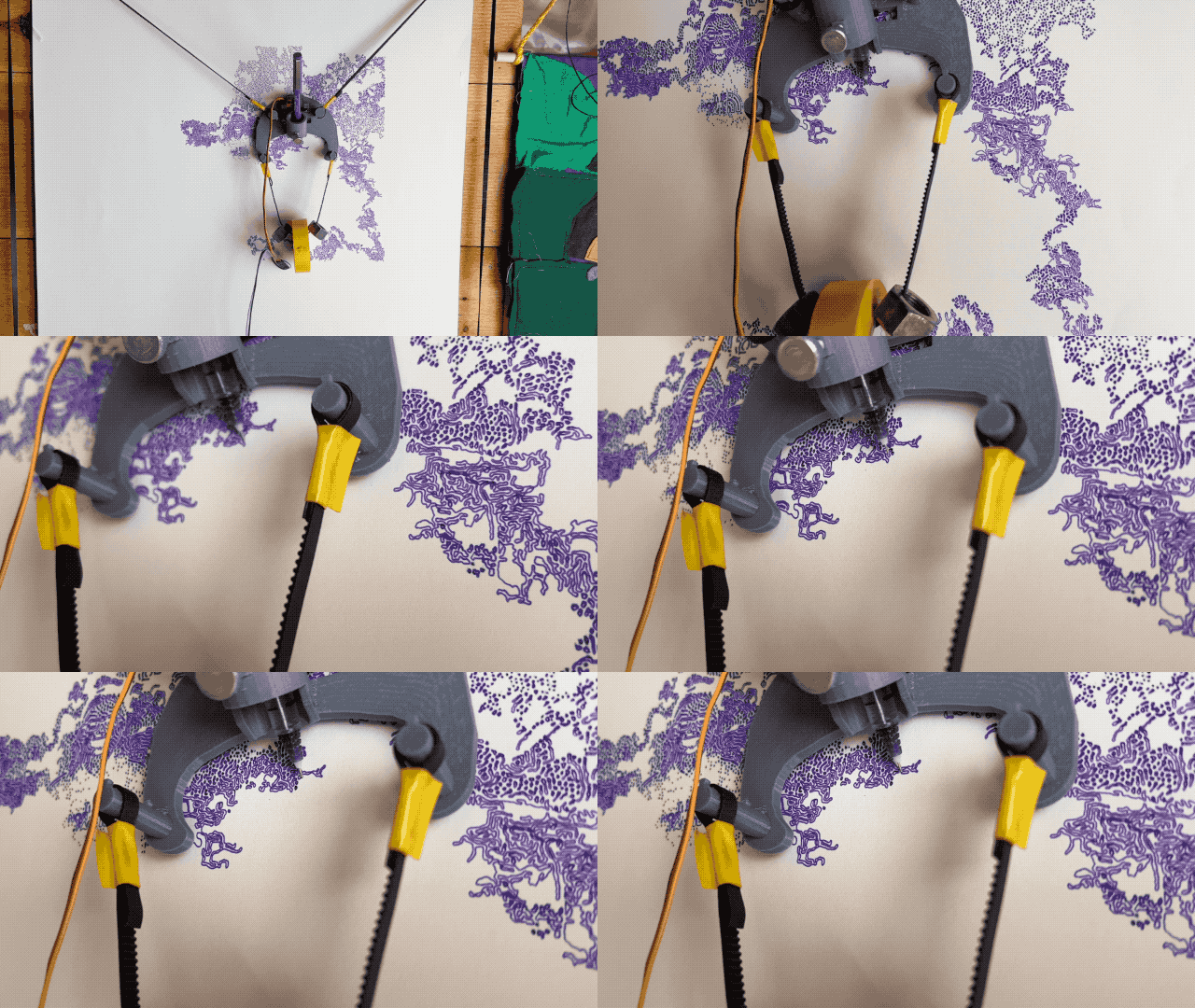
Through the iterations, I’ve managed to make it very accurate for a gondola plotter. One thing I make a point to do in the design, is open up the pen end so as to be able to watch the sweet drawing action.
And since I’m catching up on plotter related matters, I guest speaker’d in Robin’s classroom to talk about X,Y coordinates. It was super fun and of course, the end goal was to get kids to drive the plotter. Most kids were curious in seeing the machine draw, few were enthralled. I loved having the chance to trigger some sparks in their brains. We did some other fun things around Cartesian coordinate systems.
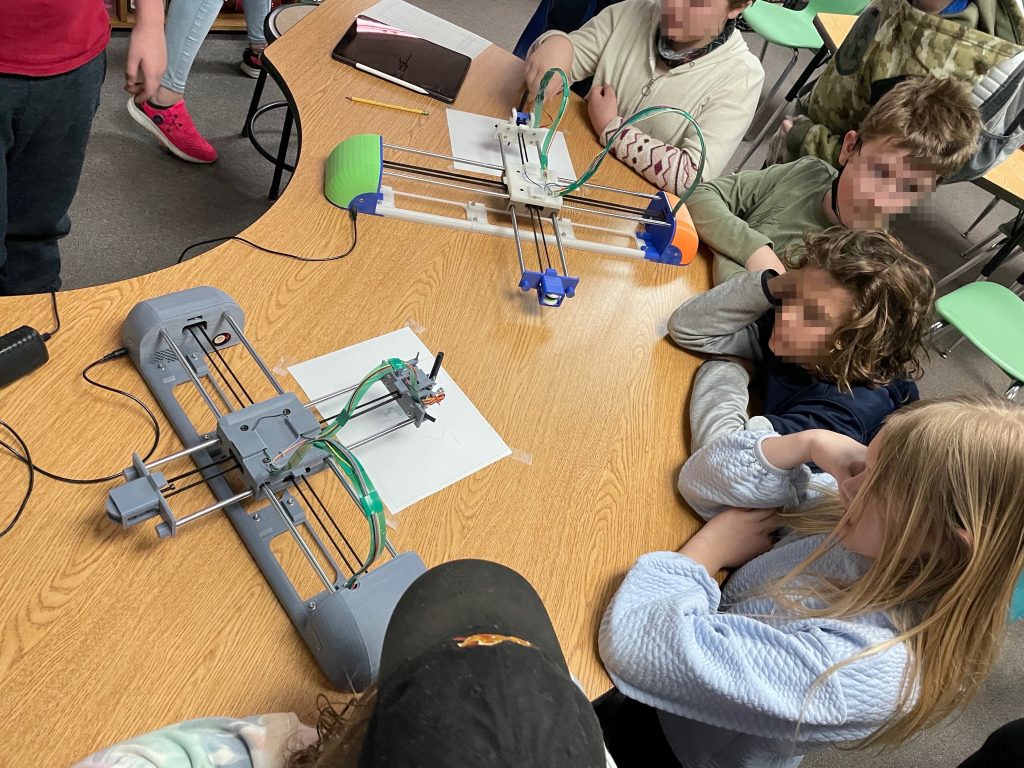
I’ve been asked to do it again this year. I’d love to, and I’ll have one more plotter in my arsenal.
Microplots
I built a website for running experiments in collaborative drawing. It’s pretty neat and I’m not going to describe it just yet, but in the process of testing it, I threw at it all kinds of plots I had at the tip of my fingers, and it yielded some pretty cool results.
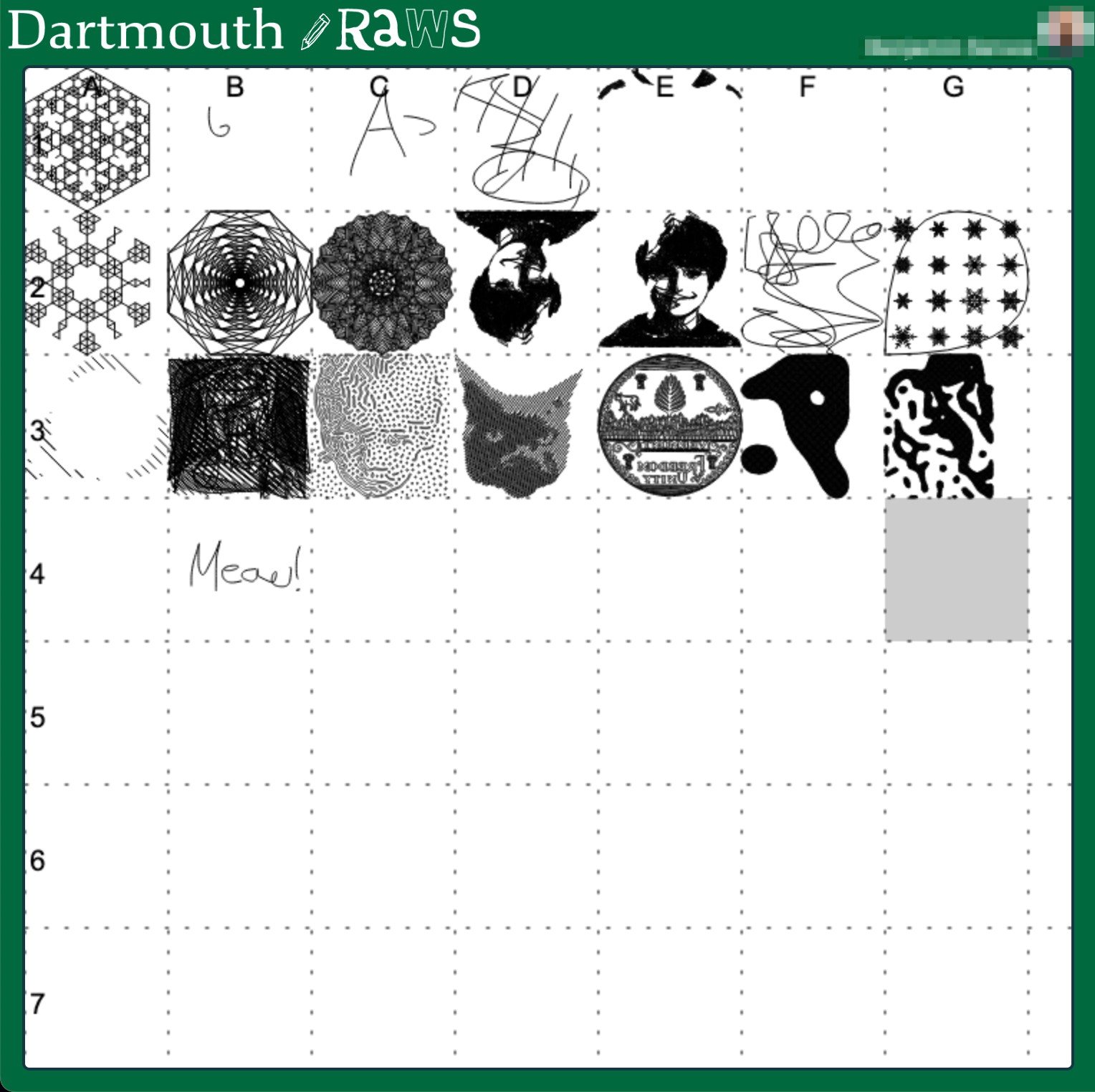
I may have here my next plotting streak: microplots. Some look predictably bad as they were meant as stress tests, but some came out well enough to make me curious.
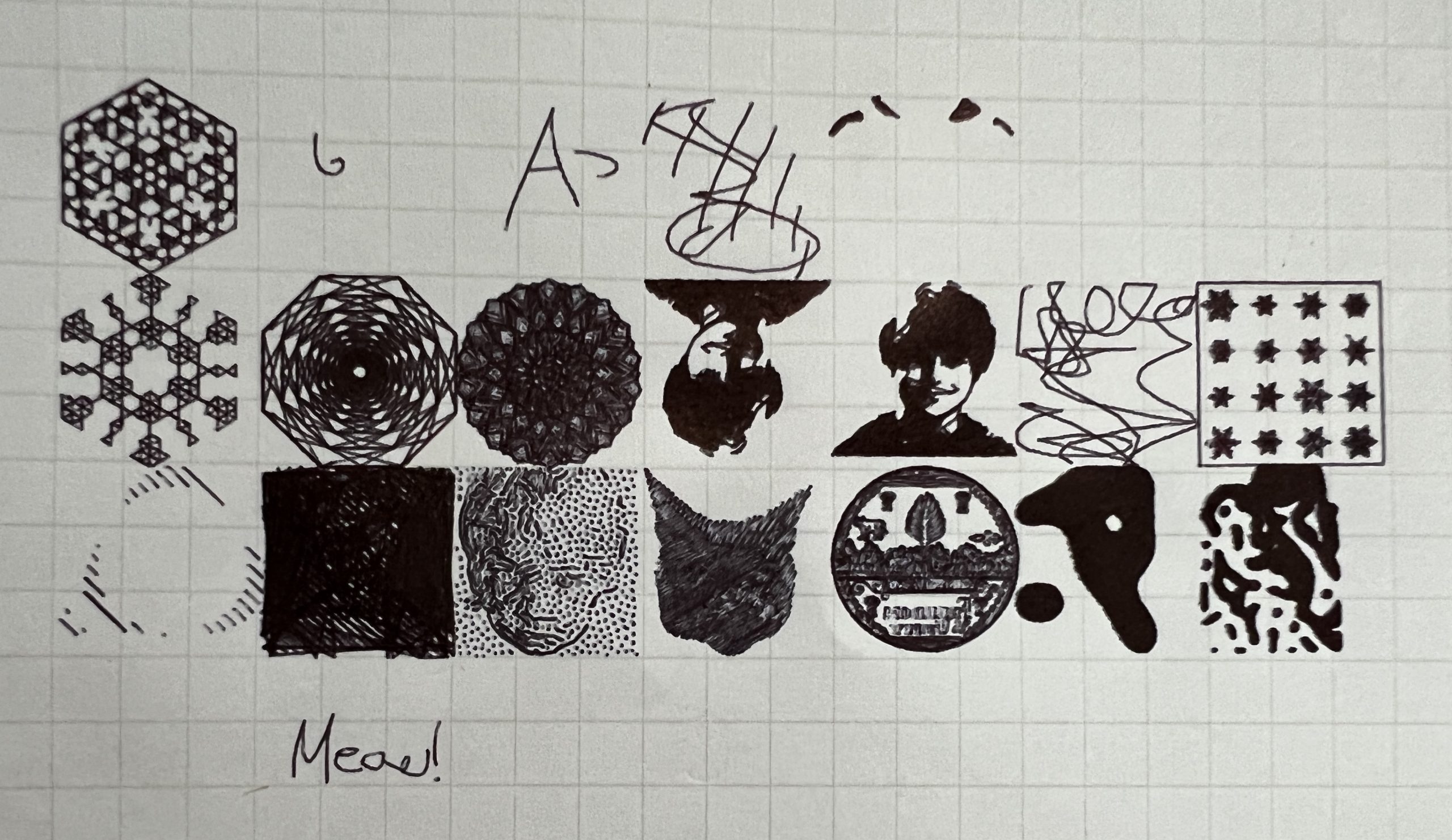
More to come on all this soon…
Once More, With Feeling
The Christmas Card video was meant as a bit of a gimmick, something to post about. And it definitely worked to this effect. PlottyBot had some visibility on Reddit and ended up on HackADay :).
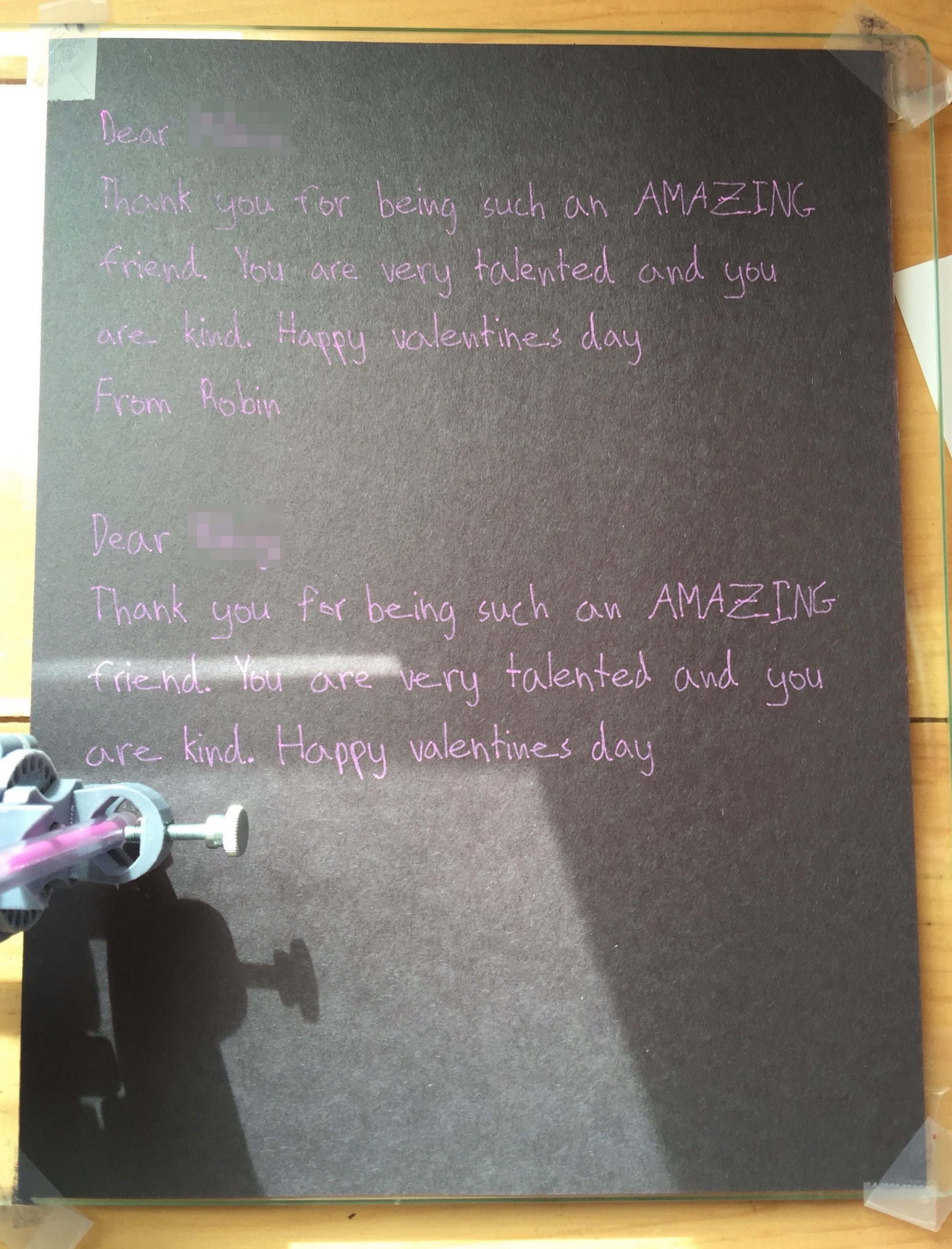
It’s always fun to get a bit of spotlight and see people react positively to something you built. Then Robin needed to actually write a bunch of valentines cards to his classmates, and he didn’t want to do it at all. So I proposed the plotter and his captured handwriting to make it fun. He didn’t hesitate and I learned a couple of things. First, he was fully capable of operating it, a sign that he’s growing up and that the software stack does make plotting accessible. Second, it was actually less work to “mass produce” handwritten cards. I thought it’d be the same amount of work as compared to writing them yourself, but really he’d just show up to change the paper when the plotter was done. He was watching TV while the plotter was working for him… Maybe this whole project is a failure.
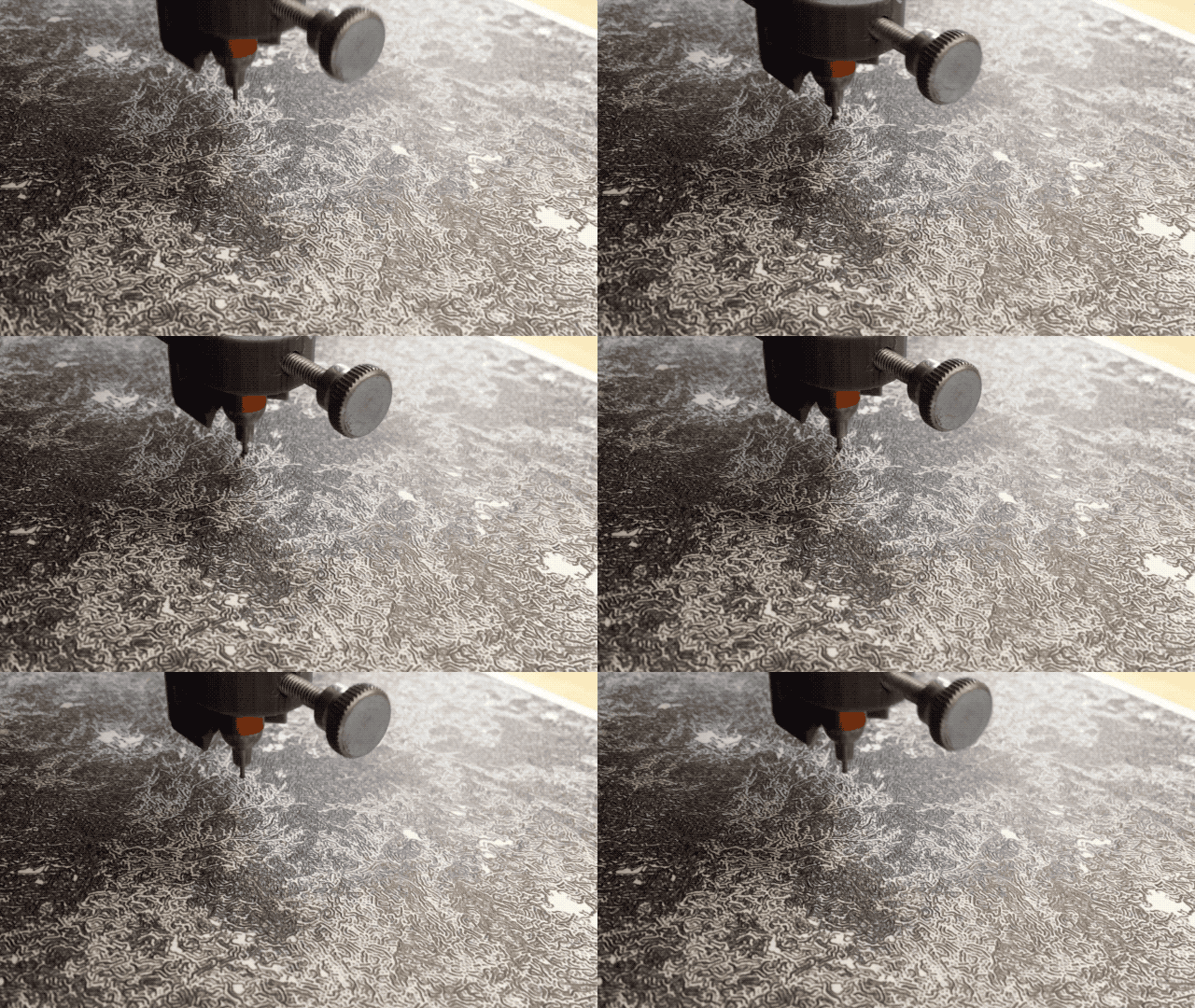
111,345 Pen Strokes
This is close to the upper limit for plot complexity. The squiggles are packed so tight the ink and the fine point pen laying it are at the limit of what they can do while keeping the strokes distinct.

Having lived alongside machines my whole life, I never fully understood until this project what they were capable of. I knew it, but I didn’t understand it fully. I could I never draw this well, I wouldn’t have the dexterity to make these strokes, I wouldn’t have the ability to draw as fast, as relentlessly, or as flawlessly. Lastly, for the 17 hours that the plotter was drawing away, I was free to do other things. I know it’s not much of an epiphany but I found myself starring at this ongoing plot quite a bit pondering about how overwhelmingly better this machine was at drawing than I could ever hope to be. It’s one thing when a machine does something completely foreign that just isn’t possible for us humans, it’s another much more relatable thing when it holds a pen and draws. Learning about stepper motors has been a small revolution in my mind, and I see them everywhere in the world now.
I think I’ve pushed this one machine as far as it can go while still producing something of value. It’s a really good feeling to have pushed it this far given it represents the culmination of a 3 year pursuit. Now I can focus even more on the funner aspects of plotting cool things, knowing the machine and software stack can tackle the maximum level of complexity I would throw at them.

Reference: Ivan Murit’s Texturing
26,237 Pen Strokes
Little by little I’m increasing the complexity of what I can send to the plotter. As an image passes through the various programs I choose for a particular render, I push their limits and often run into bugs, memory limits and others. As much as possible, I dockerize each step so they are easier to summon and improve on their own. This also allows for pipelining.
I finally found a fast and reliable SVG->GCode converter. Inkscape’s is reliable but it’s extremely slow. I had to rewrite a part of it to be iterative rather than recursive so it could handle the size of the SVGs I am throwing at it.
Inkscape itself has a command line mode so some of the repetitive stuff I use it for are dockerized, for example to ungroup objects and break apart compound paths. It’s truly amazing.
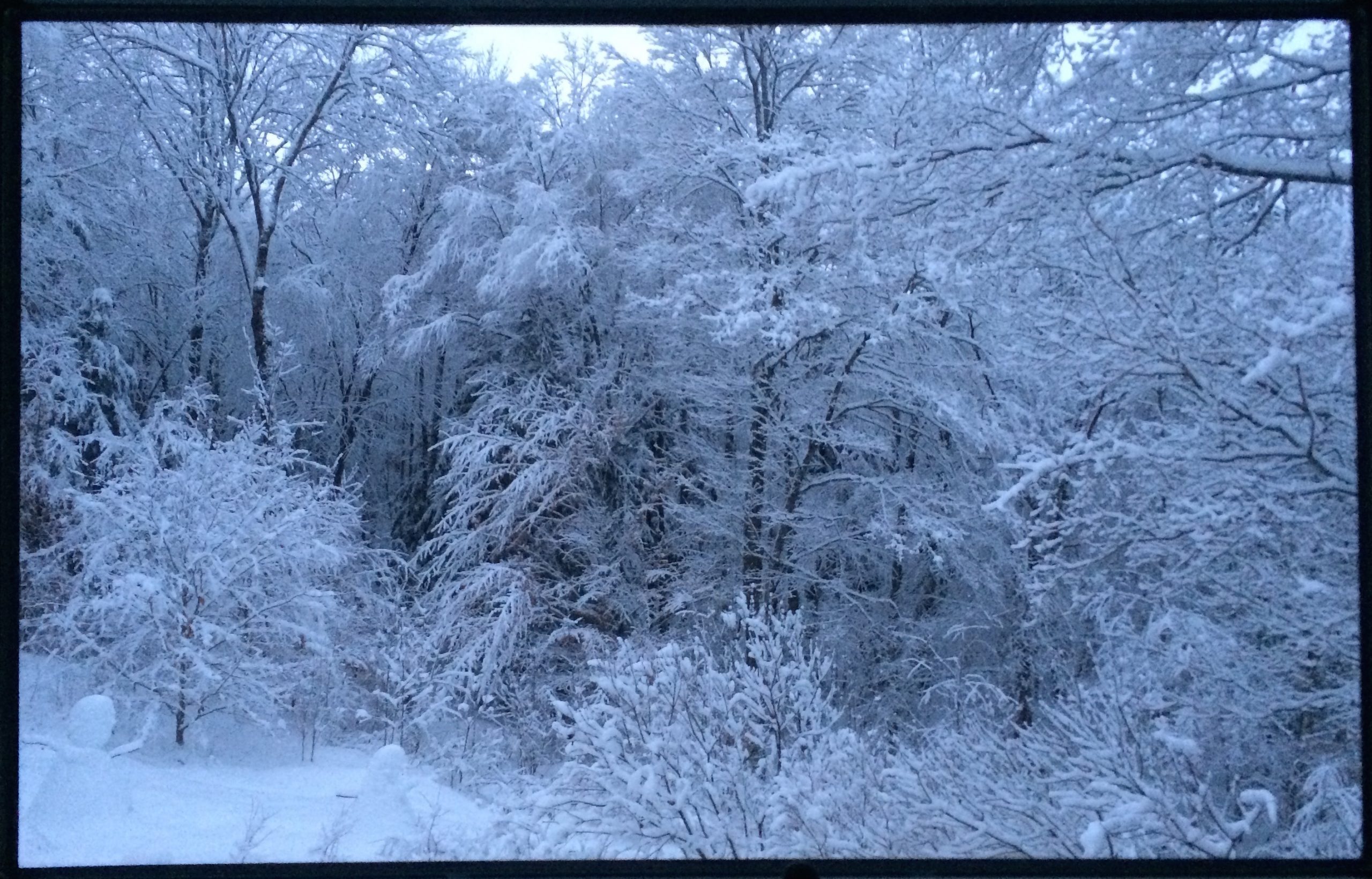
I kind of want to publish all this but I have no idea if I violated any licenses frankensteining code from various sources. And I have much better things to do with my time than to find out. Things such as this wonderful plot:

Protected: Typing Their Handwriting
Christmas-card-O-matic 3000
Protected: Not sure what I’ll do with it
First Build
I’ve heard from several people building their own PlottyBot but it’s the first time I see a picture of one :). It truly is a great honor.
Built by Jeff.
