I built it last year and took a bunch of pictures to document the build. Then life happened and I didn’t. Someone noticed I had an undocumented v2 and asked about it, so it was time to fix this.
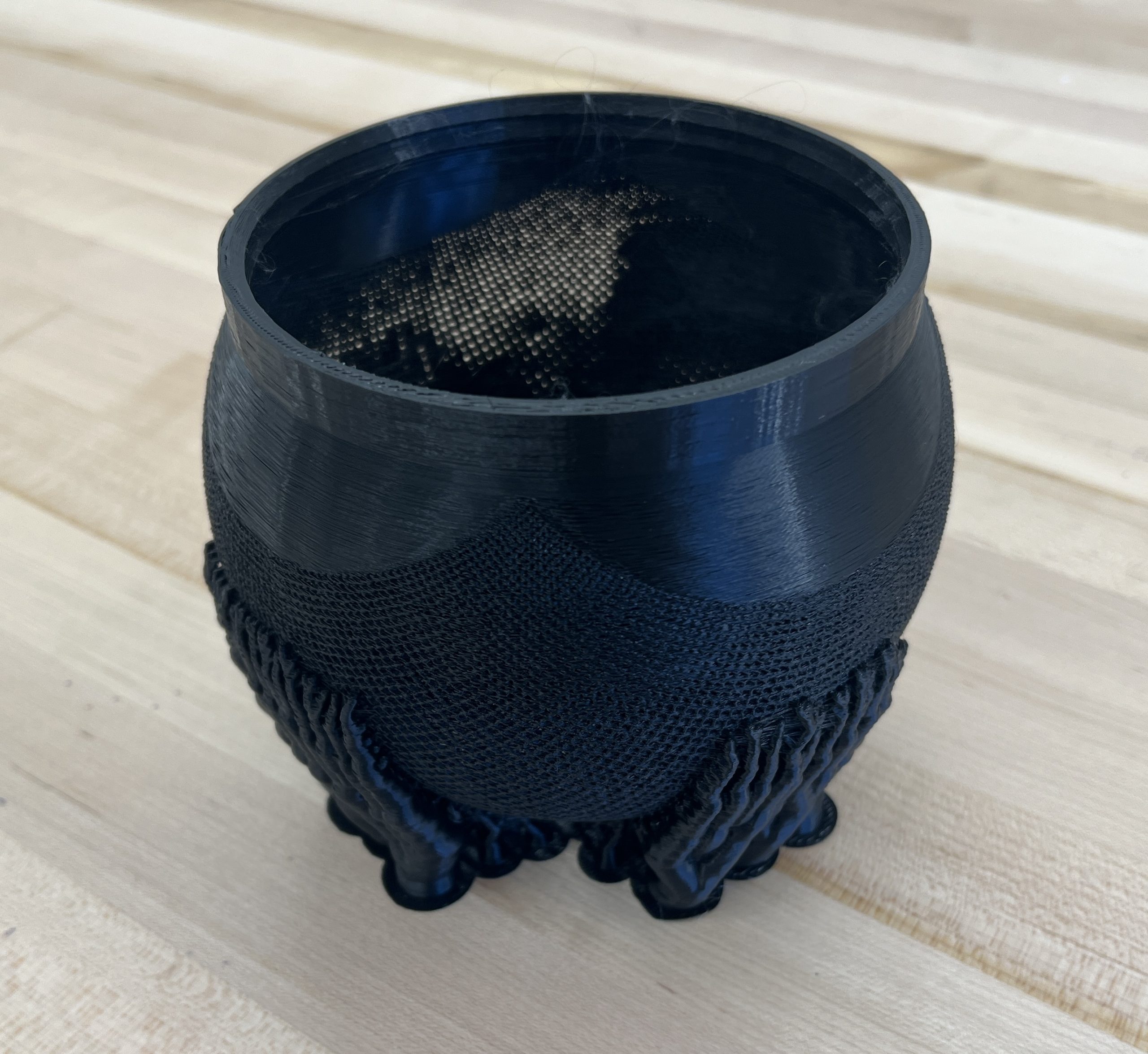
Lithophane
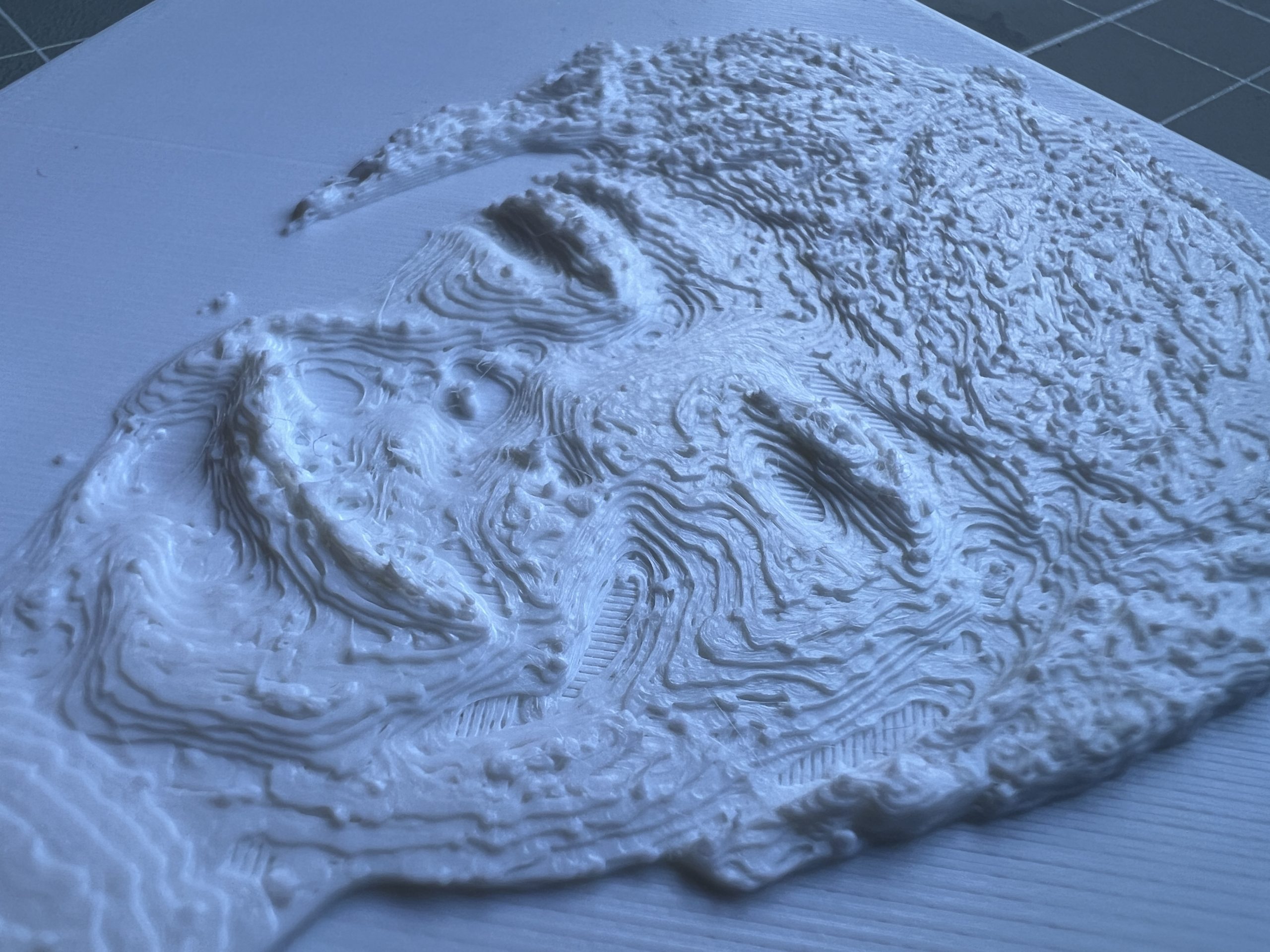
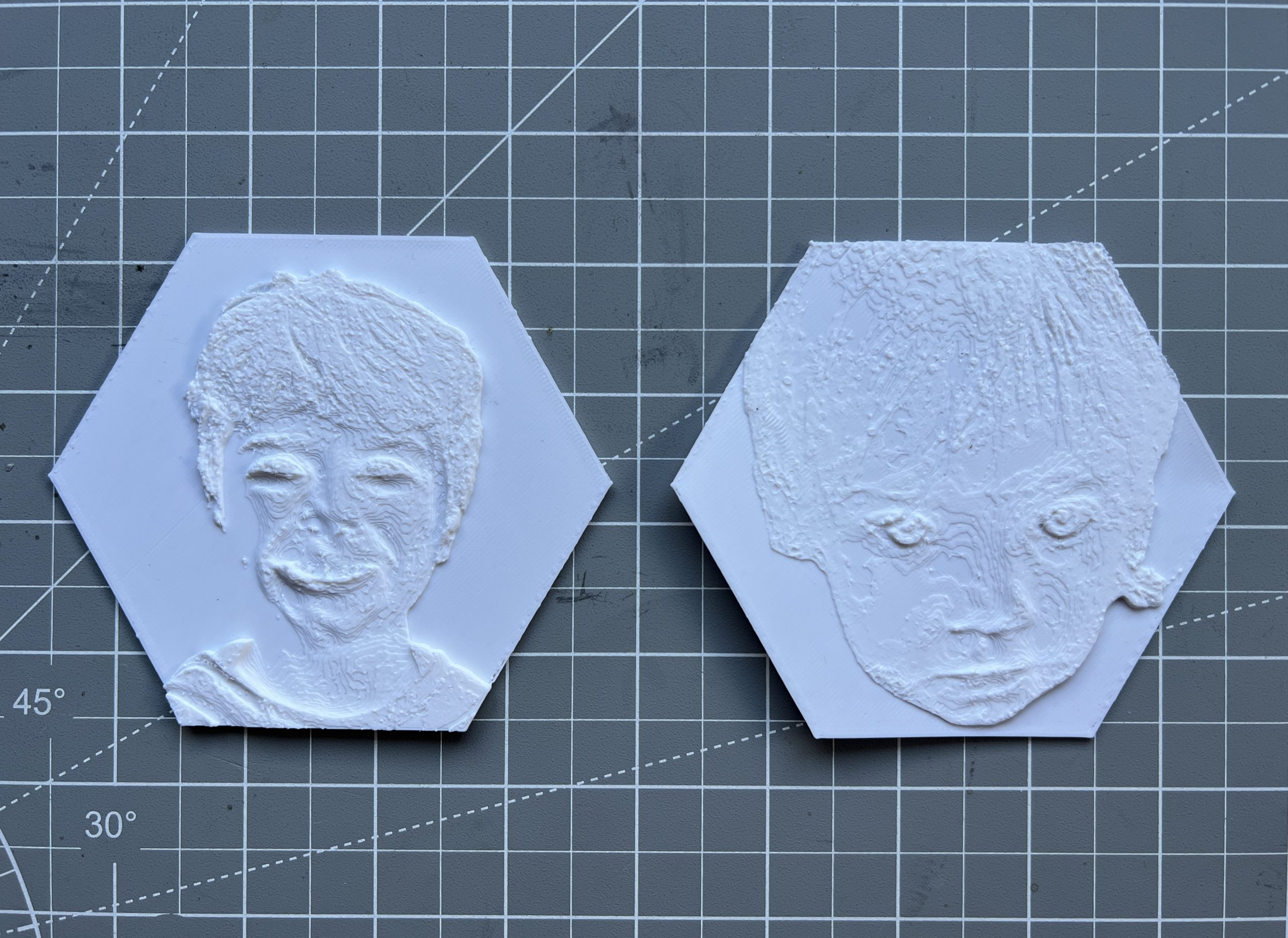
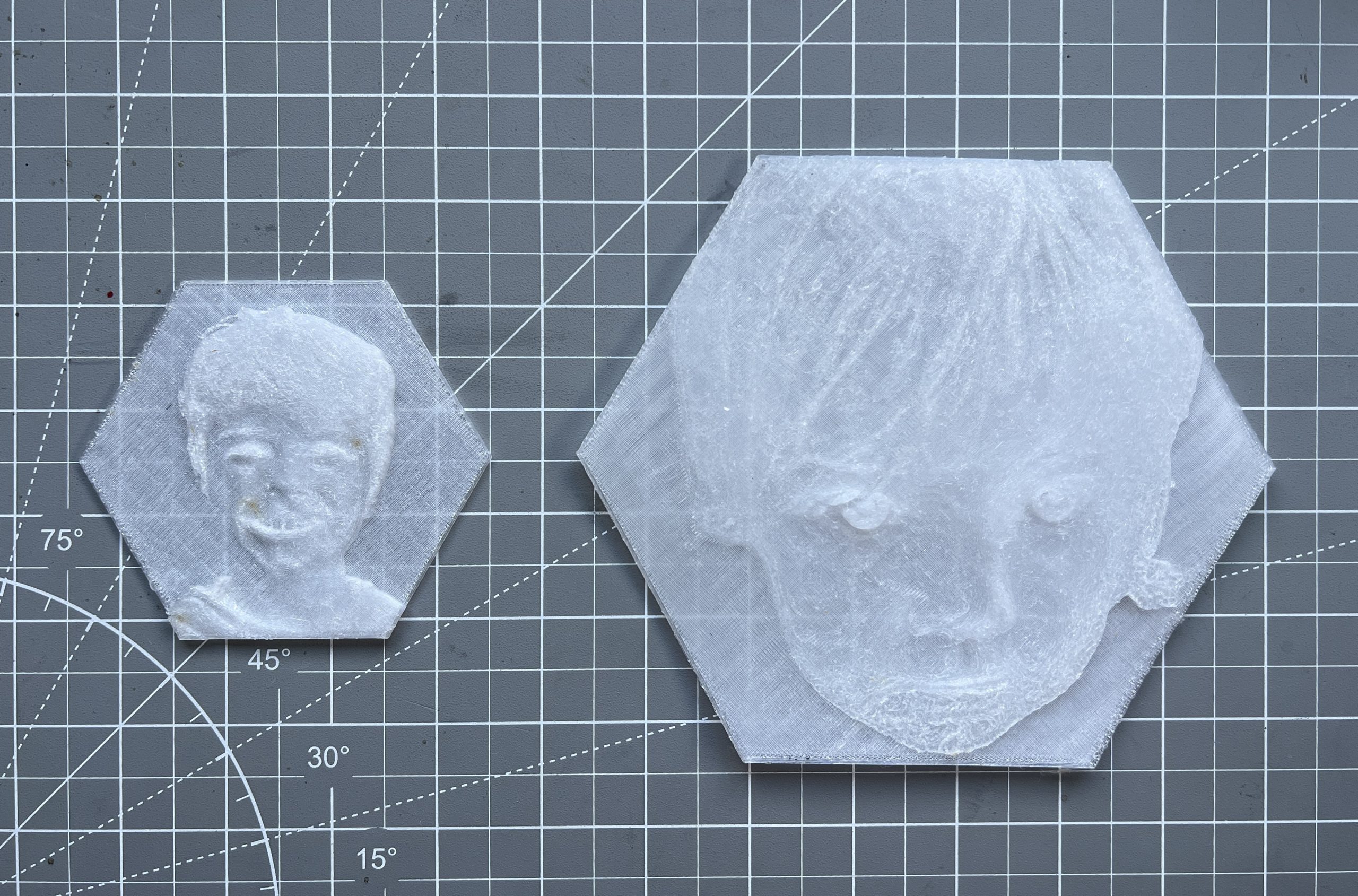
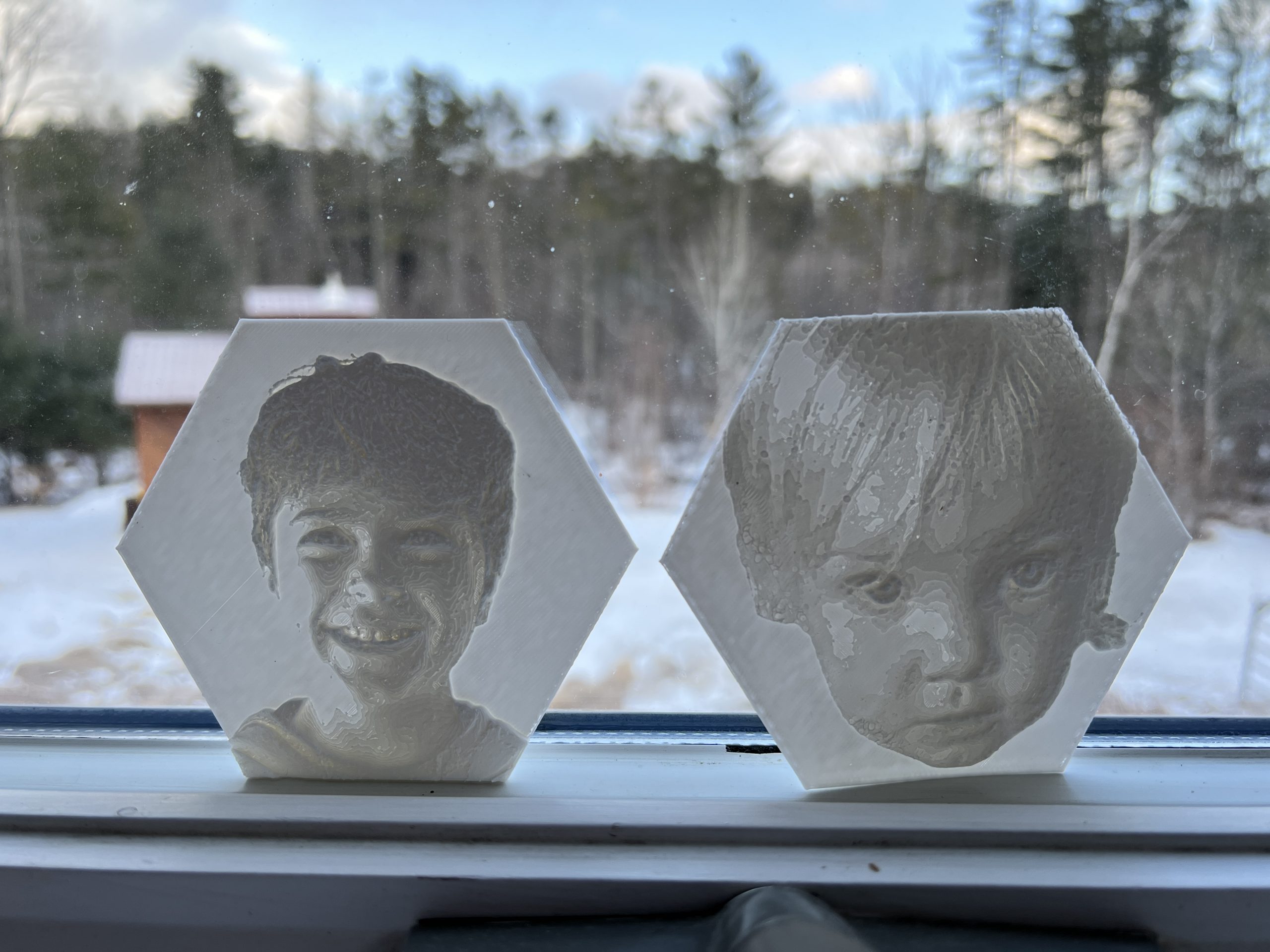
Pretty simple yet cool stuff, I’ve tried both transparent & white filament. And a very well done website helps make the STLs.
Overcoming Inertia
The design of PewtyBot 1.0 left something to be desired: the whole top section (stepper motor, assembly & laser) is moving, and that is a decent amount of mass that needs to be accelerated rapidly many times over.
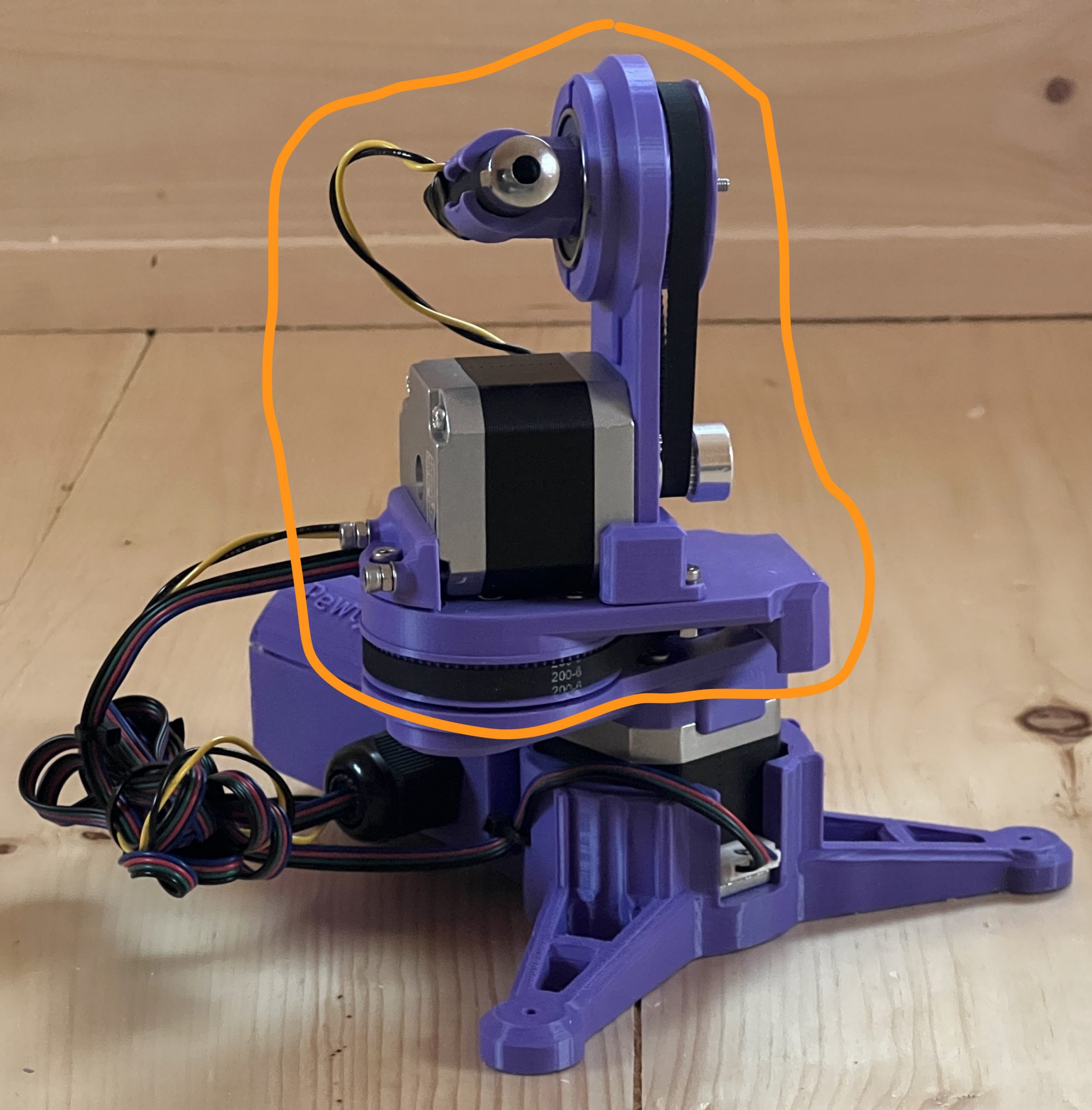
As I was tuning parameters, it became obvious that I needed to slow things down to avoid inaccuracies from the vibrations of a fast accelerating mass. I found happy parameters which led to several public deployments, but deep inside I knew I wanted to try the mirror approach. Instead of moving the laser, it remains static and only a couple of light mirrors are doing all the moving.
Introducing PewtyBot 1.1!
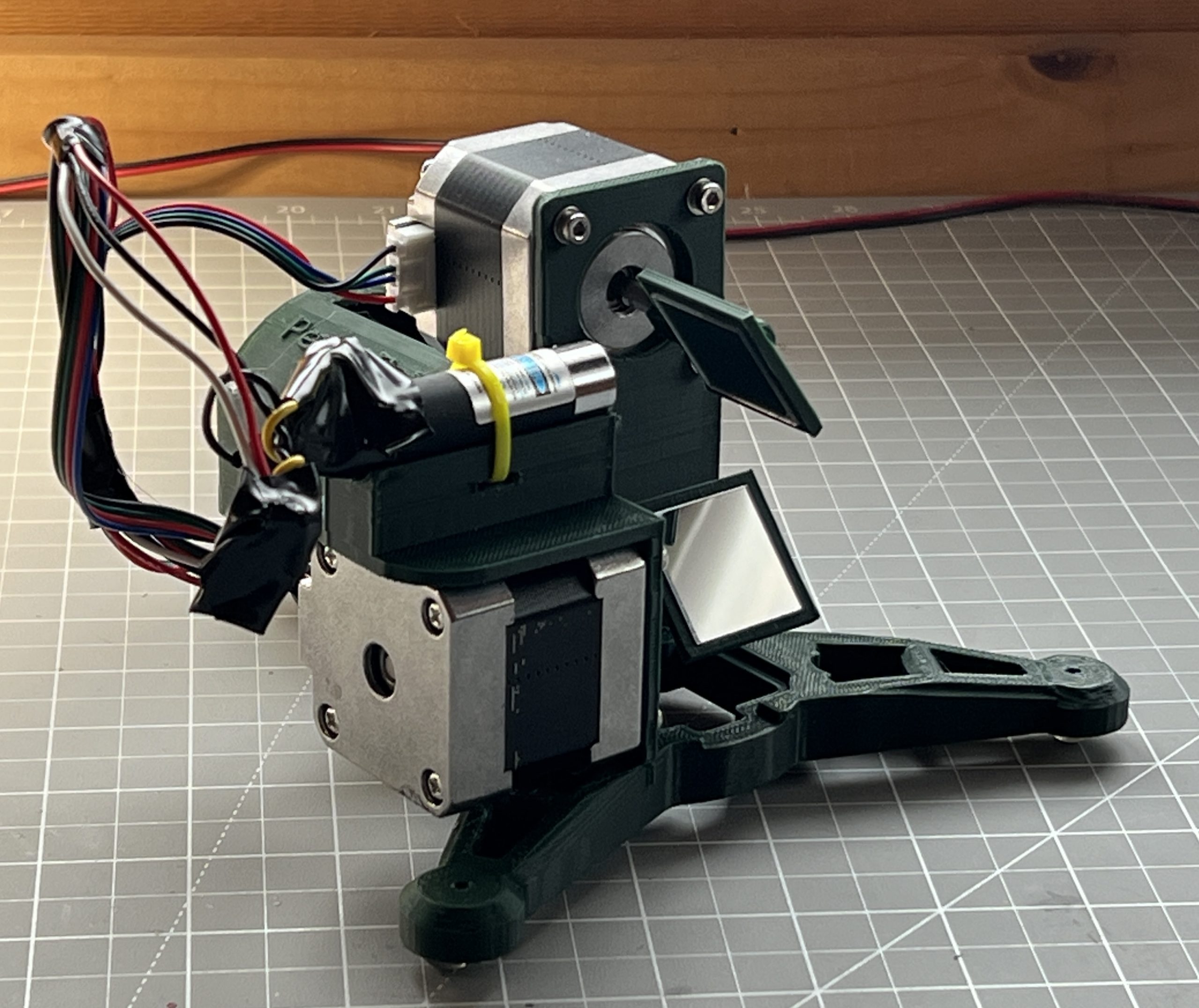
There’s a funny story in there about losing code, reimplementing, and a core issue I was struggling with being solved without knowing why. As always, a few unforeseen challenges got in the way, but ultimately the math is exactly the same as PewtyBot 1.0 so that was a relief. It’s just the motion code that needs to be adjusted some to deal with mirrors.
And well the results are cool, but somewhat mitigated. Definitely not “rocks your socks off” levels of cool. I can definitely move the laser a lot faster. Although through the exercise, I’ve realized that the “slow” speed of PewtyBot 1.0 may have been in the perfect sweet spot for laser light retention on a photoluminescent medium. And so maybe I got lucky there. Of course I could get a beefier laser that emits more light to compensate for the reduced time it spends on any particular area. I’m pretty convinced though that I want to remain in the “cat laser” realm for risk & safety. And so the other variable I get to play with is mirror quality, and I shouldn’t be surprised that there exist a whole world of mirrors of various specs. I got some very cheap craft type acrylic mirrors at first to test concepts. But you can tell the pointer hits the medium diffused and discolored. And so ultimately I’ll want to spend the money on a few square centimeters of first surface mirrors rated for blue light wavelengths. But first I’d like to convince myself that the mirror approach actually brings something extra to the table.
Can’t Have Favorites
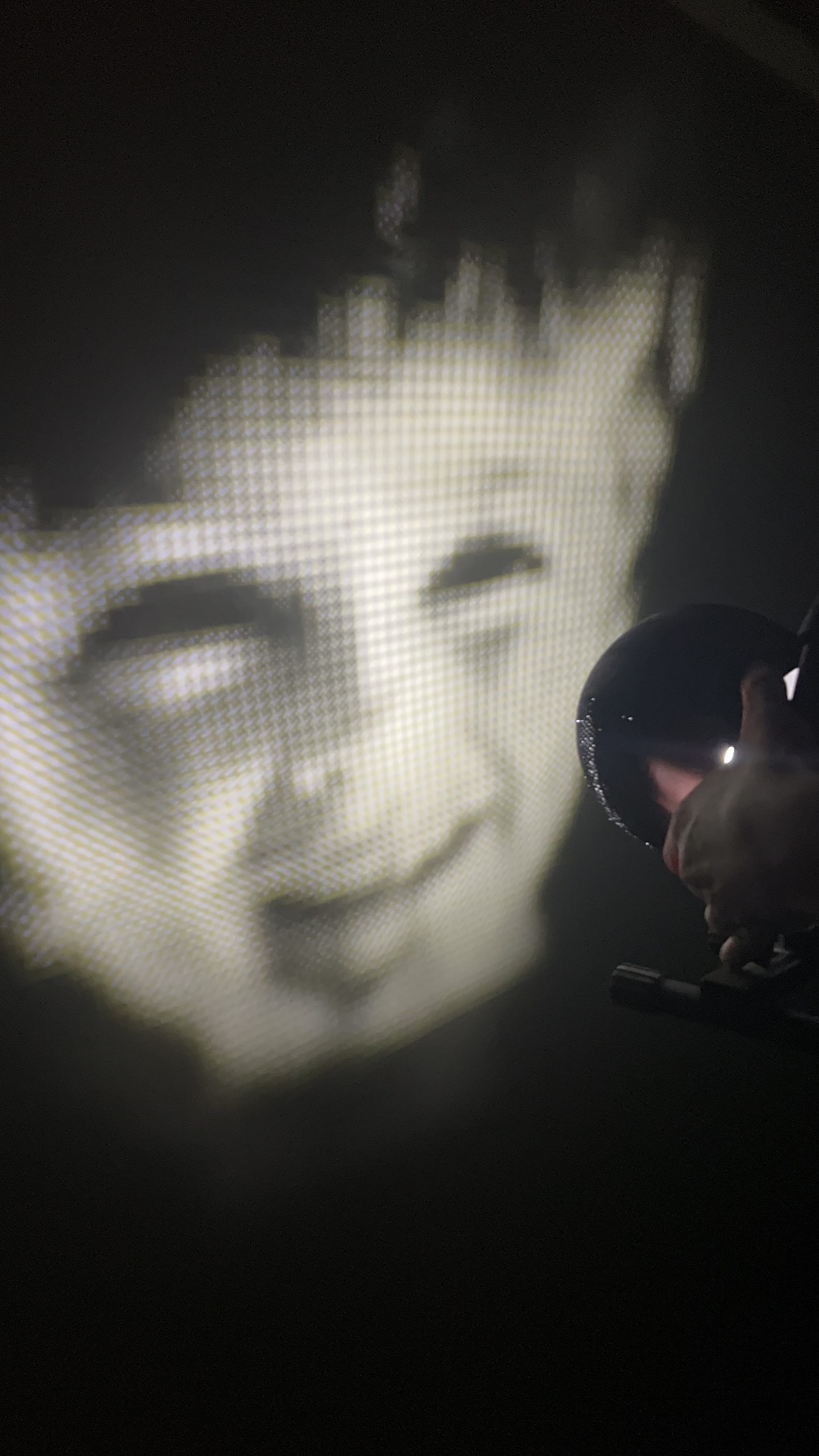
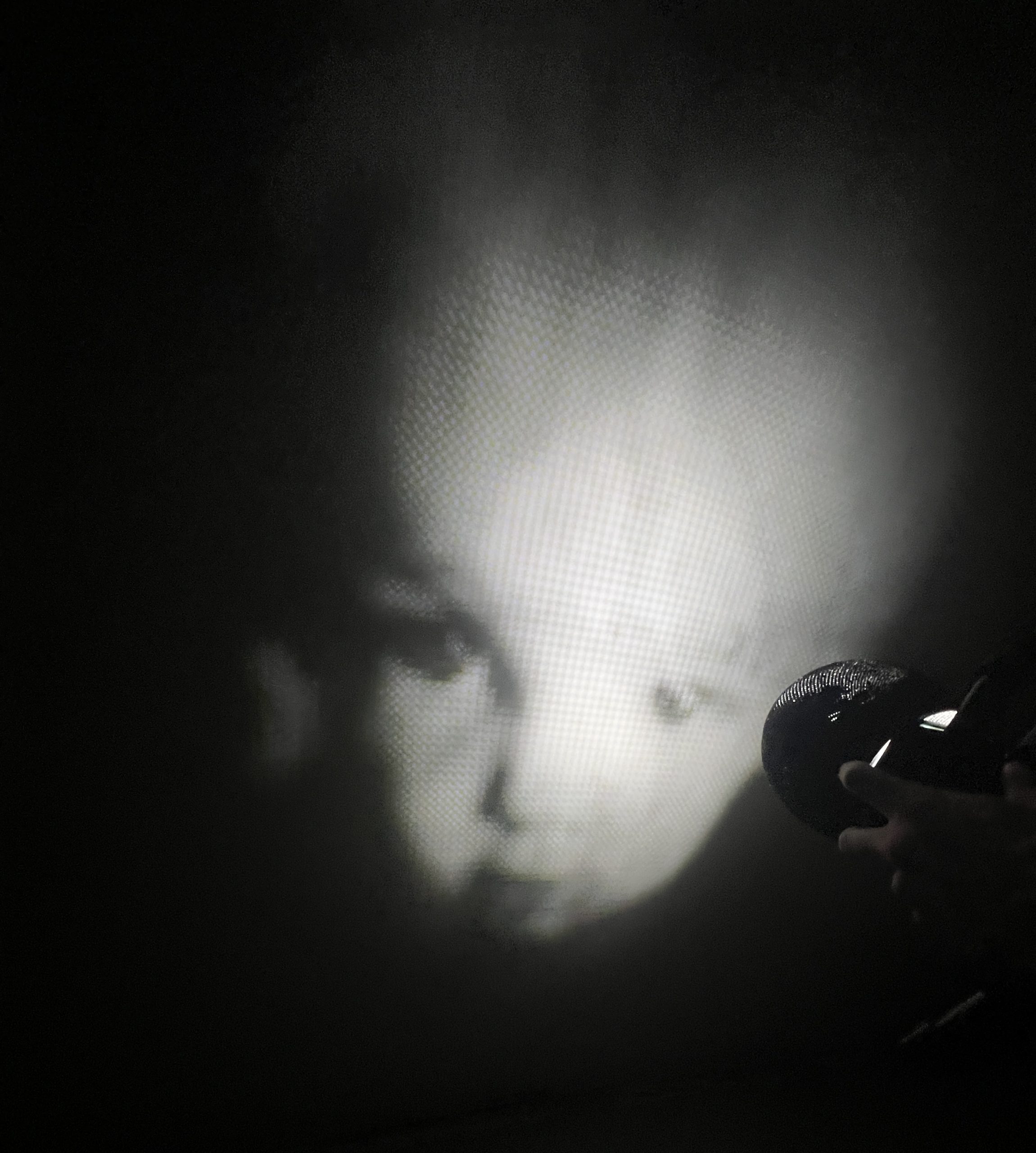
they both need to have their stereographic projector.
Stereographic Projector
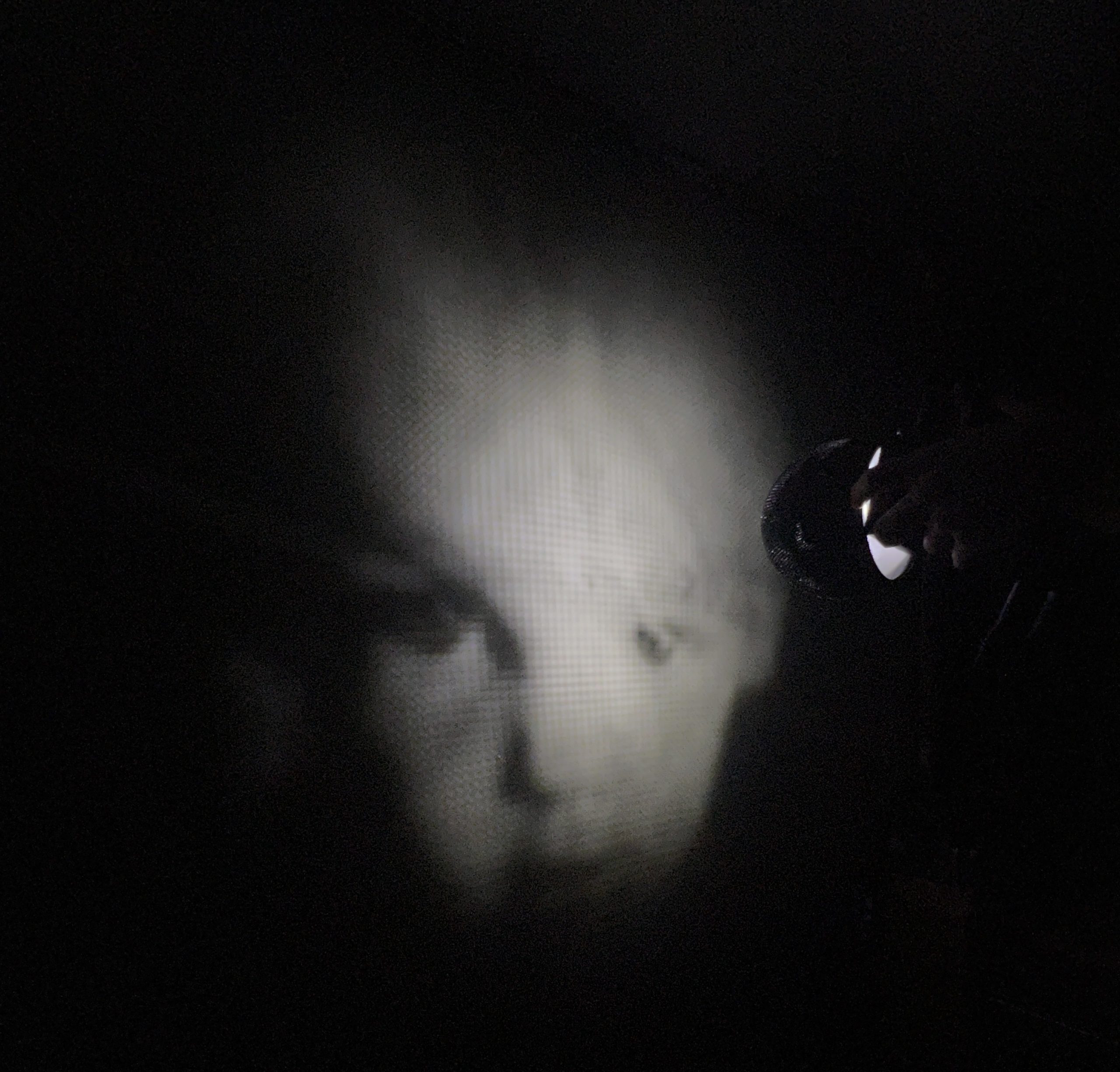
I had to make one: https://www.thingiverse.com/thing:2094215. Projection is shorter range than I was hoping for but it’s still fun and gets the kids thinking.

SketchyBot 1.0
I finally built a standard sized one. I ran into a few unexpected challenges given how smooth the small one went.
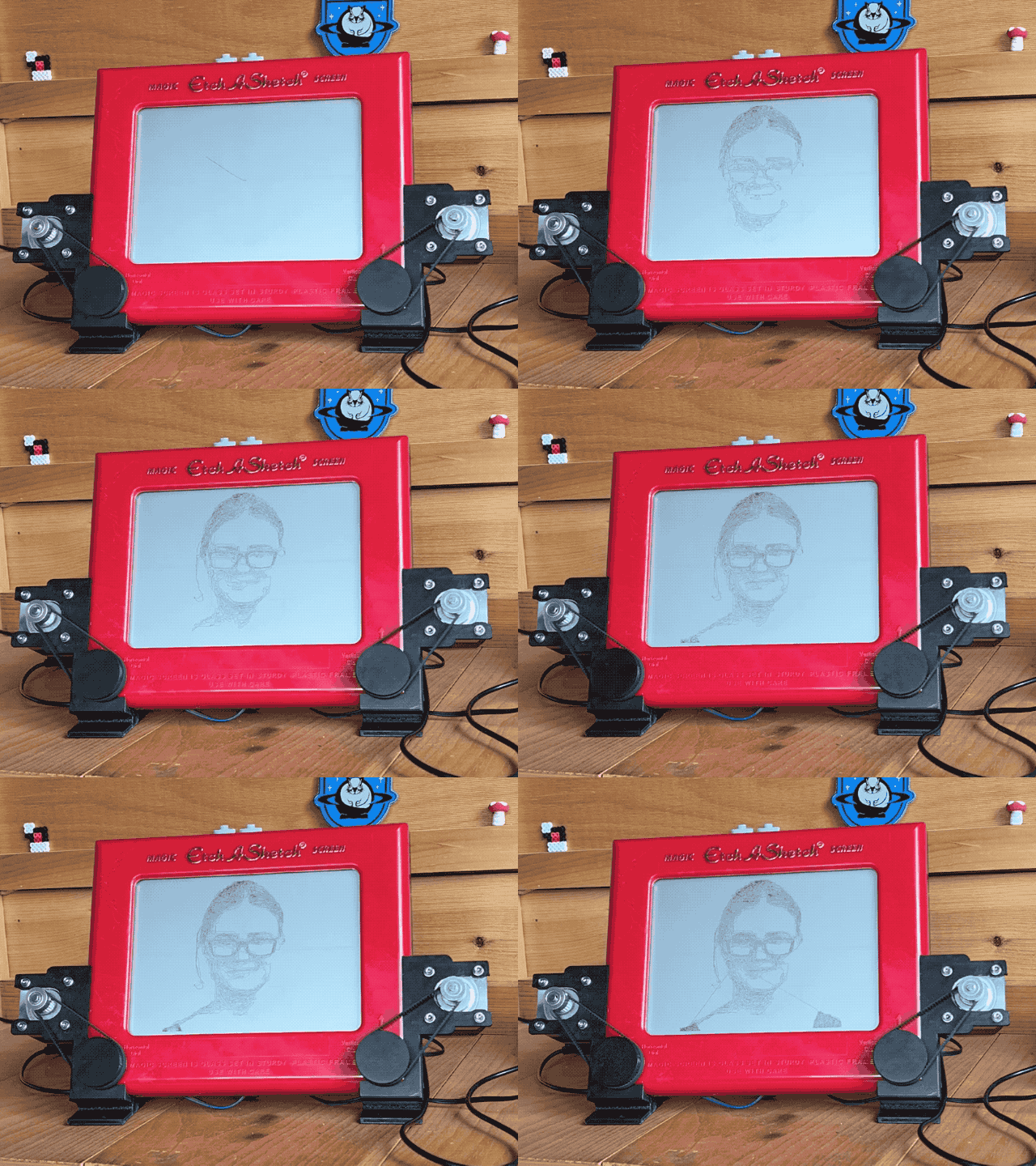
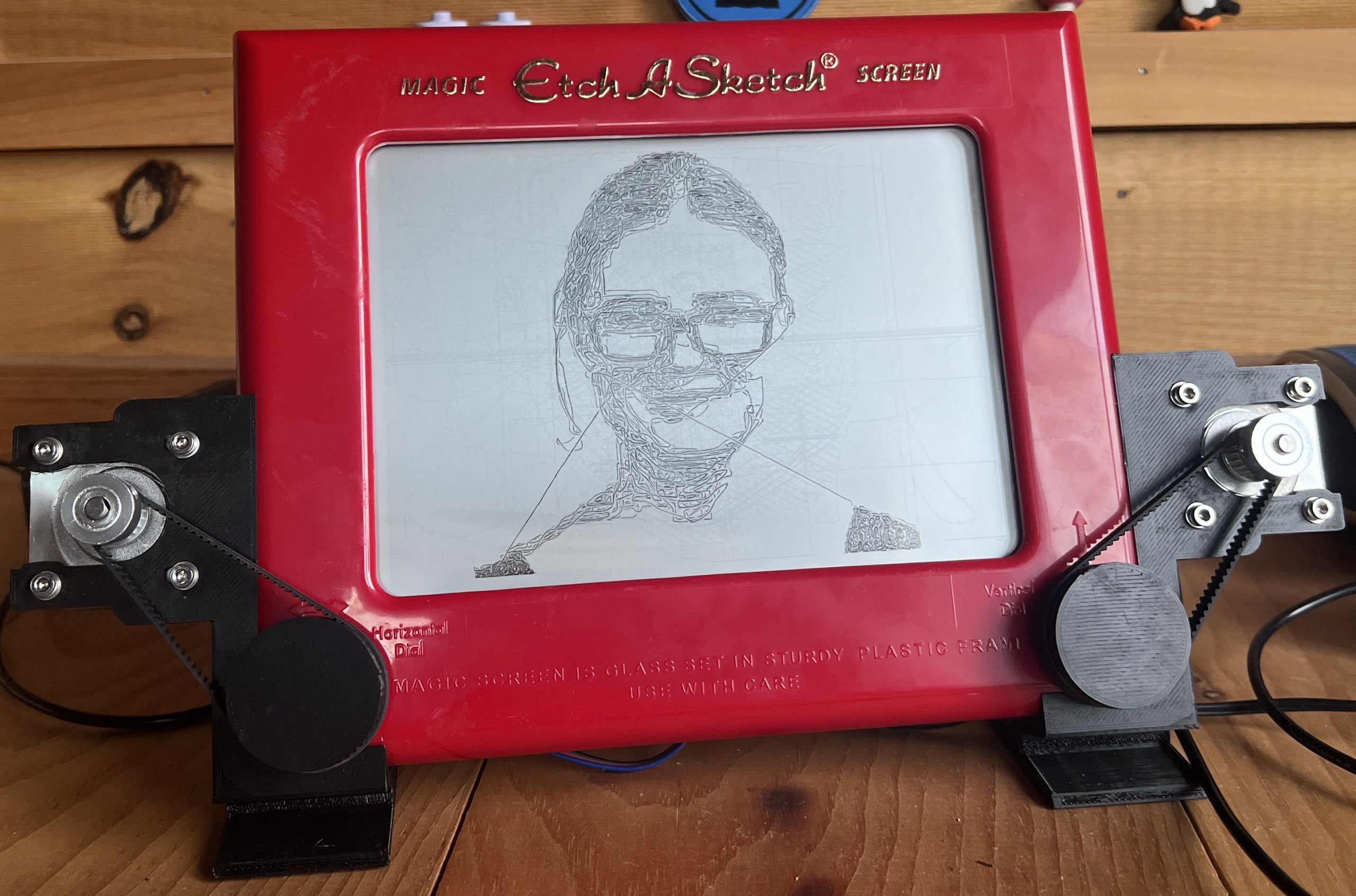
It really isn’t the most accurate machine, the belts inside aren’t timed, but it does pretty ok with some rendering algorithm and is fun.
PewtyBot 1.0 x2
I built another one, it’s always been useful to have 2 of my drawing machines.
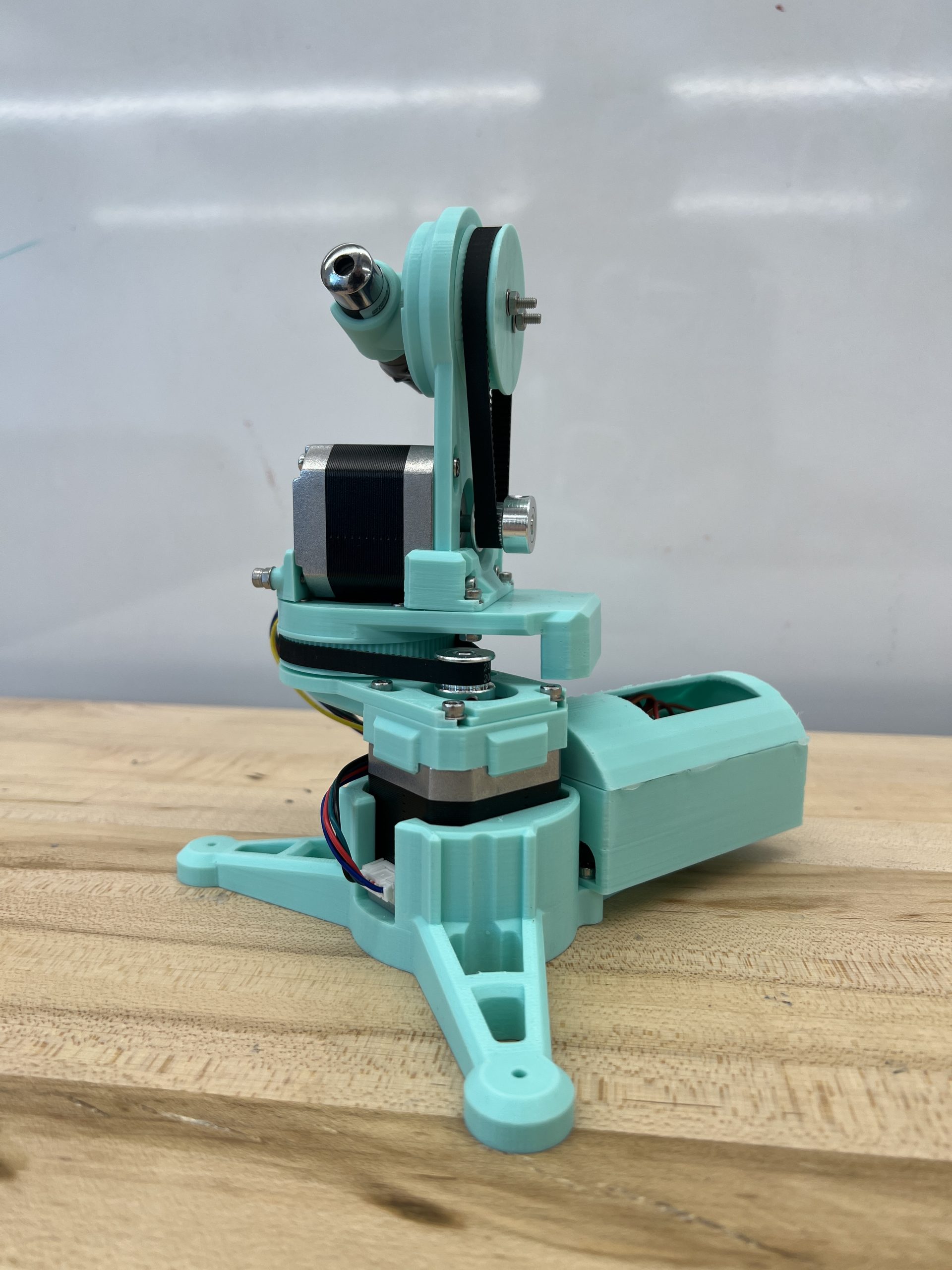
PewtyBot 1.0
I’ve used this project as a stepping stone and modified it some. I can’t say enough good things about it, it propelled development forward significantly and I found it to be expertly designed. Too bad the project it now defunct. I had to find assembly documentation on archive.org.
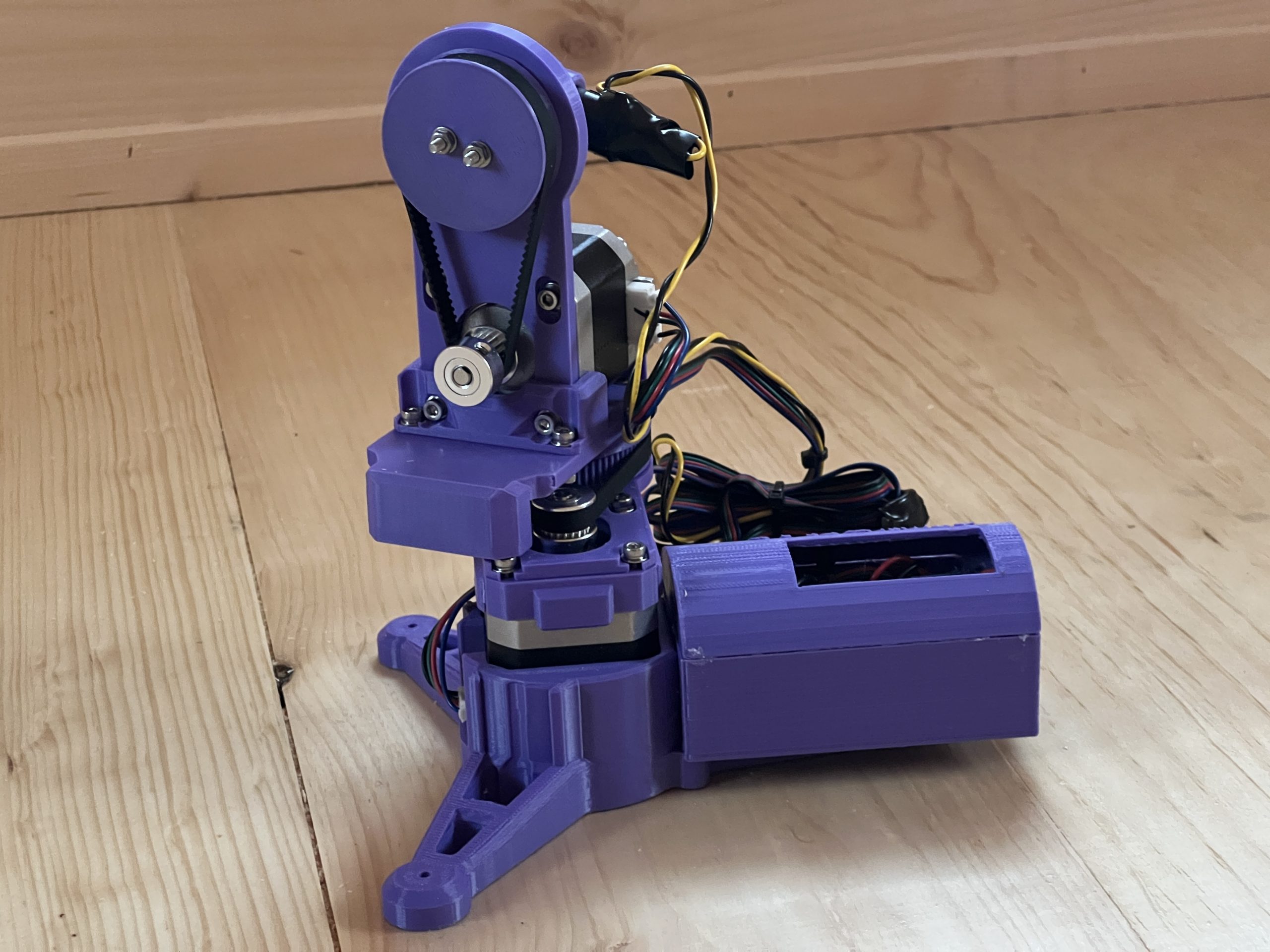
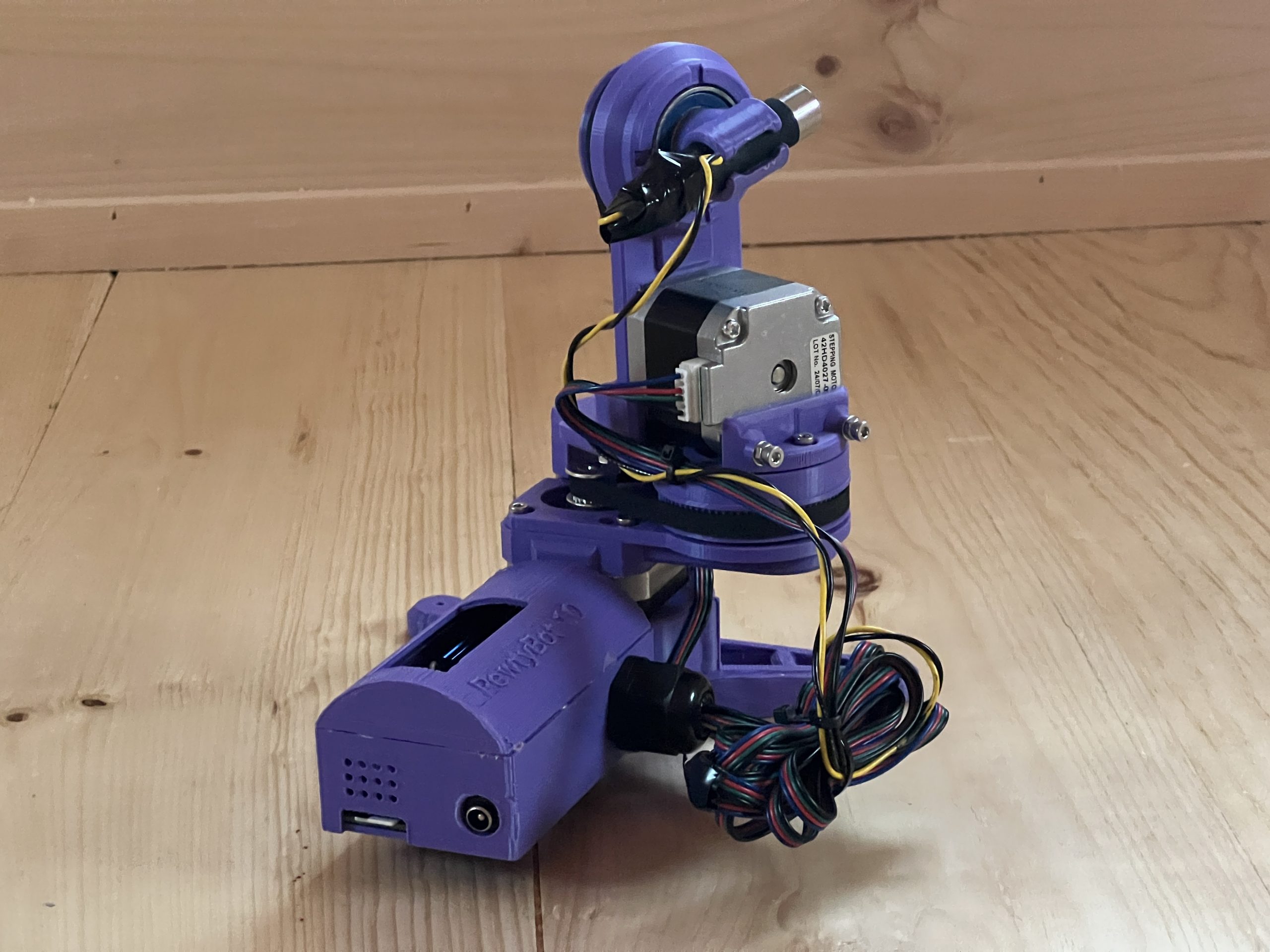
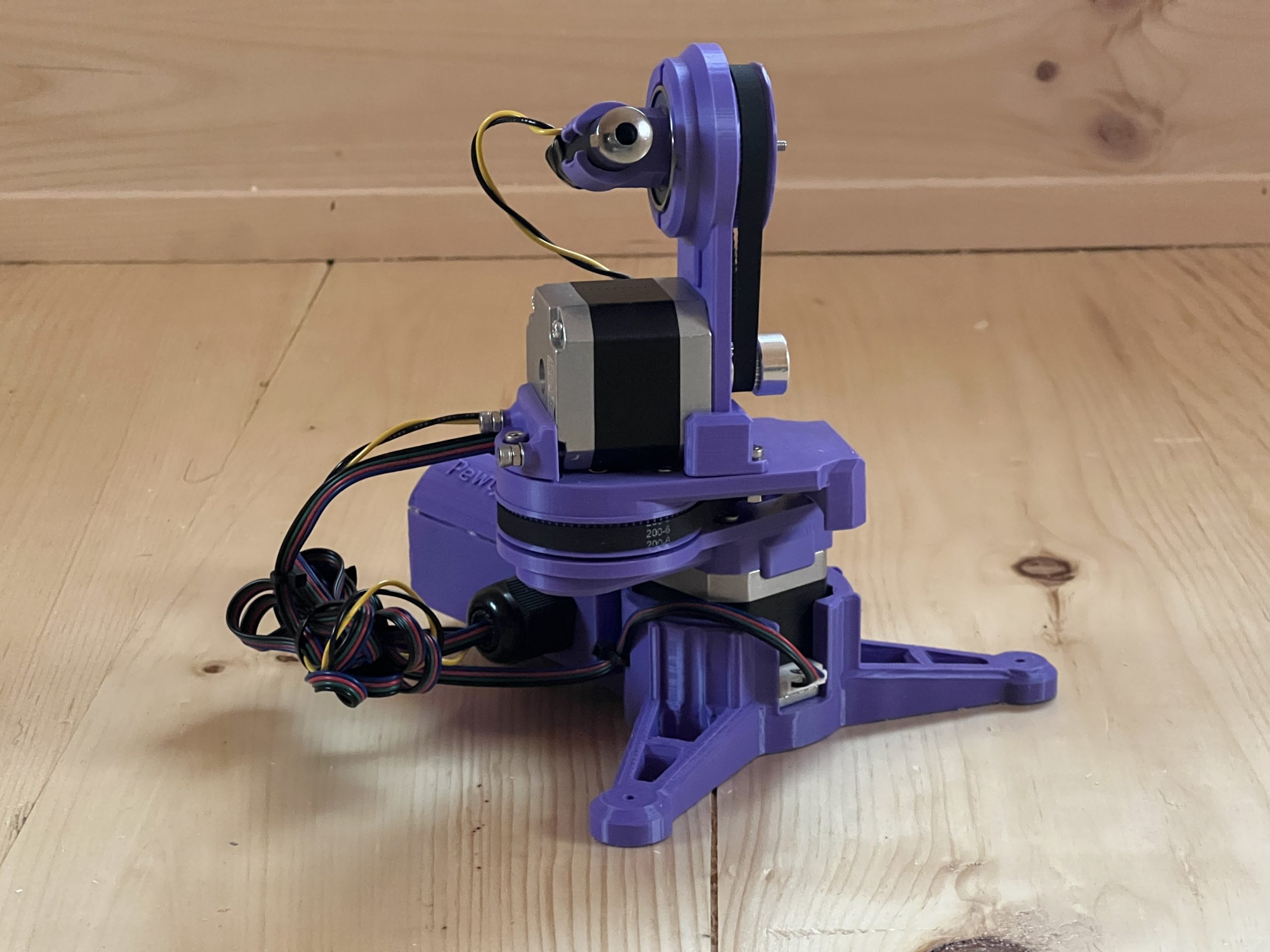
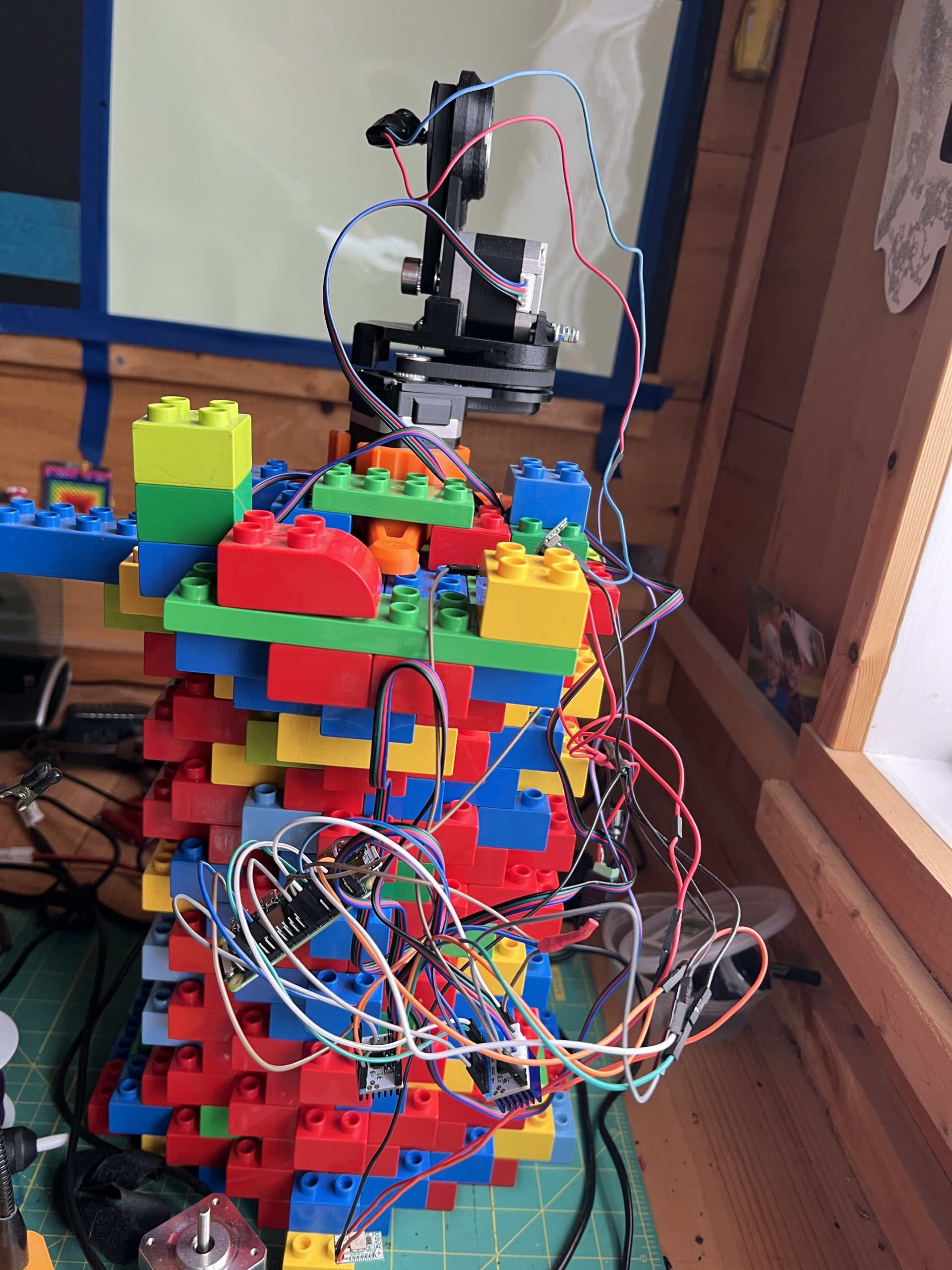
I’m not sure I’ll document it as well as I have the tabletop plotter or the gondola one. At least not yet, maybe that’ll be a Christmas project like the other 2. I did port the same software stack, it would be a shame not to given the years of feature development that went into it. Of course we should use these features with lasers. It might also change drastically, I want to investigate what rotating mirrors could do for speed. Currently some of the moving parts of the machine have enough mass that their inertia causes inaccuracies when moving at high speed.
It’s nice to have things tidied up, the development machine was a mess.
Protected: Crutch Guitar
Procrastinated Planning
Driven by necessity, I finalized the plan for construction 2022. I struggled pretty hard on this one, because I tried to figure out many ways to gain half a floor, and I had to think hard about snow management. Ultimately I ended up keeping it to just 1 floor because I do NOT want to mess with the existing tin roof. In Vermont currently contractors are impossible to get, let alone roofers who are notoriously difficult to begin with (and rightfully so). So it was always the plan that I’ll be doing the tin myself, and because of that, I really cannot mess with the existing roof. So this addition has an independent roof line which does not at all integrate with the existing one.
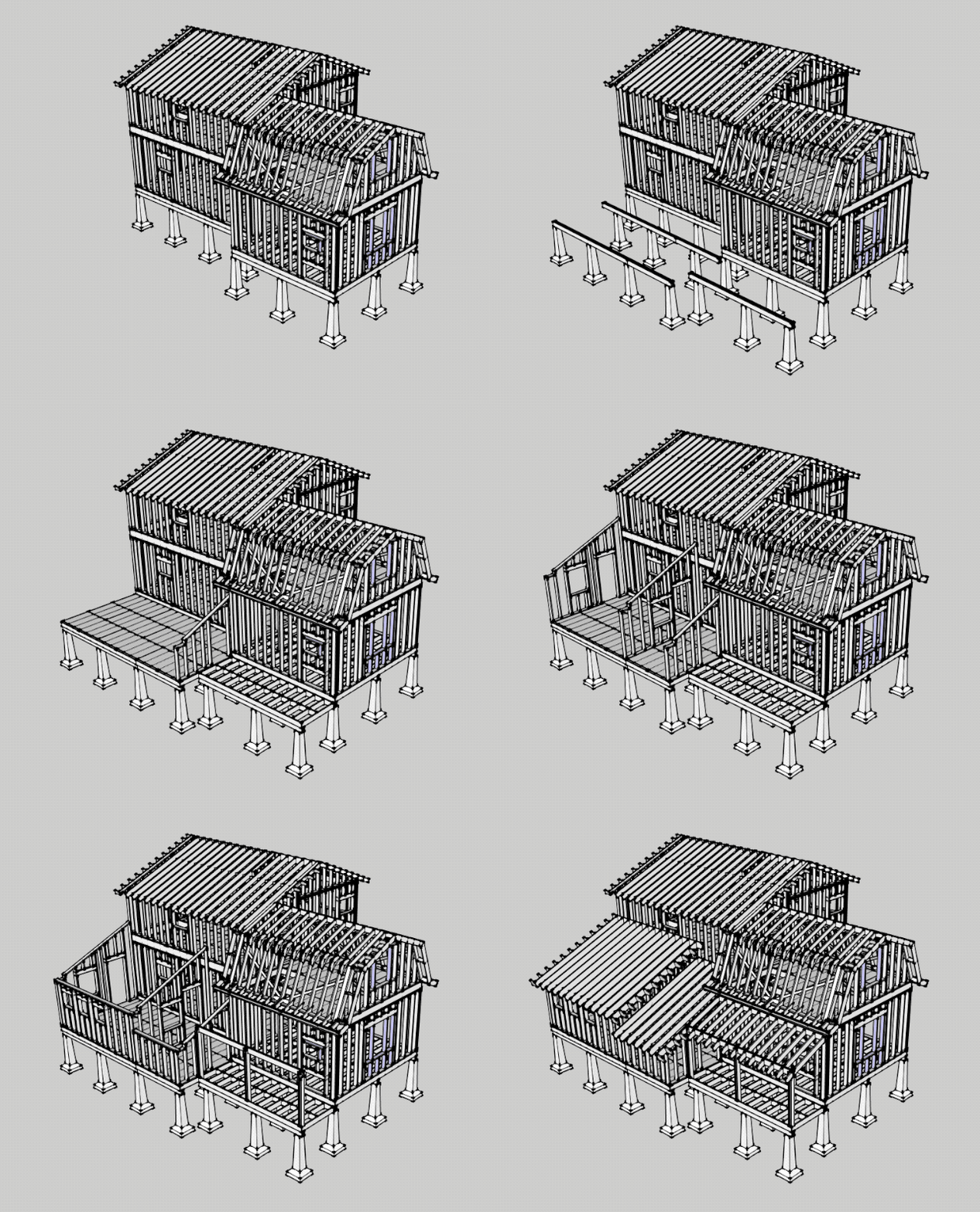
There were a couple of challenges to solve but in the end, it’s a pretty straightforward build. Nicole is getting a whole 12’x16′ all to herself to accommodate all the projects she’s spearheading on the homestead.