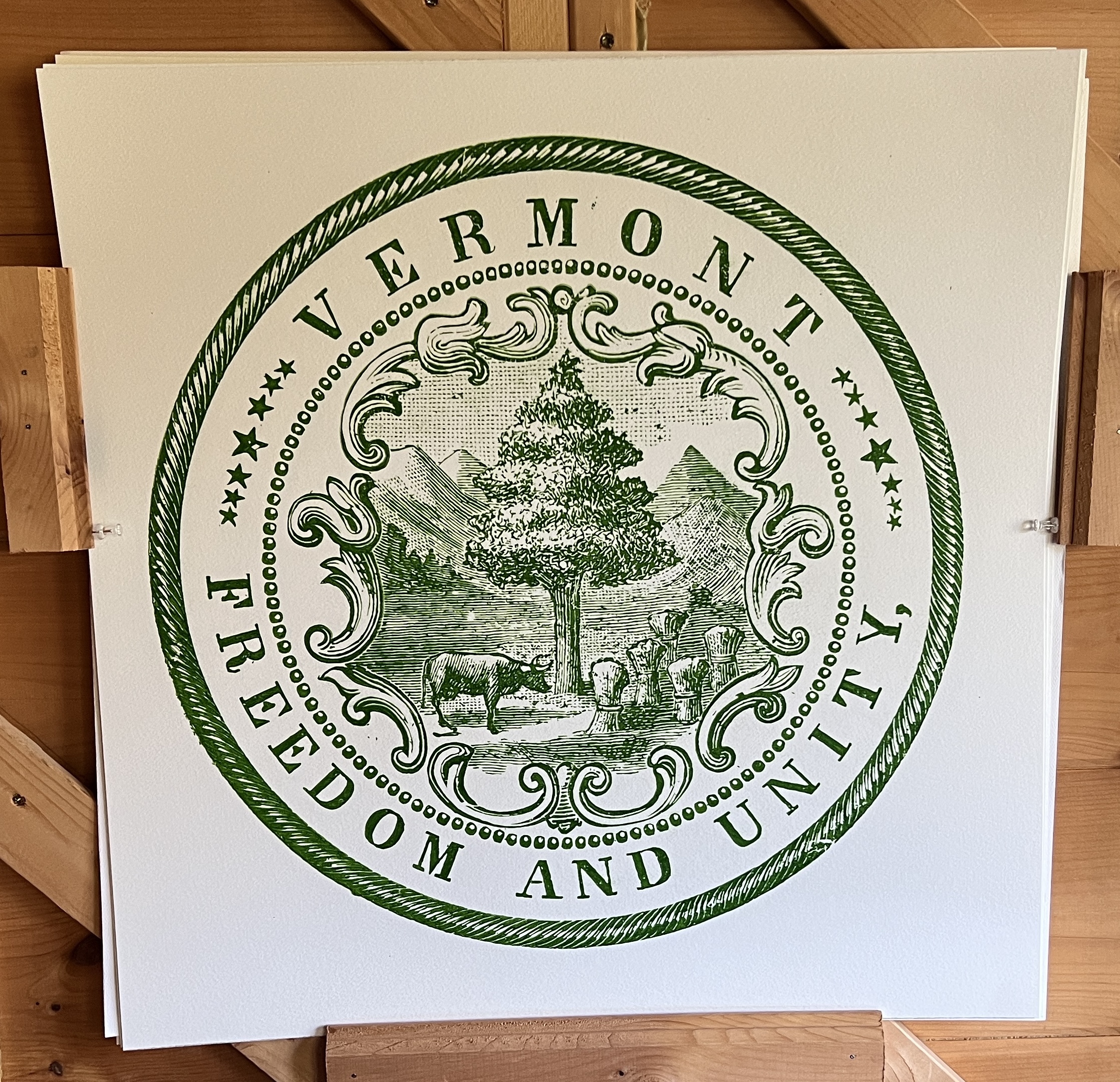
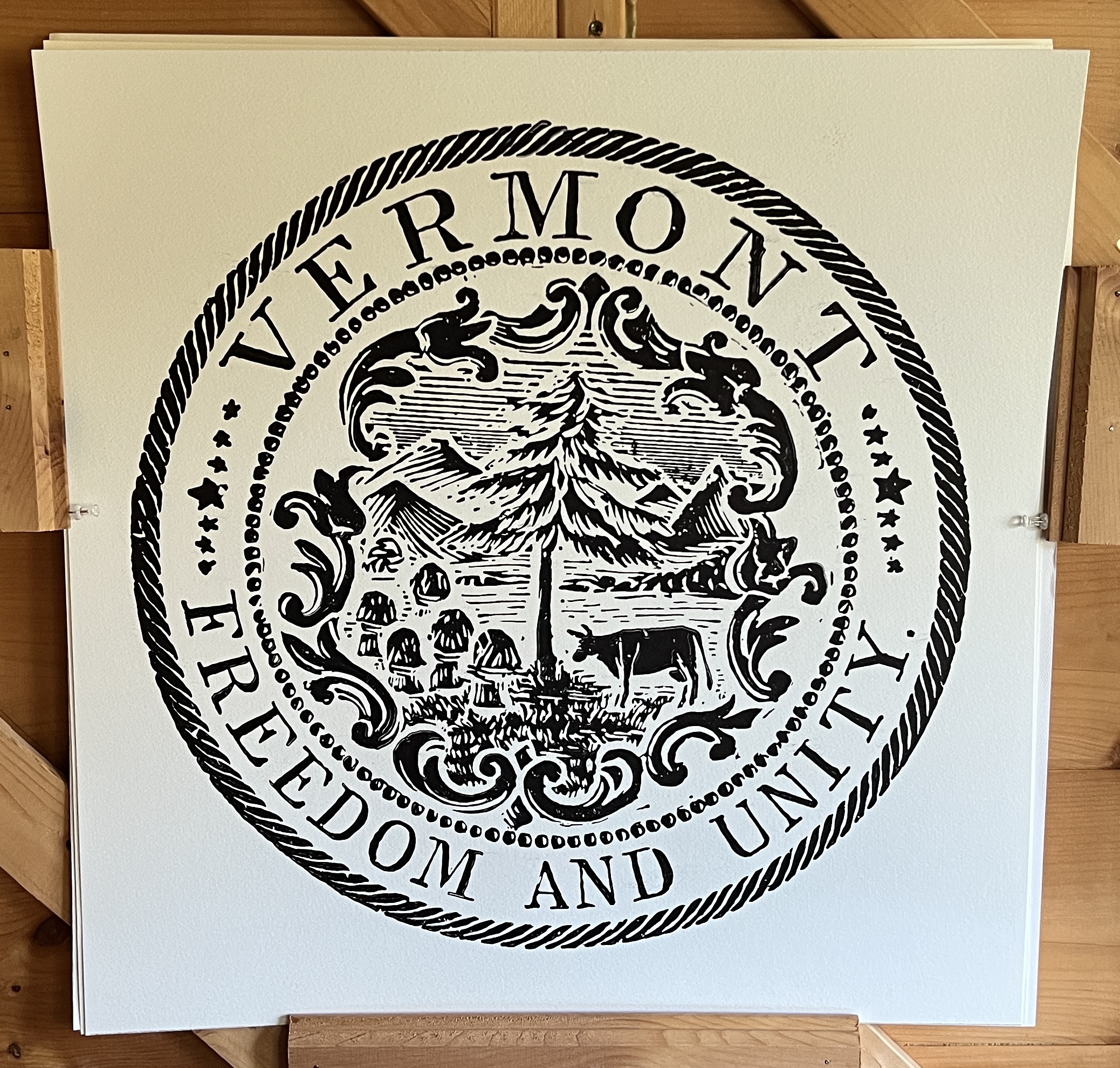
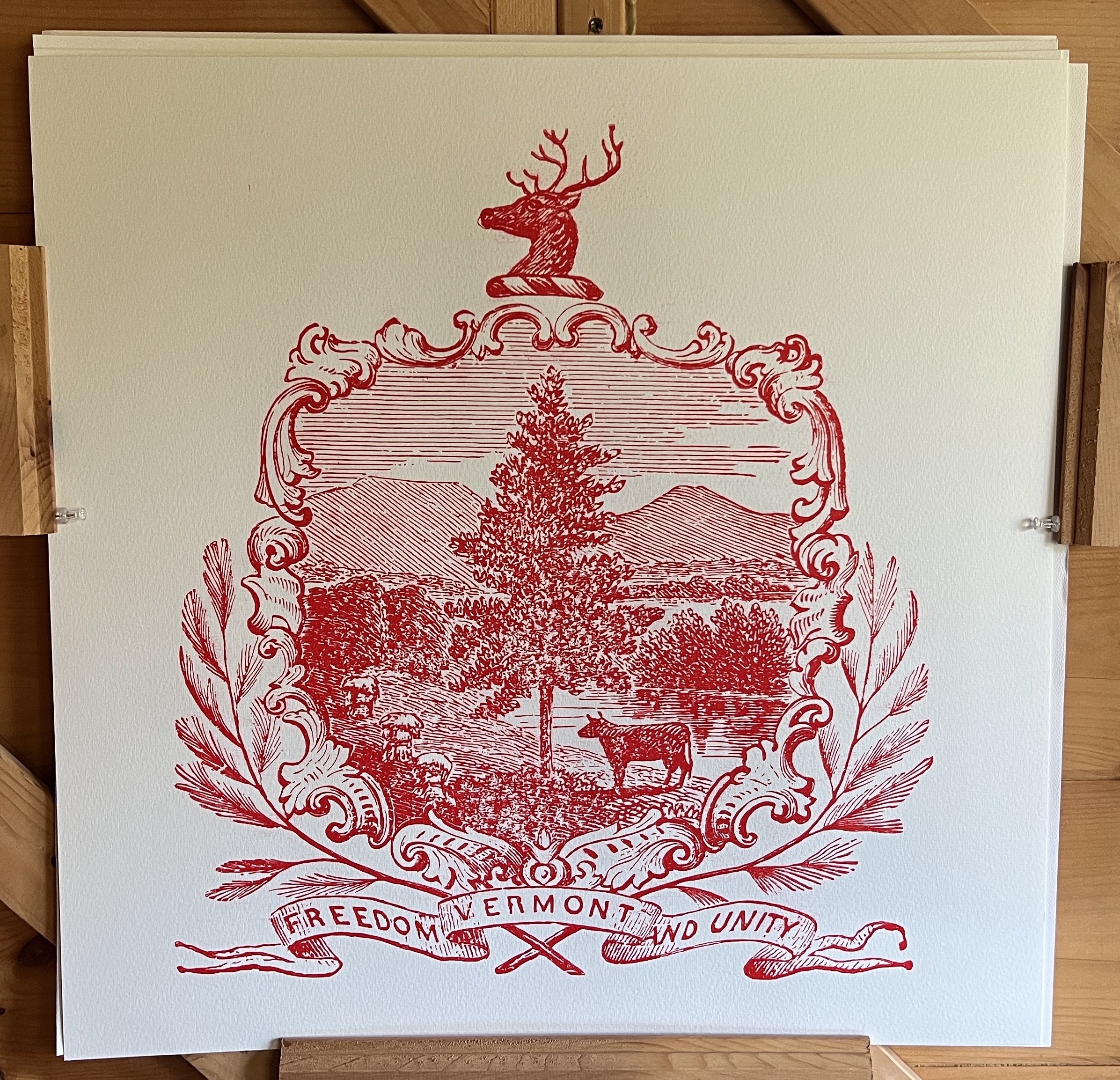
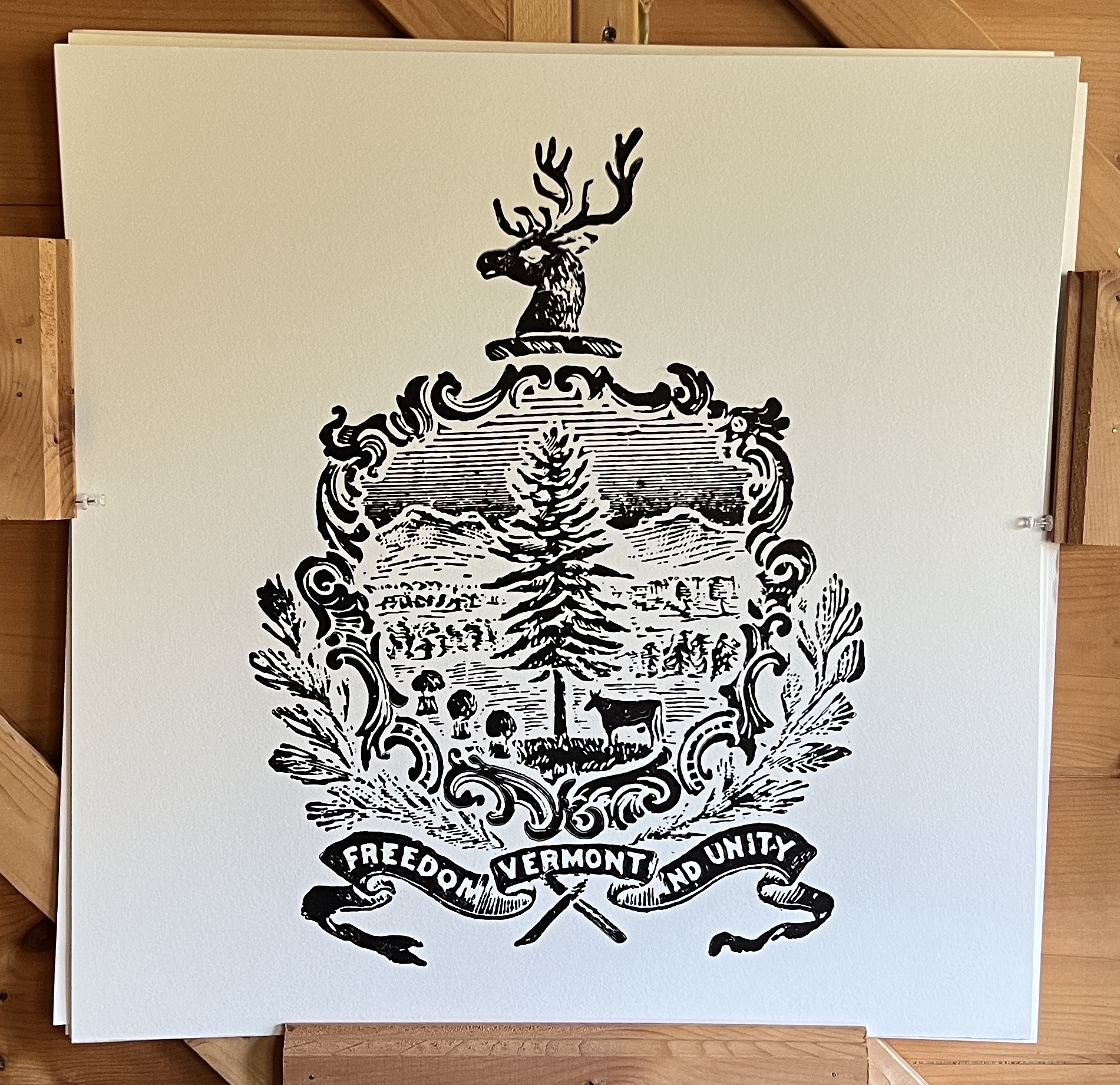
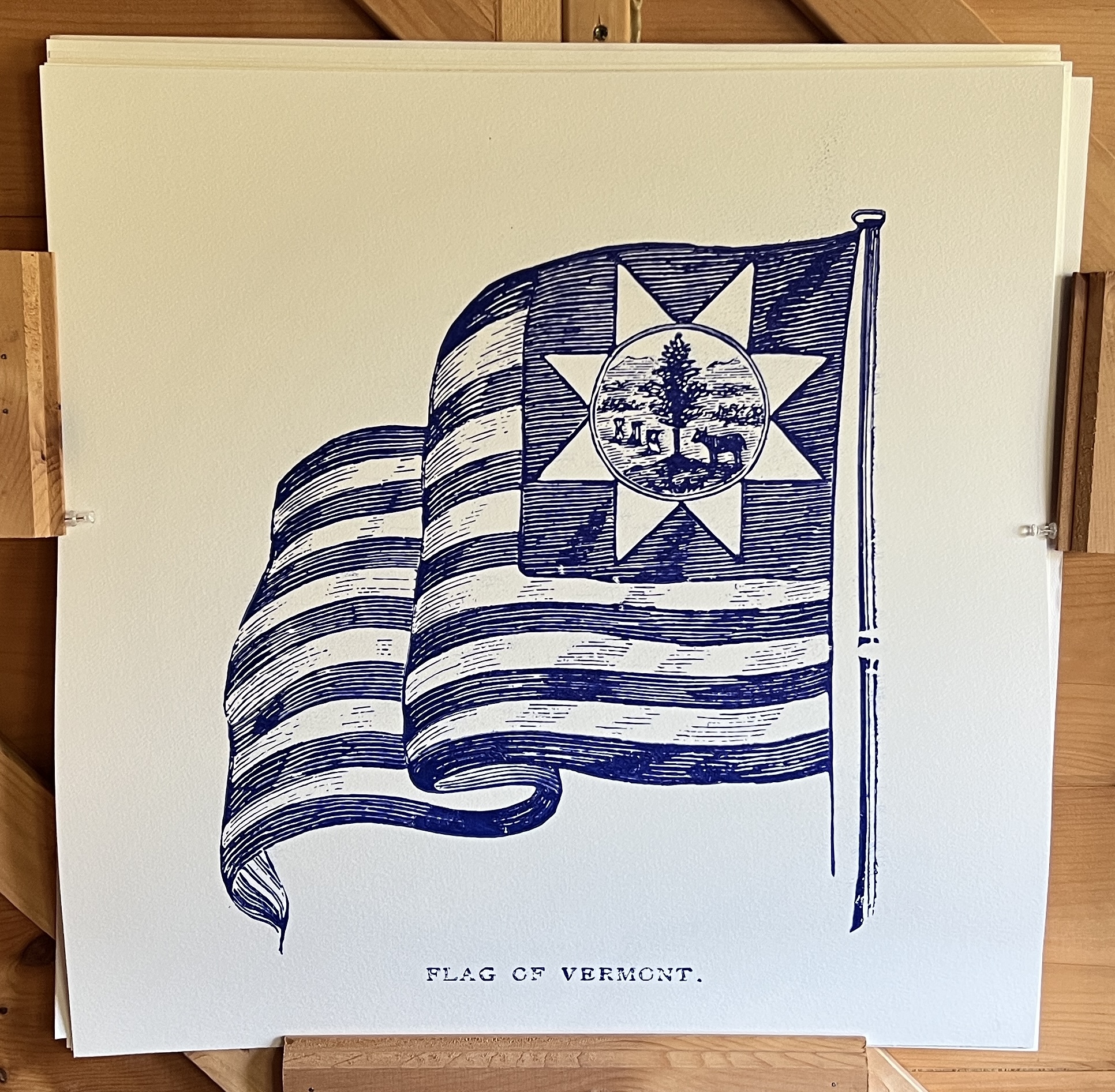
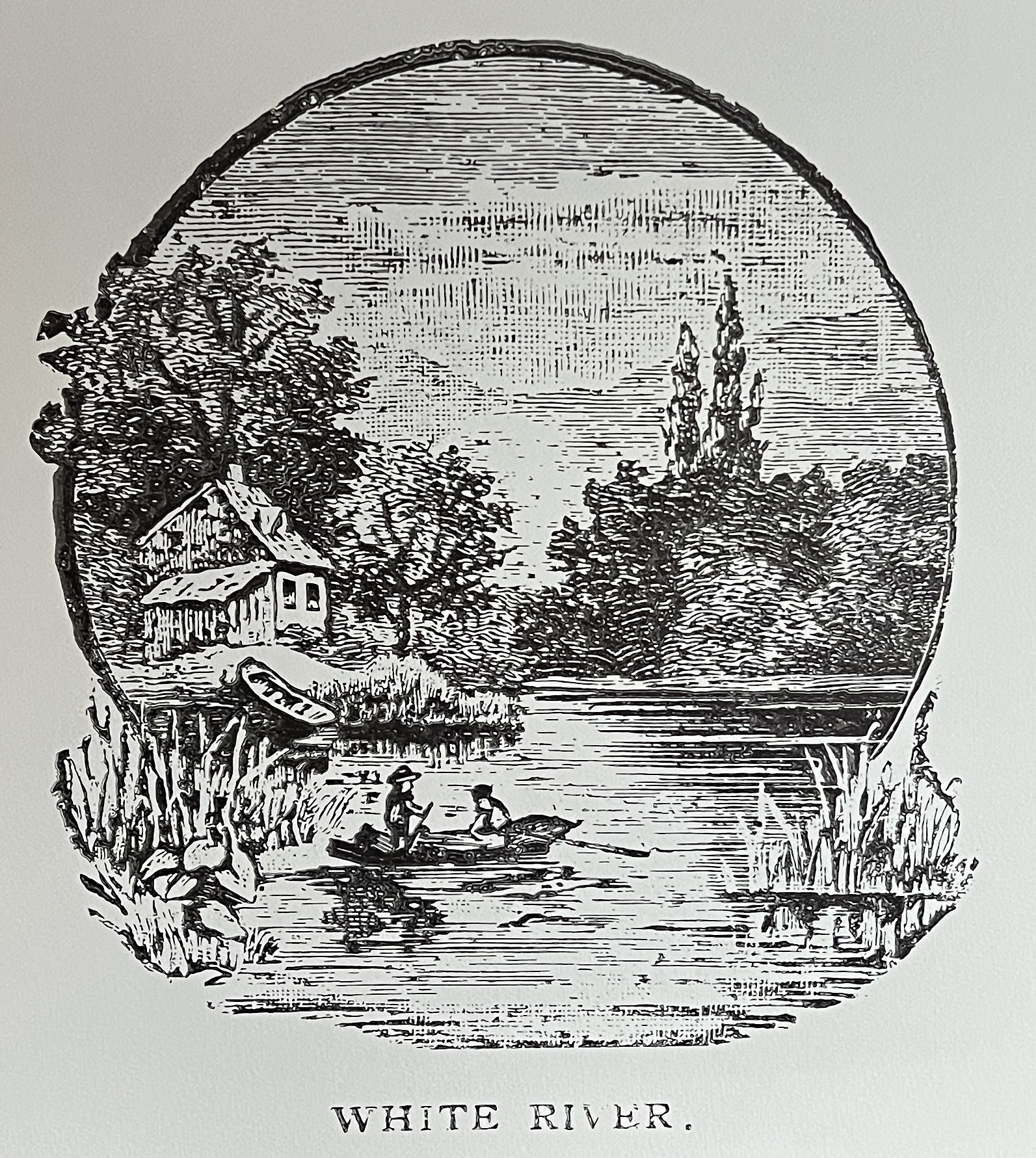
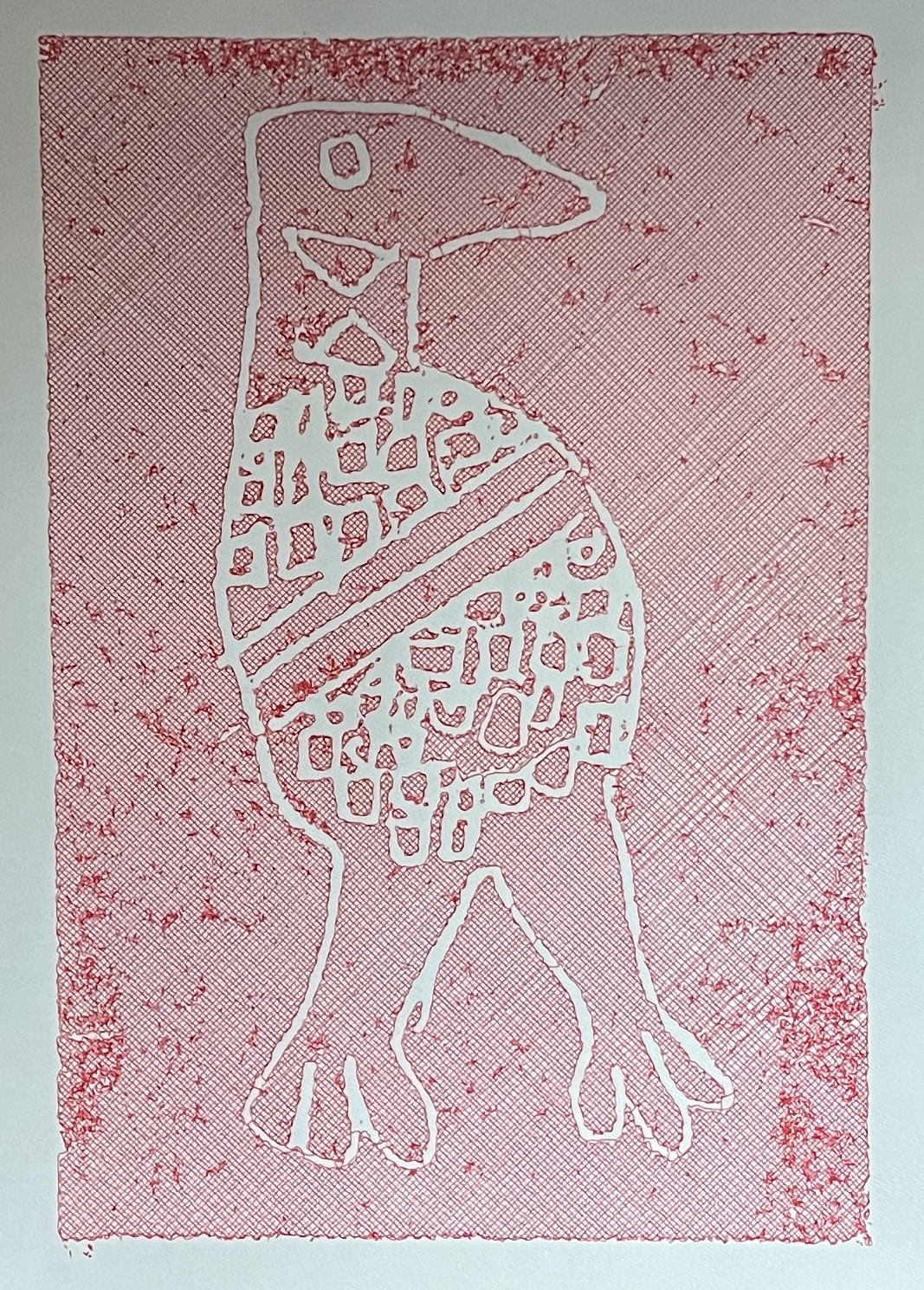
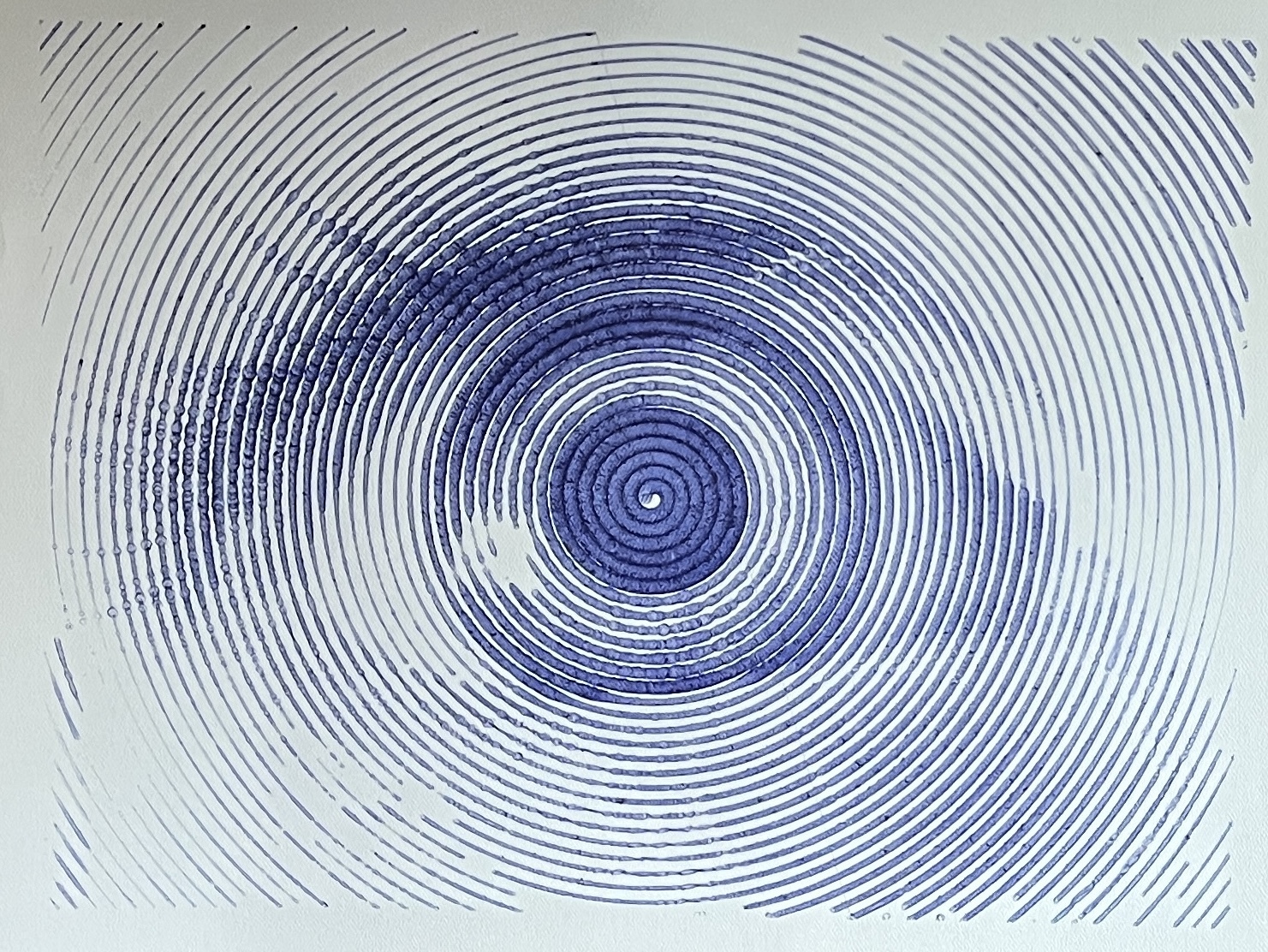
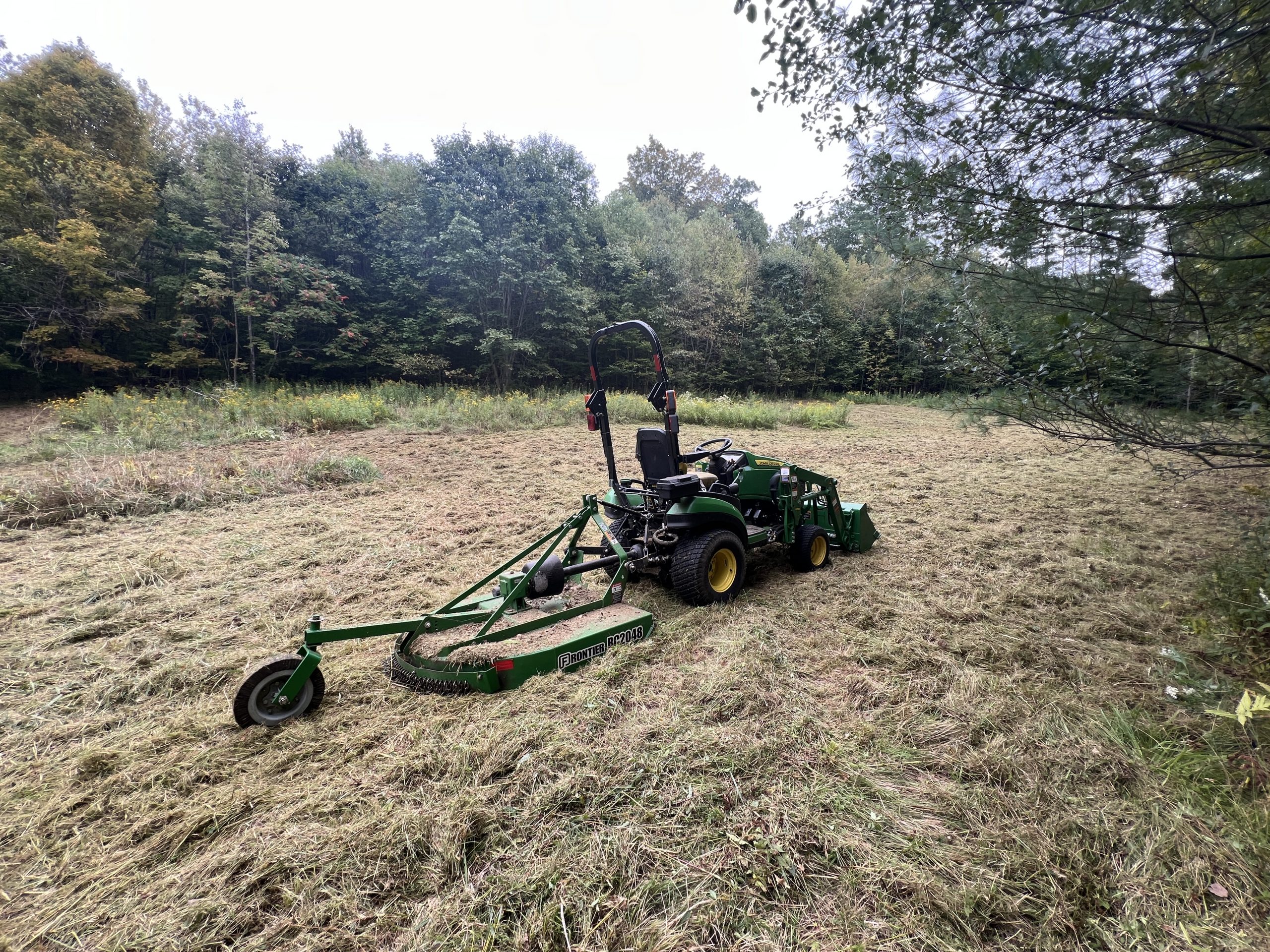
I have a penchant for Vermont seals & coats of arm, and I found some good ones in some old books. I really like turning old engravings into large plots, these look great in person.
The new recursive inset fill algorithm is incredible and making me want to revisit previously hatched plots.
I was forced to read as a kid, which made me despise books and go through school avoiding them at all cost. I can count on my hands the number of books I actually read. Half of which were when I met Nicole and took interest in the books she liked. It’s a sad fact, but literature eventually found its way via music with Brel & Brassens. I could at least enjoy some good prose but I still avoided boring paper for decades. Learning English eventually made me more interested in language. Lately I’ve felt like friends were getting something out of books that I wasn’t, and so that I should try again. I’ve also been interested in refactoring media habits, less algorithmically fed bite size outrage, and more human chosen focused & continuous.
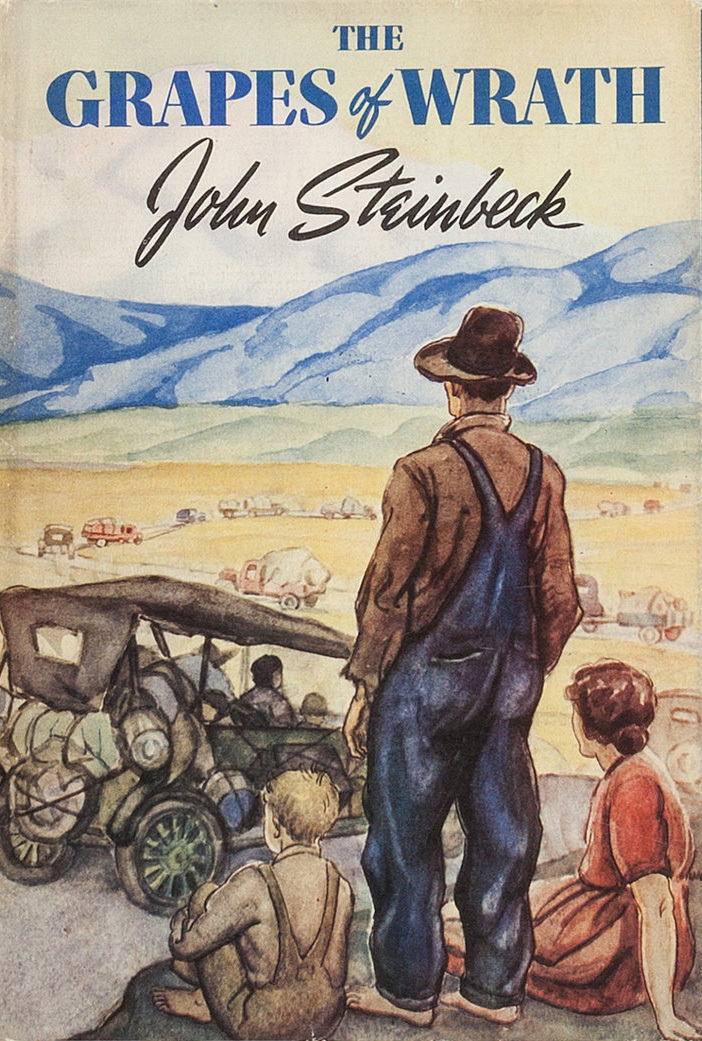
How to pick a first book in decades, and not get burnt? Well I decided to stick to classics thinking they were well liked for a reason. The current economic context led me to pick The Grapes of Wrath by Steinbeck.
It took me a while to get through it, reading is really not natural and I need to establish the habit. And I loved it. I loved recognizing a uniquely American hardiness in Tom & his fambly. Nicole & I have observed well before this book that Americans have a particular way of going through hardships. Resigned, no push back, just acceptance and enduring. Sometimes, and that may be the latin in my own cultural mix, you kind of want to shake them and ask why they are just accepting things that could be pushed back on. This cultural trait is well illustrated in this book. It was rough to read at first and it took me a while to understand some of the words. The illustration of economic exploitation was also well received and helped me understand a pan of US history, and present state. Everyday economics here is objectively a lot more cutthroat than western Europe. This can be good or bad, much like unquestionably enduring hardships. More freedom to do great things, and more freedom for greedy predators to help you hang yourself.
I know it was a good book because it stays in my mind well after having read it. I hope I can keep fanning that flame going forward.
I seem to have stumbled on a turkey turf war, I wasn’t sure what I was hearing until I got close. And then again I wasn’t sure what I was seeing until from the chaos emerged 2 flocks going opposite directions. Clearly they had run into each other and weren’t having each other’s presence.
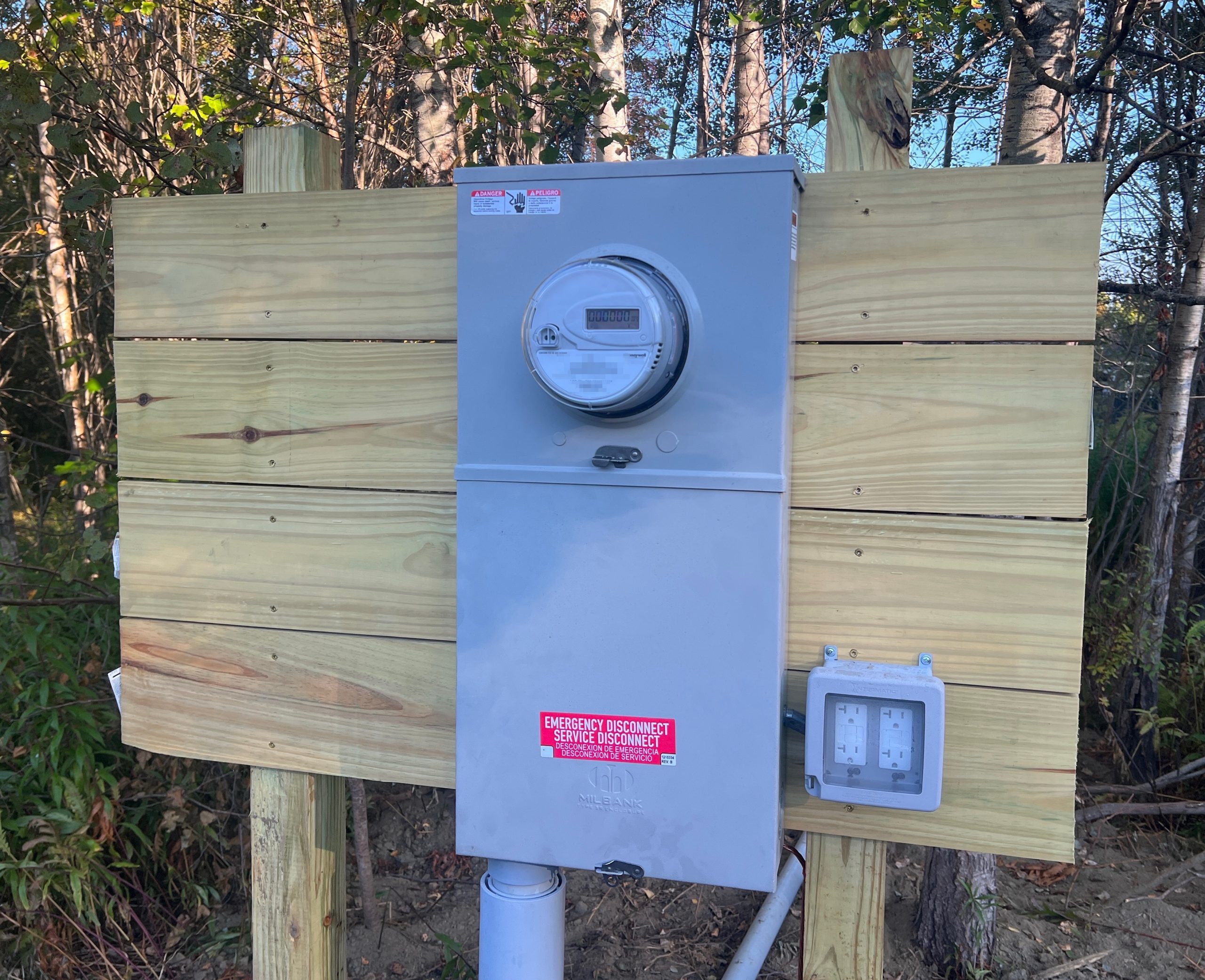
I hate to say it, but we have hooked on to the grid. Well, we have an outlet, outside, with nothing plugged in. The house and kids are growing, we use ever more energy and I have less time to implement. We still don’t have a root cellar which would be the perfect spot to keep batteries from freezing, and would trigger our investment in a good bunch of lithium. And so until then it’s only 3 batteries keeping us going, and really they do great, but in the winter with shorter days, more cover and colder weather, we have used the generator. And so the idea with having access to the grid is to replace that, and in general having one more option to fill batteries.
I am dead worried about complacency, I really don’t like the idea that it’s right there waiting to be used and easy. In reality, the last car we bought should have been electric. We didn’t have the capacity to “fuel” one though, it would have been nice to have had the grid option then. I still very much have the intention to fuel one with the extra solar array that’s been sitting in the shed for a while now, but at least if push comes to shove, we can still get the car now and experiment with increased solar later. That is one thing about home grown solar, with change comes a transitional time of experimentation and learning lessons the hard way. Which is a bigger deal when talking about mobility (AKA me waving my hands explaining to Nicole why her car doesn’t move).
Another hard truth is that we’ll never have enough storage to run AC in the house through the night. We’ve done wonders with running it during the day, taking a cold shower in the evening, and fanning cold air in at night. If you give us a Summer like 2025 every year, no problem. Seared in our memory though is a brutal heat wave which lasted for days and offered no respite at night. We want to be better placed to tackle future heat waves, and the grid means having the option to run AC through the night.
The house is still solar and autonomous, the grid is only an extra decoupled input we can tap into when it makes sense. But we’re no longer as off grid anymore. I’m confident we’ll keep growing our array and experimenting, I’m genuinely curious about all things solar.
I’m plotting again after an August hiatus. The new Gondola Plotter is super quiet, so nice! I’ve made a few refinements to the software stack of course… The usual.
I found a bunch of really cool engravings in some very old books I found in the abandoned house. These books are worthy of some discussion on their own much like the old vinyls, but this isn’t the time.
I got ChatGPT to make me a few SVG handling tools that are really incredibly well done and will help me shed some of the apps I was using. With SVGs there really is not a single app that does all the things, so I drag a collection around just to use 1 or 2 of their function. AI is helping me write scripts to explore algorithms and replace more trivial functionality from apps.
Case in point: this super cool recursive inset fill algorithm to turn fills into something a plotter can do.
I’ve been wanting to write this one for a while, but I knew it’d take me a good few days to nail it. That got turned into 30 minutes with AI. Jaw dropping. I love the effect as it echoes a lot of bored fillings of shapes I’d do as a kid getting bored in class. The cookstove above is filled with it, but it’s far too dense at this size and so it really looks like a actual fill rather than a particular effect.
A lot of my tooling these days is Python which has good libraries for handling SVGs. I used to dislike Python for their dumb purist move from 2.7 to 3 which wasted everyone’s time, and because they had managed to reimplement library hell. But I have to say venv is a successful redress to the later.