Plotting Plotters

Well so, I fell into a very deep rabbit hole. The world of pen plotters… A year in, I finally have some good results. After several prototypes of Gondola plotters (V-plotters) and regular tabletop plotters. I’ve homed in on a set of designs, hardware, electronics, and algorithms to think I can make a small difference in that world. I still need to iterate a little but I’m hoping to release each plotter as a DYI projects in 2020. Maybe I’ll even sell my making them for others. Of course there will be integrations with Mandalagaba because that just makes sense.

Now there are several such plotters one can buy or build for a wide range of prices. And they all have a very shitty software stack. This is where I believe I can make the biggest difference.

As with building houses, it’s enormously relieving to finally see into the real world a model you’ve been immersed in, CADing it for a year.
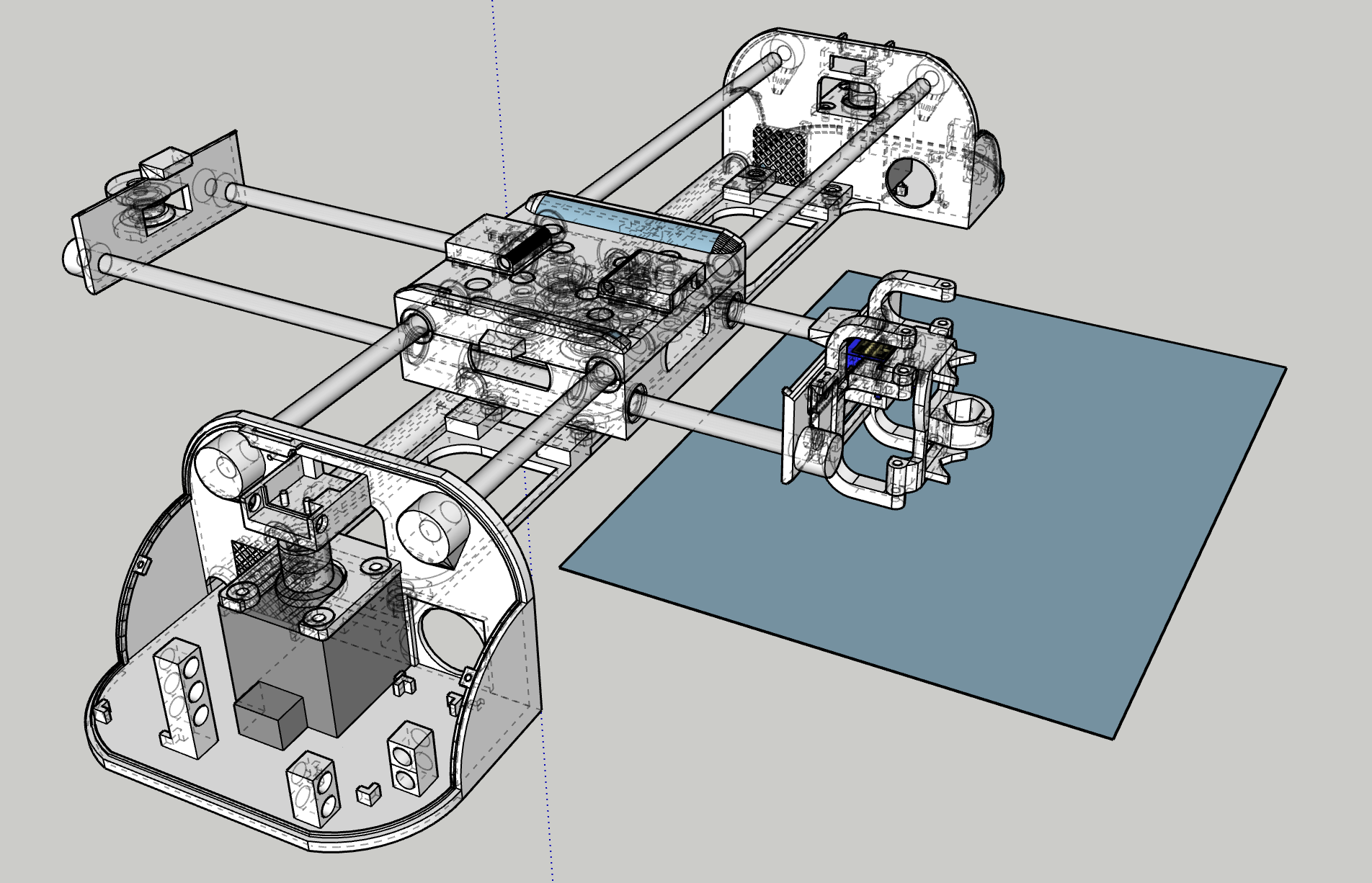
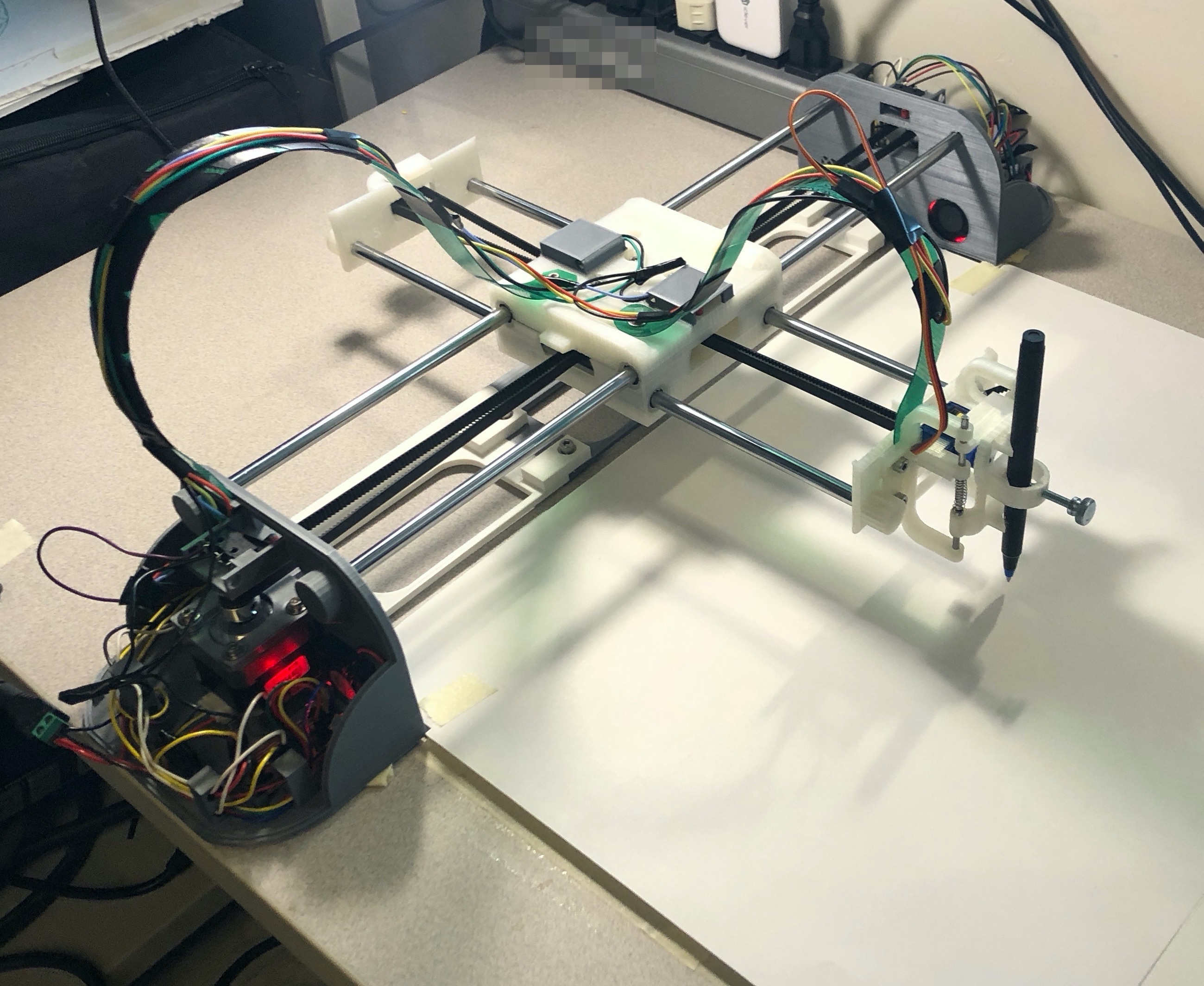
I’ll skip talking about the long series of challenges I ran into building this. It’s really, really nice to see a long plot finished to perfection knowing that finally, nothing is wrong. I’ve learned a lot along the way.

There’s a bazillion pen plotters on Thingiverse, I’ve used some of them as stepping stones until I was ready to finally make my own top to bottom. As I said, software is where I think I can make the biggest difference. I’m a Raspberry Pi aficionado, and this opens the door to a sophisticated software stack (web servers, HTML canvasses, format conversion, penstroke optimization, live link with Mandalagaba). I found not a single plotter using a Pi, in fact I found very few projects of anything using stepper motors with a Pi. I had to do some serious trail blazing to step a motor reliably.

Here is for example a pen stroke optimization algorithm I developed to speed up plotting.


The base, drawing penstrokes as they come. “Empty” travel going from one penstroke to the next without the pen drawing: ~36437 (relative pixels).

The next penstrokes is the closest. Empty travel ~15820, 0.43 compression ratio.

The next penstrokes is the closest, but consider its beginning as well as its end, draw the penstroke reversed if it was the end which was closest. Empty travel ~12467, 0.34 compression ratio.

 

Now for the eye candy 🙂
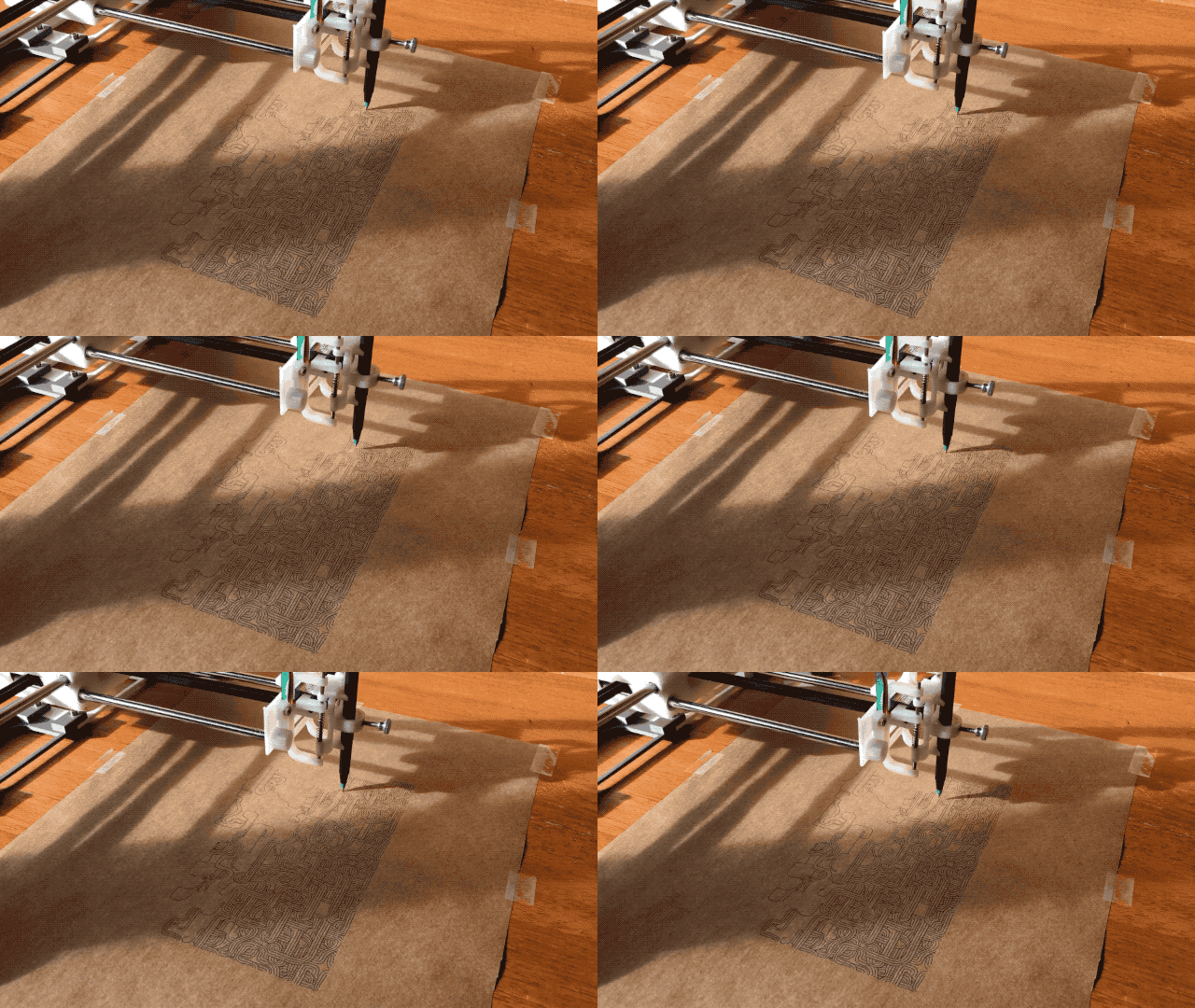
I could watch this for hours, and I did.
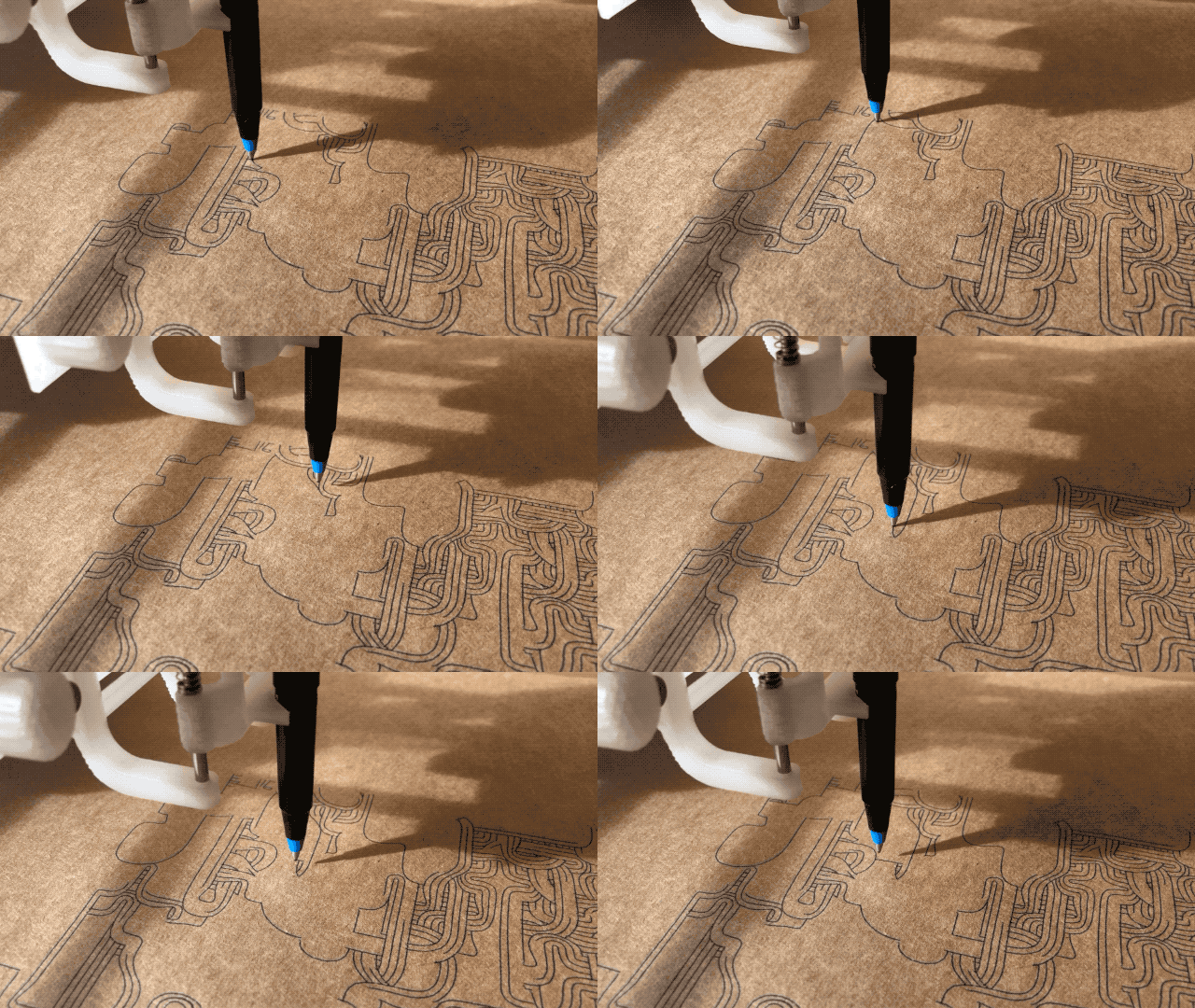
Of course the efficacy of this algorithm depends heavily on the model to be drawn. I found that anything coming from Mandalagaba tends to benefit enormously, especially tessellations. And it makes sense, for every penstroke drawn, the repetitions occur throughout the canvas and they show up in that order even if you drew in a very localized area. The example above comes from the most excellent turtletoy.net.

More to come very soon on the great world of plotters…
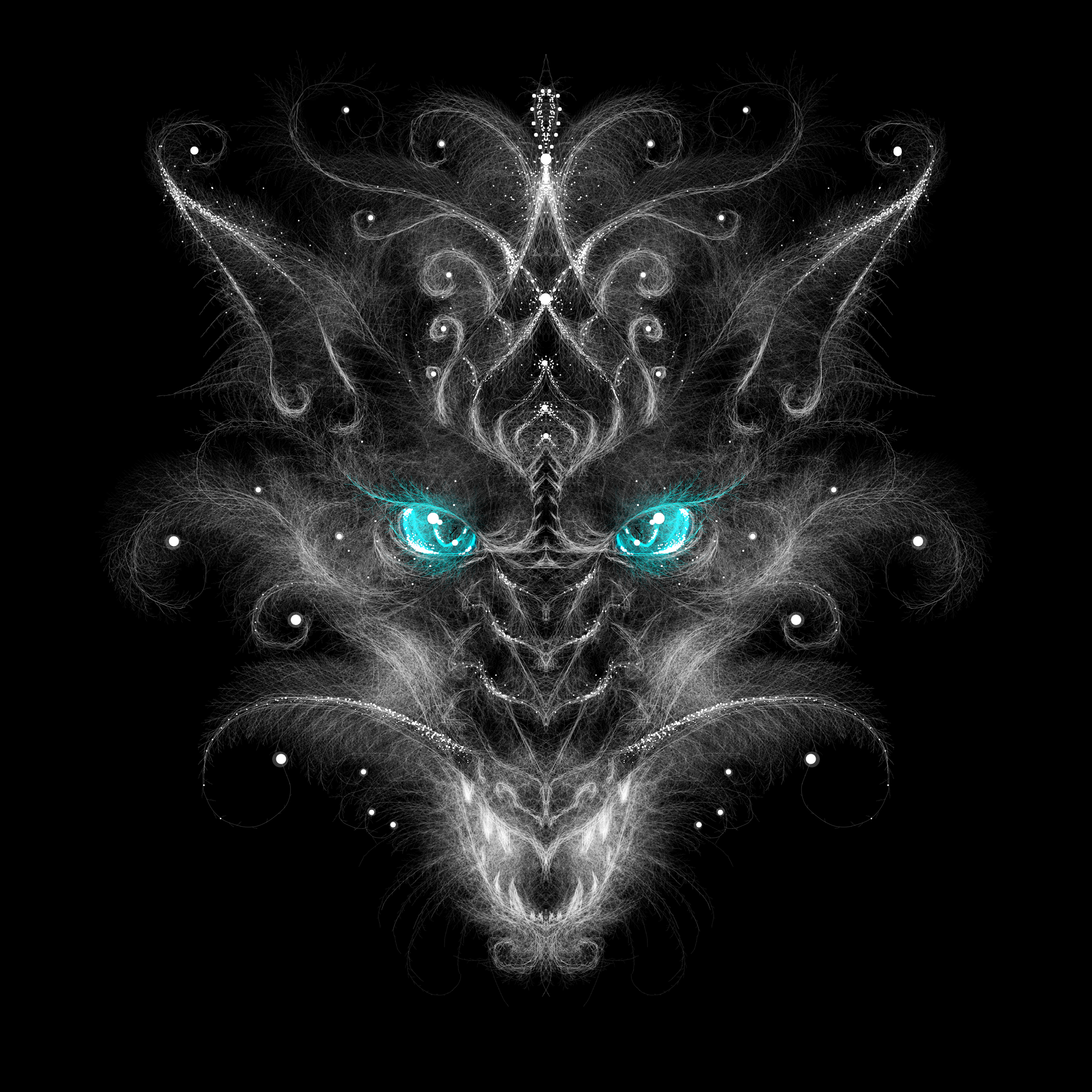
I just have to post

This Dragon which found its way into the Mandalagaba digest. I haven’t seen anyone really touch recursion yet, and then this shows up.

This is my absolute favorite thing about adding features to Mandalagaba: seeing them used in ways I didn’t even realize were possible. Here recursion is used to create ethereal traits. Of course mirror symmetry is used for the face too but that I had seen before :). The hours spent hammering out recursion are all of a sudden, absolutely worth it.

The artist is here: https://www.instagram.com/laralaubert

Recursive Drawing Sneak Peek

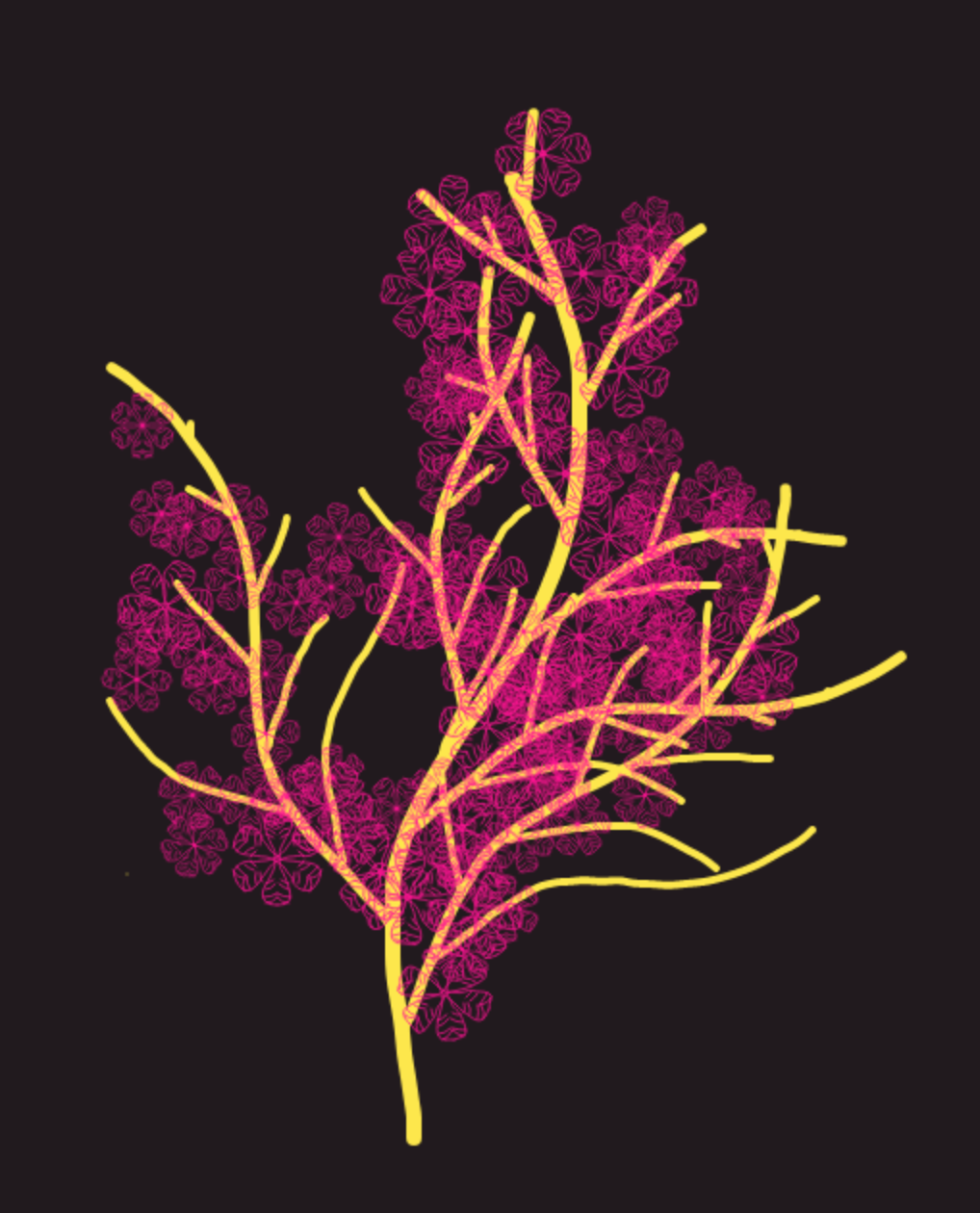
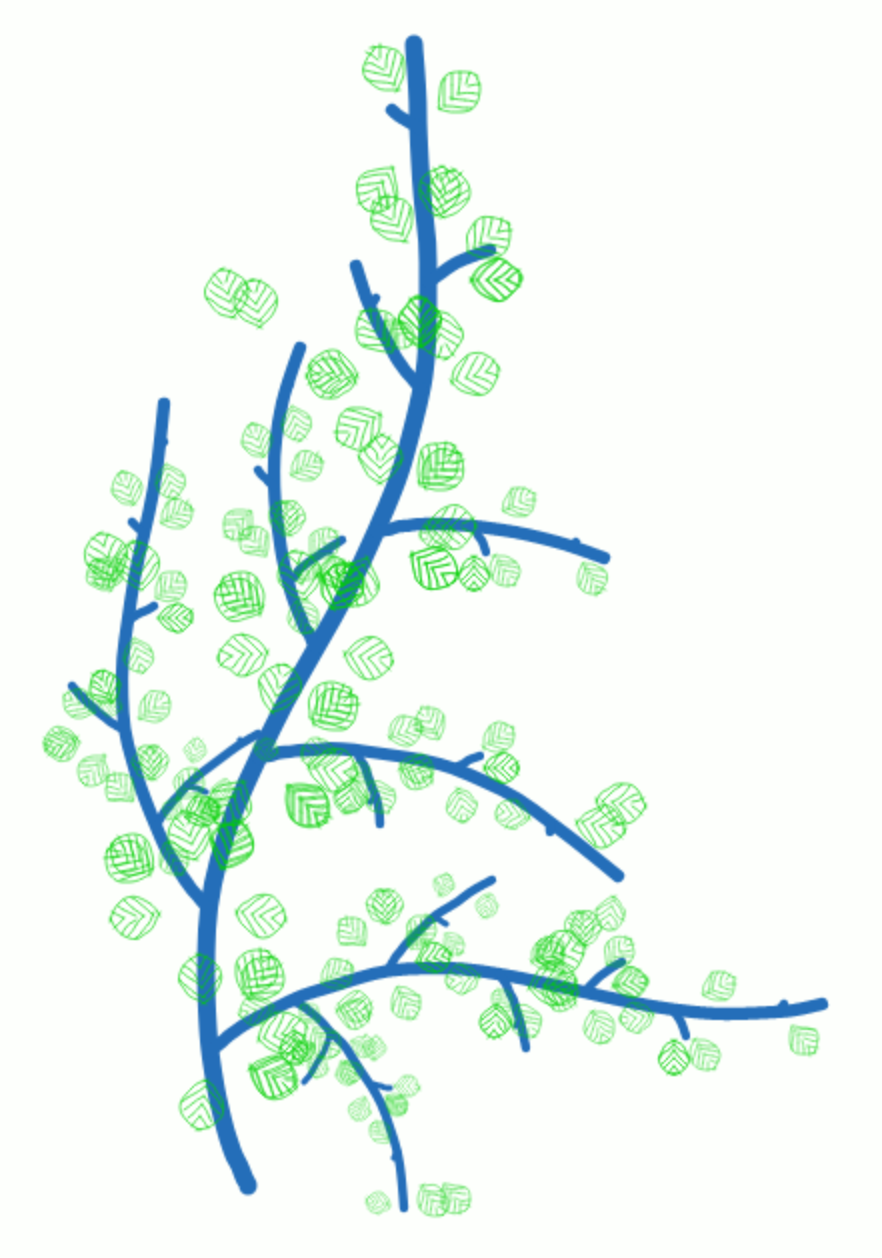
I’ve been working on implementing recursive drawing into Mandalagaba. There are many, many tunables which can be implemented to facilitate recursive drawing. It’s tricky to pick the ones which make for a fun drawing experience. One of the effects that I seek in particular is that of a growing plant.

Rorschach Stream

[mejsvideo mp4=”http://ben.akrin.com/videos/rorschach_stream.mov.mp4″ ogg=”http://ben.akrin.com/videos/rorschach_stream.mov.ogv” webm=”http://ben.akrin.com/videos/rorschach_stream.mov.webm” poster=”http://ben.akrin.com/videos/rorschach_stream.mov.jpg” width=”640″ height=”360″]

The Power of One pen stroke

[mejsvideo mp4=”http://ben.akrin.com/videos/the_power_of_one_pen_stroke_03.mov.mp4″ ogg=”http://ben.akrin.com/videos/the_power_of_one_pen_stroke_03.mov.ogv” webm=”http://ben.akrin.com/videos/the_power_of_one_pen_stroke_03.mov.webm” poster=”http://ben.akrin.com/videos/the_power_of_one_pen_stroke_03.mov.jpg” width=”640″ height=”360″]

Tessellationgaba

Very intense 2 months coding marathon to bring into the world the new version of Mandalagaba.

I completely rewrote the symmetry engine to be universal. When I coded the first version, I only wanted to scratch a specific radial symmetry itch and had to expand on narrowly conceived code to accommodate for features that came up from the tool’s success. With this new version, I instead gave myself a broad framework built for expansion, I can translate any penstroke at any angle in any location. Beyond mandalas, it makes possible tessellations and even the 2 combined.

I used the opportunity to add many features which were lacking: zooming, forking, lines, color picker, et cetera. With many more to come. The interface was rethought to be more accessible. Doing so took much more time than building the core engine.

There is an obscene amount of math that goes behind every pen stroke you draw in the tool. It was kind of fun to go through it again in my life, 20 years later. Even though I had forgotten about it all, it came back nicely. It’s amazing to have the internet as a tool to look up methods, to be able to describe the problem in plain English and have potential solutions thrown at you. It used to be that you needed to know what you needed precisely to find it in a book.


I love that Robin copies what I do no matter the understanding level, we’ve had lots of talks about what is going on.

It’s not just the math but also algorithms, languages & infrastructure. Not to toot my own horn but in my 30s, I’ve never felt so intimate with every aspect of an idea’s implementation. It’s extremely enabling to know exactly where to go to achieve X. Honestly though I’m a little burnt out at the moment, something that was supposed to take 10 days took more than 2 months of coding every single night.

My hope is that the new tool becomes a reference online for this type of work. And it’s all 100% free; well… we’ll talk about that in the next post.

Lower tech fun found in a thrift shop