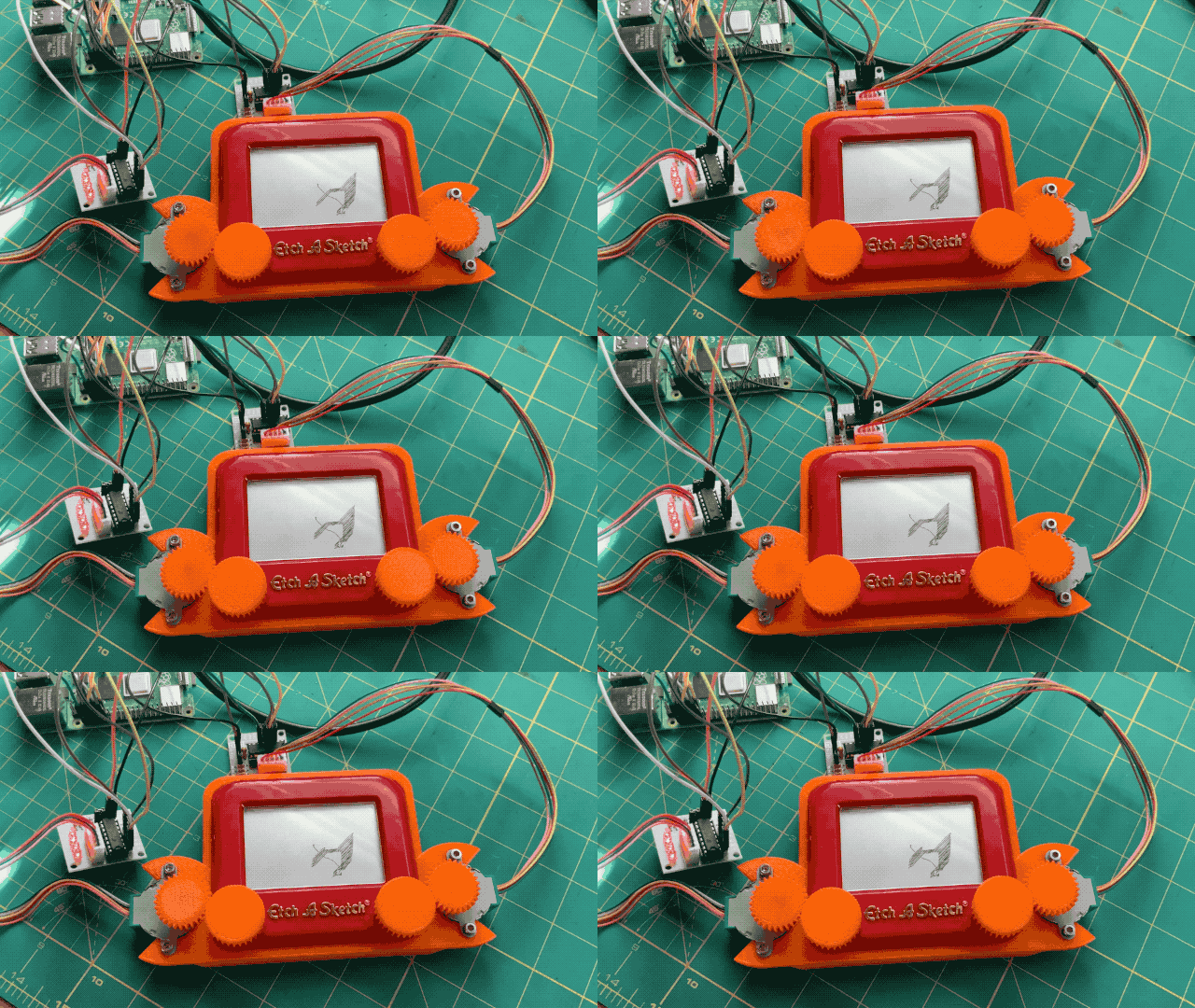
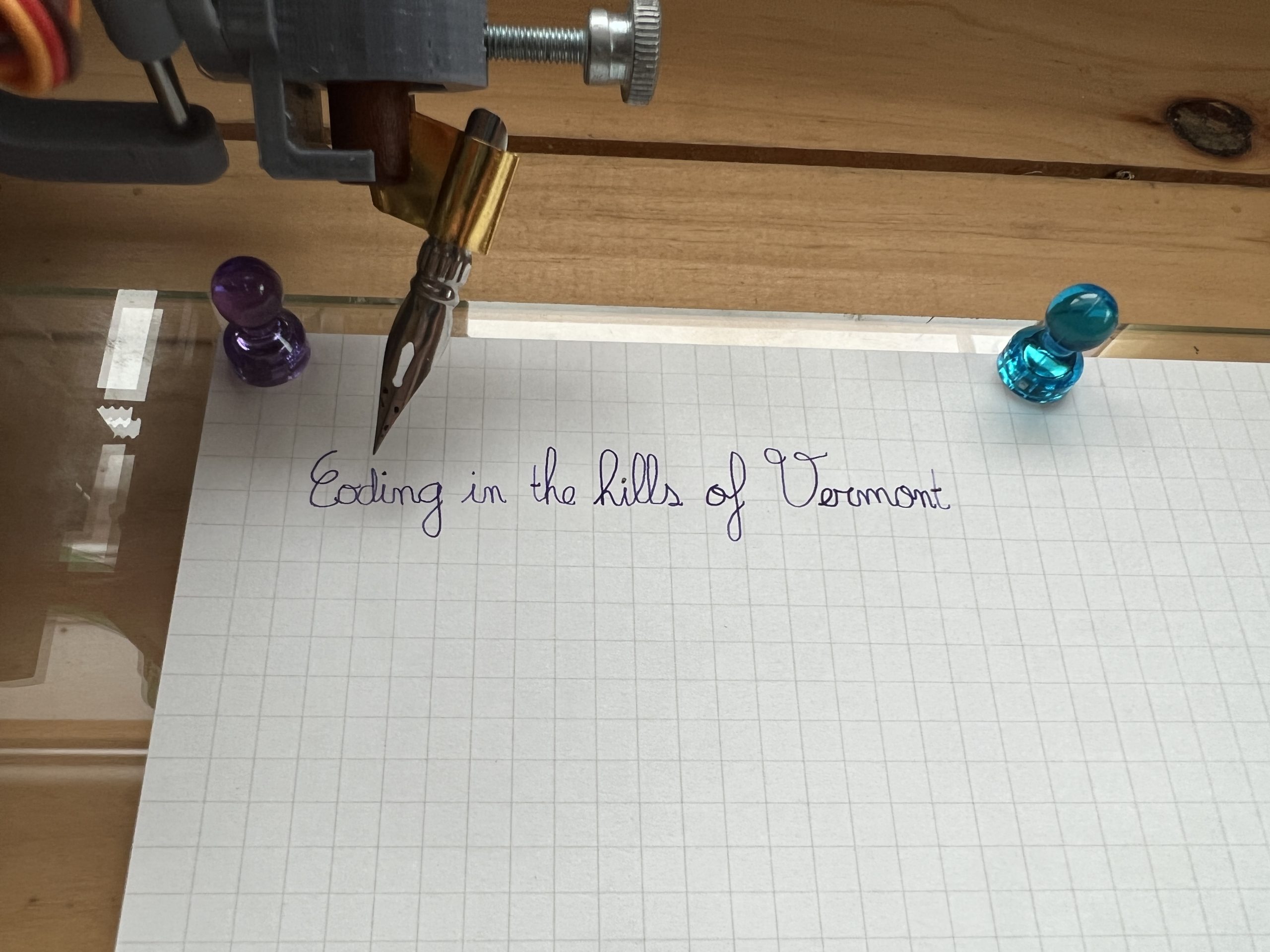
I stumbled upon electronically actuated Etch-a-Sketches, and I pretty much had to see if I could port the PlottyBot stack to the toy. It was pretty straightforward. I got the parts from someone else on Thingiverse for a smaller Etch-a-Sketch and the fit isn’t great, but it’s enough of a proof of concept to know I want to make a nice big one, and really the work is all mechanical at this point. How about a web enabled Etch-a-Sketch that can write in your handwriting?
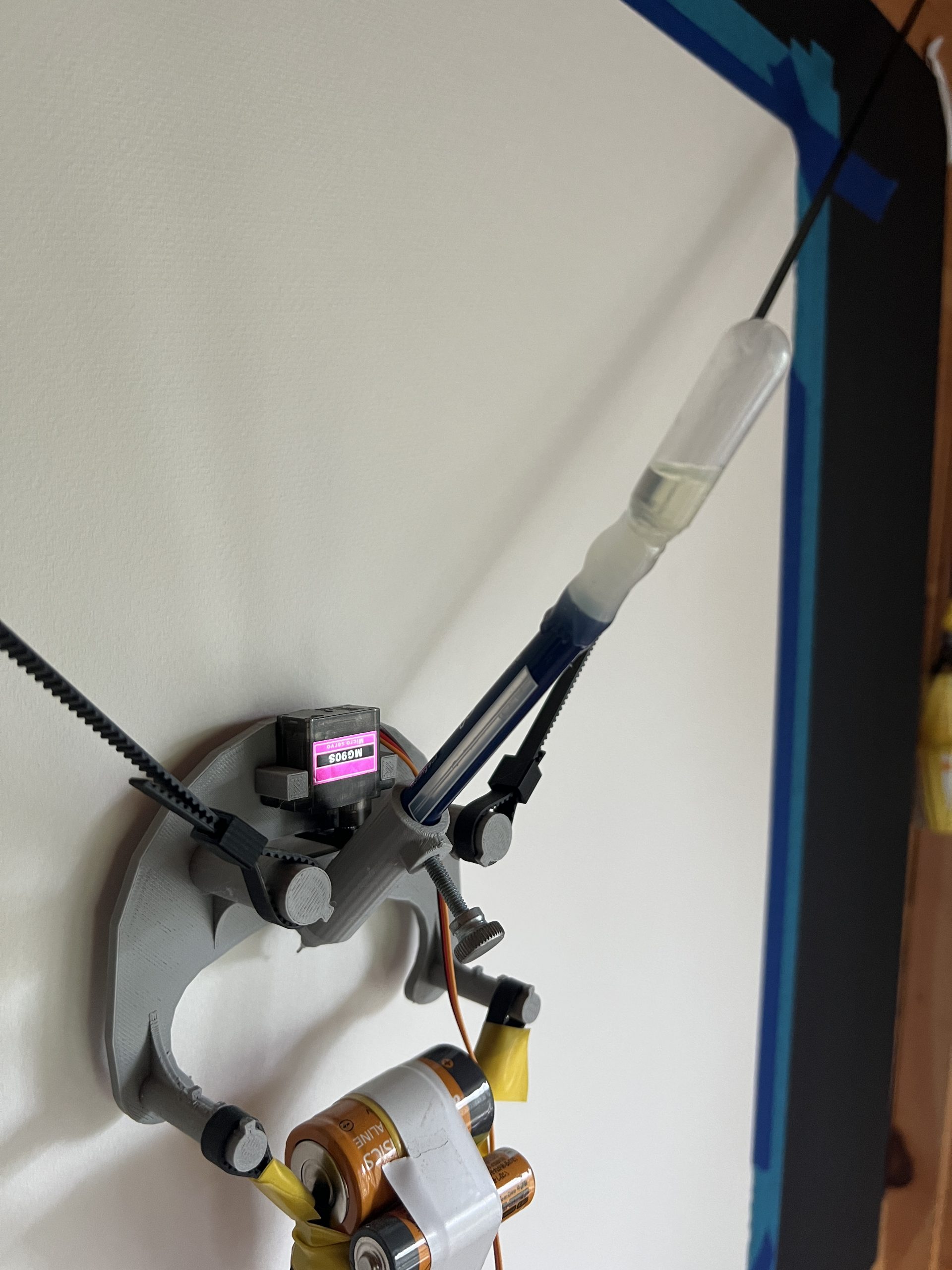
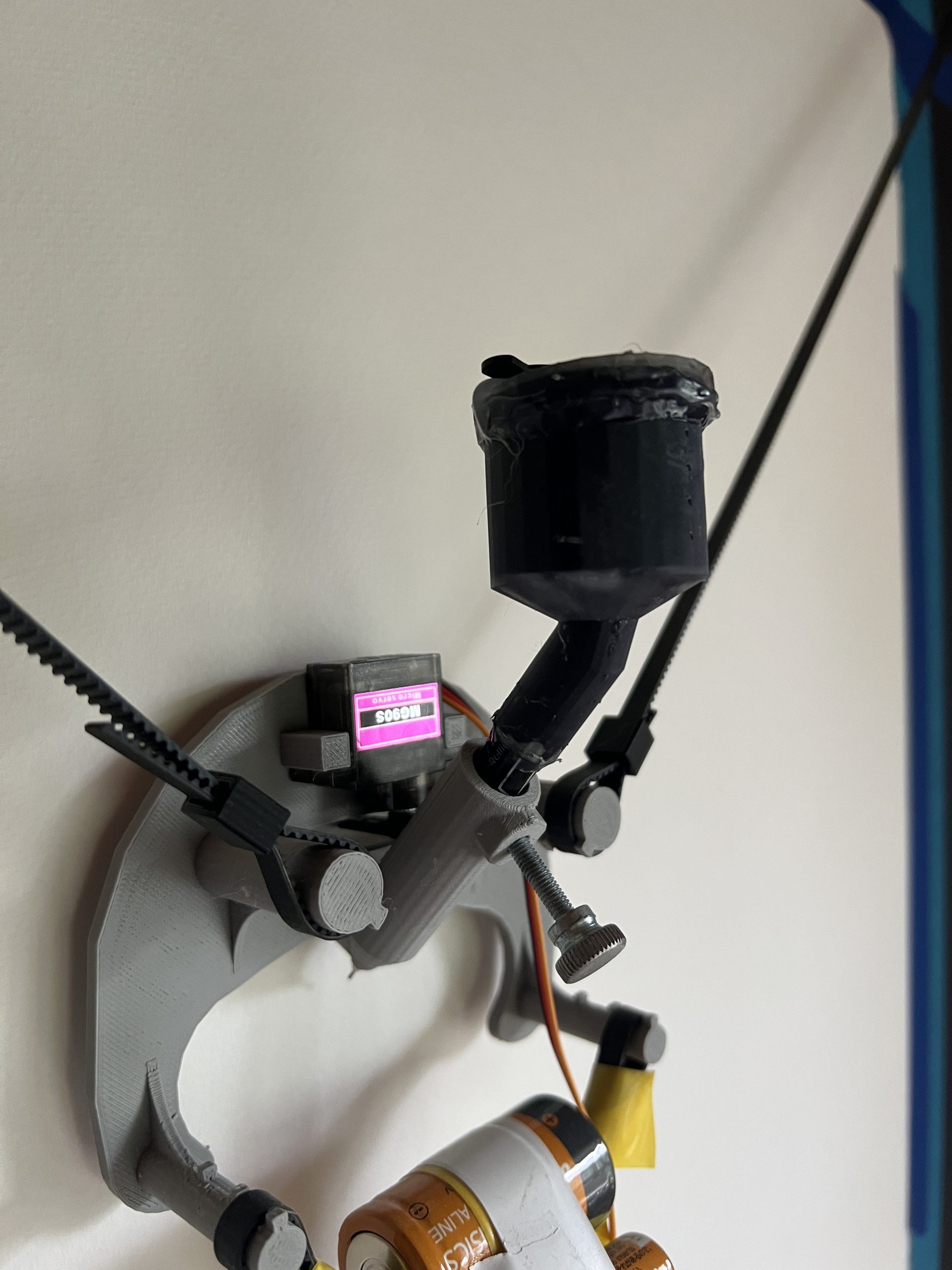
When I plot stuff that goes beyond a pen’s ink capacity, it’s a pain to swap pens. It’s a constant worry and the operation has the potential for ruining a plot. So I’m experimenting with ways to have enough ink on board, or maybe refill. Of course I’m learning that pens are designed within tight tolerances of pressure & viscosity.
I think this one is going to work. I made the reservoir’s volume 5 times that of an unaltered Precise v5 pen.
I always make an ink mess with each experimentation. I’ve learned that PLA printing is not liquid tight. And so thank you Nathan for the resin printing :). One other silly lesson I’ve learned is that various paper can suck up ink at different rates.
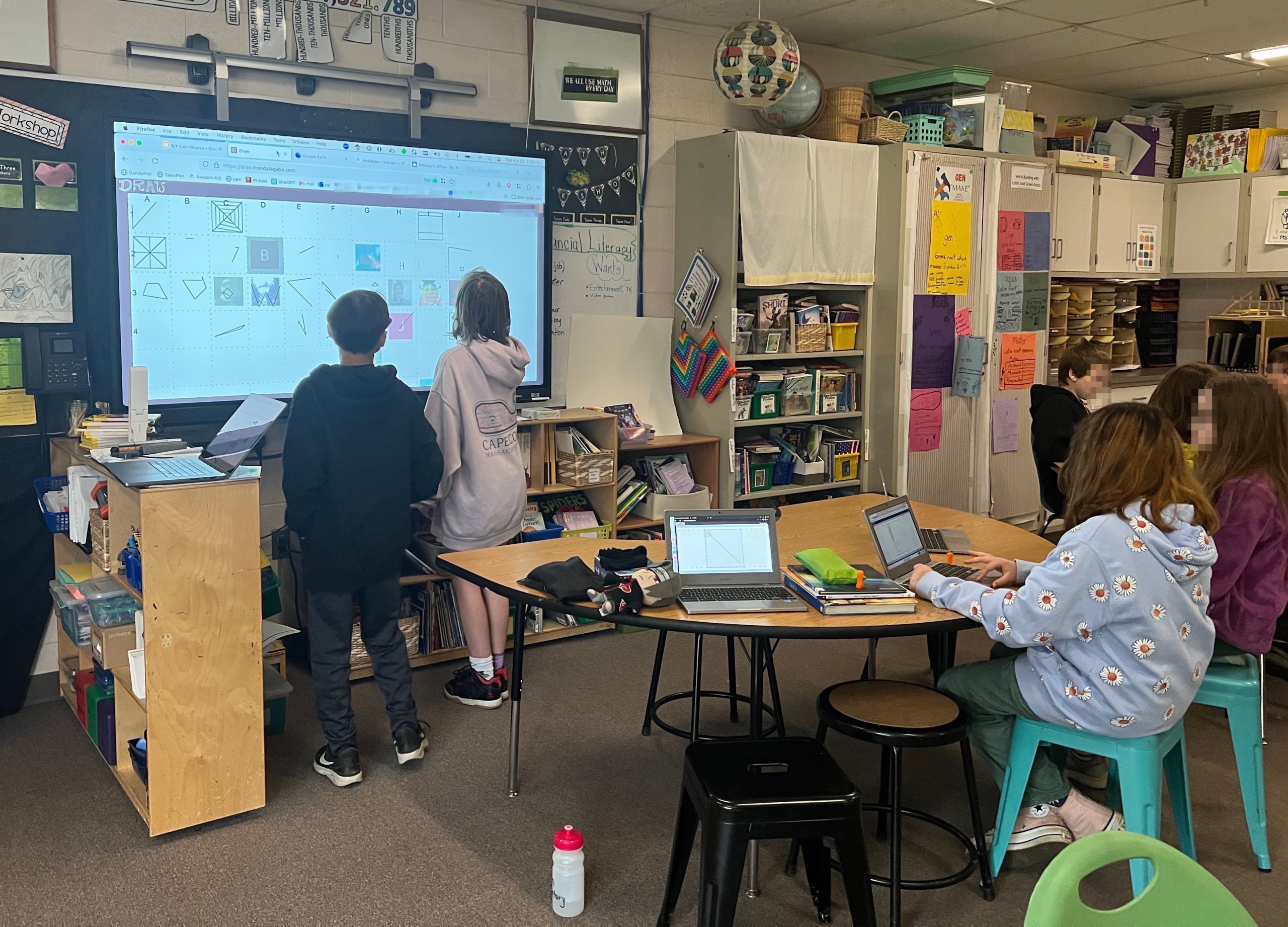
Some of the tools I’ve accumulated over the years lend themselves particularly well for teaching. I’ve gotten better at swooping in a classroom with some plotters and talking about math or machine drawing topics. I can make it very interactive.
It started not so much for teaching, but rather for collaborative art. Very much inspired by r/Place, I created a tool with real estate scarcity, but with my usual focus on drawing. The kicker would be that the art is rendered live on a plotter somewhere in the world, maybe in front of you in a public place, maybe a video stream and you know your pen strokes are executed by a machine thousands of miles away. You claim a square, coordinate with others to make bigger pieces, and a collaborative art piece is born. That was the idea at least. I’ve tried several permutations of this experiment, in public, on a stream, with various rules and online communities, and it simply never generated the enthusiasm I thought it would. I have 95% given up on the idea of a collaborative art piece of the sort. The big plotter still has me wondering hence the remaining 5%, but it is tedious and expensive to deploy for an experiment that has shown no promise at every iteration.
What this website became great for however is teaching as it allows for time sharing a drawing machine across several students. We can explore one concept or other, and then apply it and have the great motivator that we’ll get to control the machine by doing so. 3 years ago I taught a module on X,Y coordinates with the local 5th graders, I didn’t have this site then and it went fine. But the following year I figured I might as well use this dumb collaborative art website I made for something so I integrated it into the coursework. Now that second year The machine’s made an enormous difference in how students engage. Recently I ran this course for the 3rd year with the website and the magic happened again. Both times, kids were very much willing to go through teeth grinding (light X,Y coordinate based coding), and help each other out to see their work realized in the world by a cool machine. The first student that submits a drawing on the site inevitably has everyone jumping off their seat to see the machine move up close. Then they’re even more motivated to do it themselves. I help them with the mistakes they make at first, and once they get it I have a good half an hour of walking around and seeing the cool stuff they draw. During this time I might send one drawing machine on a more intricate plot that can finish quick. Having that plotter wield a pen expertly inevitably draws 2 or 3 kids who just sit and stare at the machine non-stop. I know what they’re going through. The whole experience has them asking so many questions, and I love interacting with the different ways in which they see the world. I also love the opportunity to get to know every kid in town a little better when they go through 5th grade.
I’m quite glad that these tools found a place in education. Sometimes I think of pushing further, there’s definitely something to this formula, and I know teachers often purchase various curricula or interventions that meet a standard or other. But I can’t push all the projects, and so far I’ve refused to let money taint anything plotter related.
Funnily enough, I even had an opportunity to guest lecture in the same way with college art students. Of course we don’t talk about 5th grade X,Y coordinates, and I’m not there to talk about art either. Rather we learn and employ tools and techniques for line art and single instrument machines. It’s only funny because I’m ashamed to admit I’ve been very dismissive of art (except music) my whole life. I never understood it and wasn’t a fan of the carefree personalities gravitating to it. I’ve seen the light now, and I do feel apologetic for the times someone showed me a something they had made and it went completely above my head. But I can’t say I was particularly impressed by the students. I’m definitely curious to try again and see if I can bridge more understanding. In the meantime, I have no issues resonating with 5th graders so I’ve got that going for me :). Except for keeping them focused, that is insanely hard.
I wrote something pretty neat for Plottybot, and for the longest time I thought I should make it available on its own, and detached from the project. Then the most excellent Stuff Made Here guy made a writing machine, and ran into all the issues I ran into which drove me to write my own algorithms for capturing and replaying handwriting. My stuff wasn’t online then and that’s a shame, it was only available by building a Plottybot, or at least using its Pi image. Oh well.
As is tradition, I captured my kids’ handwritings as I do every year some time in the Winter. But this time I made sure to have the new site ready before Thanksgiving so that people could use it as they went and met with loved ones.
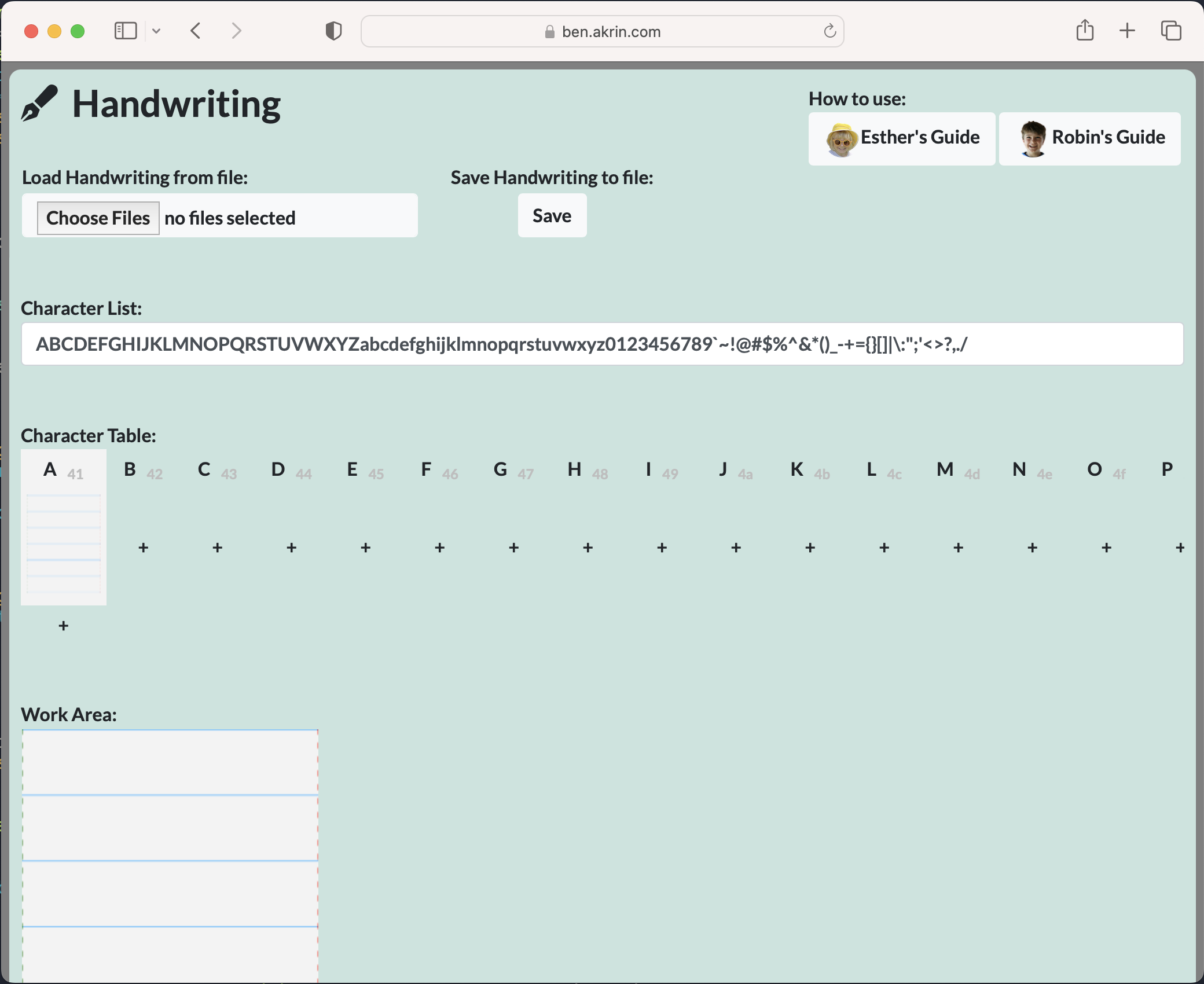
So here, this site serves the purpose of capturing one’s handwriting. It supports cursive, character variations, saving, and finally exporting to SVG & GCode. Hopefully this means you can use it with your favorite craft machine for the coolest of personalized projects.
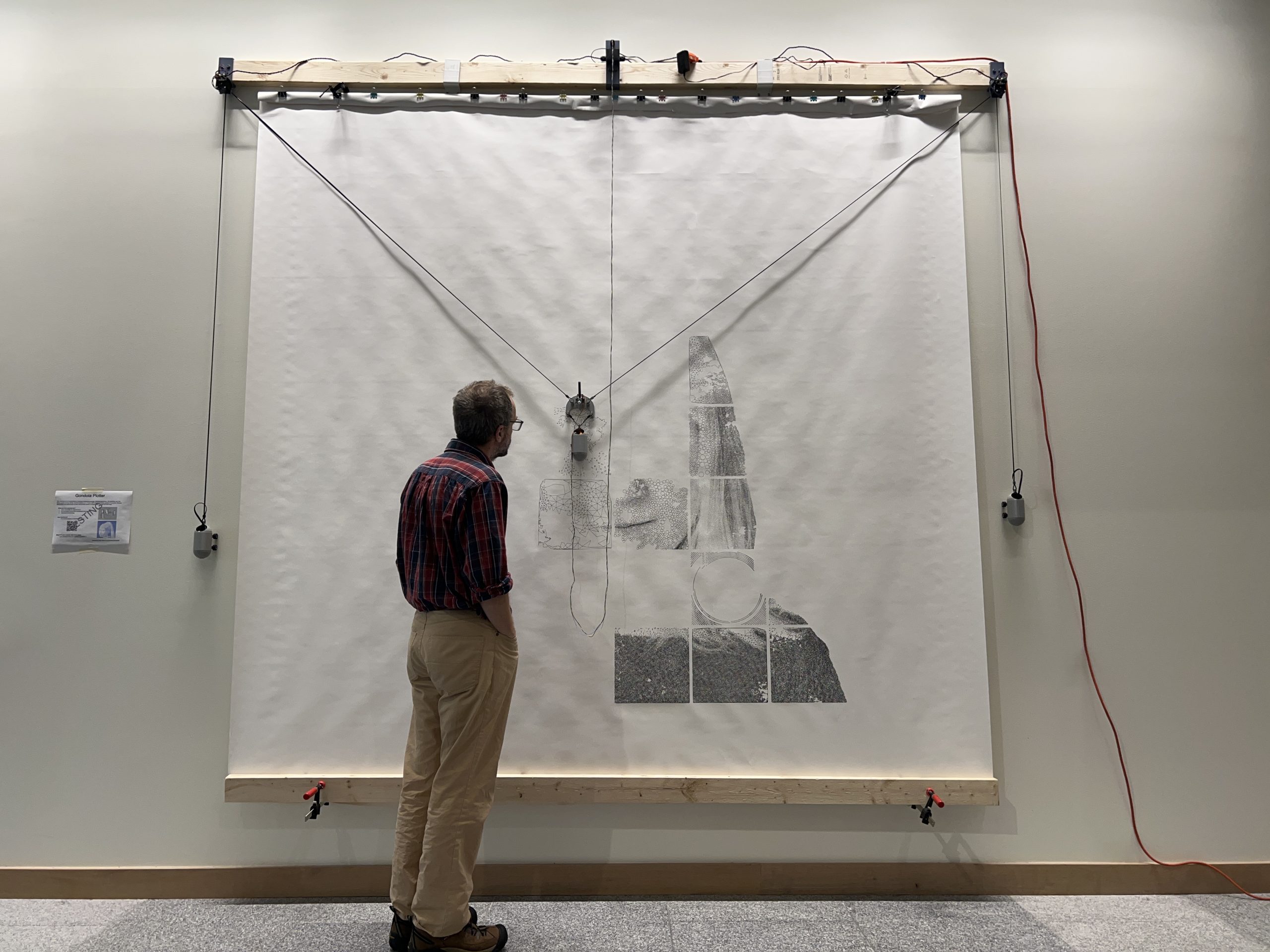
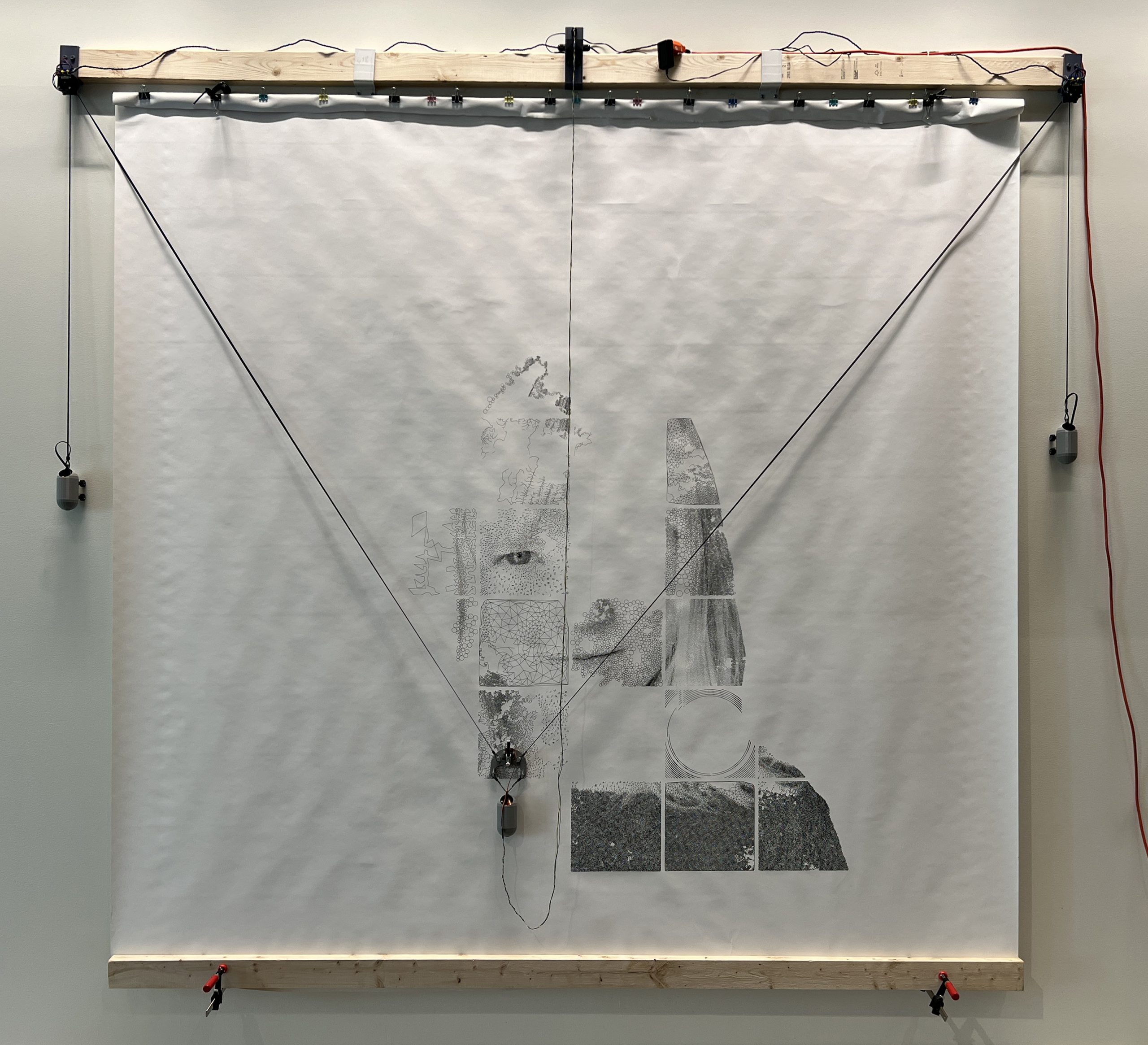
I’ve recently gotten the ok to deploy a large gondola plotter in a public place. Theoretically, there is not limit to how large a gondola plotter can be. Practically, there are considerations to how large they get. I’ve been working on solving the various issues that arise from having a 10′ deployment. Of course with the ~20% margin to avoid extreme positions, it’s not 10’^2 drawable. Still though, there are many challenges due to the scale. Finding paper big enough is a challenge, so is moving it without damaging it. I figured out other quirks, it’s boring, let’s skip to the eye candy:
I have several public facing experiments lined up for it over the next few months or years. I’m not in a hurry. This is just a warm up to figure out what it means to deploy it in a public spot. What’s fairly clear though, is that there isn’t much I can do to make this better, and so this may be the culmination of a 5 years development effort.
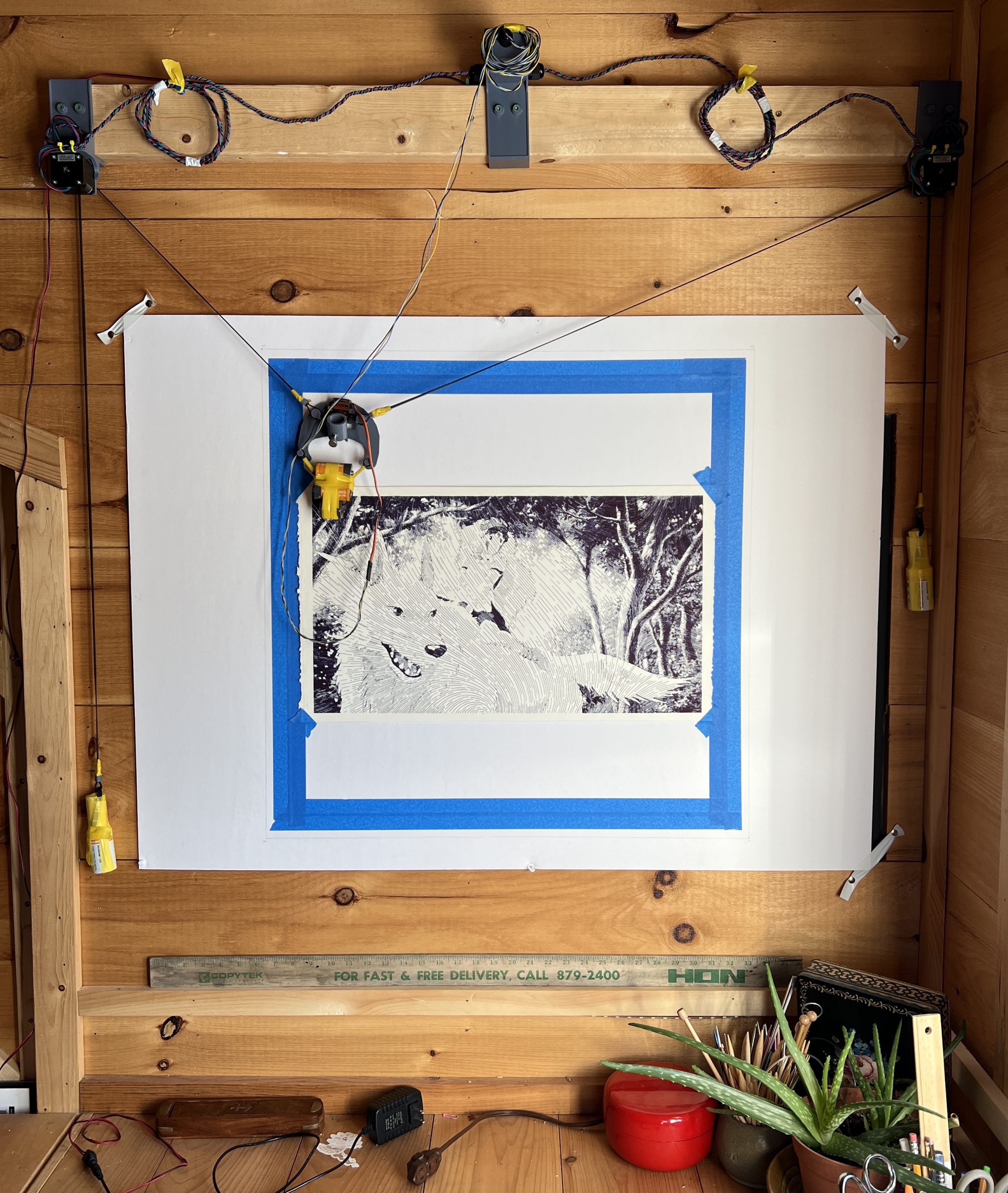
That’s 3 days of the machine working non-stop, I’m watching the ink level closely and hope it’ll be done in a couple more days.
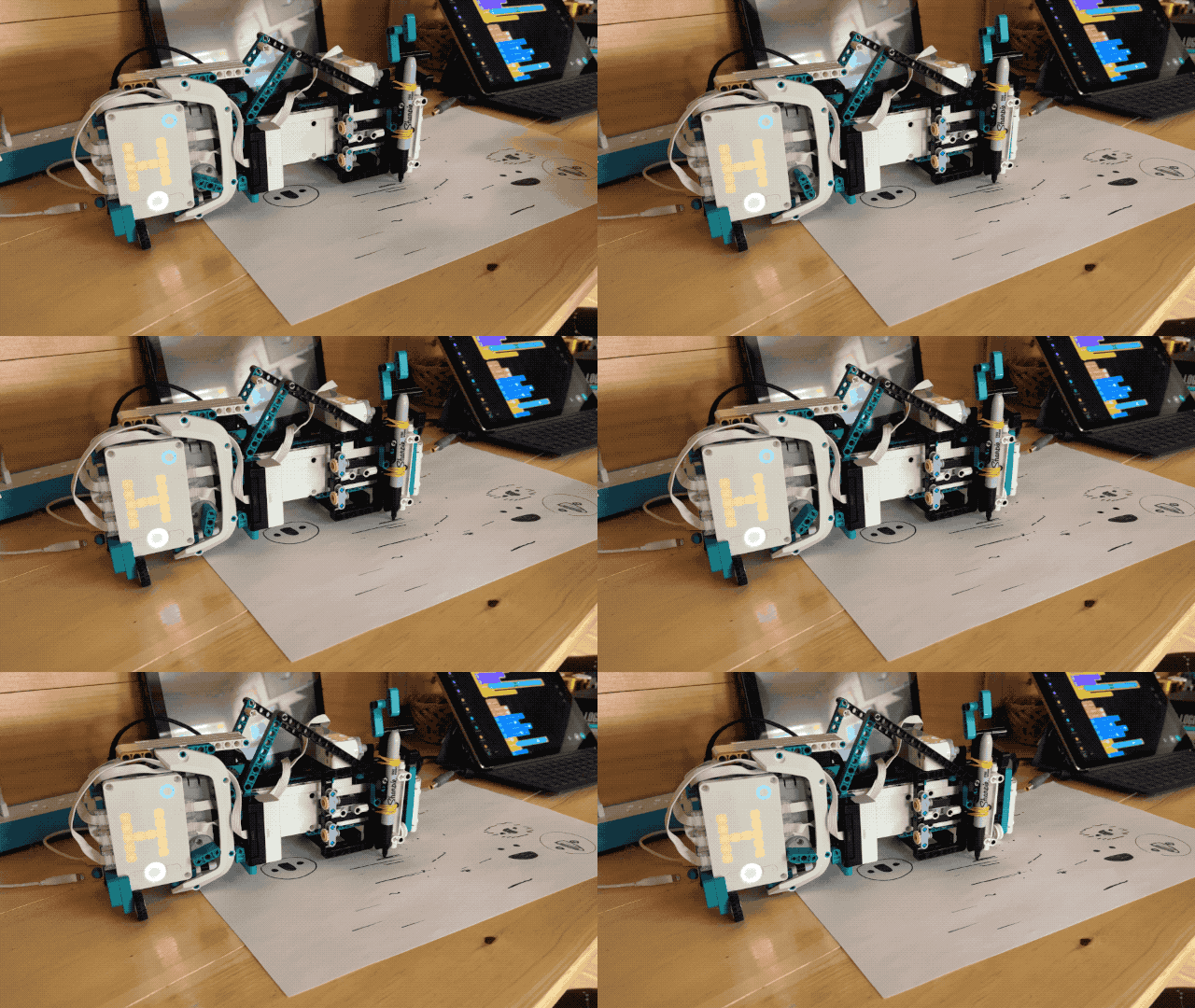
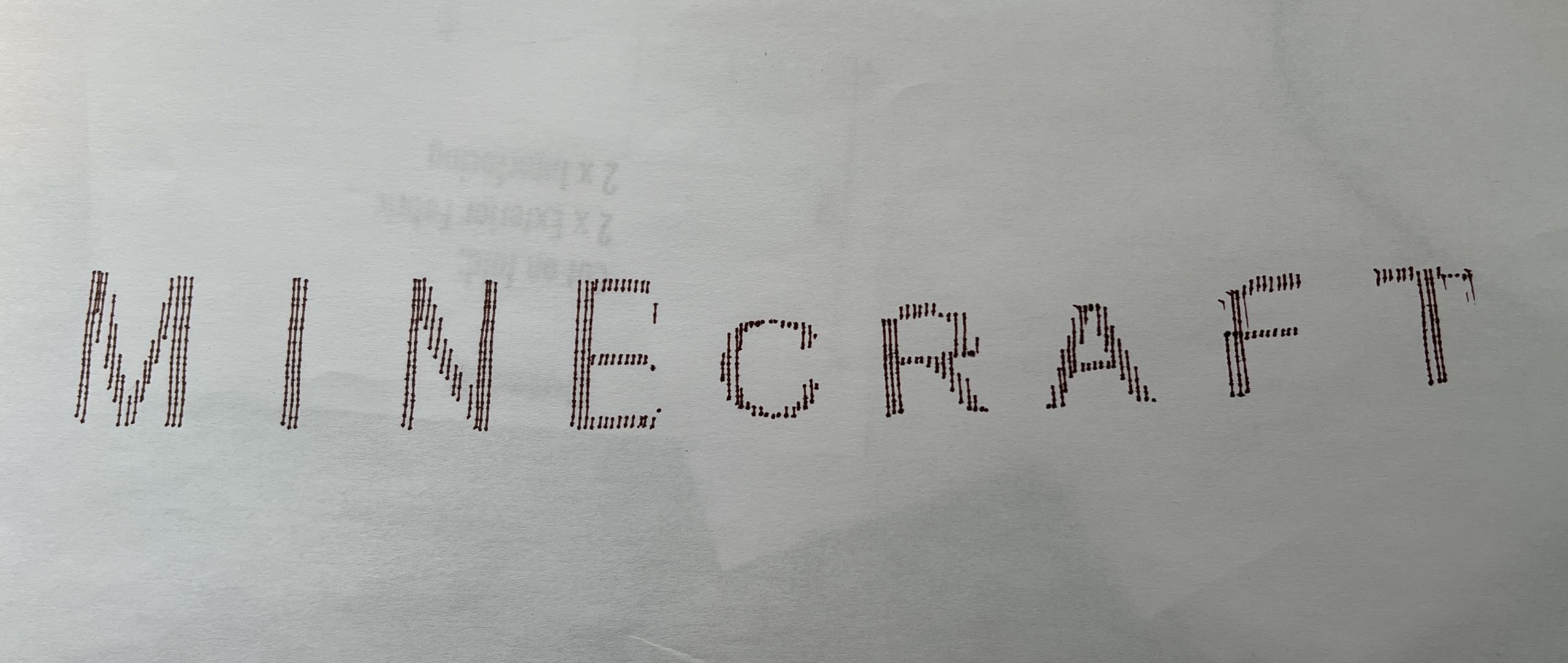
Robin built a very cool Lego Mindstorms based plotter. I’ve seen him run into issues similar to what I ran into, and solve them. I’ll sometimes attach a monetary prize to some of his Mindstorms projects. Once he’s scratched the itch and wants to move on, but I know a lot of challenges occur not just making a robot work, but making it work well.
For a while there was $5 on making a drawing machine that drew something beyond a basic shape, it didn’t have to be much, just had to be something that proved the machine’s worth. And he’s earned it with this:
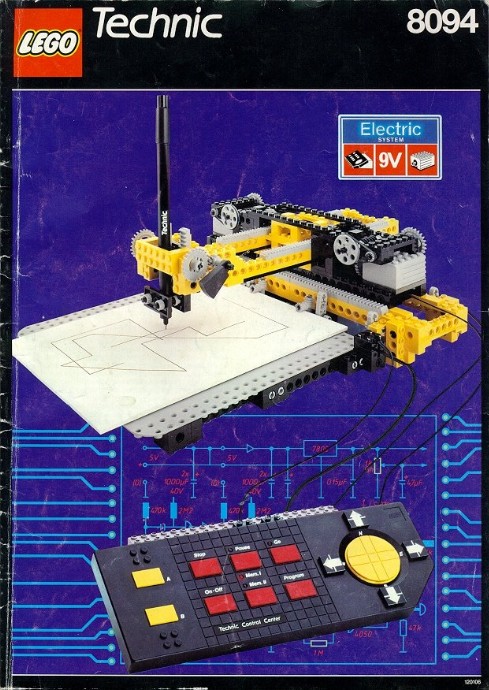
He didn’t write the software that turns text into lines, but there were plenty of mechanical challenges to getting the machine consistent enough to make this. Overall I’m blown away by the quality of today’s Mindstorms. Seeing him build his machine reminded me I had this set growing up:
Might have planted some seeds.
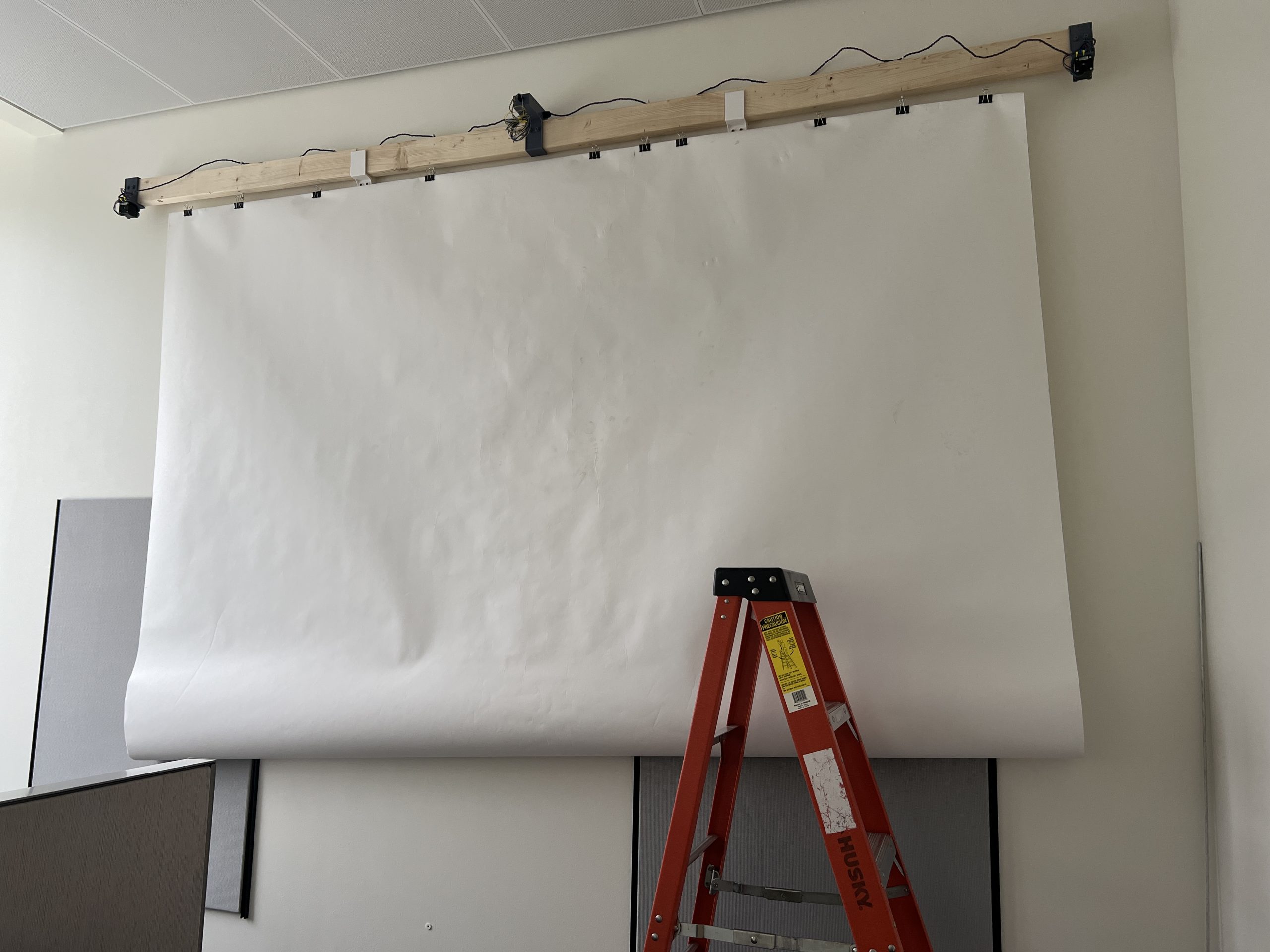
In the meantime I’m testing a 10′ deployment, a drawing machine so big one needs a ladder to get to the top. I haven’t ran it yet, but I know there will be new issues arising from the scale. Even just setting the paper is challenging.
I’m revisiting and polishing the “ink refill routine” capability, and I rewrote the ligature algorithm for cursive handwriting. This is mostly just a test but it shows promise.