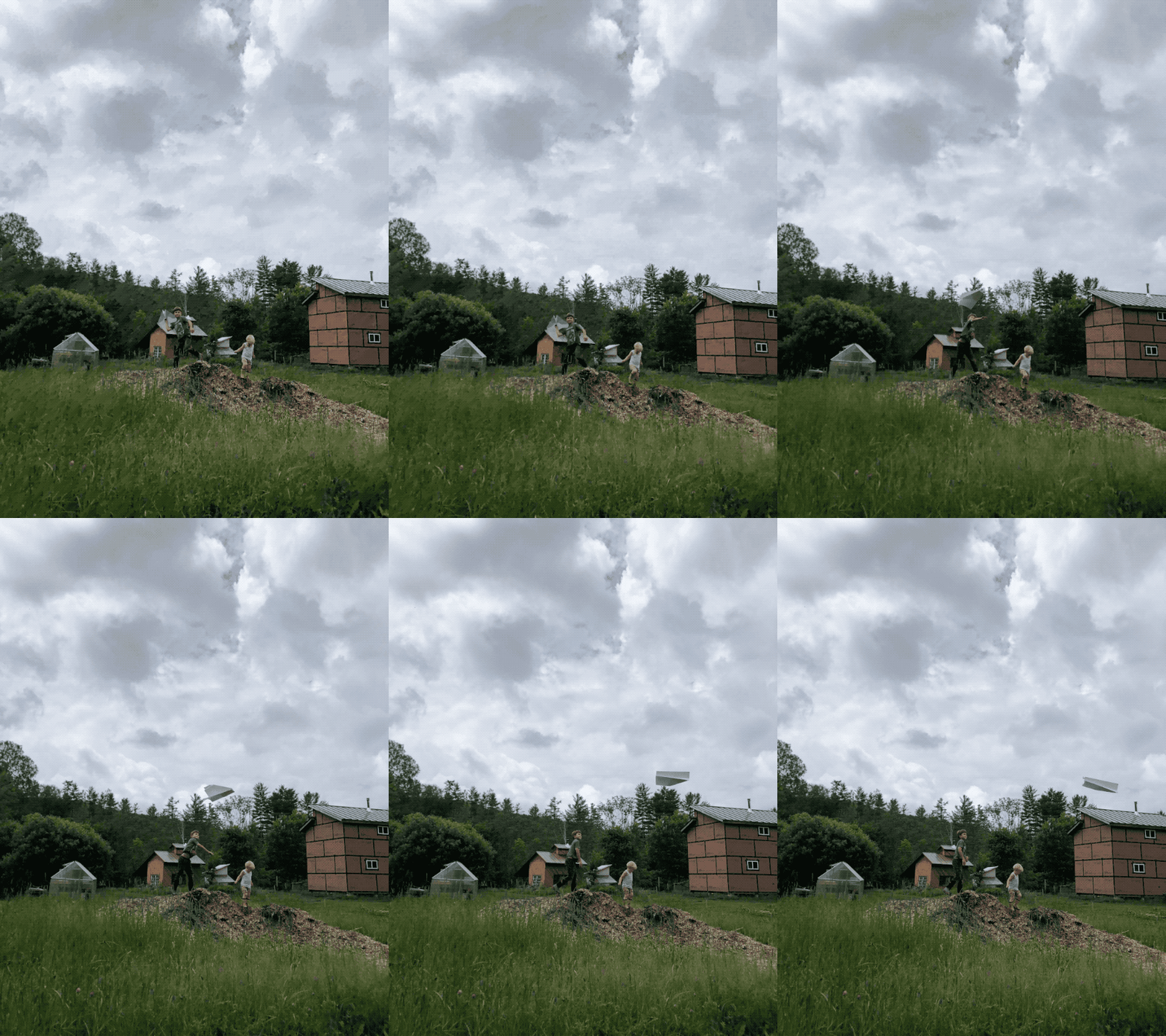

Never seen a kid
go from bed to snow as fast as he does. Not 30 seconds pass from the warmth of his sheets to the blistery morning cold.
His new morning routine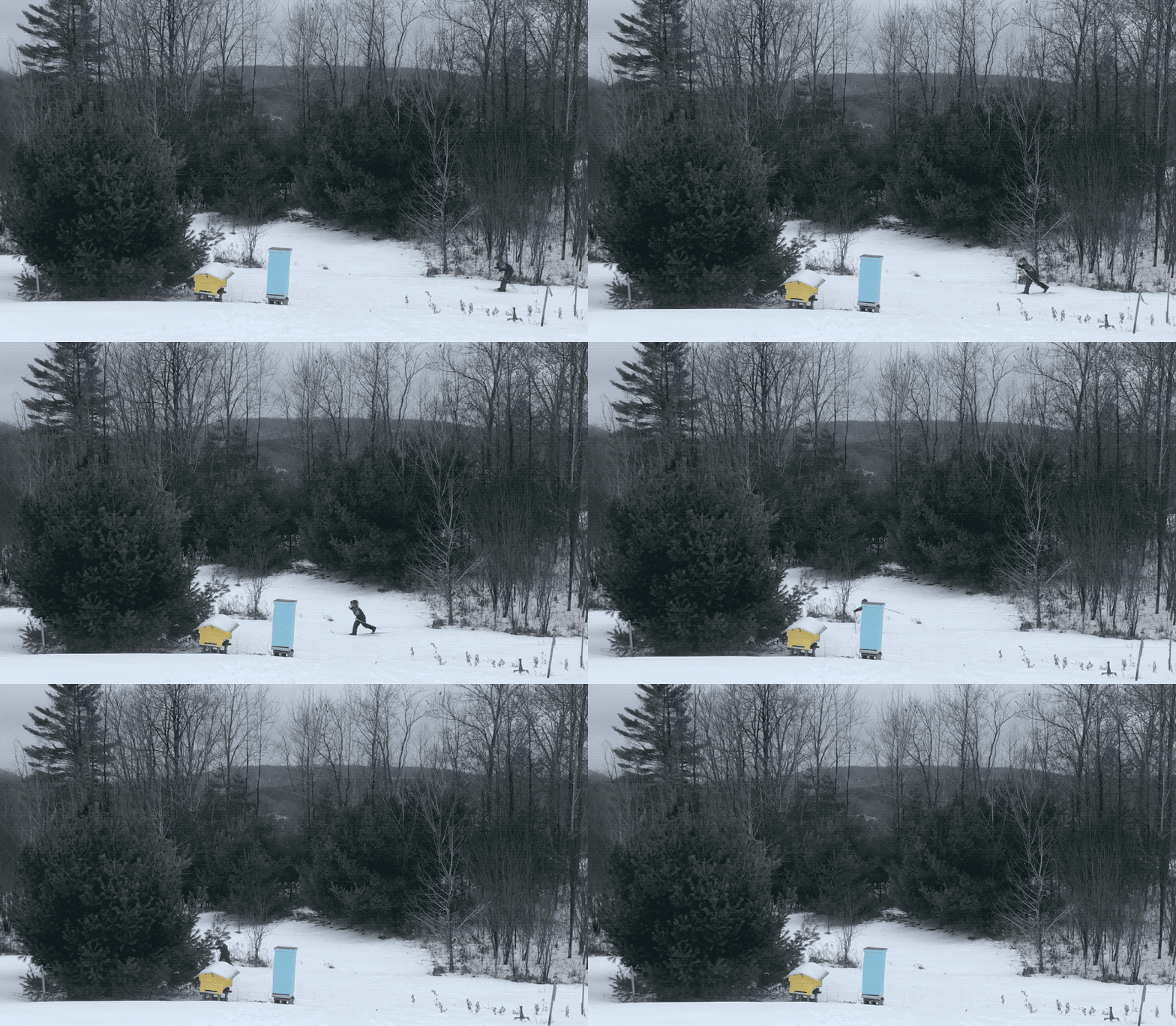
House Sunflower Vs its Outside Sister


Pollinators are busy bees.
This here blog is 10 years old
And it’s still updated 🙂
It’s funny and a little cringy to go back to the early posts when I didn’t have many interesting things to say. It feels as though I eventually found my voice. Part journal, part project documentation & sharing. One of the unintended and very nice side effect of documenting projects on a public forum is that it forces me to finish them well. I’m an itch scratcher and it’s easy to move on from an 80% finished project having seen the results. The remaining 20% are all boring polish and documentation. By putting them online, I’m obligated to present them in a fully baked form and I’ve never regretted having done so. I’m not sure who the audience is besides myself, the sections are a bit all over the place. What I do know is that some posts are more popular than others, some surprisingly so. Even though I didn’t do a good job at keeping logs through the past decade, here are the most popular posts today, using the month of March 2019 as a snapshot in time:
#1 – Somehow I’m maintaining the most popular MAC address to IPv6 link-local converter online. Not sure how that happened but here we are, 12370 hits, 35% of all visitors on my blog are people curious about this. That’s what happens when you’re the first result on Google. Not super glamorous eh?
#2 – My article exposing the idea, tools, and techniques for turning the visitors of your websites into a super computer. 2793 hits, 8% of traffic.
#3 – Glamor galore: the original blog post from which Mandalagaba was born. Now, this is just the remnant of what is now a separate entity, yet it has it tentacles into enough things online to bring 1986 hits (6% of traffic).
#4 – You just got to convert your IPv6 link-local address back into a MAC right? 1829 hits, 5%.
#5 – Some obscure piece of Python interaction with SNMP. 936 hits, 3%. I think we’re starting to see the power of documenting weird little pieces of computer lore I had a hard time gathering myself.
#6 – and I’ll stop here with 407 hits and 1% of traffic, my well documented foray into writing PAM modules. This has picked up recently with a widespread push for multi factor authentication.
All the following ones are of the same nature, some script or method I came up with and documented. Together they account for a large portion of visits. I guess no one cares about life on a homestead or Duplos :).
The waves
There’s what happens on a standard month, and there’s the temporary effect of having something chosen by the internet for its 5 minutes of fame. These waves put things into perspective and it’s surprising how quickly they fade away.
Even though it’s not the most popular post on the day by day basis, the biggest wave by far was generated by the original post of Mandalagaba (only #3 above). I lost these logs to destructive auto-rotation but they amounted to ~200,000 visits in 24 hours and ~100,000 trailing in the subsequent few days. The first hours were pretty brutal for a poor 3Mbps DSL connection.
Mandalagaba is now hosted in the cloud for its propensity to generate such waves so it doesn’t count in the logs after this. Otherwise It’d be my daily #1 by far, and responsible for the 2nd and 3rd biggest waves. I’m hoping I’ll be able to repatriate it back home once we get fiber, hopefully some time this year.
In the absence of Mandalagaba, the 2nd biggest wave is my article on turning web traffic into a super computer with ~50,000 visits including ~24,000 in the first 24 hours. I was pretty worried when I released it that reaction would be very negative given the more than gray subject matter. To the contrary it was very well received, even yielding the best compliment ever thrown in my general direction:
 Thank you Mikerg, your comment made my day!
While the popularity of Mandalagaba happened to my surprise, I had a suspicion that the Super Computer article would make some kind of a splash once released. It happened immediately and it was nice to see. Let’s just say I had been extremely obsessed by browser based computing in the months leading up to it. And I felt like a mad man with a mad idea at the bottom of a long meandering rabbit hole. Coming out of my hole and seeing minds blowing up left and right was reassuring in that I had in fact seen something, and I wasn’t the only one seeing it. We were all left thinking “oh, I guess that’s possible now”, with the promise that things only get more intense with more acceptance of standards such as WebAssembly.
Little meta anecdote: while I did not run any computation to keep things as clean as possible during the wave, the Super Computer article at its height gave me a nice Super Computer comprised of 500 nodes :). I can only imagine the amount of computing power a piece of popular culture could yield. It’s interesting to ponder how the attention economy could impact access to processing power.
Even though the number of hits is lower on this article, I think the reception is more impressive for how niche the topic is. Everyone likes to draw a mandala, very few people know what the heck is going on in this one.
That’s about it for the big waves. It’s interesting to note they both happened very recently in the decade this blog has been online. Maybe I’m finally getting good enough at something I can actually contribute to the world :).
One thing is for sure, I really like self hosting. I’ve been running my own mail & web servers for 17 years, it was for fun and learning at first. It was economical second. As time went on and saw various platforms rise, fall, consolidate, or turn into cesspools of the worst human traits, it became about control. Self hosting is more satisfying today than it ever was. The internet was supposed to be decentralized and so I enjoy placing my pebble against the few towering mountains.
No ads, no greedy incentives, no privacy violation, no monetization attempt, no influencing or building of any sort of followership. At some point along the way, I decided to stay in the information age and not step into the attention age. That’s my pebble.
Smells like Spring Cleaning
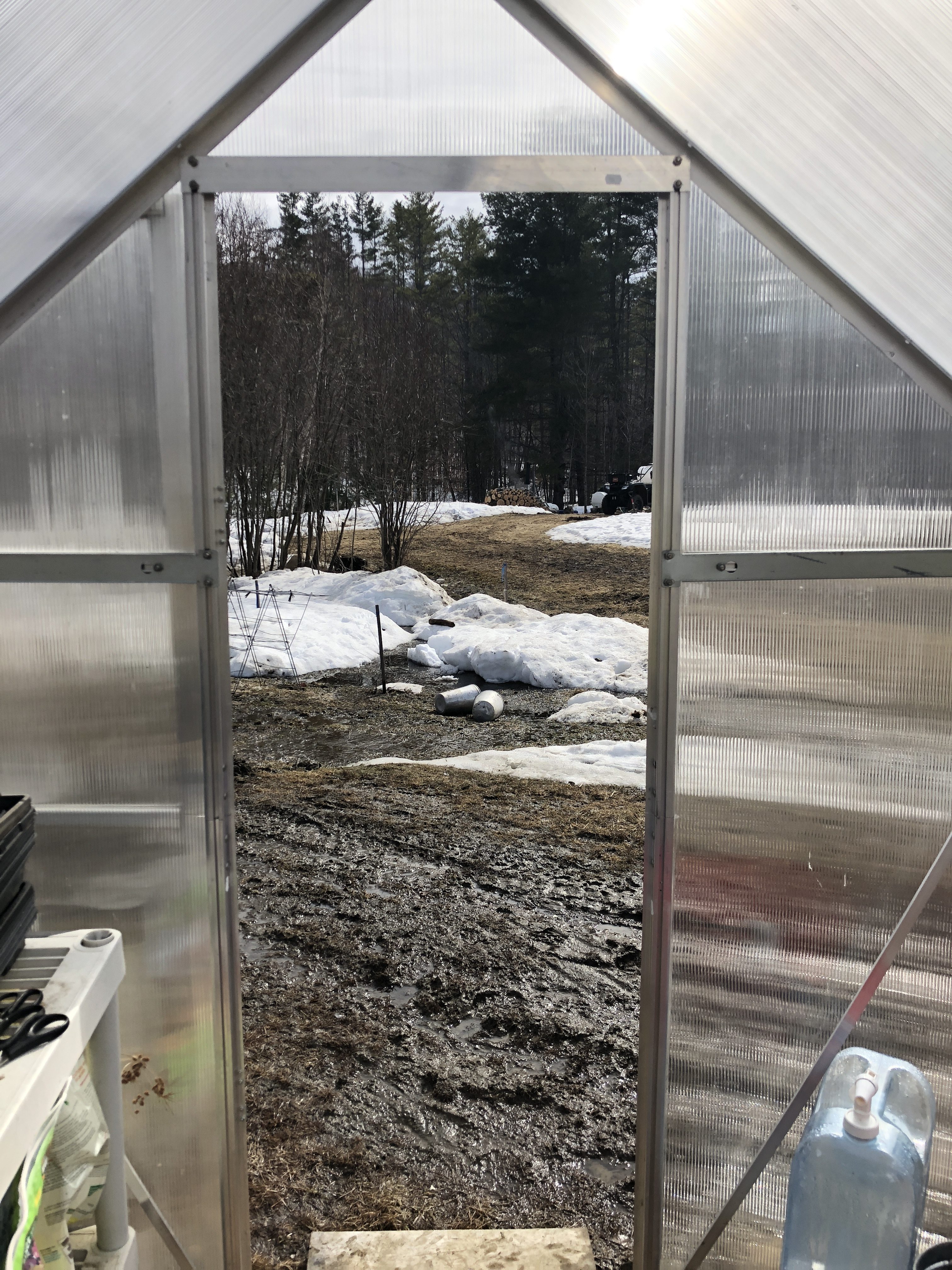
Everything looks miserable when the snow melts. We can’t quite tidy up all this with the remaining snow and mud but we’re itching to.

I just have to post
This Dragon which found its way into the Mandalagaba digest. I haven’t seen anyone really touch recursion yet, and then this shows up.

This is my absolute favorite thing about adding features to Mandalagaba: seeing them used in ways I didn’t even realize were possible. Here recursion is used to create ethereal traits. Of course mirror symmetry is used for the face too but that I had seen before :). The hours spent hammering out recursion are all of a sudden, absolutely worth it.
The artist is here: https://www.instagram.com/laralaubert
Making Ice
I’ve been helping maintain the village’s rink this year. It’s been fun to learn the ropes and of course, play hockey.


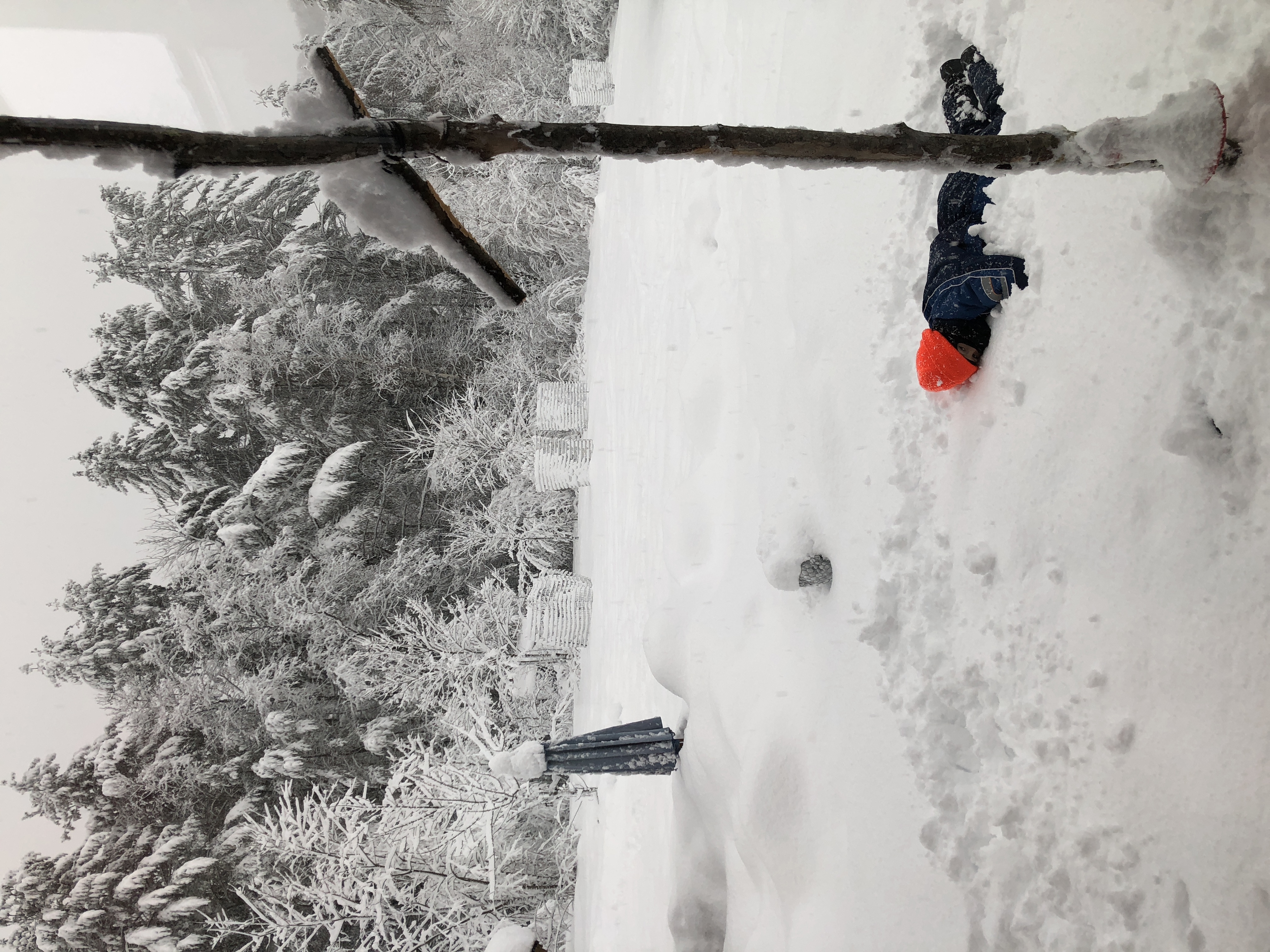
I figured out what it is about snow
Every year you can tell me what snow does, how deep it gets, and what it looks like. I know, I’ve seen it before. Yet every year, my jaw drops in disbelief when it hits.


Tessellationgaba
Very intense 2 months coding marathon to bring into the world the new version of Mandalagaba.
I completely rewrote the symmetry engine to be universal. When I coded the first version, I only wanted to scratch a specific radial symmetry itch and had to expand on narrowly conceived code to accommodate for features that came up from the tool’s success. With this new version, I instead gave myself a broad framework built for expansion, I can translate any penstroke at any angle in any location. Beyond mandalas, it makes possible tessellations and even the 2 combined.

I used the opportunity to add many features which were lacking: zooming, forking, lines, color picker, et cetera. With many more to come. The interface was rethought to be more accessible. Doing so took much more time than building the core engine.
There is an obscene amount of math that goes behind every pen stroke you draw in the tool. It was kind of fun to go through it again in my life, 20 years later. Even though I had forgotten about it all, it came back nicely. It’s amazing to have the internet as a tool to look up methods, to be able to describe the problem in plain English and have potential solutions thrown at you. It used to be that you needed to know what you needed precisely to find it in a book.
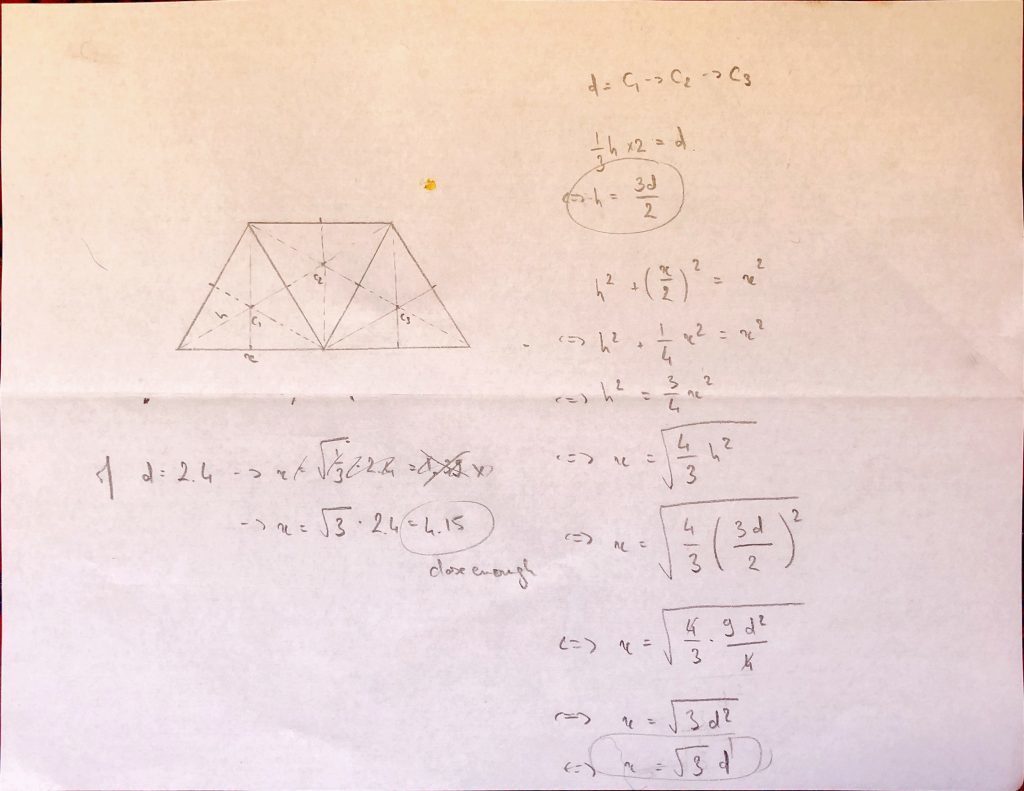
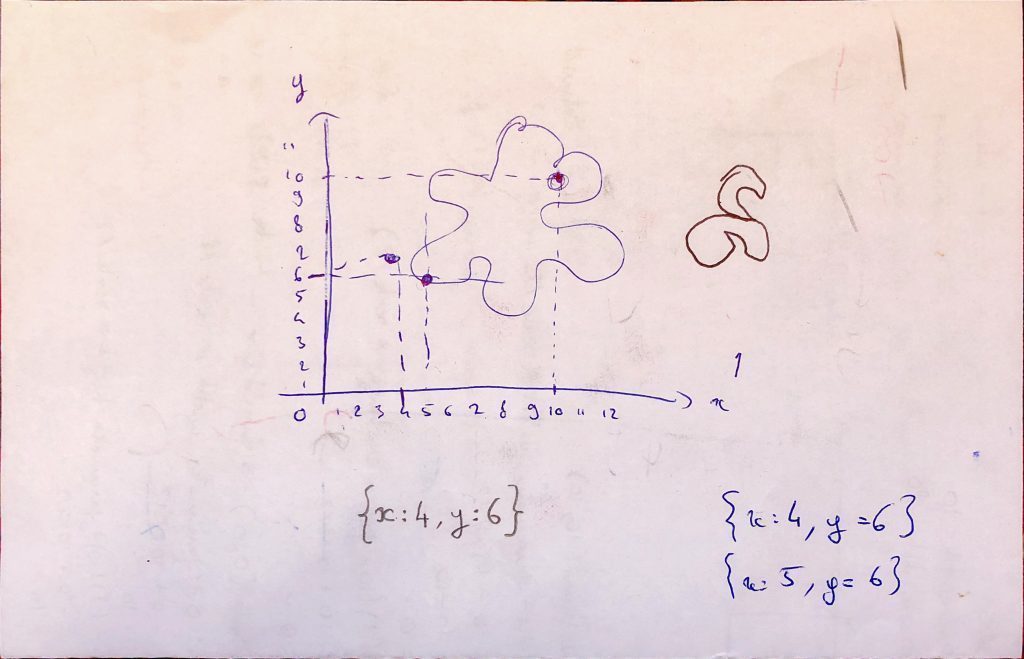
I love that Robin copies what I do no matter the understanding level, we’ve had lots of talks about what is going on.
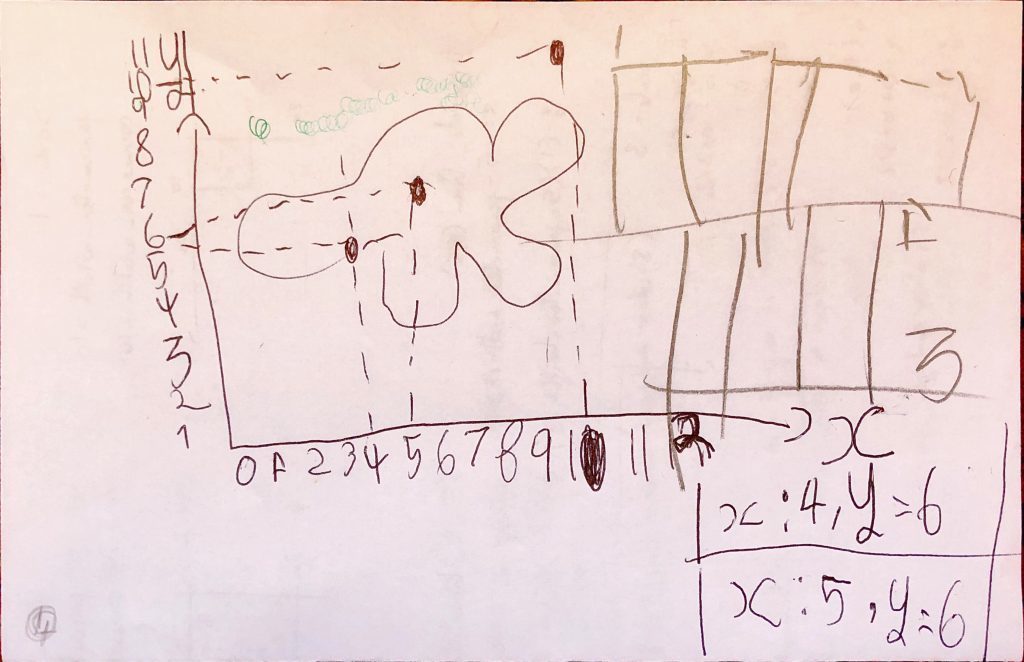
It’s not just the math but also algorithms, languages & infrastructure. Not to toot my own horn but in my 30s, I’ve never felt so intimate with every aspect of an idea’s implementation. It’s extremely enabling to know exactly where to go to achieve X. Honestly though I’m a little burnt out at the moment, something that was supposed to take 10 days took more than 2 months of coding every single night.
My hope is that the new tool becomes a reference online for this type of work. And it’s all 100% free; well… we’ll talk about that in the next post.
Lower tech fun found in a thrift shop
We woke up to a world encased in ice
We have had ice storms before but this one was particularly thorough in covering every nook in cranny of our land.

The sun shone through pine trees and it looked just like a Christmas tree decorated with lights so I updated the list of traditions I understood since moving to Vermont.
I almost plowed what snow we had before the ice came, but in talking to a friend, she brought up letting the ice accumulate on the snow rather than on the ground so it’s easier to kick out. Duh, what kind of flatlander doesn’t know that.
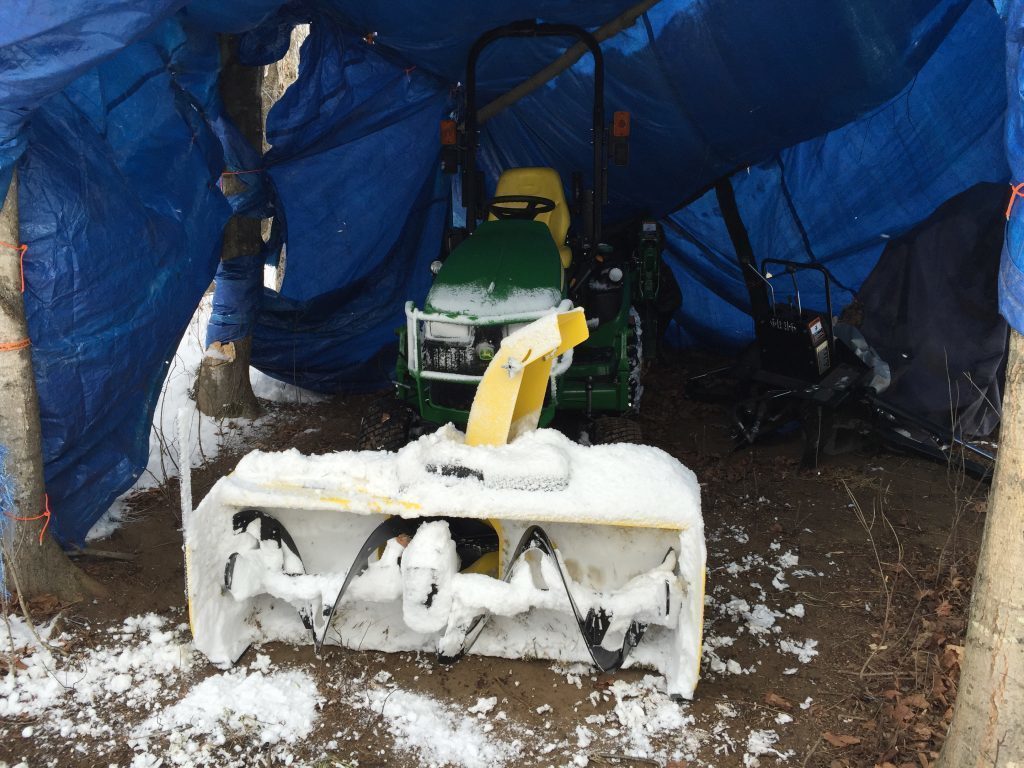
The storms are rolling in one after another, the tractor has been invaluable in taking care of all this snow. We have great paths, a flat driveway, and all I had to do was push a button and joyride around.

With all this snow and ice, the trees are taking a beating.


On the less glamorous side of things, emptying the portable toilet is a full on arctic expedition these days. We lost access to the septic tank and really, I prefer it this way.
We started on an igloo 🙂 this is the closed I’ve gotten to building one. We’ll see if we can finish the critical top.
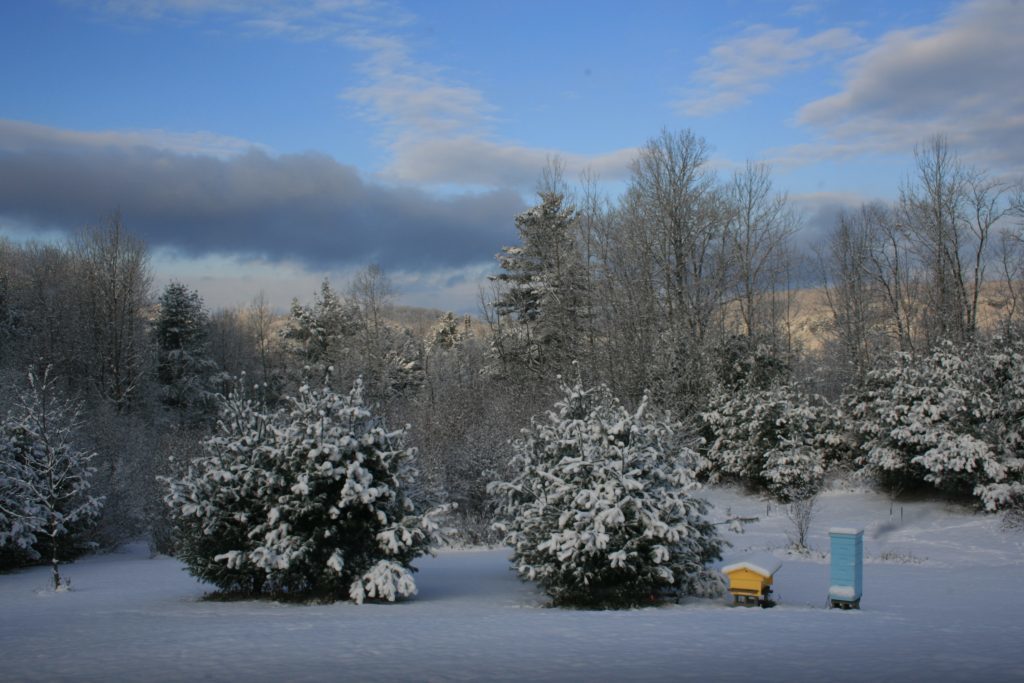

Bring it on Winter
I got to play with the snowblower implement today, super fun. Attaching it took some doing but I’m getting to know the tractor way. Putting chains on is always a giant pain.