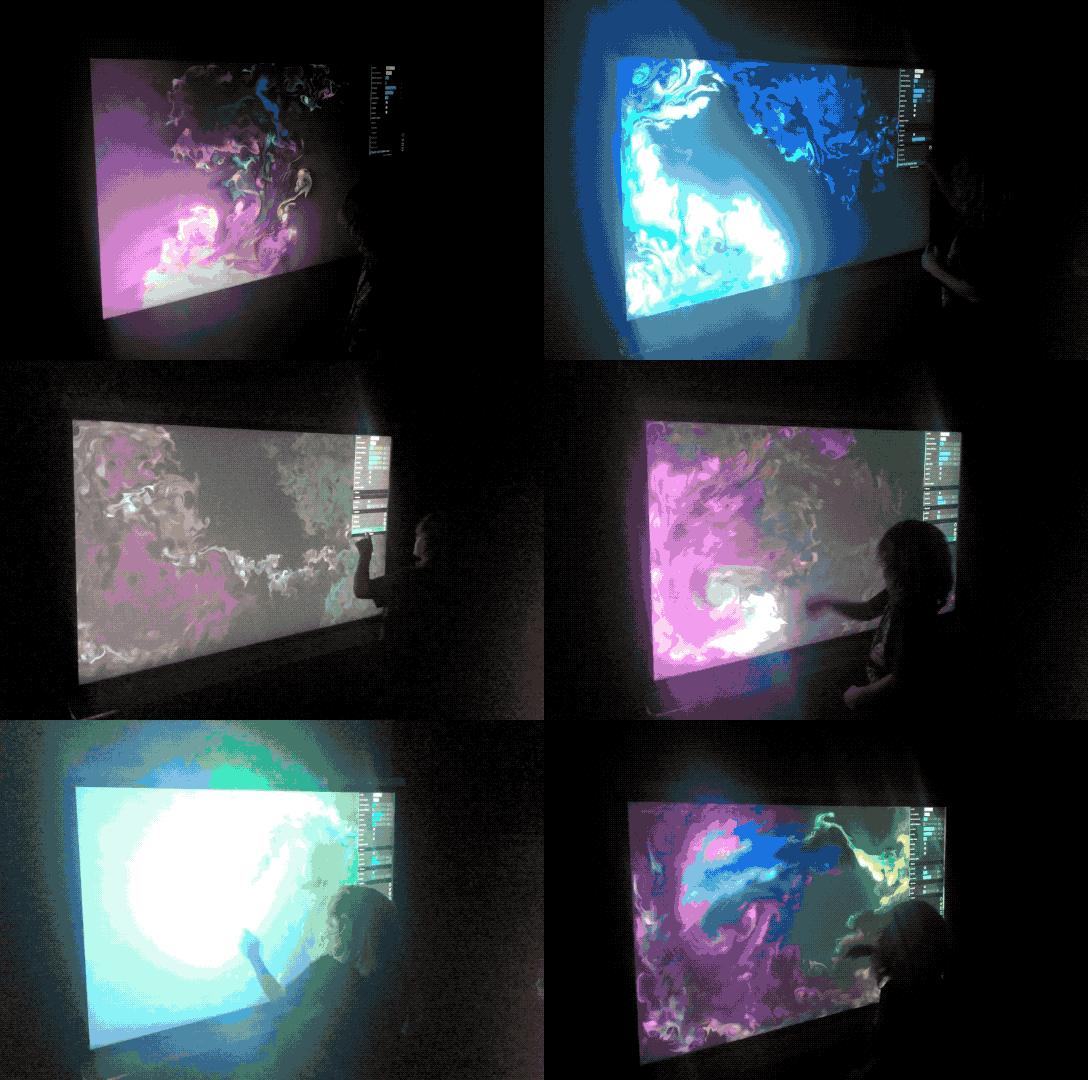
The family is growing

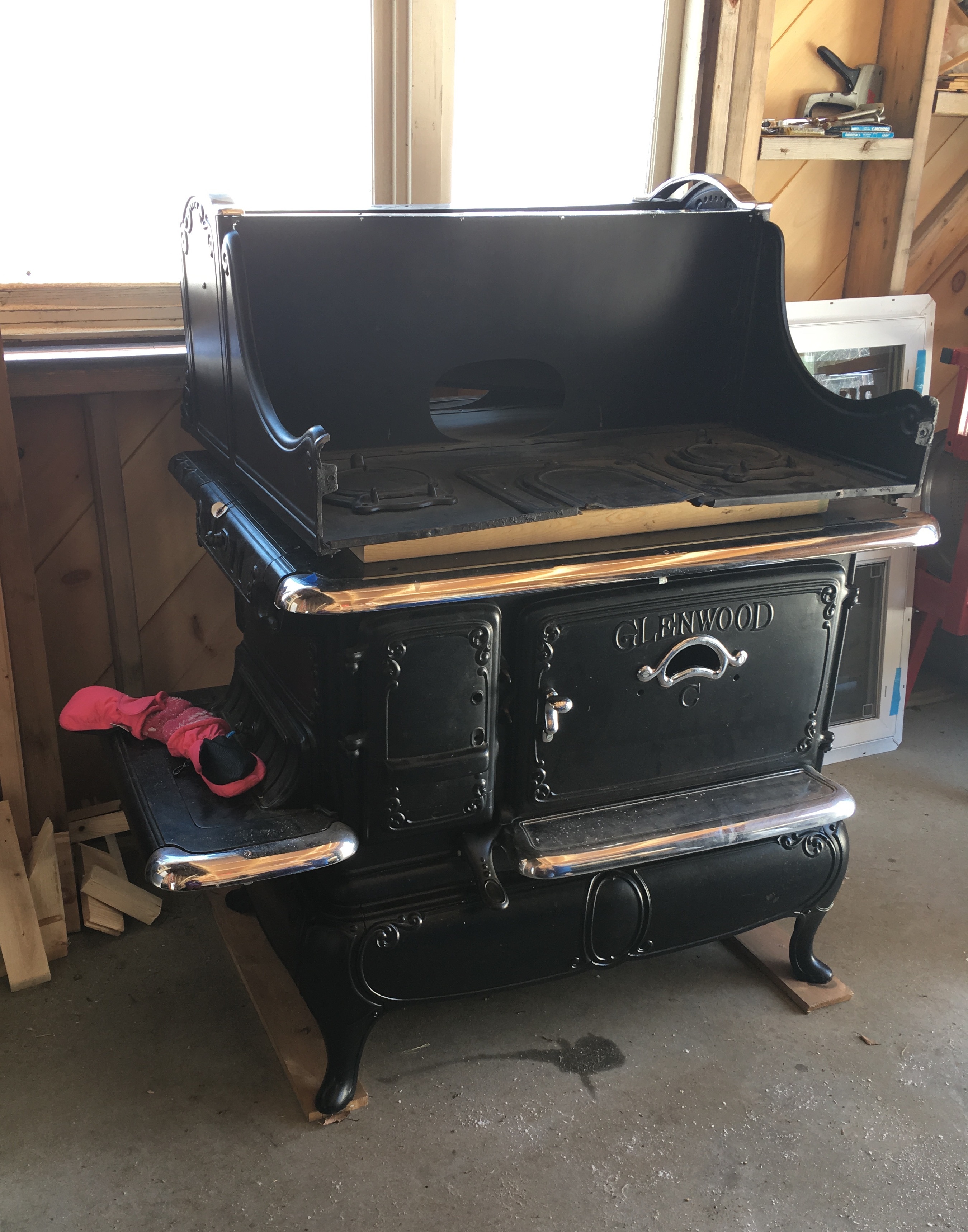
We just acquired another cookstove. It is in excellent shape for a stove built in 1905, so much so that we couldn’t let it pass. Like we did with our Sweetheart, it’ll sit unused for a couple of years, and we’ll use that time to give it the bit of TLC it needs.

It’s quite beautiful and has many bells and whistles.

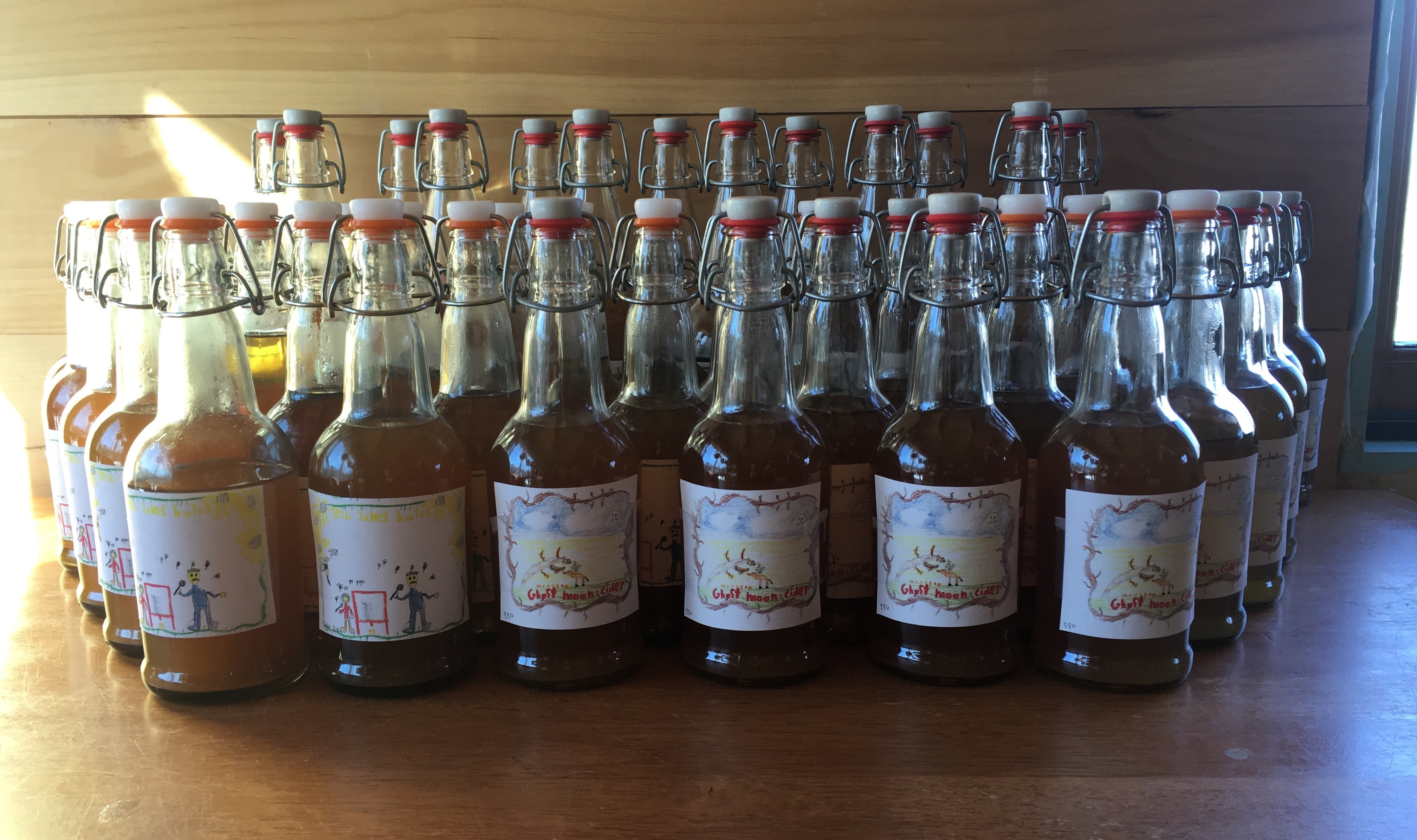
Cider in a Bottle

Our 2nd year making hard cider, we skipped one last year when the apple trees didn’t produce anything. Such are the whims of mother nature.

We did this one a little more “right” by transferring to a 2nd fermenter after a couple of months and by letting it age for 5 months total. It definitely helped refine the flavor and remove some of the less desirable tones.

As before we used our maple syrup to fuel the fermentation. It’s kind of a shame because the taste of maple syrup is completely lost in the process, I would love to have something mapley left. At the same time, it’s completely awesome that we are able to make hard cider with 100% local ingredients. And by local I mean right from our backyard. It may seem completely absurd to use maple syrup like this, we could sell it and buy many times its weight in refined cane sugar with the money. This isn’t what we’re after though, closing cycles as locally as possible is the end game, not making money. And so using maple syrup is the most sensical and harmonious thing we can do.

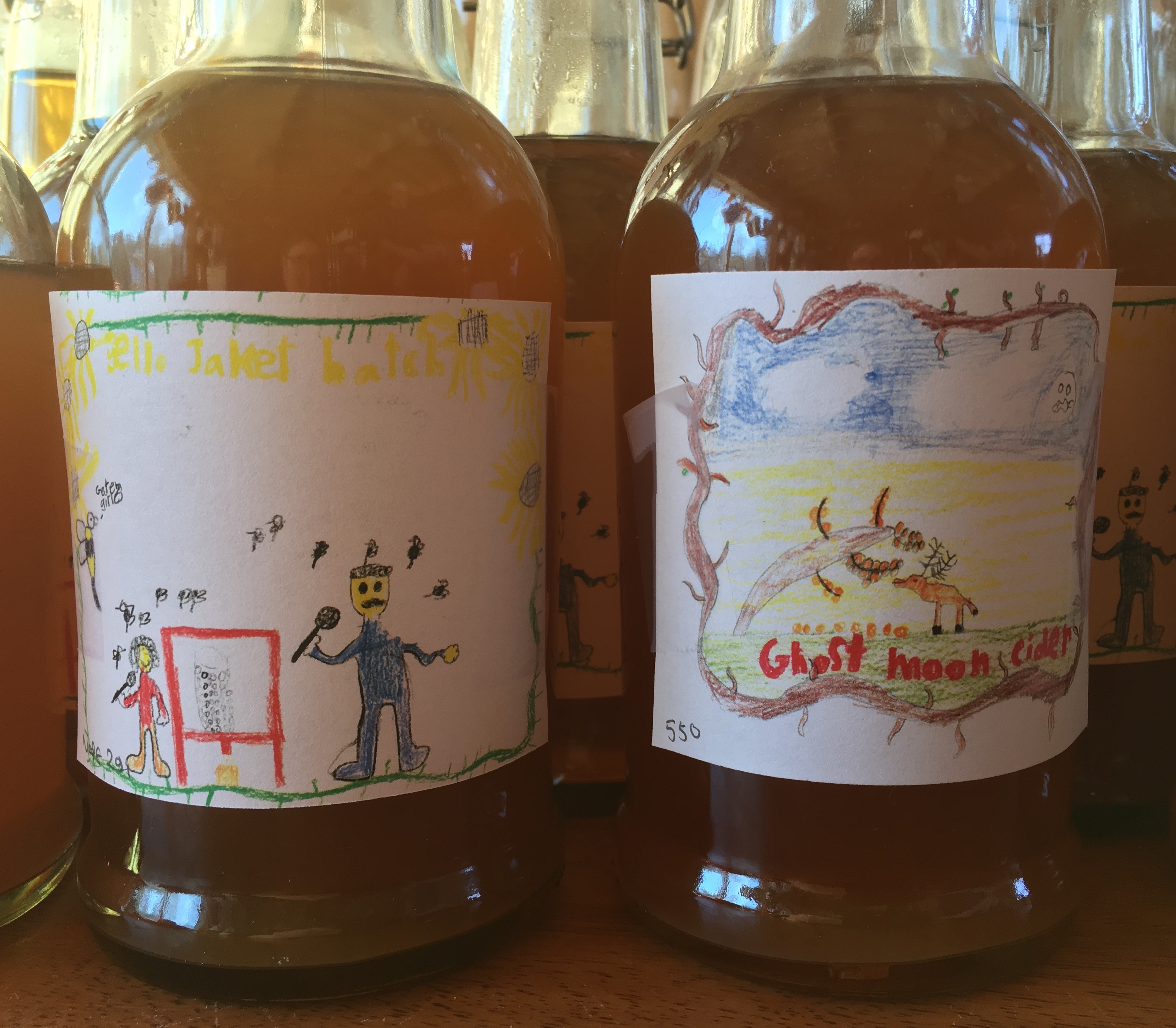
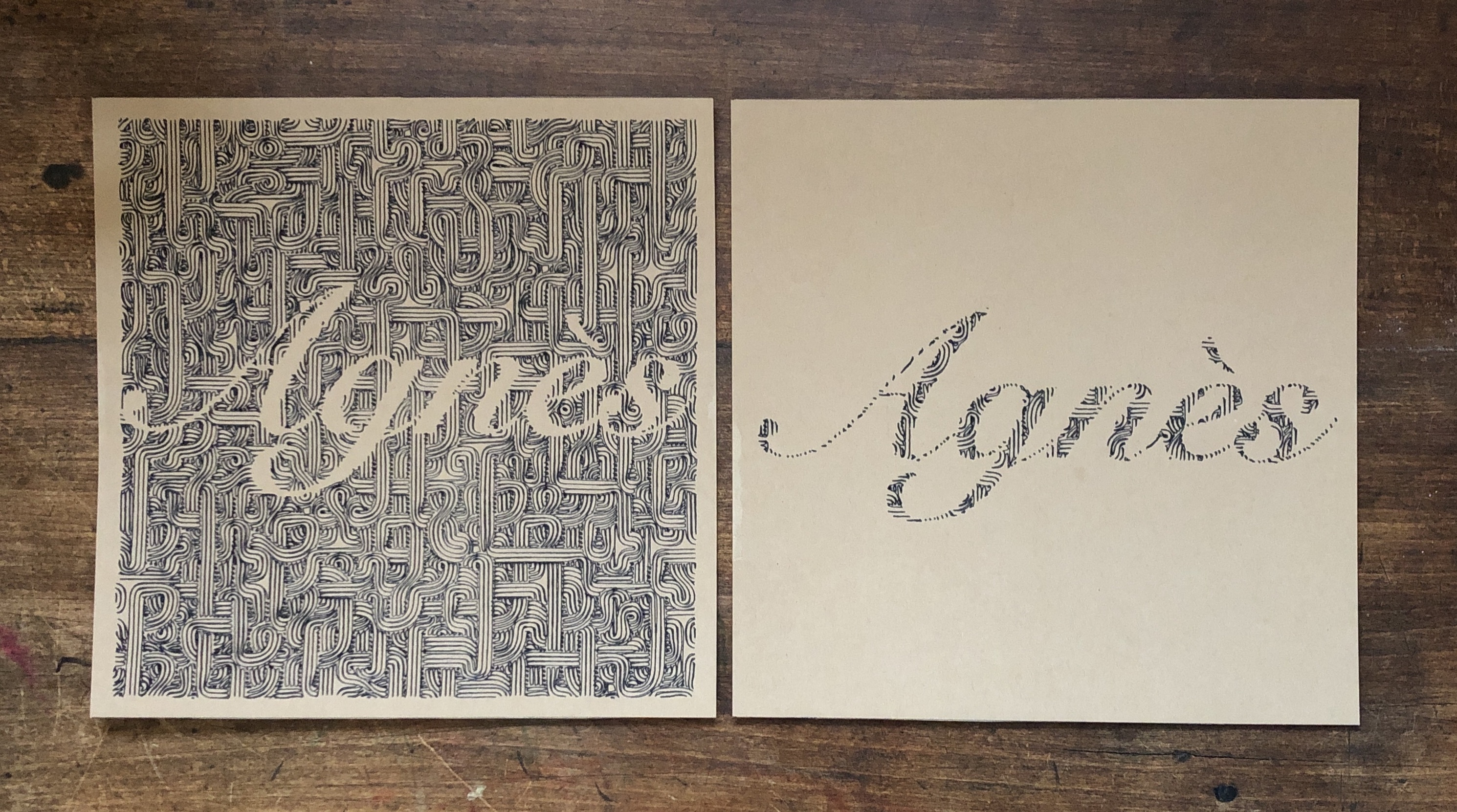
I commissioned labels from Robin, I would like to build up a portfolio of labels made from people I love to satisfy any future circumstances. This year we had deer go through apple trees during a ghost moon, and we had a press day heavy on yellow jackets.

Overall it’s really super nice that all these projects are well established these days. We are so much more relaxed going through the motions with experience under our belt. It’s still a lot of work, but at least we’re no longer worried we’re going to majorly fuck something up and ruin everything.

We’ll be sugaring soon, and we’ll have cider to drink while we boil the maple syrup we’ll use the make the cider. It’s the circle of life or something.

GPIO 2 Inverter

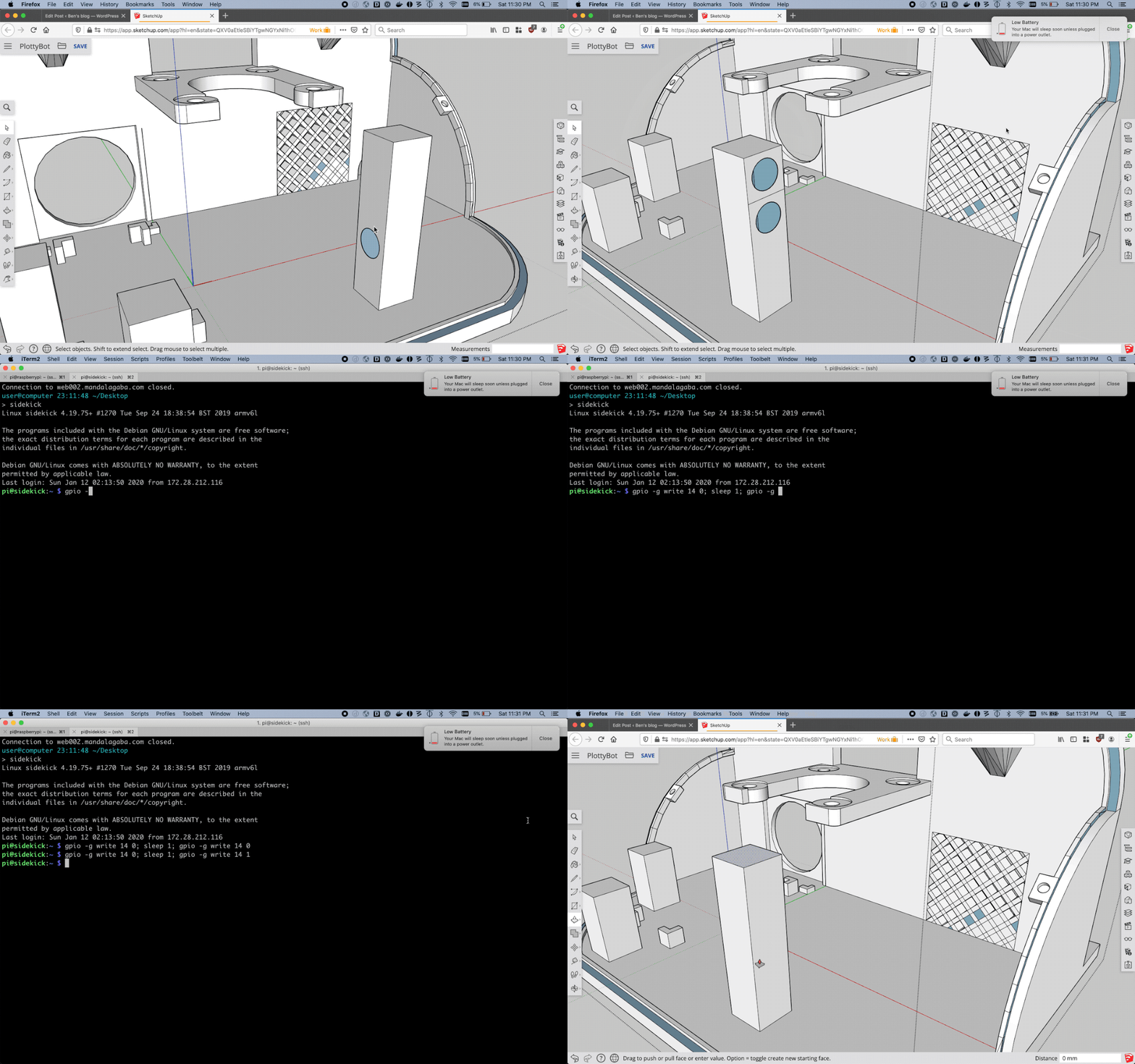
I figured out a way to turn our inverter on and off with a Pi so I can leave it off when Winter forces us to be frugal. It takes a little more than an amp hour just sitting there doing nothing, so I do like to turn it off. This capability will serve to automate the fridge in the future, before I do that though, I need to figure out a way to bring cold air from the outside into it. The idea is to have a logic which looks at outside temperature, solar status, and fridge temperature to decide if we just turn it on or if we can simply (and for less electricity) fan in cold air from the outside.

Running a fridge on the coldest months, when solar power is scarce, is doubly absurd.

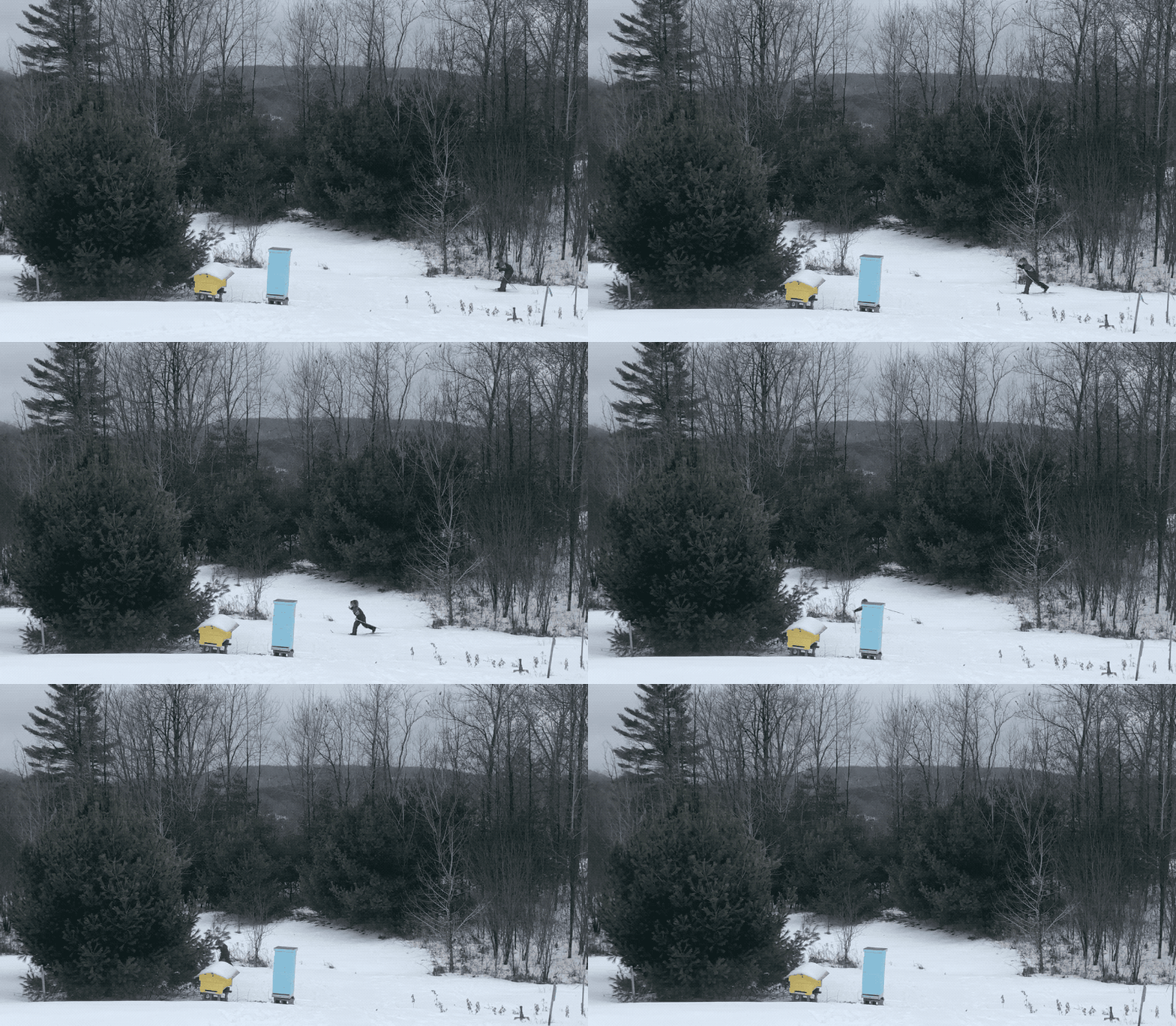
Never seen a kid

go from bed to snow as fast as he does. Not 30 seconds pass from the warmth of his sheets to the blistery morning cold.

His new morning routine

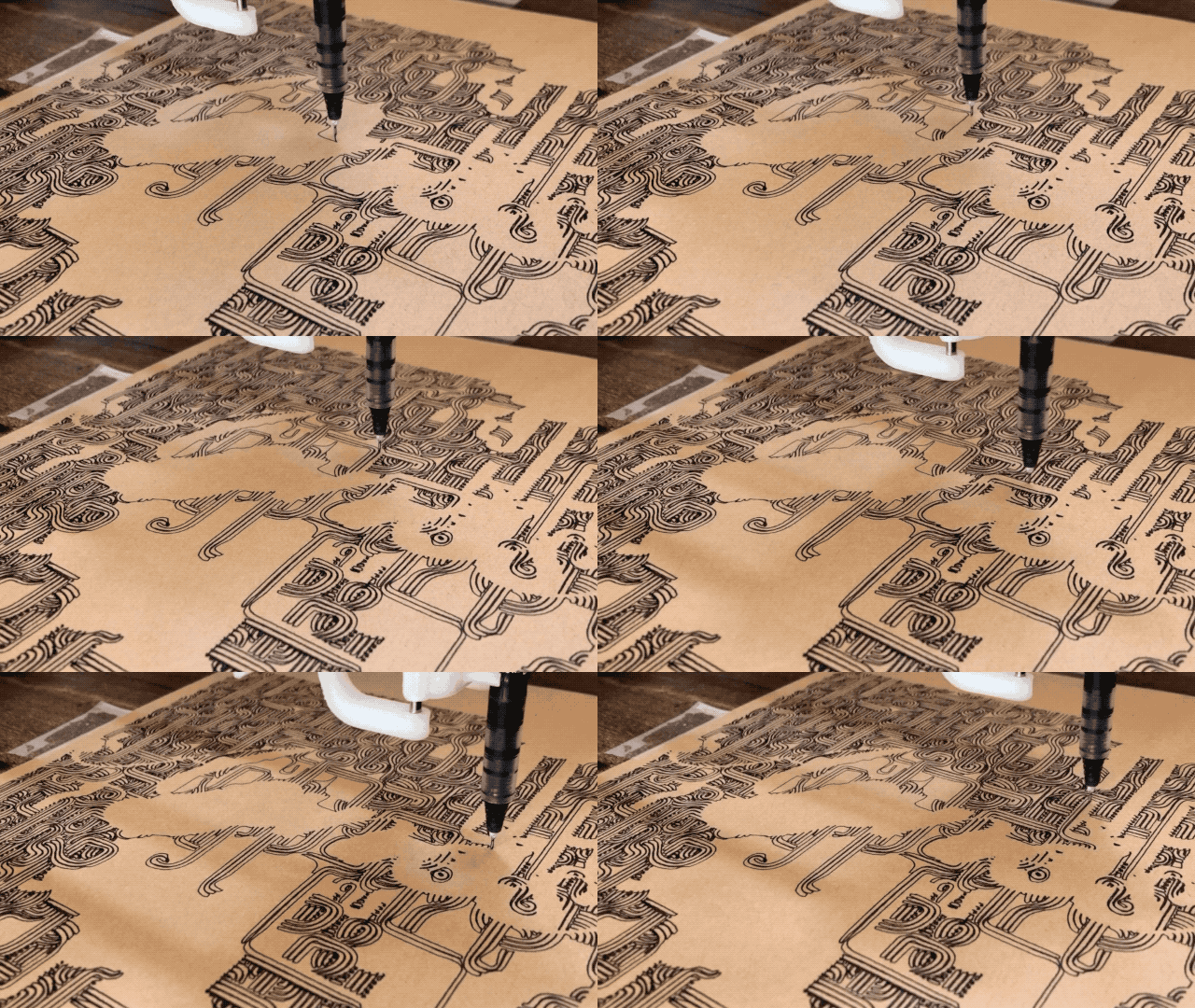
Plotter Trials

I’m getting closer to a very usable plotter, for now the prototype is serving all my plotting needs. Another prototype is in the works, this way I’ll be able to work on a plotter and keep another one for drawing. I keep finding ideas for really cool videos which I’m certain will make splashes online. I want to have my next steps figured out before I try to do just that. I know that at least the plotter build will be documented as a DYI project.

I found my birthday presents for the next 10 years

First trial with paint, I coded for “ink refill” capabilities for all instruments which require it. Obviously I’ve learned a few lessons here 🙂

Raspberry Pi Servo Jitter

Here’s the final solution I came up with to finally get a servo motor to behave on a Pi. It may not seem like much but it took a lot of doing to gather all the right bits. This was tested with an SG90, SG92R, and an MG90S on a Pi Zero.

Scroll straight to the end for the solution.

The most common way for controlling a servo motor on a Pi with is through RPi.GPIO as such:

#!/usr/bin/python3
import RPi.GPIO as GPIO
import time

servo = 23

GPIO.setmode( GPIO.BCM )
GPIO.setup( servo, GPIO.OUT )

# info on frequency and PWM formula at https://rpi.science.uoit.ca/lab/servo/
pwm = GPIO.PWM( servo, 50 )
pwm.start( 2.5 )

print( "0 deg" )
pwm.ChangeDutyCycle( 2.5 )  # turn towards 0 degree
time.sleep( 3 )

print( "90 deg" )
pwm.ChangeDutyCycle( 7.5 )  # turn towards 90 degree
time.sleep( 3 )

print( "180 deg" )
pwm.ChangeDutyCycle( 12.5 ) # turn towards 180 degree
time.sleep( 3 )

pwm.stop()
GPIO.cleanup()

Stuff you might need for this to run:

sudo apt-get update && sudo apt-get install python3-rpi.gpio

It results in super jitter which is unacceptable for the holy mission of pen plotting.

As far as I understand, the jitter comes from the wave form RPi.GPIO produces for Pulse Width Modulation, which is made in software and so it’s not super stable (no dedicated resources to build it). From what I gather, pigpio is programmed to tap into the one hardware PWM that Pis have.

The solution thus is as such:

#!/usr/bin/python3
import RPi.GPIO as GPIO
import pigpio
import time

servo = 23

# more info at http://abyz.me.uk/rpi/pigpio/python.html#set_servo_pulsewidth

pwm = pigpio.pi()
pwm.set_mode(servo, pigpio.OUTPUT)

pwm.set_PWM_frequency( servo, 50 )

print( "0 deg" )
pwm.set_servo_pulsewidth( servo, 500 ) ;
time.sleep( 3 )

print( "90 deg" )
pwm.set_servo_pulsewidth( servo, 1500 ) ;
time.sleep( 3 )

print( "180 deg" )
pwm.set_servo_pulsewidth( servo, 2500 ) ;
time.sleep( 3 )

# turning off servo
pwm.set_PWM_dutycycle( servo, 0 )
pwm.set_PWM_frequency( servo, 0 )

Stuff you might need for this to run:

sudo apt-get update && sudo apt-get install python3-pigpio
sudo pigpiod

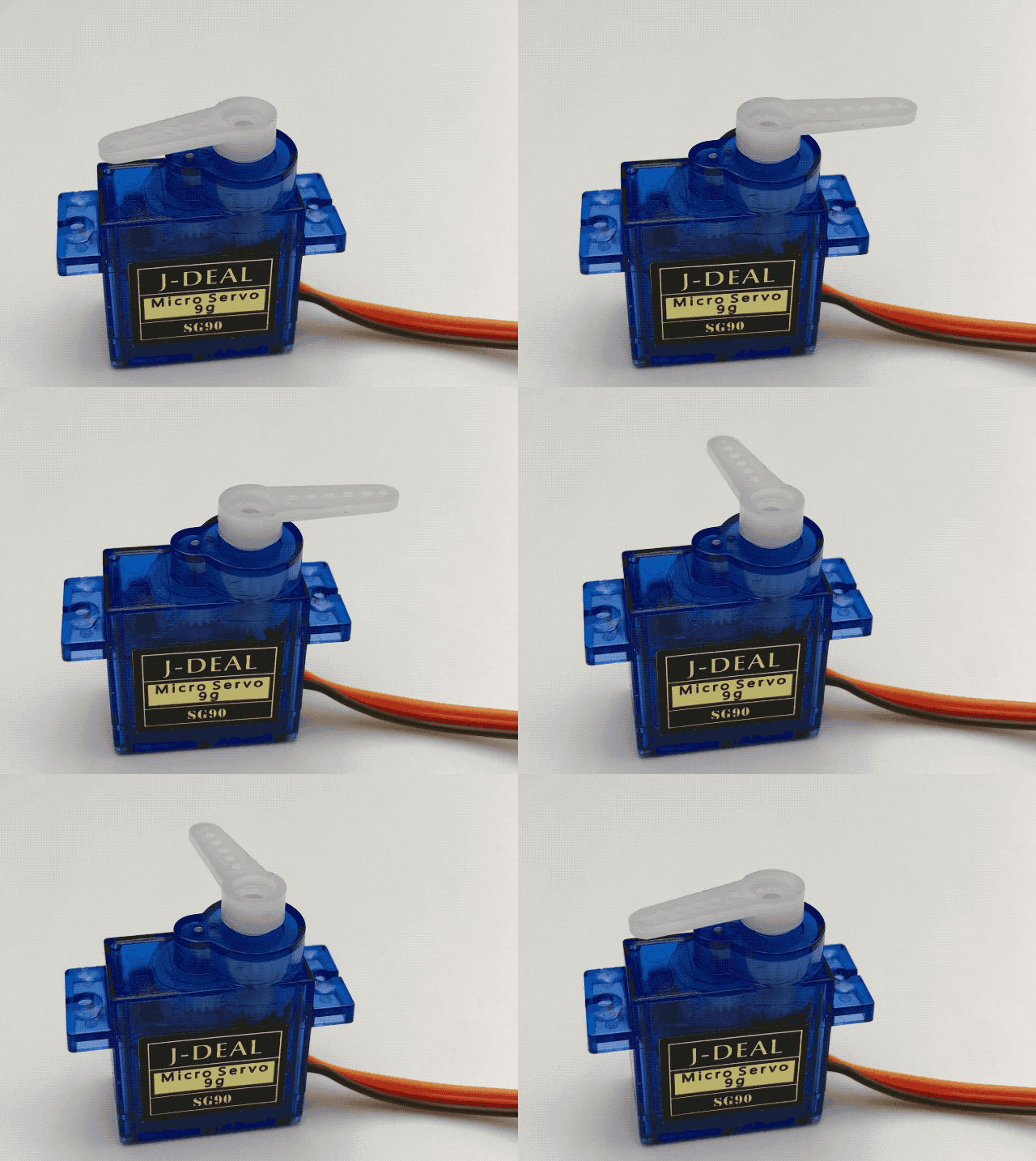
And the resulting super smooth motion and holds:
Fibonacci Assist

It’s been a while since I pushed a feature to Mandalagaba worthy of a post.

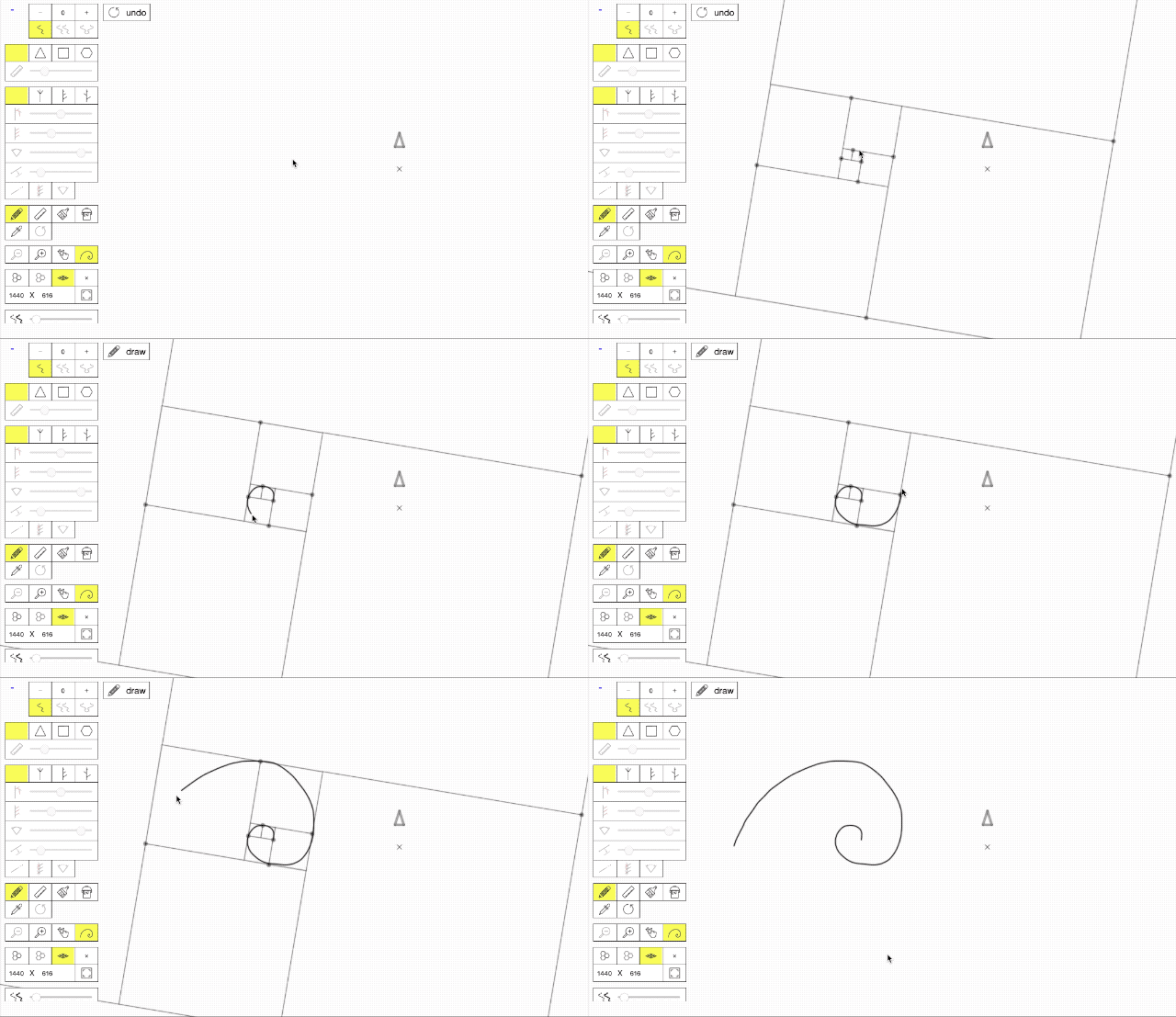
I just pushed a tool I call “Fibonacci Assist”. It’s meant to help you draw Fibonacci spirals by overlaying the proper framing based on the beginning of your penstroke.

I was reminded of the existence of this sequence and its ties to nature reading the most excellent children book: Swirl by Swirl. The book is simply magnificent and so I thought I’d do my part to help bring into the world more Fibonacci spirals.

I have yet to play with it using a stylus.