Driving a 28BYJ-48 Stepper Motor & ULN2003 driver with a Raspberry Pi
Quick points about this motor & driver
They are wonderfully cheap and extremely accurate due to 1/64 gearing. They move by 0.087890625° per step! However, the gearing is made of plastic and will wear out overtime, especially if moving heavy objects. Lastly the motors can become a little toasty if you work them hard.
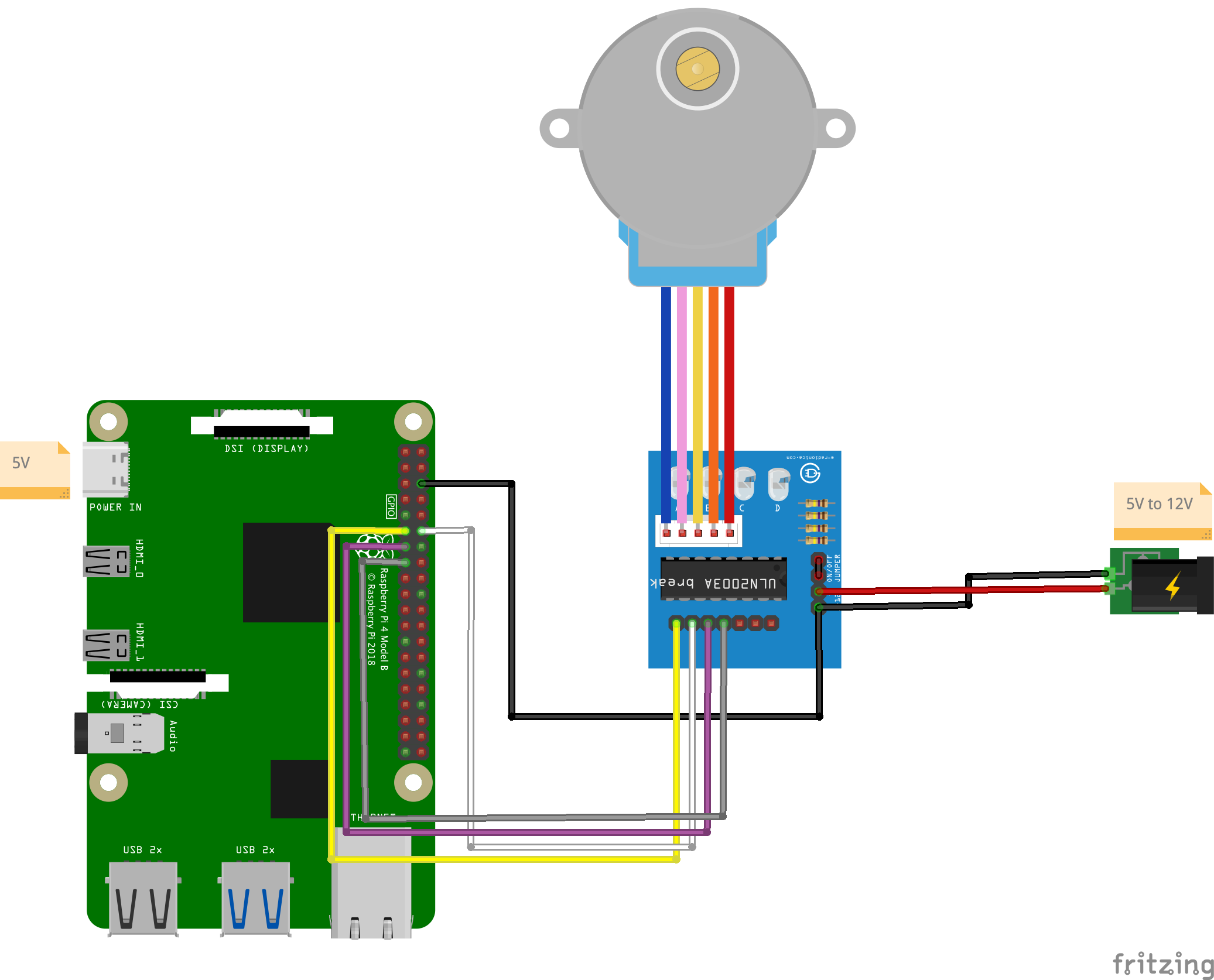
Circuit
Code
#!/usr/bin/python3
import RPi.GPIO as GPIO
import time

in1 = 17
in2 = 18
in3 = 27
in4 = 22

# careful lowering this, at some point you run into the mechanical limitation of how quick your motor can move
step_sleep = 0.002

step_count = 4096 # 5.625*(1/64) per step, 4096 steps is 360°

direction = False # True for clockwise, False for counter-clockwise

# defining stepper motor sequence (found in documentation http://www.4tronix.co.uk/arduino/Stepper-Motors.php)
step_sequence = [[1,0,0,1],
                 [1,0,0,0],
                 [1,1,0,0],
                 [0,1,0,0],
                 [0,1,1,0],
                 [0,0,1,0],
                 [0,0,1,1],
                 [0,0,0,1]]

# setting up
GPIO.setmode( GPIO.BCM )
GPIO.setup( in1, GPIO.OUT )
GPIO.setup( in2, GPIO.OUT )
GPIO.setup( in3, GPIO.OUT )
GPIO.setup( in4, GPIO.OUT )

# initializing
GPIO.output( in1, GPIO.LOW )
GPIO.output( in2, GPIO.LOW )
GPIO.output( in3, GPIO.LOW )
GPIO.output( in4, GPIO.LOW )

motor_pins = [in1,in2,in3,in4]
motor_step_counter = 0 ;

def cleanup():
    GPIO.output( in1, GPIO.LOW )
    GPIO.output( in2, GPIO.LOW )
    GPIO.output( in3, GPIO.LOW )
    GPIO.output( in4, GPIO.LOW )
    GPIO.cleanup()

# the meat
try:
    i = 0
    for i in range(step_count):
        for pin in range(0, len(motor_pins)):
            GPIO.output( motor_pins[pin], step_sequence[motor_step_counter][pin] )
        if direction==True:
            motor_step_counter = (motor_step_counter - 1) % 8
        elif direction==False:
            motor_step_counter = (motor_step_counter + 1) % 8
        else: # defensive programming
            print( "uh oh... direction should *always* be either True or False" )
            cleanup()
            exit( 1 )
        time.sleep( step_sleep )

except KeyboardInterrupt:
    cleanup()
    exit( 1 )

cleanup()
exit( 0 )
Stuff you might need for this to run:
sudo apt-get update --fix-missing && sudo apt-get install python3-rpi.gpioResults
This motor takes 5.625*(1/64)° per step, this means 2048 steps for 180°:
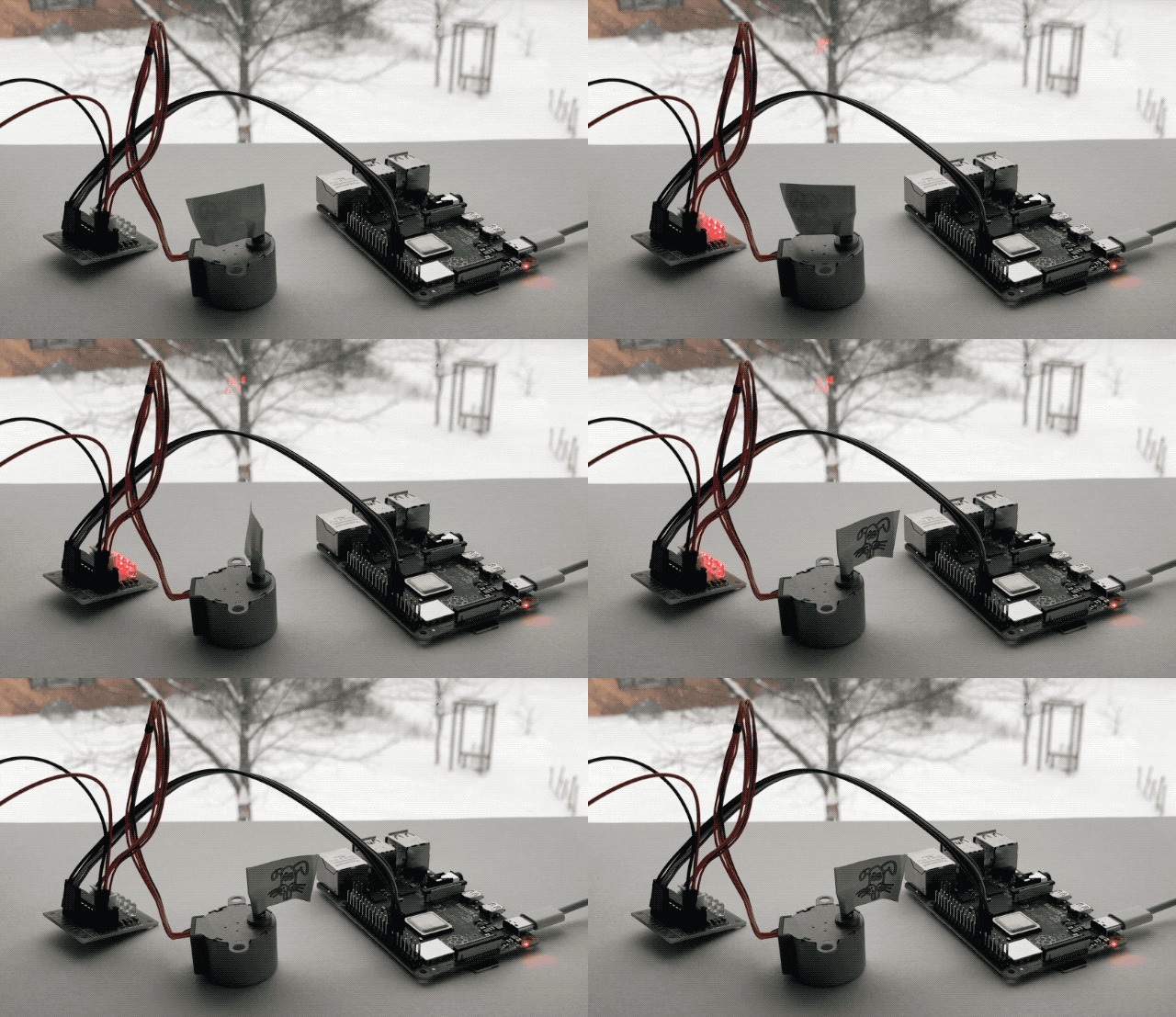
and 4096 steps for 360°:

One thing that is super cool about the driver board are the LEDs. Projects are always cooler with blinky LEDs, but these guys also help show what is actually going on inside the stepper, and can help you find issues. They are supposed to light up in sequence.

Compromises, Getting 70 Amps on Demand
We barely used our Champion generator these past 5 years, but it did come in handy on rare occasions. It sat for 2 years unused at one point and needed some TLC to get back going again, a fact we didn’t want another way. Working from home in the time of Covid, having upgraded our solar setup, and still not making enough power through very cloudy days, we had to compromise our values a bit more and get decent fossil based 🙁 regenerating capabilities.
I’m still gathering information on water and wind turbines to diversify down the road, but today we are not ready to pull that trigger and we need to work.
So we acquired a very nice Honda EU2200i, and a wonderful little device that plugs into it and produces 70A at 12VDC on demand.
The Honda generator is really nice and very quiet.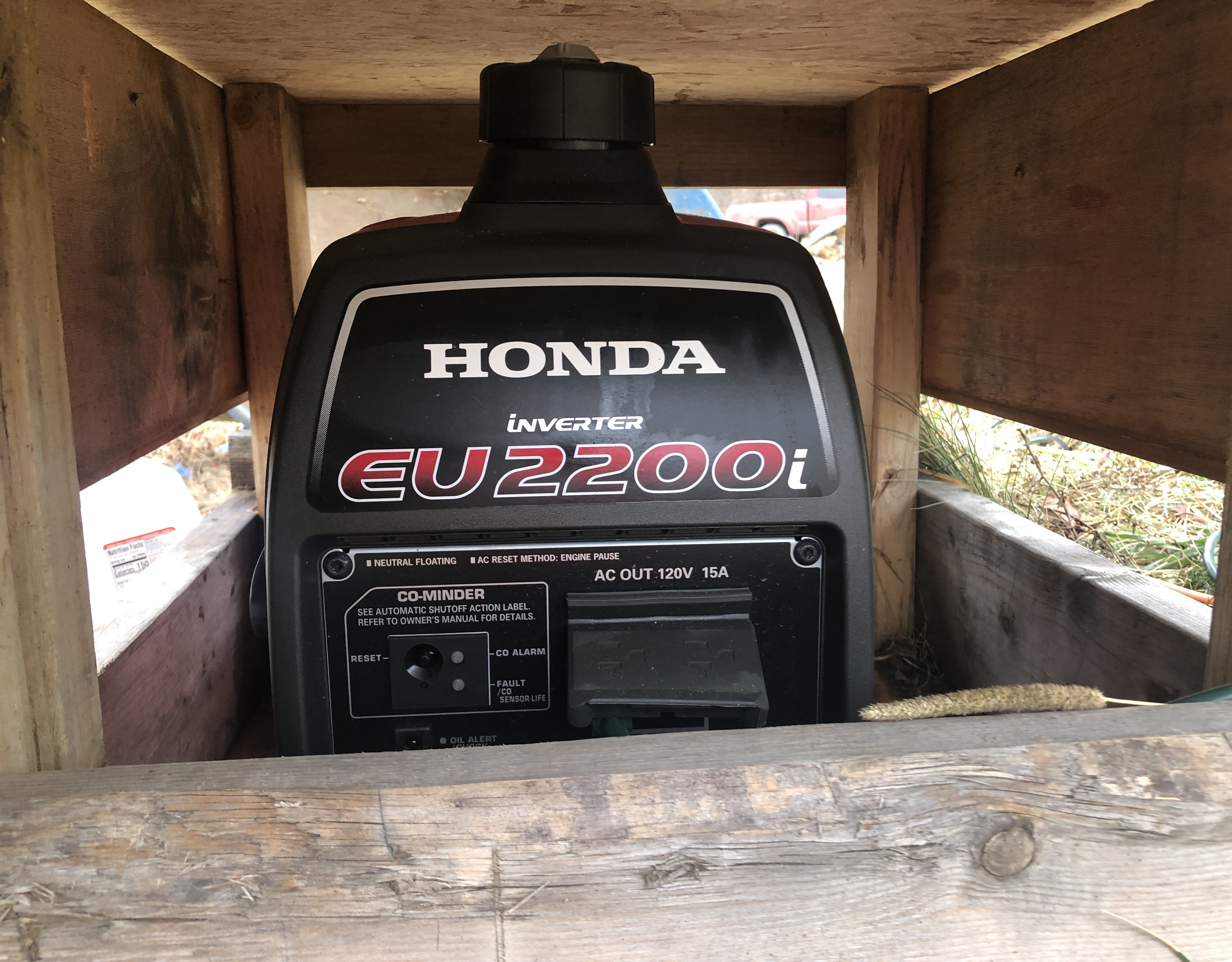
The AIMS Power CON120AC1224DC is very impressive, is can truly put out 70A on demand, it can be tuned to charge several battery types, and it decouples the load. I don’t need to switch the load to the generator, which means it’s always on the nice clean pure sine inverter.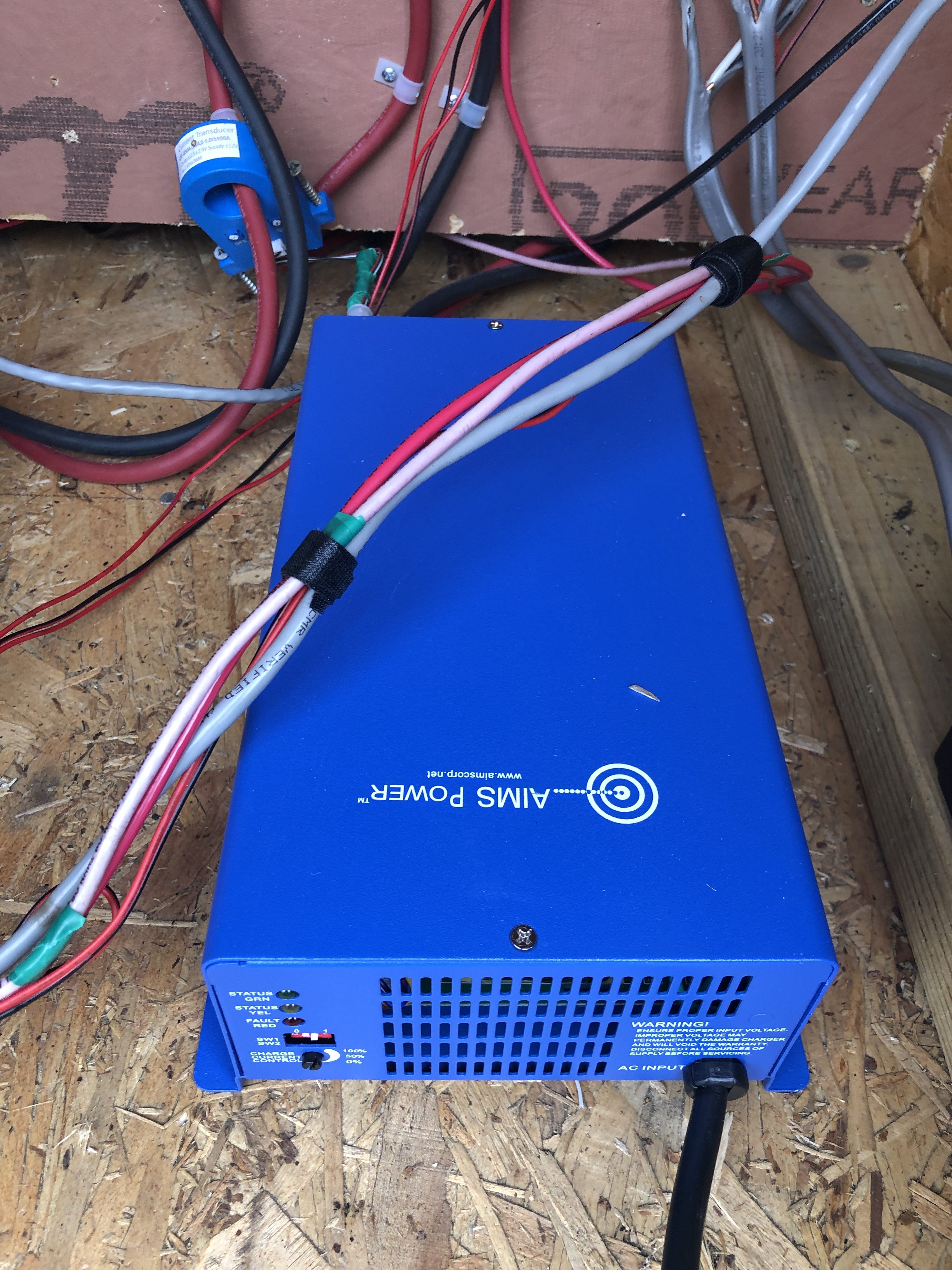
The Honda generator comes with Bluetooth, a fact I was not happy about as it’s gimmicky, but I have to say it is nice to not have to go back outside to turn off the generator. The AIMS converter is definitely working it hard.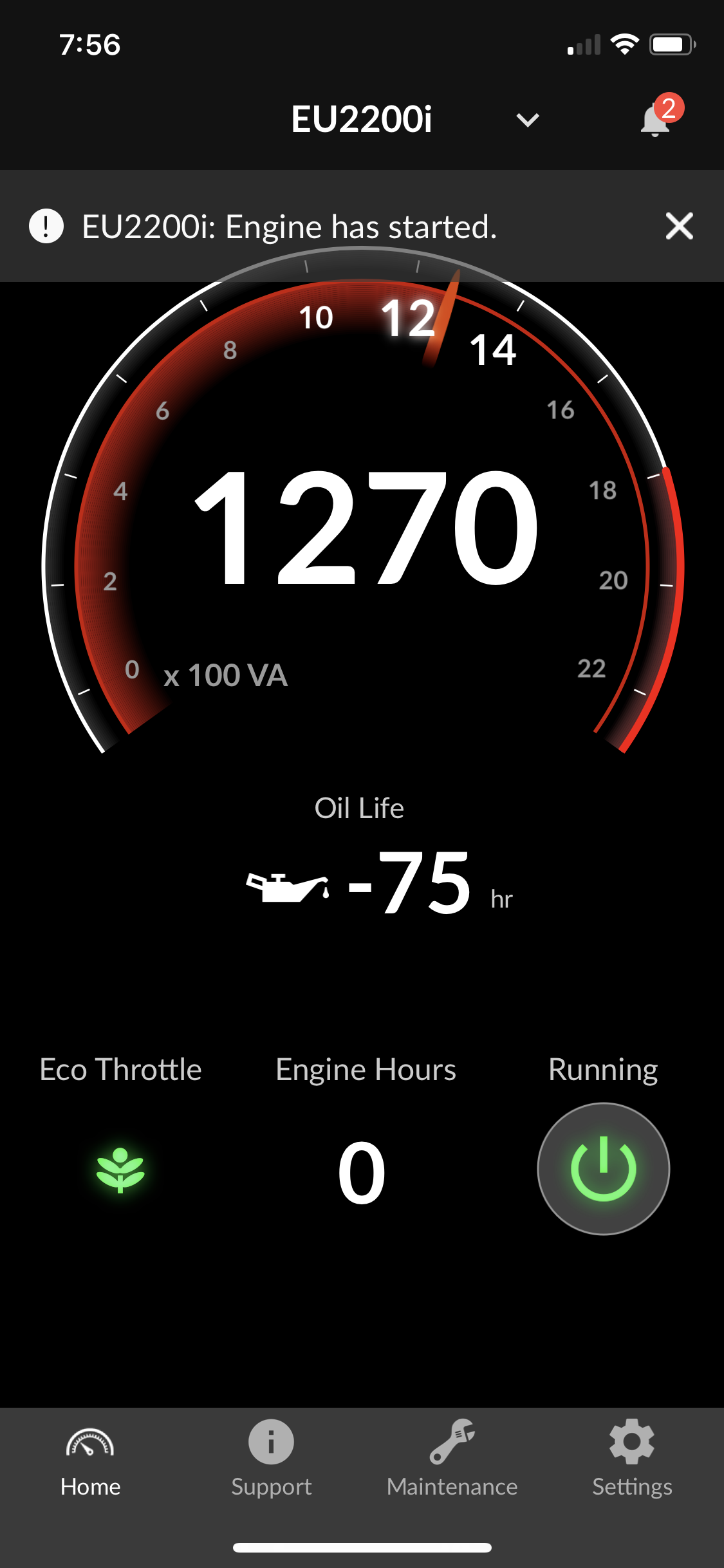
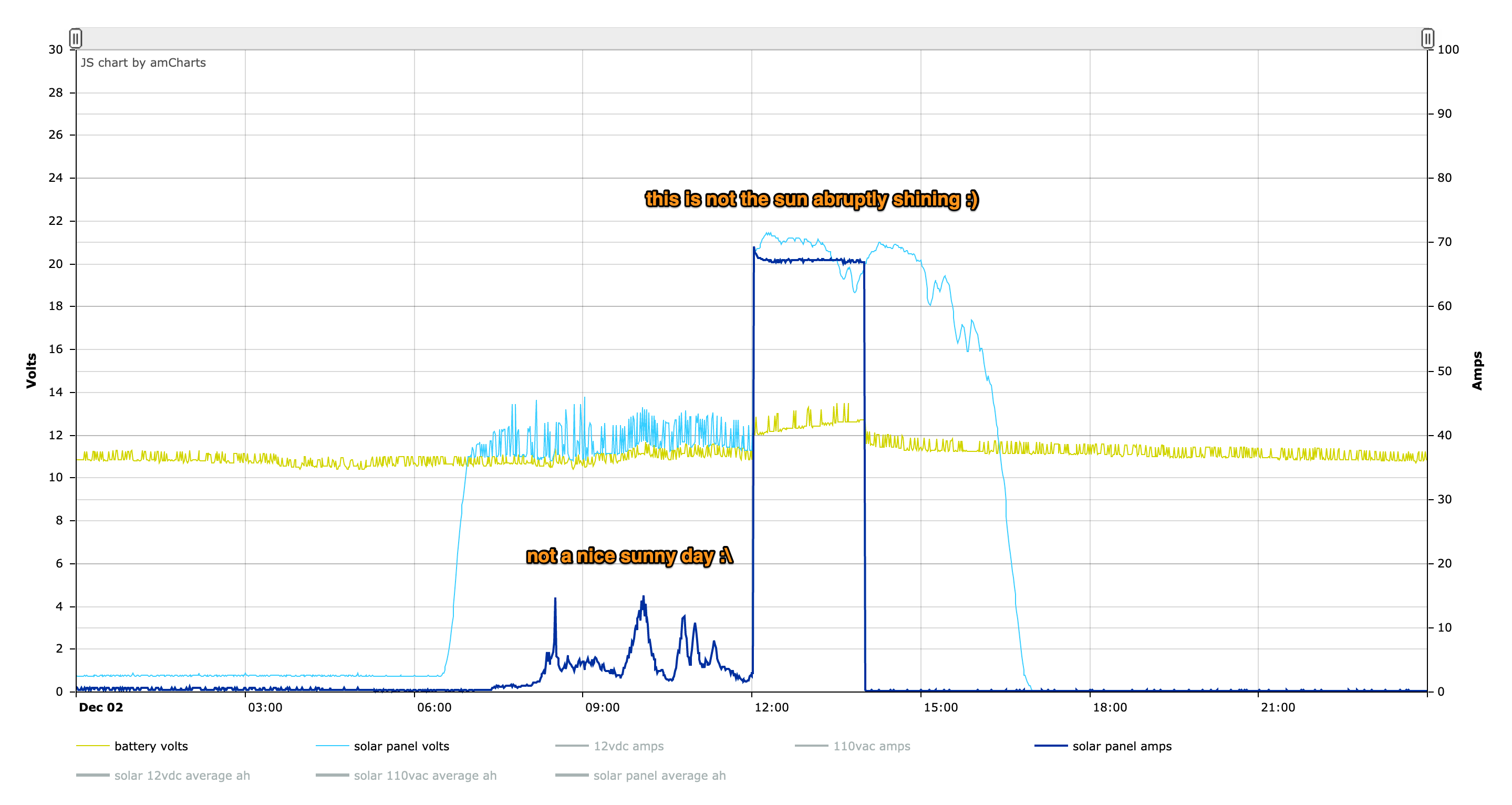
The results on the solar graph are, well, a bit absurd to look at :).