Esther loves creating Fairy houses, and I love creating wood piles.

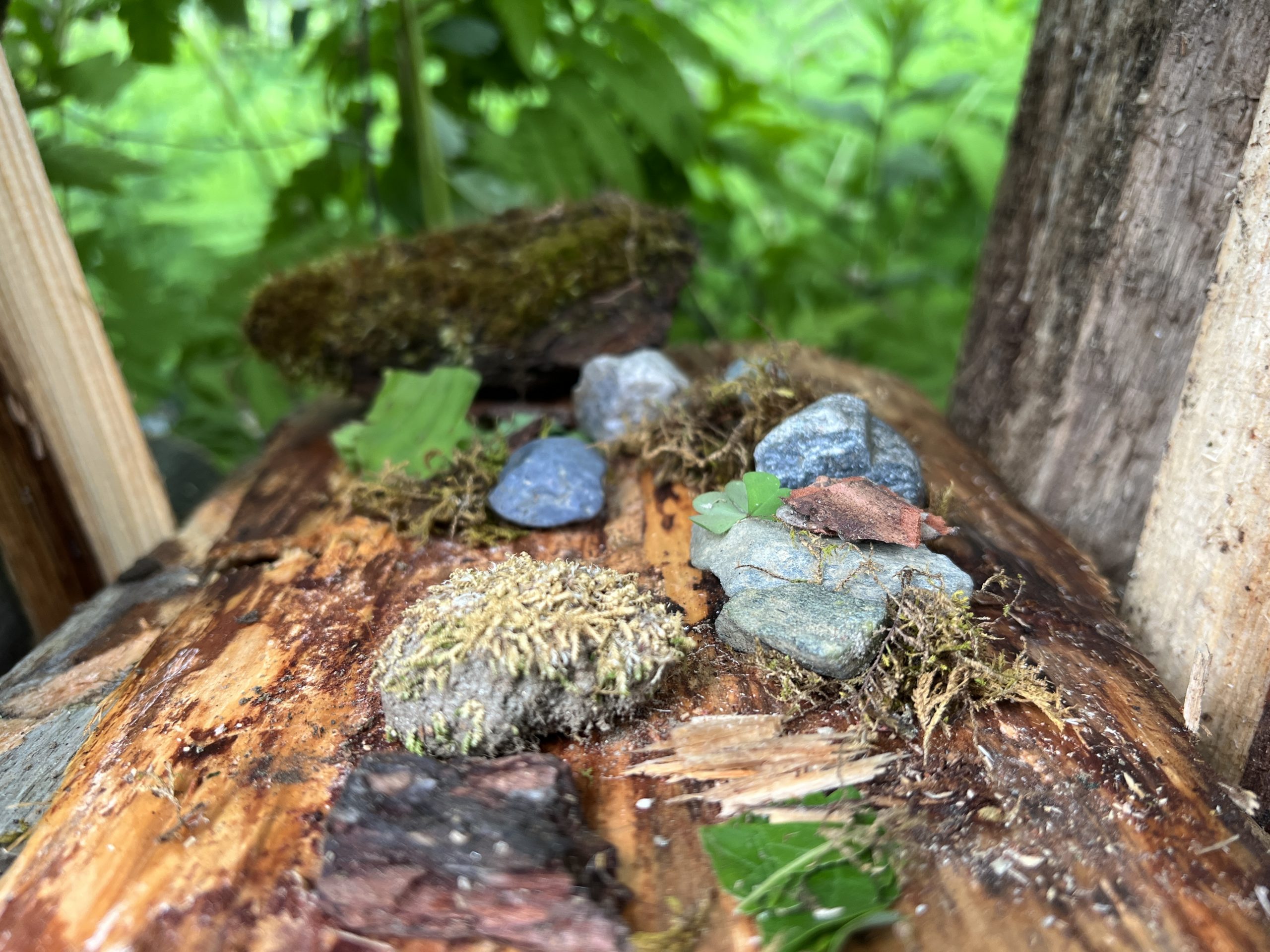
Esther loves creating Fairy houses, and I love creating wood piles.
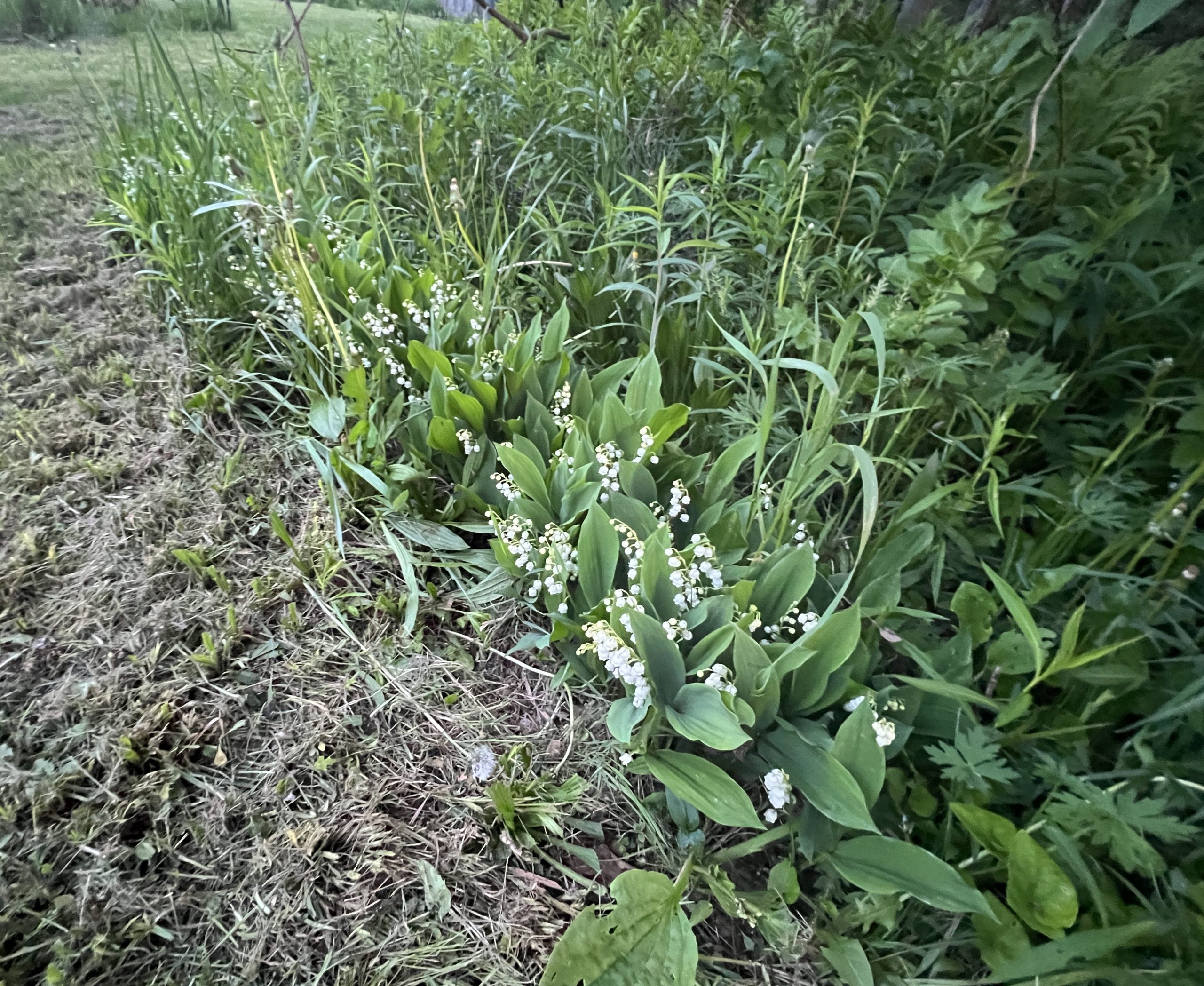
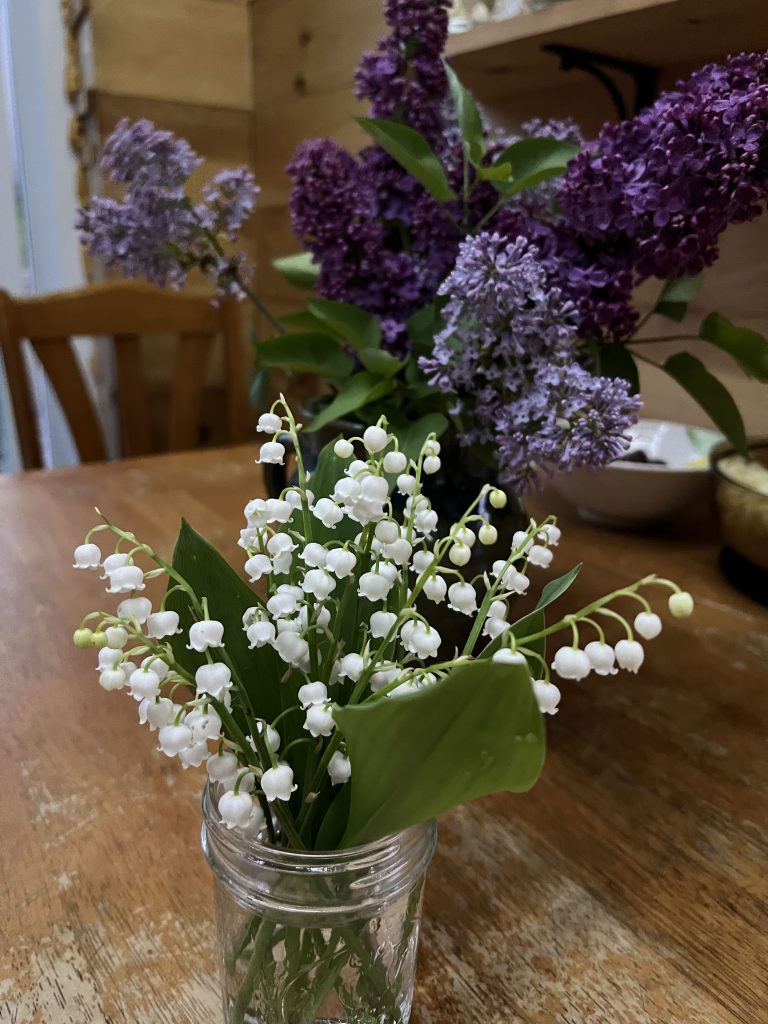
Flowers started rolling in, one of Nicole’s most successful crops. After many failed attempts, we finally have an established patch of Lilies of the Valley. It’s incredible how far we can smell it from.
It’s scary how many things I started counting in decades. Also scary, how much “damage” 2 well motivated humans and their machines can do over a decade. This isn’t the best picture to show everything we’ve created but it’s a nice before and after. For the fun story, it’s not actually taken from our land but I didn’t know where the boundaries were exactly at the time. And we acquired the parcel since :).
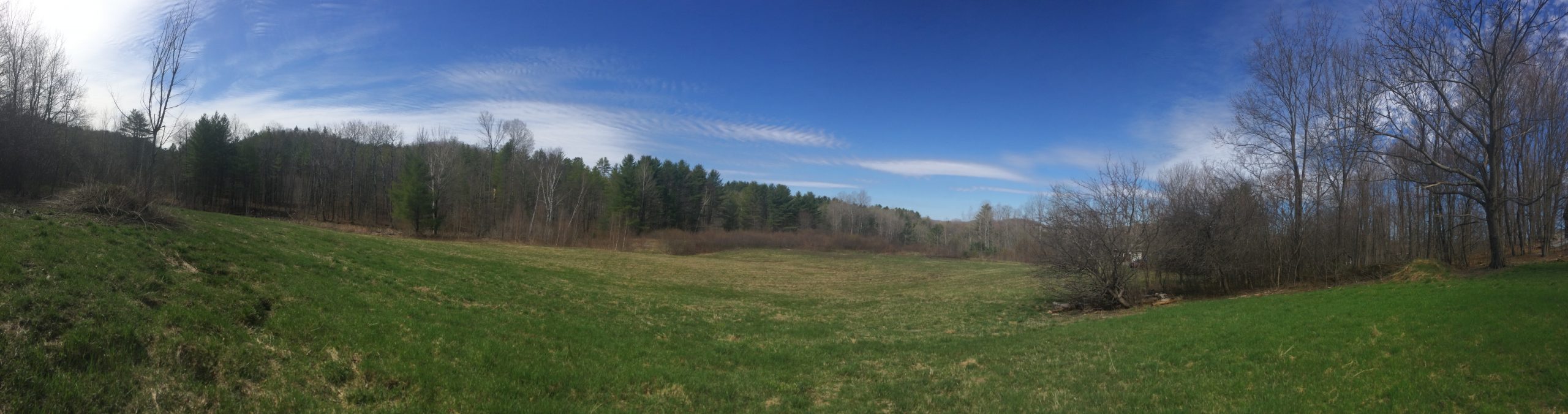
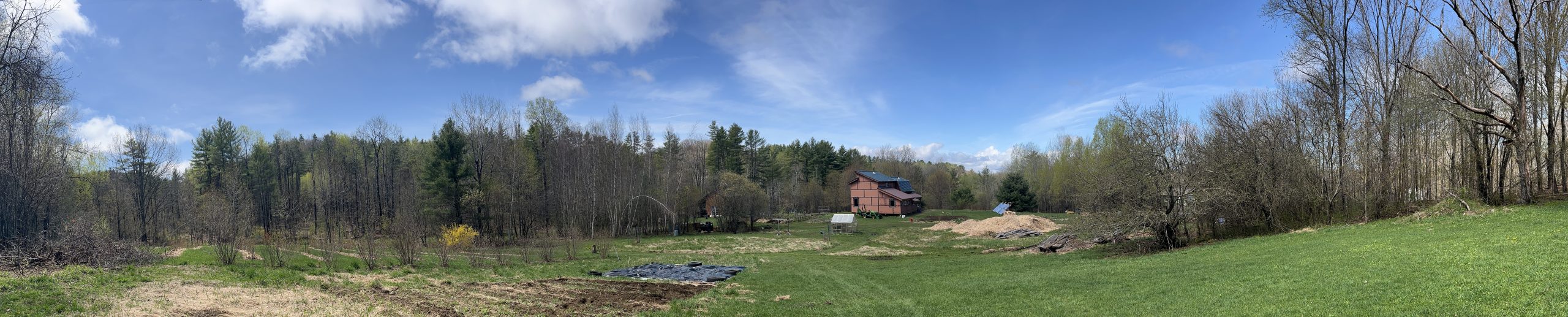
We’ve definitely entered a new phase in our adventure, it started around year 7 when things started taking shape and being nice. We’ve been more retrospective as we entered this new phase and started reaching anniversaries like this. It’s hard to discern fully the impact the decision had on our life trajectory, evidently though it’s been very far reaching. For those wondering, there hasn’t been a single moment of regret, far from it. We don’t need to practice gratitude, it’s here anytime we look out the window. Living in a nice environment is one thing, enjoying the fruits of years of shaping it gets to a level of contentment that I believe is buried deep in all of us.
The goal for us in trying the “back to the land” experience, was to avoid later regrets. It would likely fail, we would compromise heavily on the ideal scenario, we had even started doing so before finally finding our land, but we would get it out of our systems and be able look at each other in midlife knowing we tried. Turns out, it’s been a home run. There’s a lot more to say about why it worked and how it’s shaped us, but I’m afraid it might be too philosophical and maybe even boasting at times, see I’m quite proud of what we’ve done.
One of the maple taps wasn’t producing much at all, so I moved it to a birch tree. I had tried before but was too late and didn’t really get anything. This time though, the sap was flowing and so I got about a gallon that I boiled on the stove inside.
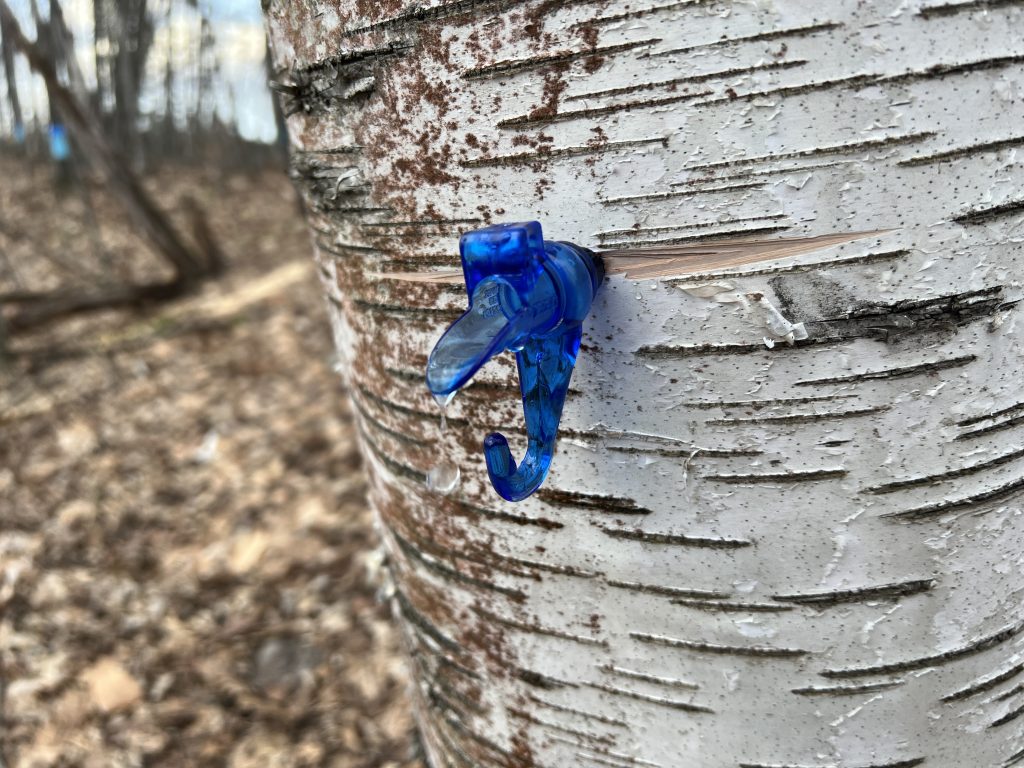
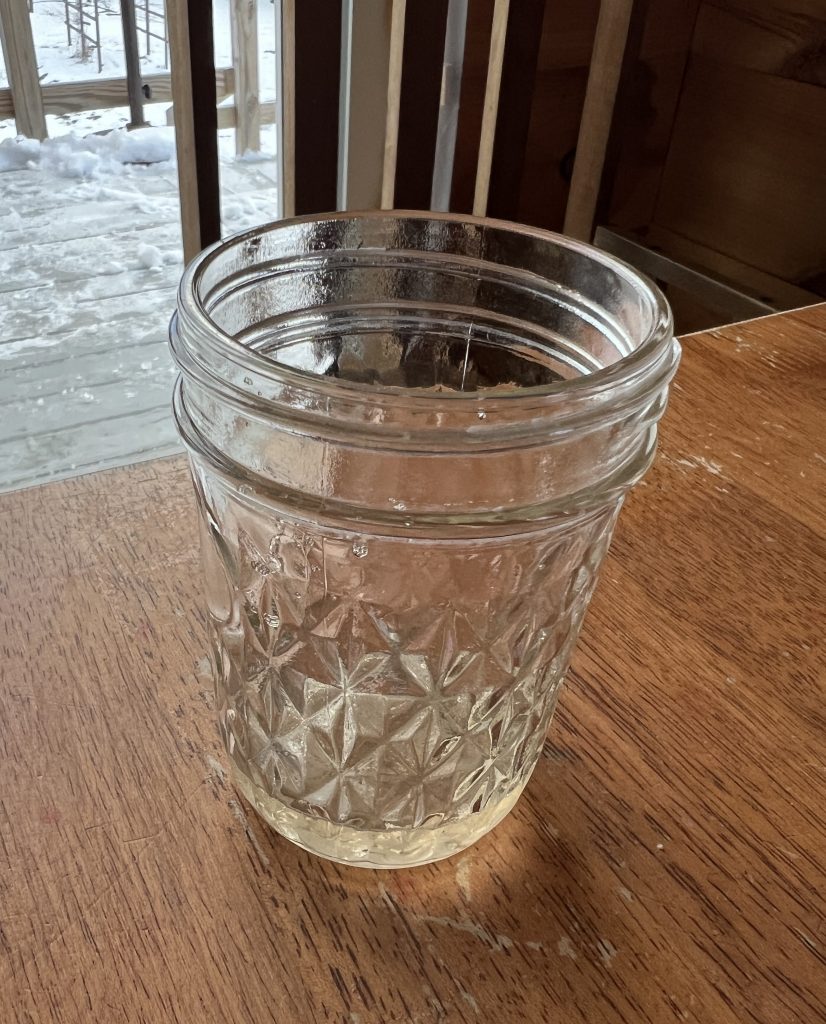
And it was really delicious. Much like maple syrup but with more of a floral tone. Maple syrup takes ~40 gallons of sap to get 1 gallon of syrup, a 40:1 ratio on average. Birch syrup is 100:1! That explains why it’s not common. I’m definitely curious about it though. In one season, we make enough Maple syrup for our family’s generous use for a good 2 years. Maybe I could do Birch every other year. It’s the same process with the same tools, just more water boiled out.
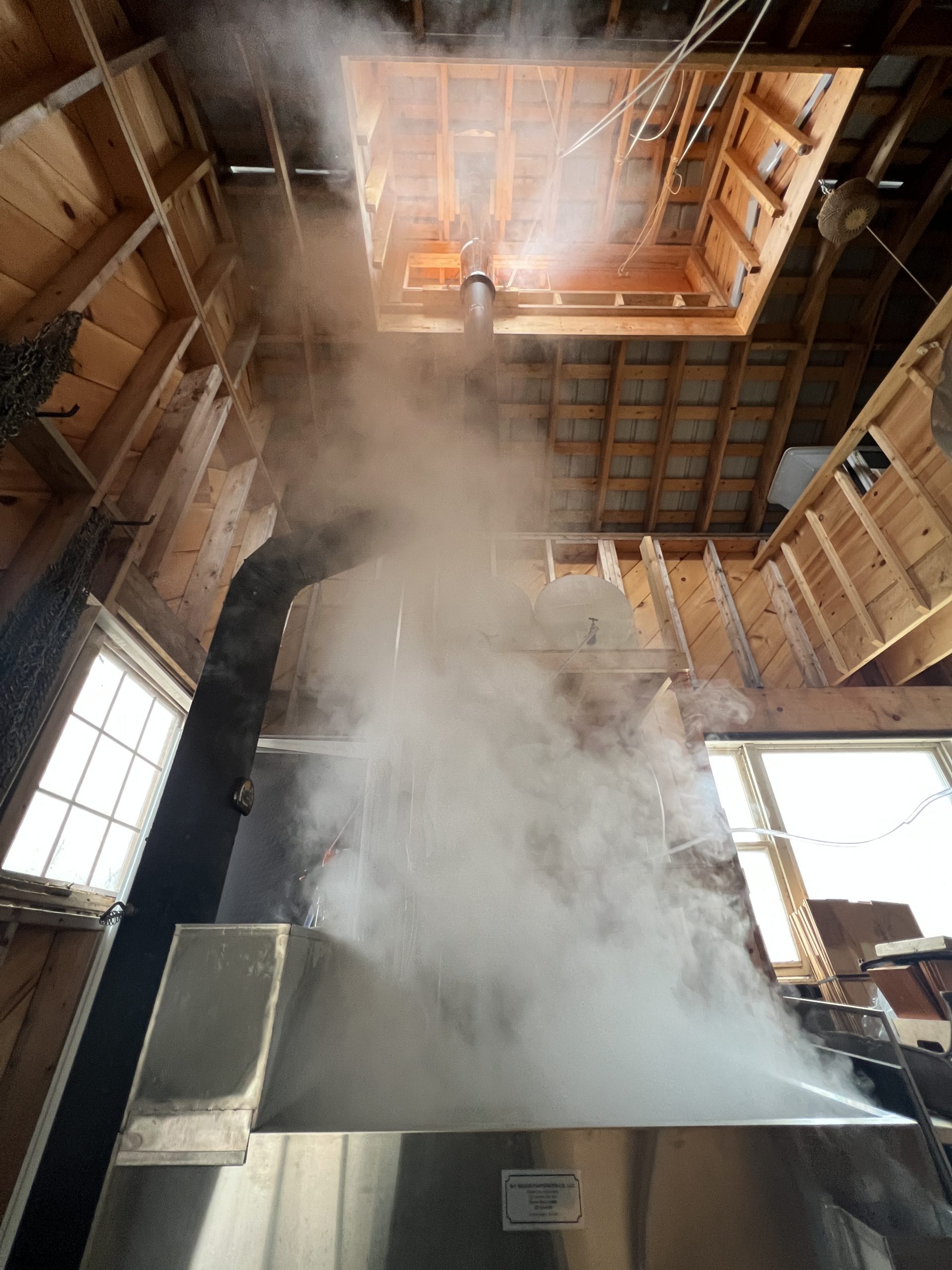
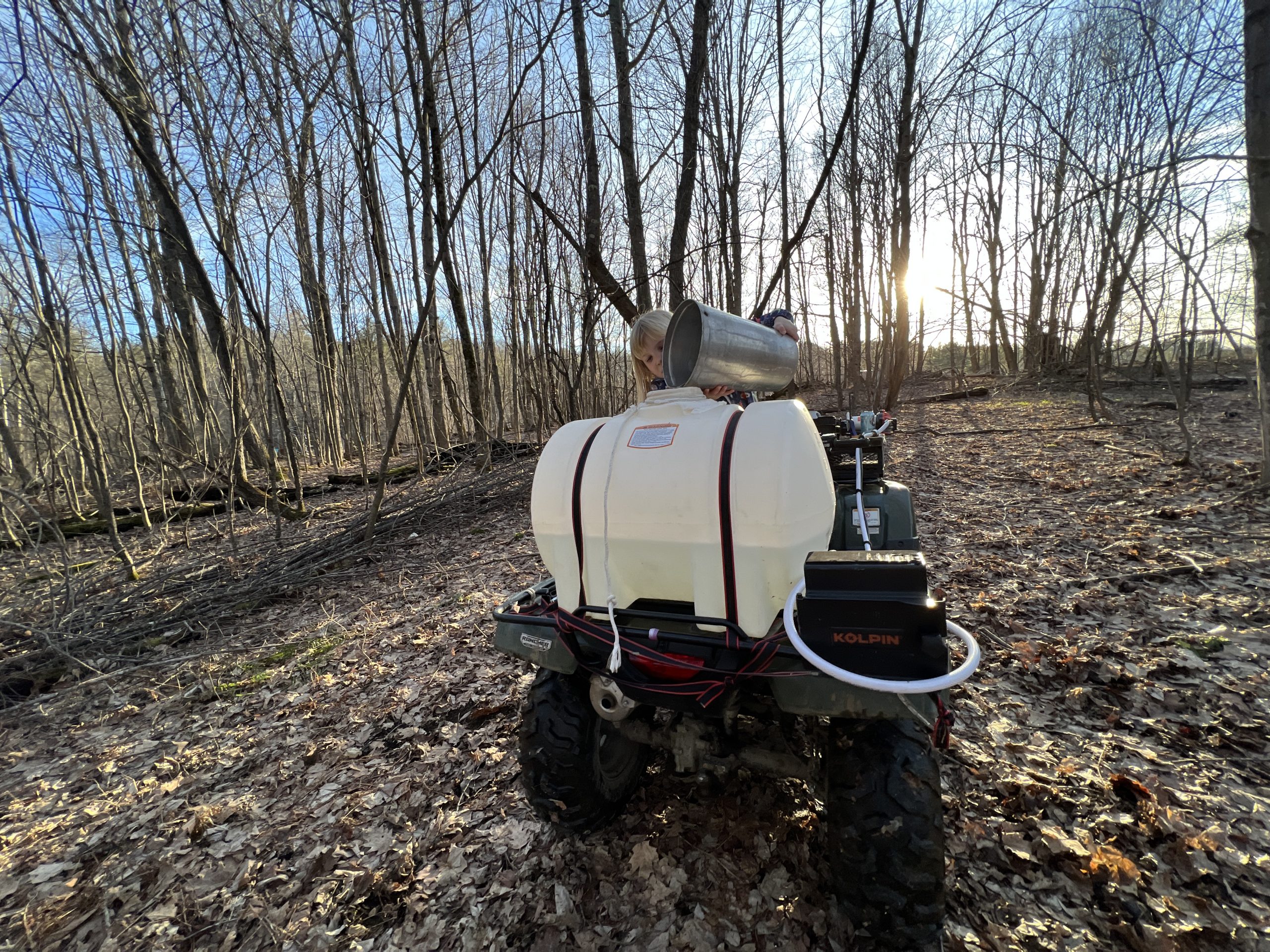
After last year’s hiatus, we’re back into sugaring. It’s a whole lot of work, but it’s also very rewarding and I love doing it. I love that everyone around us is involved in it somehow, it’s got a community wide feeling to it.
The contemplative boil coupled with the smell are the parts I was missing the most.
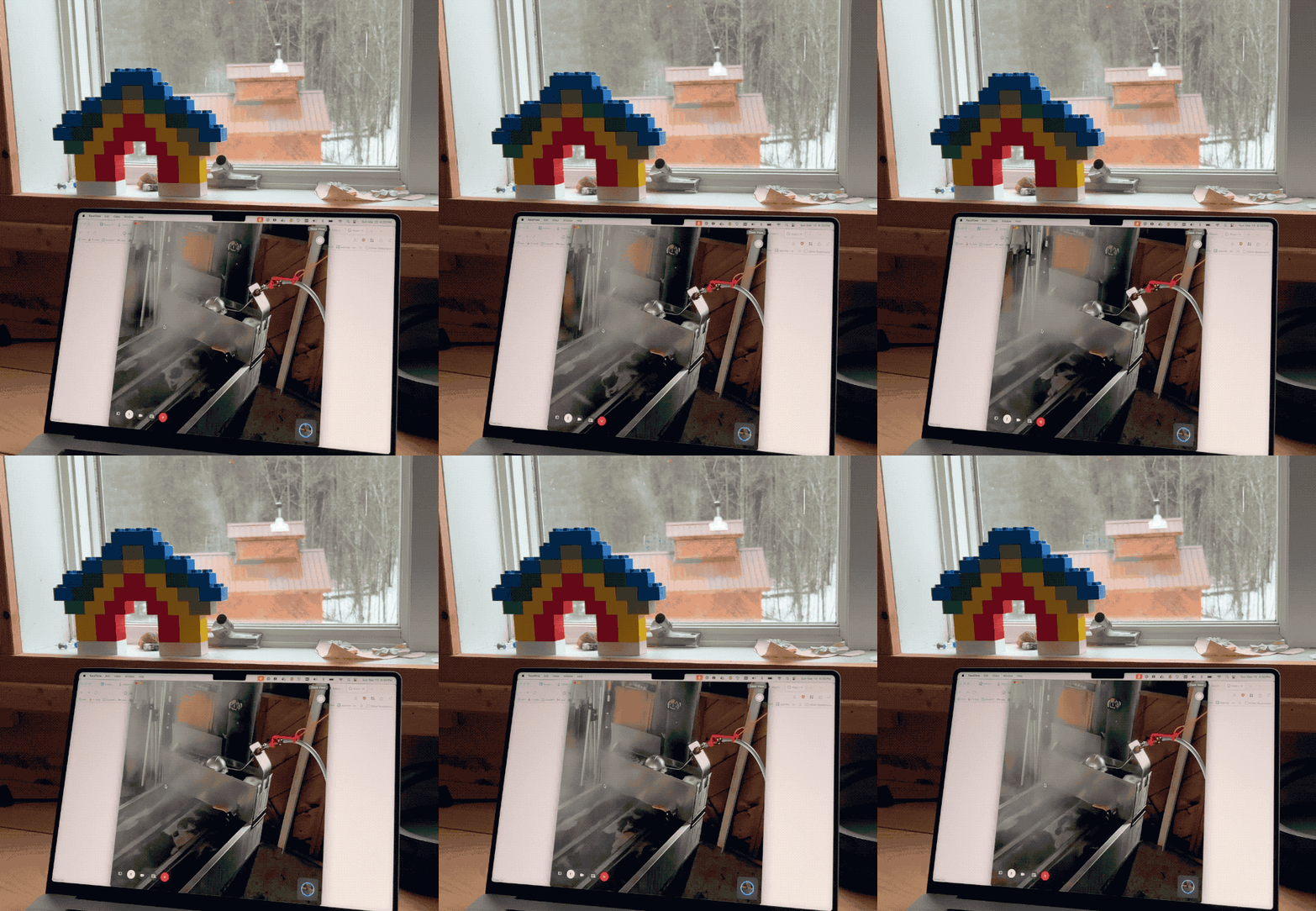
When we wind down the operation, I don’t need to feed the fire every 5 minutes. The fire bricks keep plenty of heat to keep evaporating several gallons for an hour or 2, so I keep an eye on things remotely.
When we draw syrup, I don’t take pictures. There’s too much going on and it gets very sticky. Between the bucket collection, the boiling, the draws, the cleanups, moving wood, it’s really a lot of work. We were insane to do it outside through the night and moving sap by hand a few years back. I have a distinct memory of being outside by myself at 2AM, seeing light in my warm house from a distance, hearing coyotes come down the hill, and really wondering what the fuck I was doing there. And I would always worry that a bear would knock down the pan to get in the syrup. I’m glad I don’t have to do this anymore, but I’m also glad I did it.
I’m bubbling with ideas for things I want to improve in the operation.
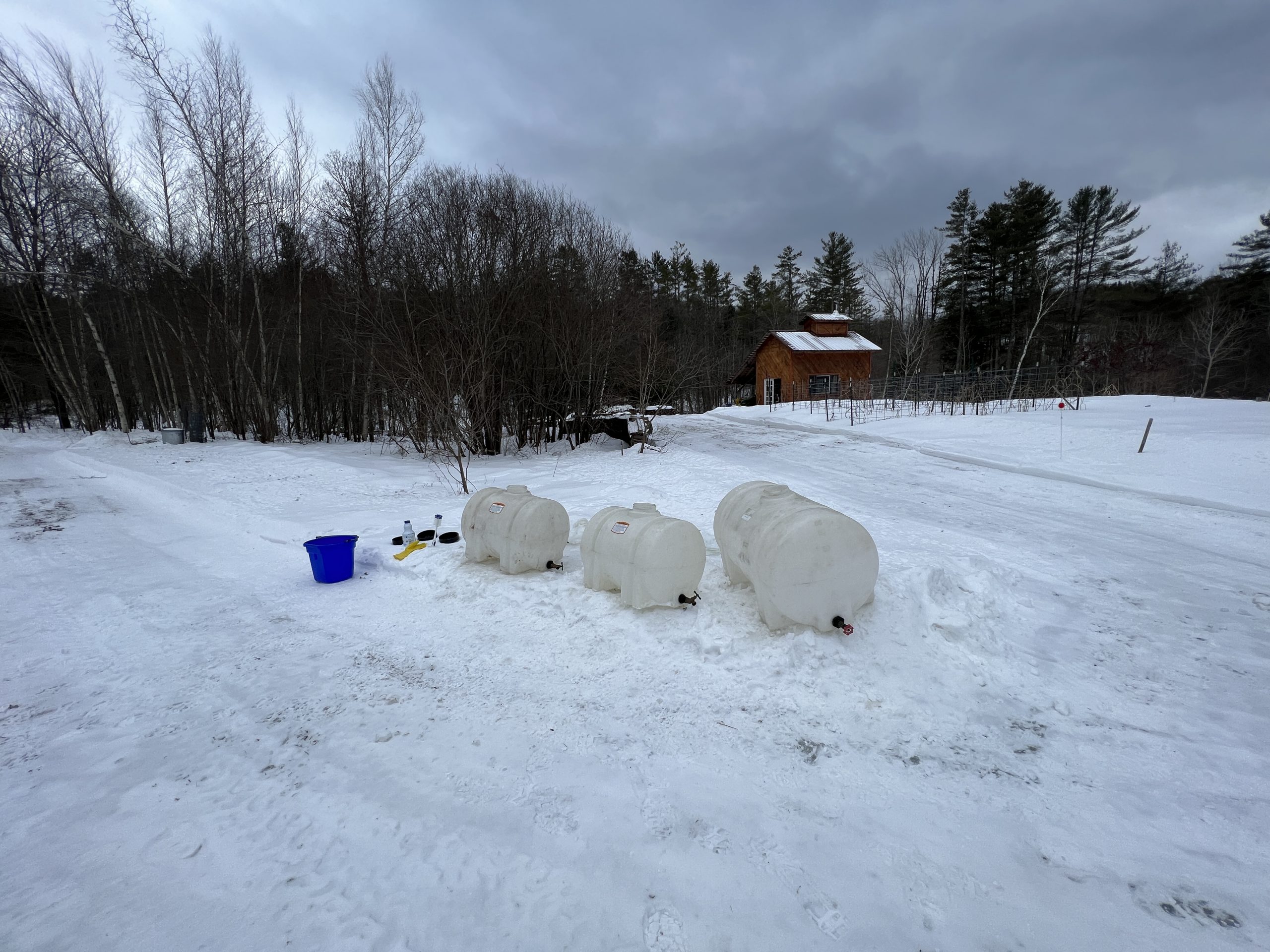
Cleaning up everything to get ready for 2024’s sugaring season, which seems to be a bit later than the mid-february start we’ve gotten used to.
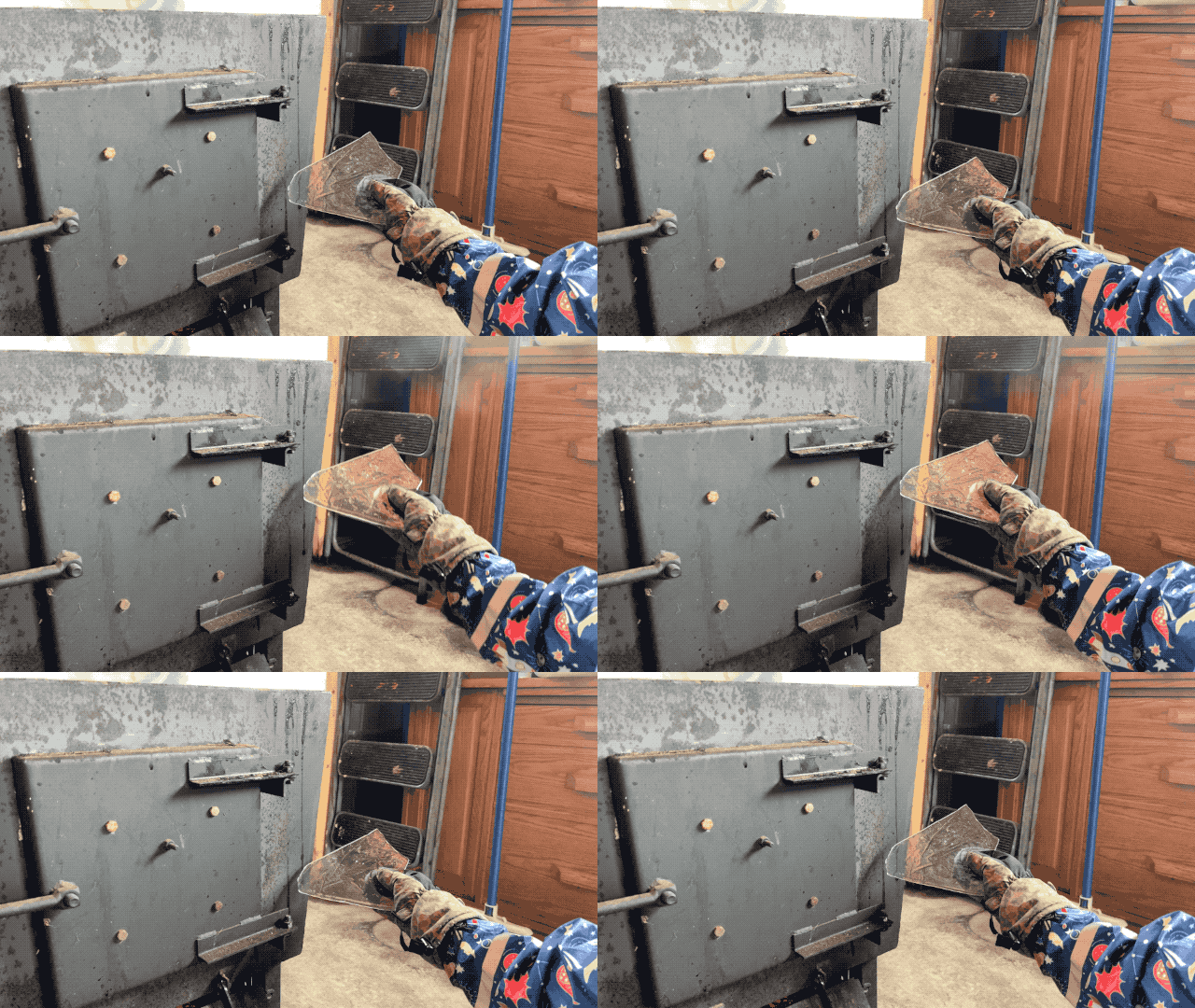
Flue scrub
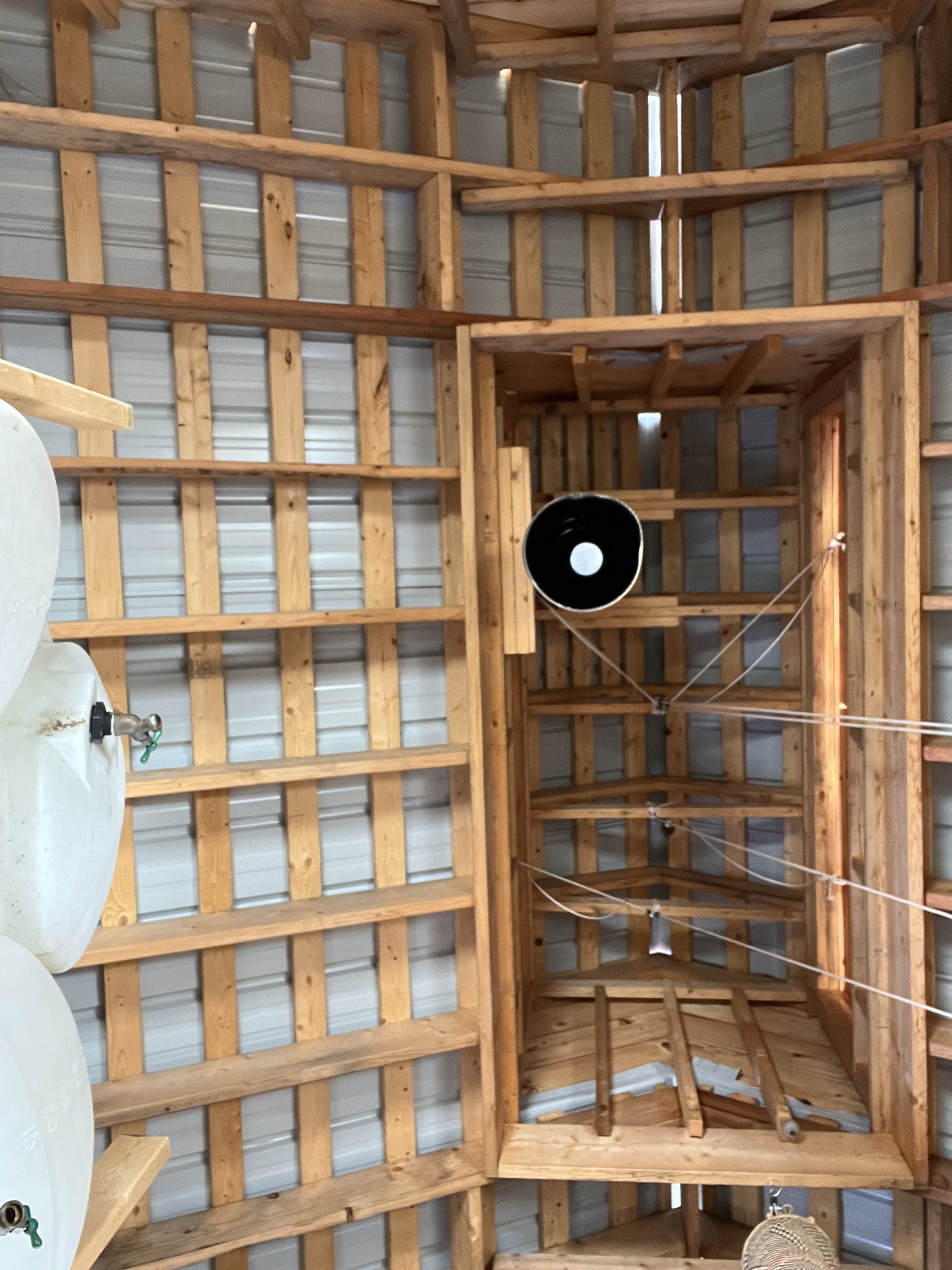
Tank scrub
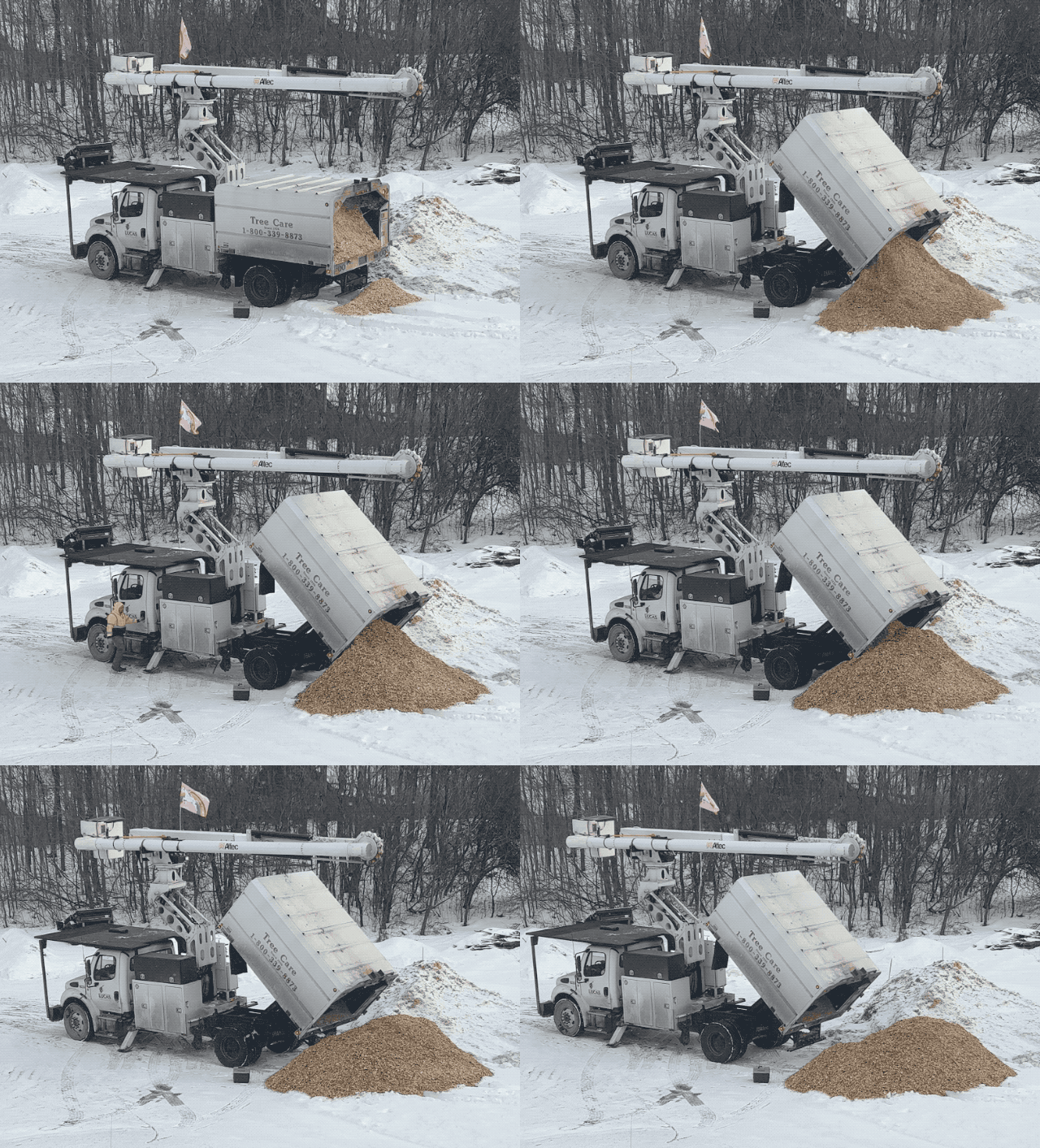
It’s not unusual in Vermont to find a crew removing trees getting in the way of one thing or another. Often times they are contracted out do clean up whole roads and will be working for several days. Often times too, they need to drive a while to get rid of the resulting chips, which to us are gold. We can use them as green matter in compost, to keep weeds from growing while giving nutrients to the soil, or at worst as fill. We never have enough and so whenever we see these crews working, we ask if we can get some chips. Sometimes it saves them time so they’re happy to, and we slip them a twenty whenever we see them. We’ve gotten 3 big loads so far this year, right in time for Spring planting. It’s a really awesome win win.
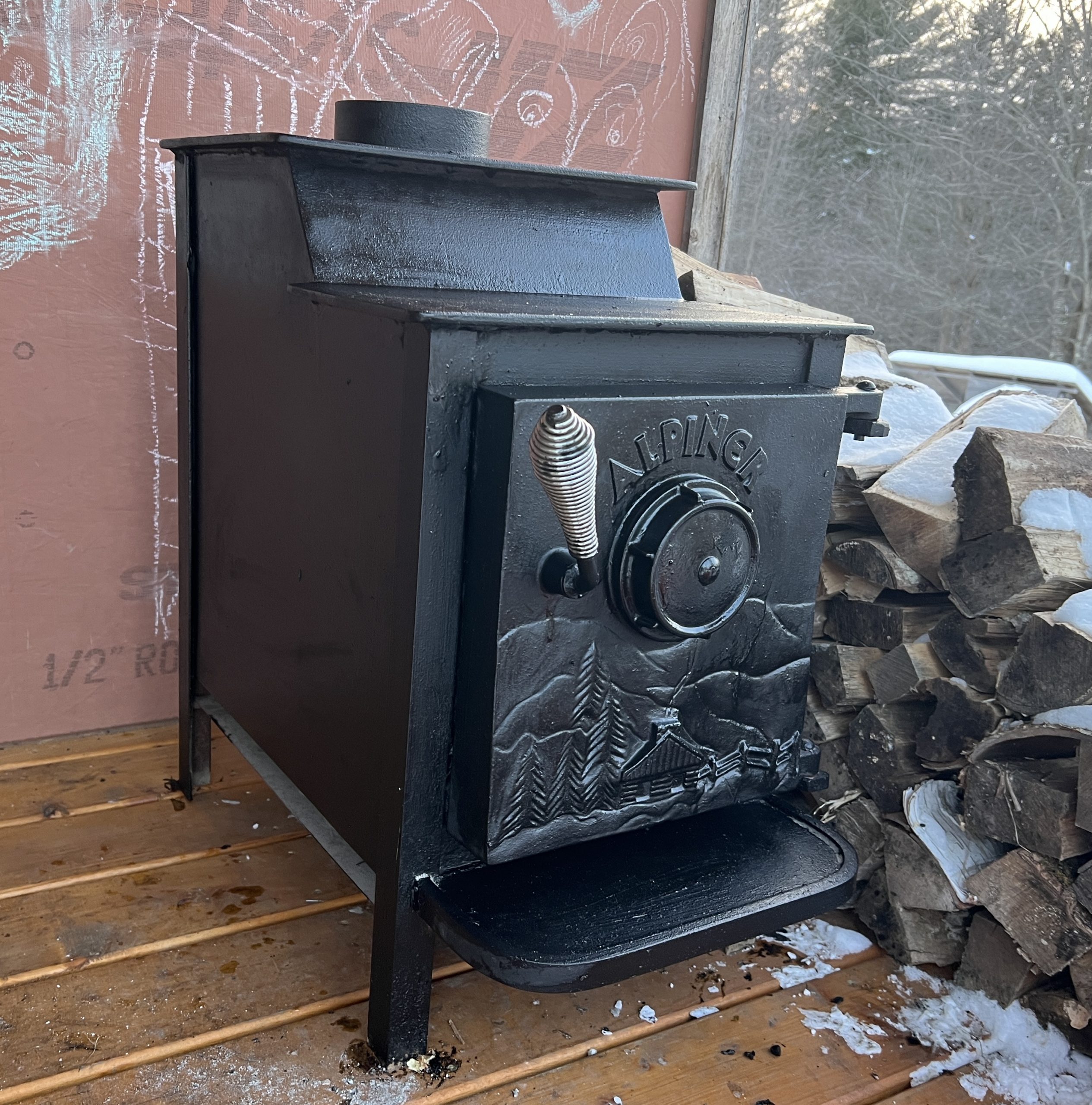
We bought another woodstove to replace the Alpiner. We keep hearing about how we could burn so much less wood with a more efficient stove, and it’s hard to understand, a log burnt is a log burnt. Why would it make more heat in another stove? Well apparently it does, and I’m not yet convinced of it, but this new stove is riddled with soapstone so at least it’s better at spreading out the release of heat over time. In the very few mornings we’ve had with it, it’s true that it was really easy to get the fire going again with just a few embers. Everything else is… well, like any other stove, we need to get acquainted with it.
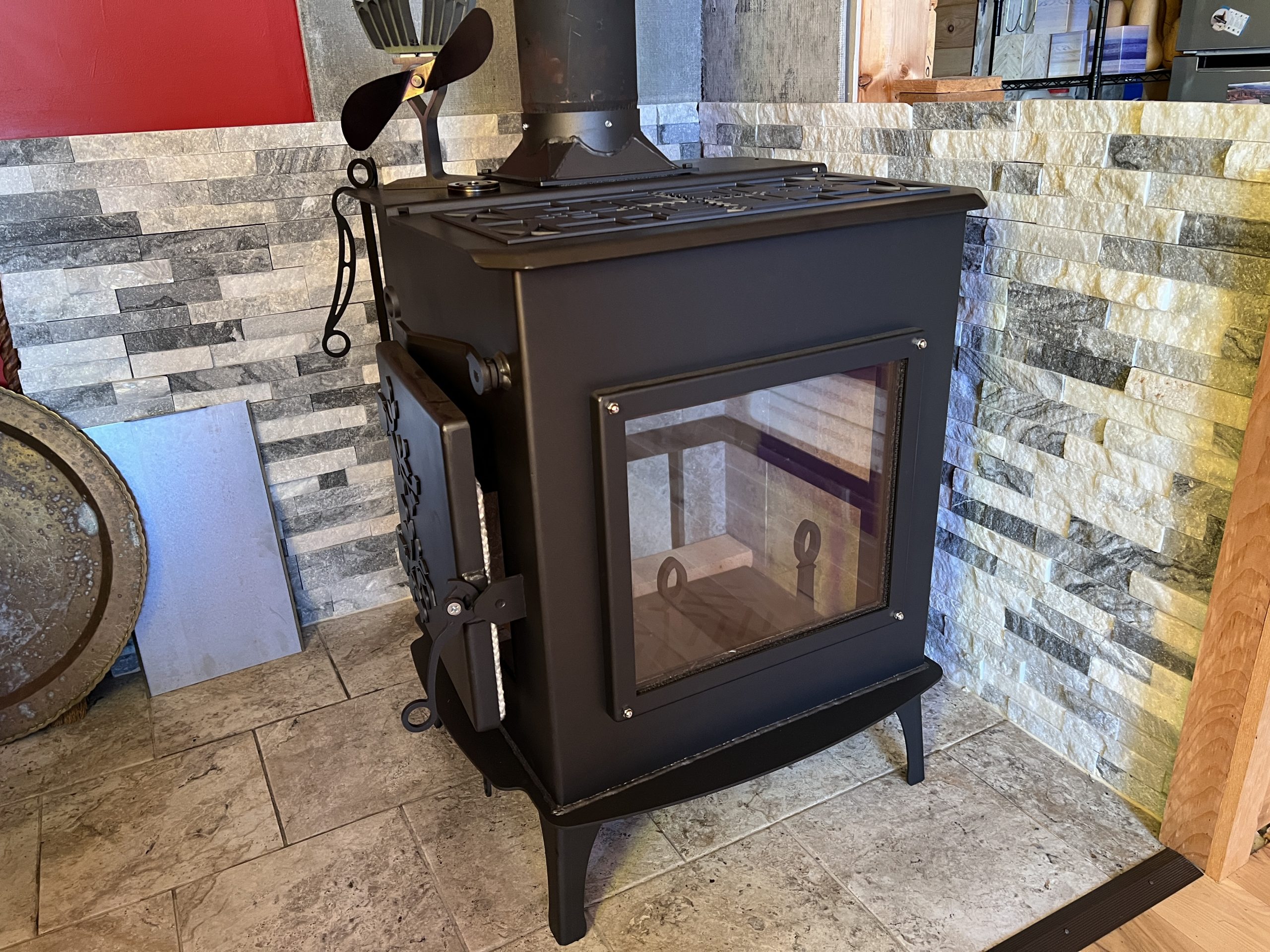
The first fire, which sounds great except it’s off gassing so it stinks up the house. It does seem to be a well thought out, modern stove.
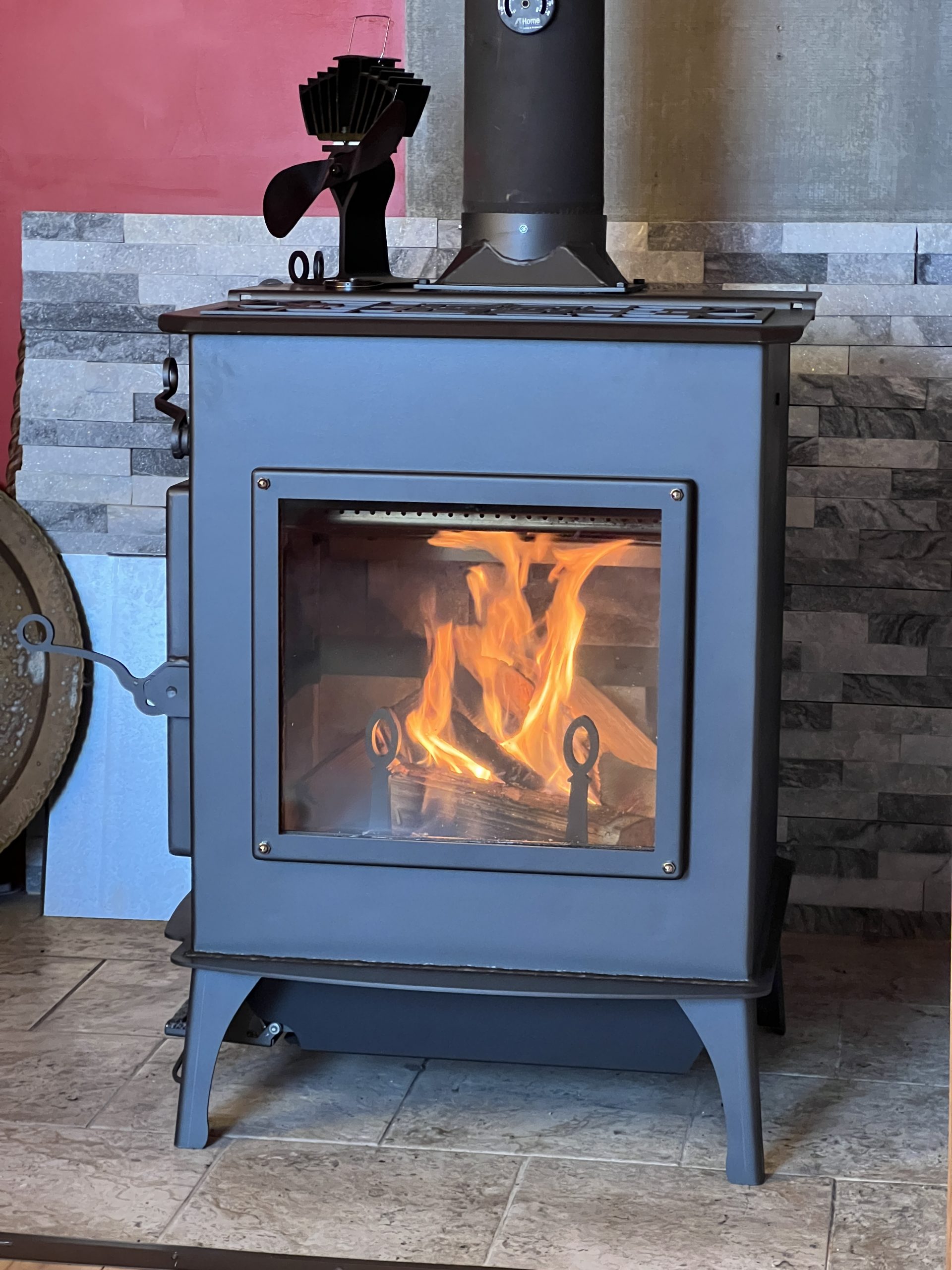
It is the first time we have a stove with a window. That aspect is really super nice, there’s nothing like the glow of a fire warming up a room.
Now I can barely move the Alpiner by myself, and the new stove (it doesn’t have a name yet), well it weights 2 to 3 times more… We had it installed thanks to tax incentives, and boy am I glad I didn’t have to move it. I don’t think I fully fathomed just how heavy it is.
It was nice to geek out with a couple of stove guys, and to make sure I wasn’t doing anything stupid since I never had someone official review my stoves and flue builds.
The Alpiner is waiting on the porch for next Spring to be moved to storage with the tractor. It’ll be useful in a cabin or other down the road. I gave it a thick coat of olive oil to prevent rust. It’ll burn off next time we fire it.
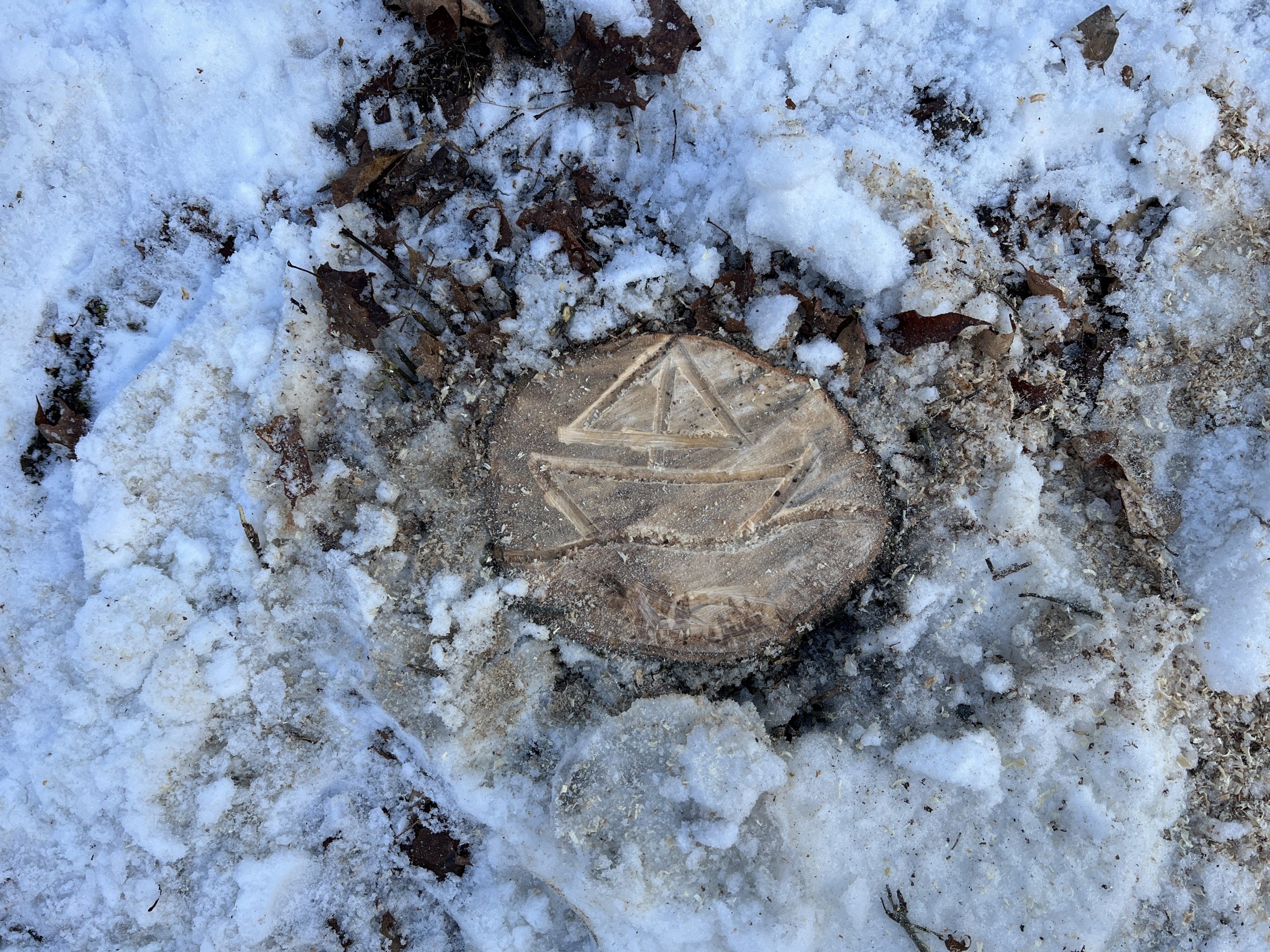
I always leave a little something in the stumps of the trees I take. It can’t be too complicated, and curves are reeeeeally hard. They’re all over the place and the kids love finding them, I hope the grand kids will too.
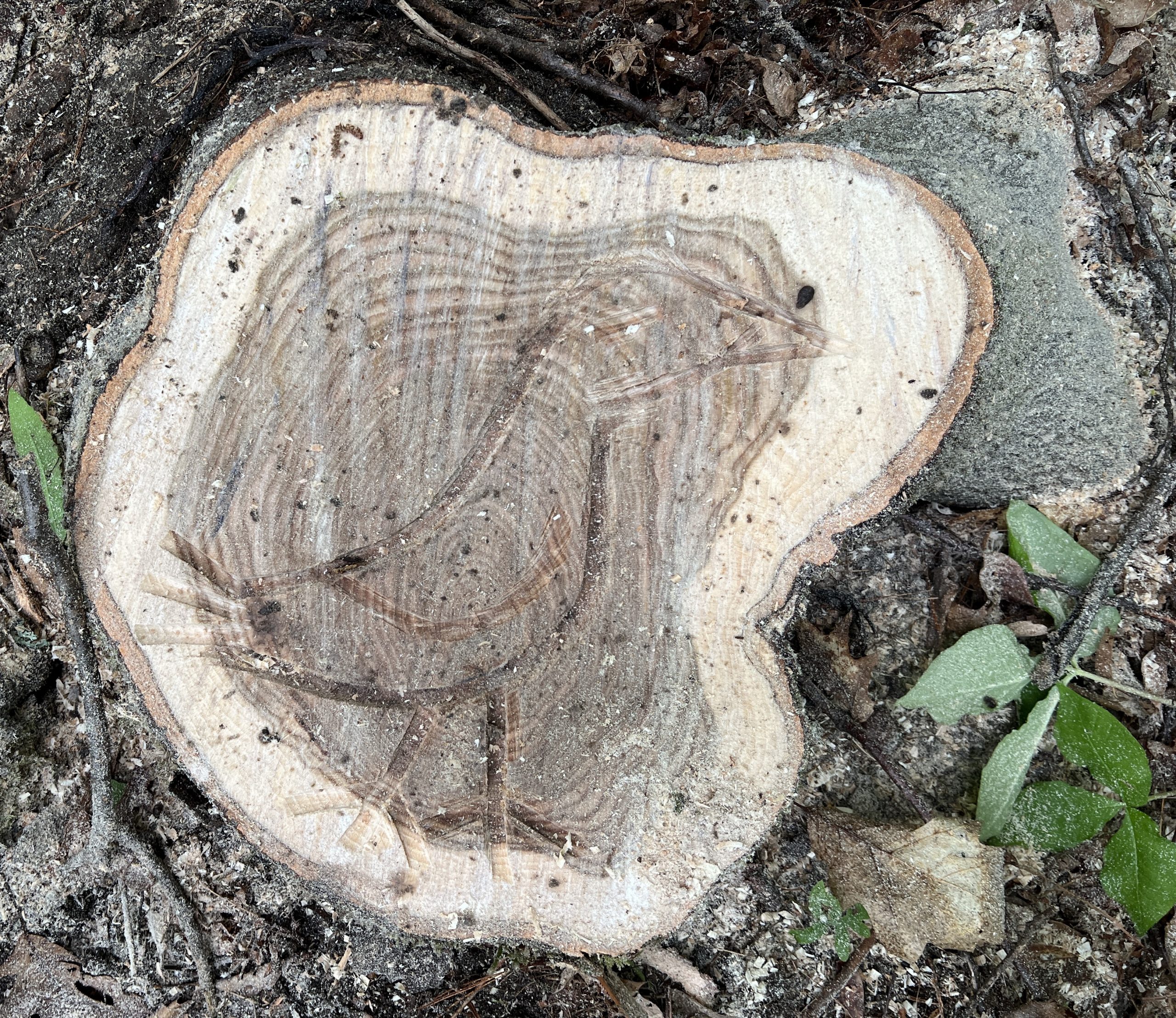
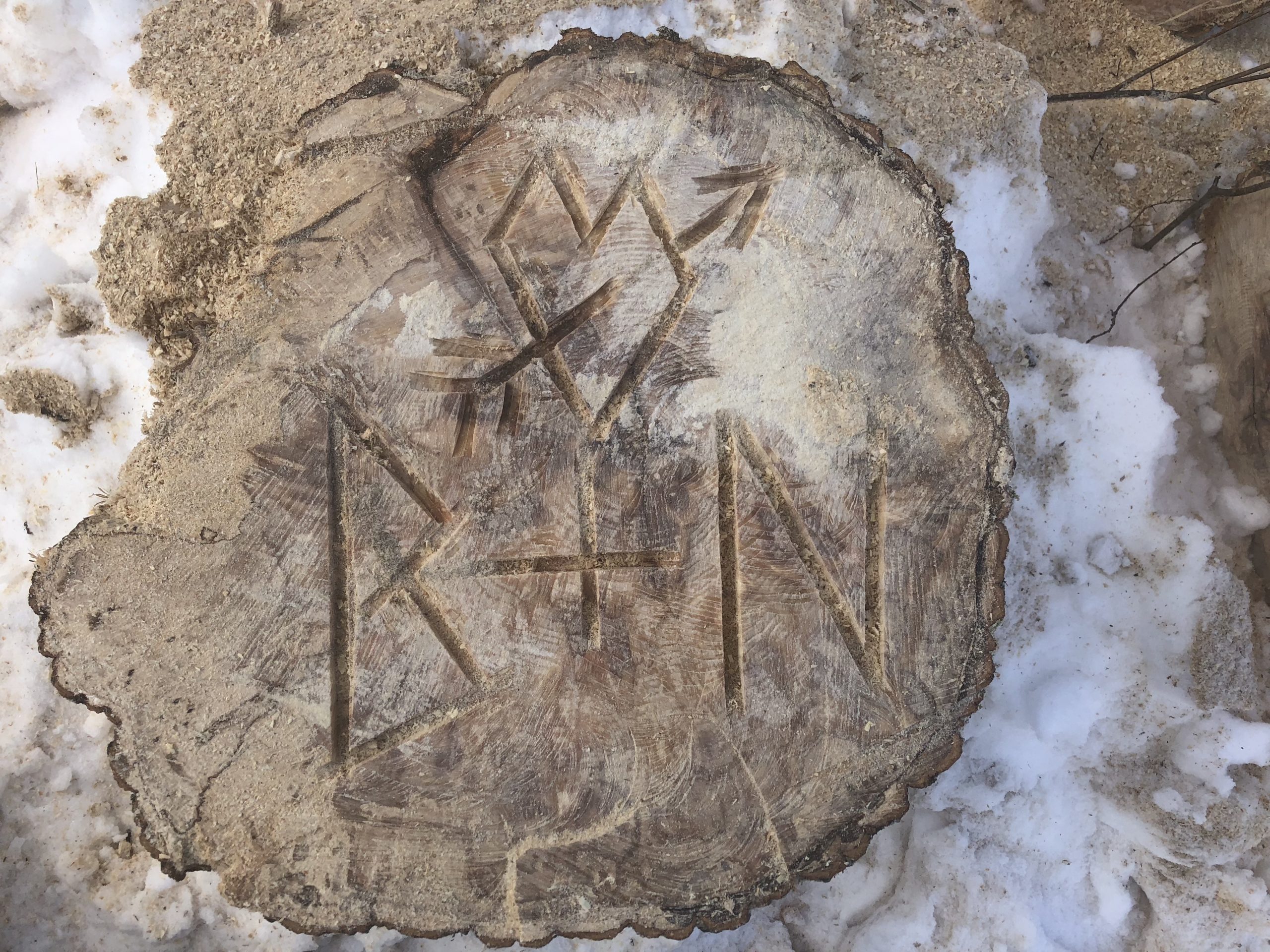
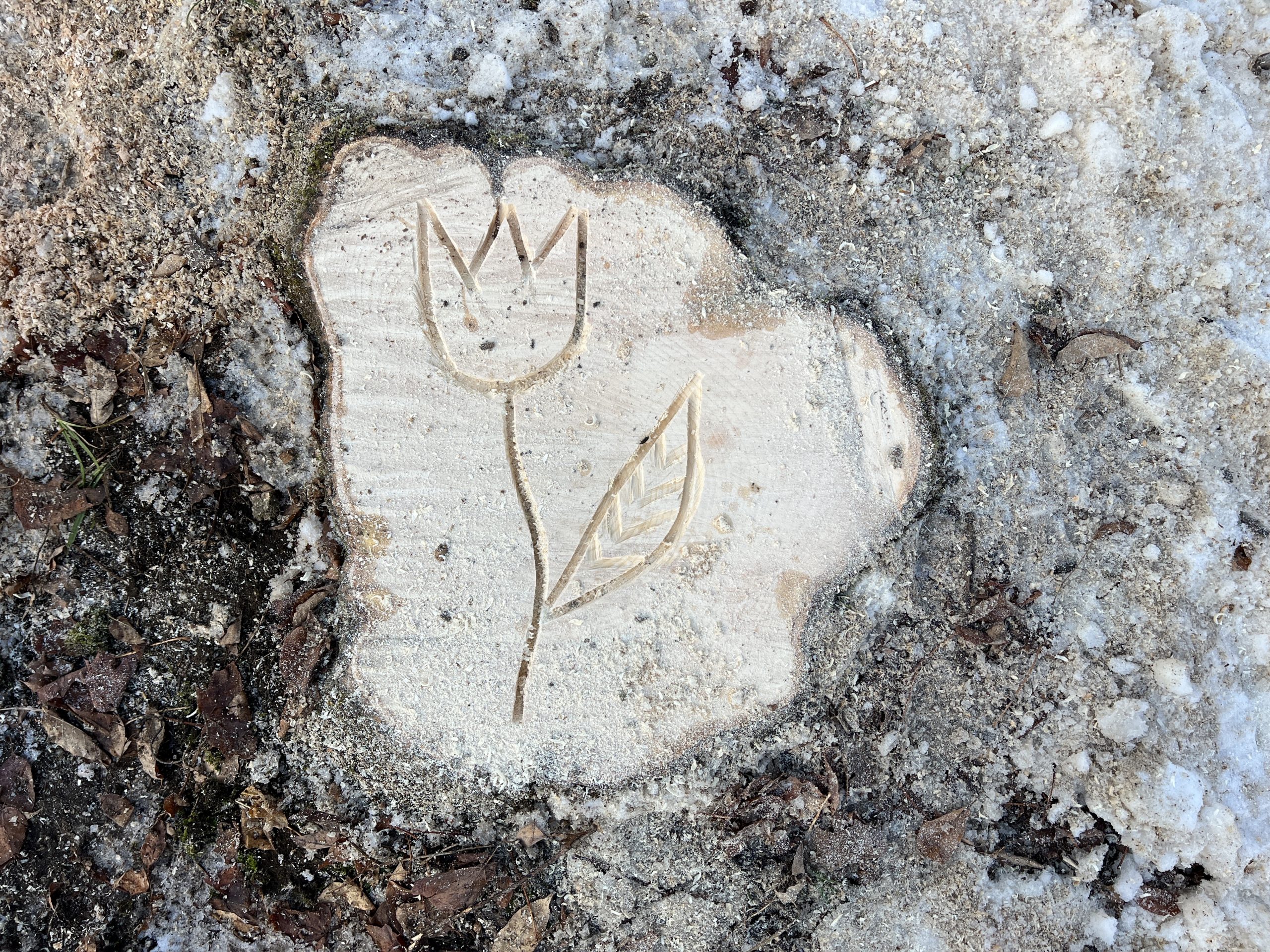
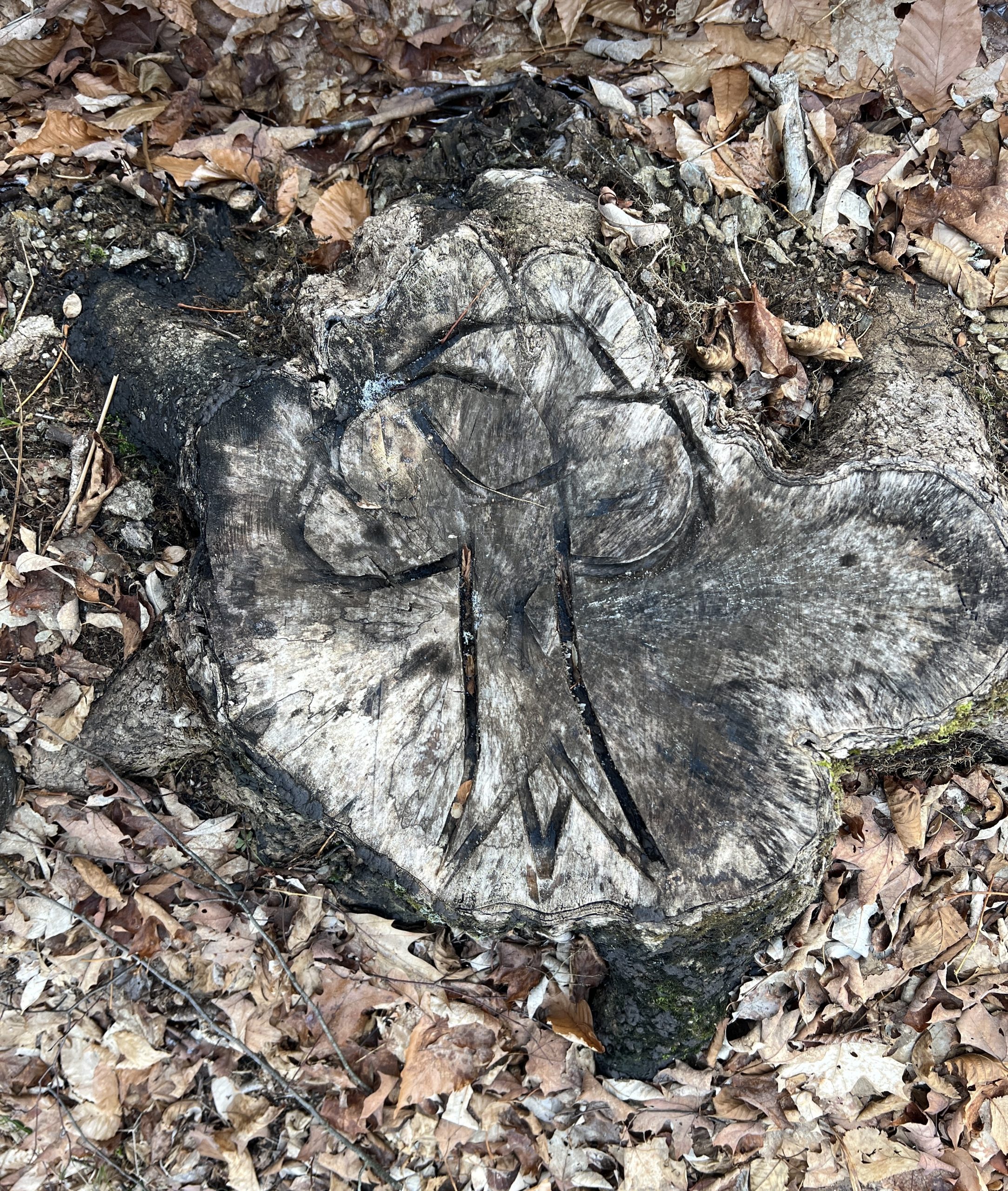
All routine now :). Looks like only every other year is a (wild) apple year so this will have to last a while. Esther’s been extremely helpful.
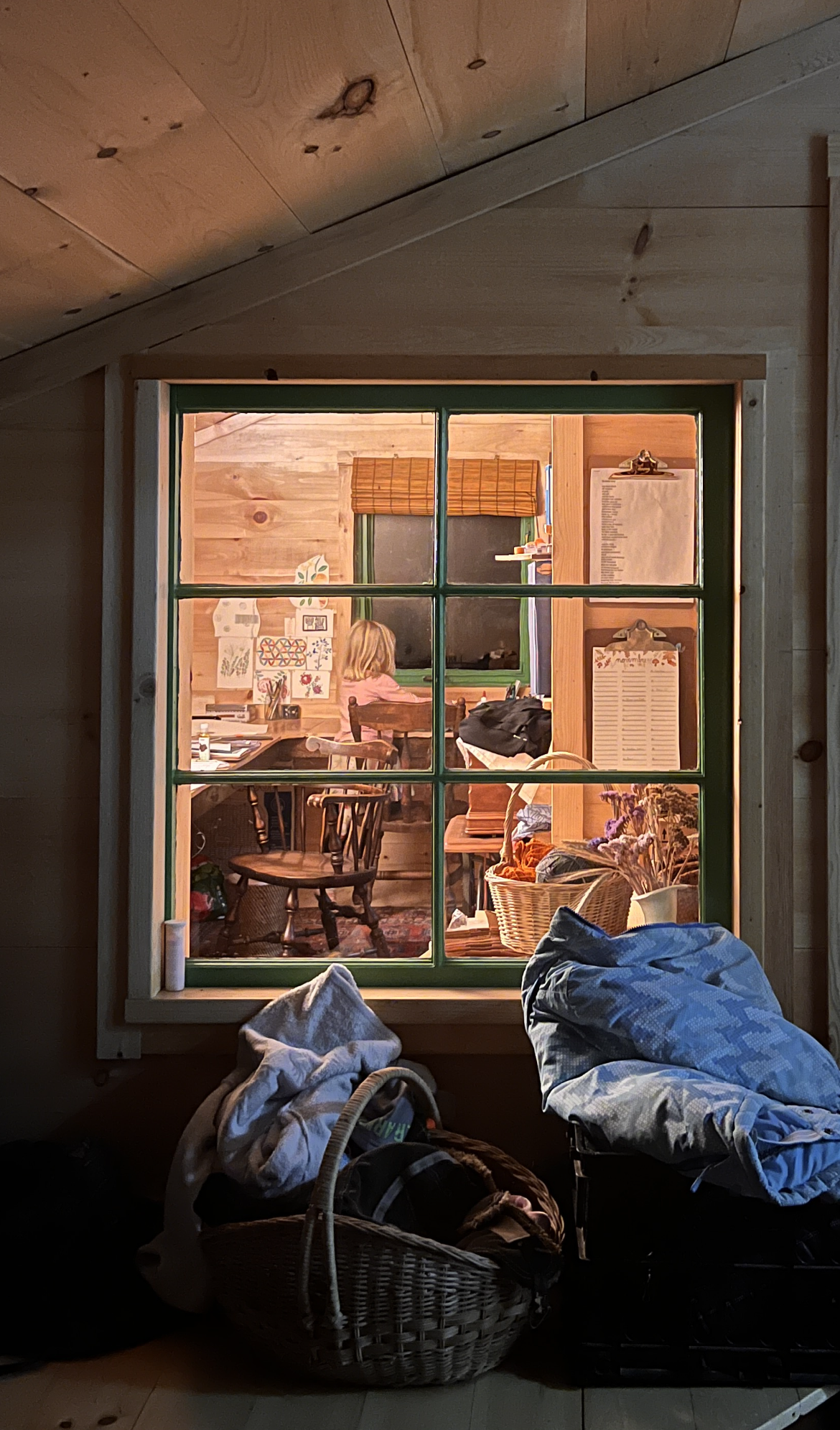
The house is still very unfinished 8½ years in, but it’s also gotten to be incredibly cozy during the cold months. It’s only ever gotten better over the years, while we slowly forgot what a regular house is like. I know we crave wood heat when we go somewhere it’s not used. We just bought a new stove, a real fancy clean burning one and I’m very much looking forward to using it although it’ll be likely at the end of Winter that we finally get it. To get a clean air tax incentive we were asked for a propane bill or electric bill, they’ll have to do without, things are too perfect where they are. It is putting it mildly to say that we were shaped by our living arrangements, in many ways I feel like the transformation we sought years ago is complete.
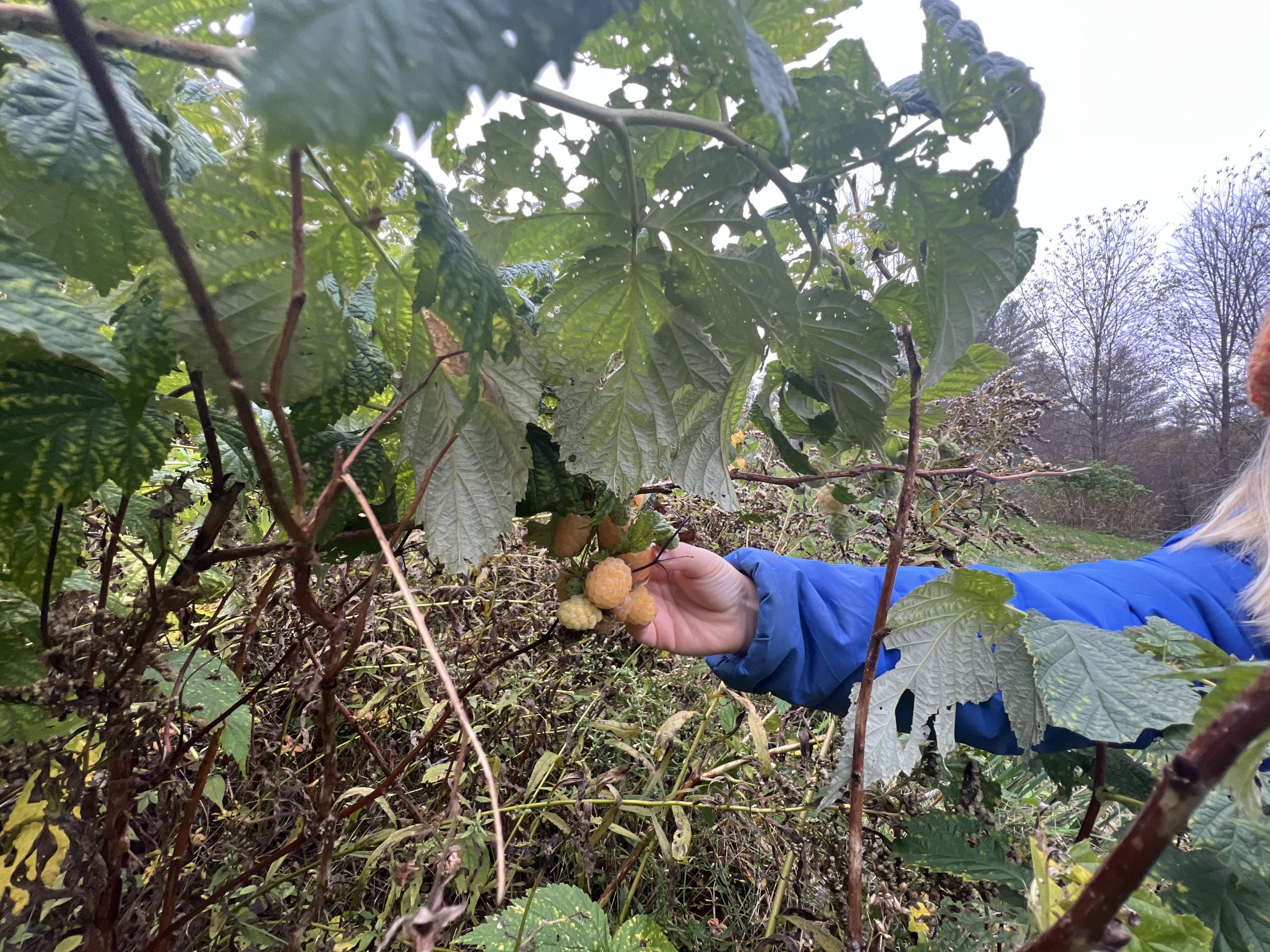
At some point every July we say goodbye to raspberries until next year. It’s a little sad because they hit first and they’re the best, but we’ve got other berries to keep us happy.
This year some of the plants decided to bear twice! We seem to recall some had this in their description, and I guess the season’s been long enough this year that they went for it. It’s a bit surreal to be brought back to the joys of early Summer at the very end of the season when everything is done and being put the bed for Winter. They taste just as good too.
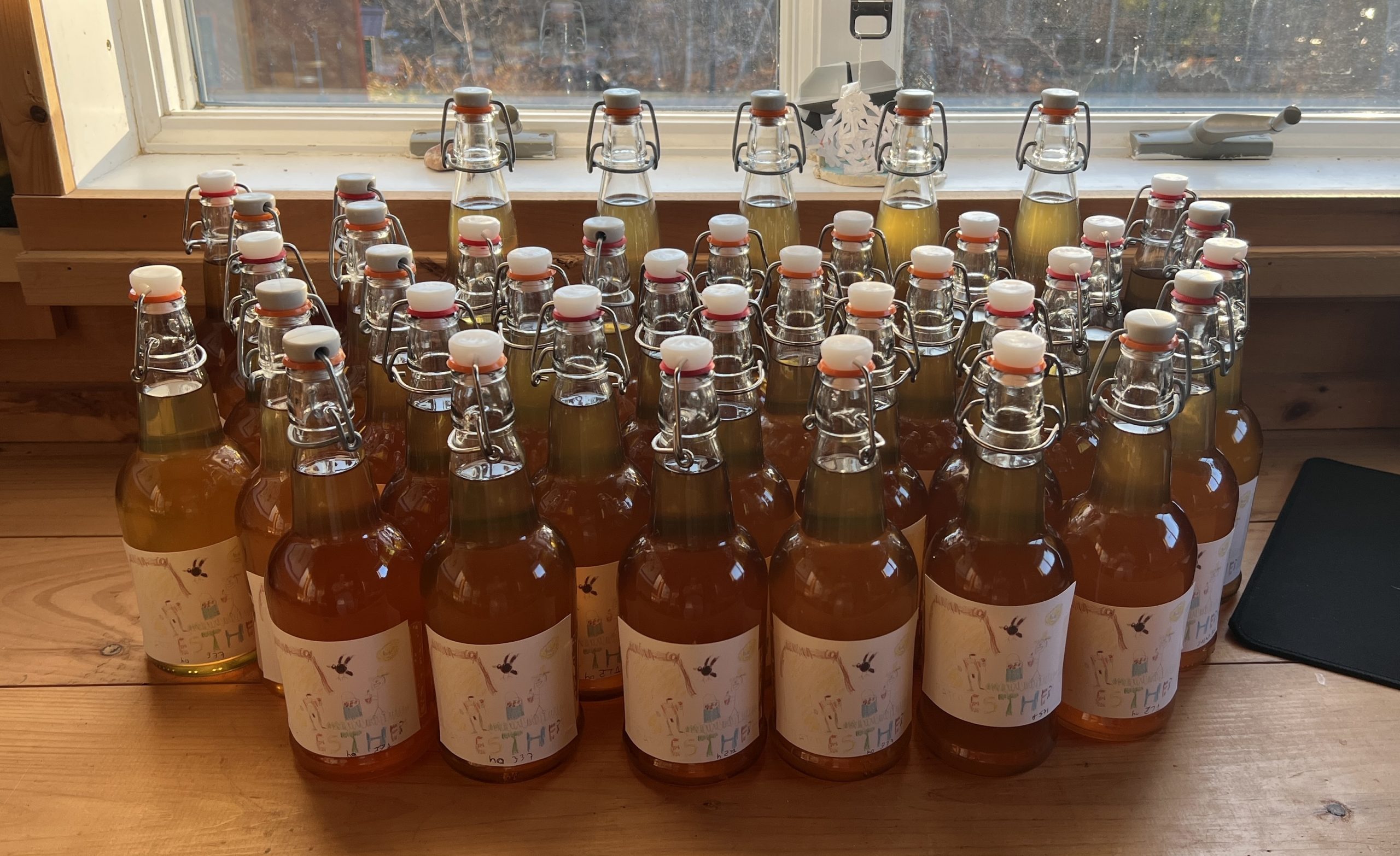
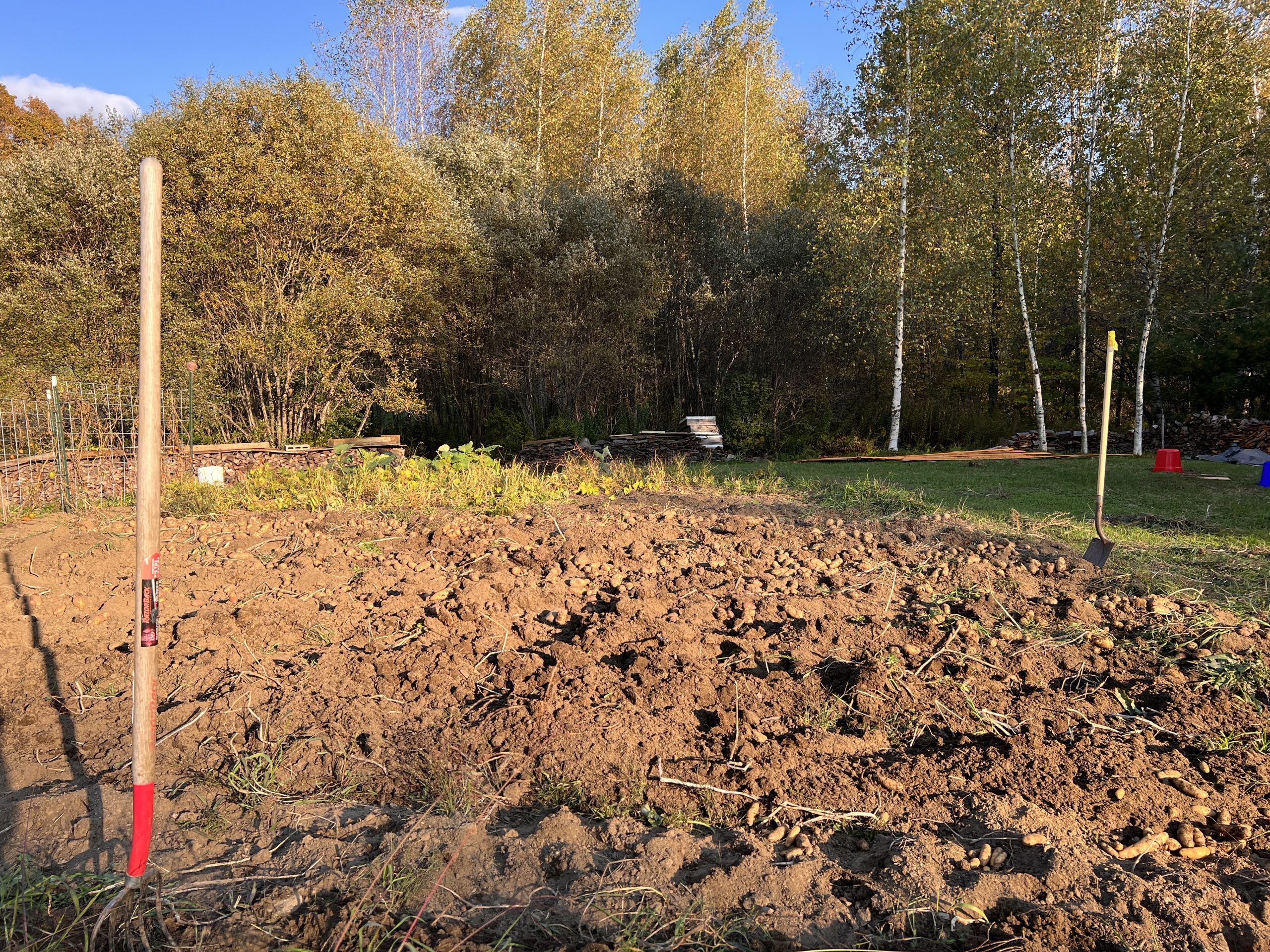
There’s so much harvesting to do in the Fall. Nicole dug up a ton of potatoes while I was making cider.
Then I walked past the orchard and saw a whole bunch of hazelnuts ready to be picked, crap, I don’t even know what to do with them.
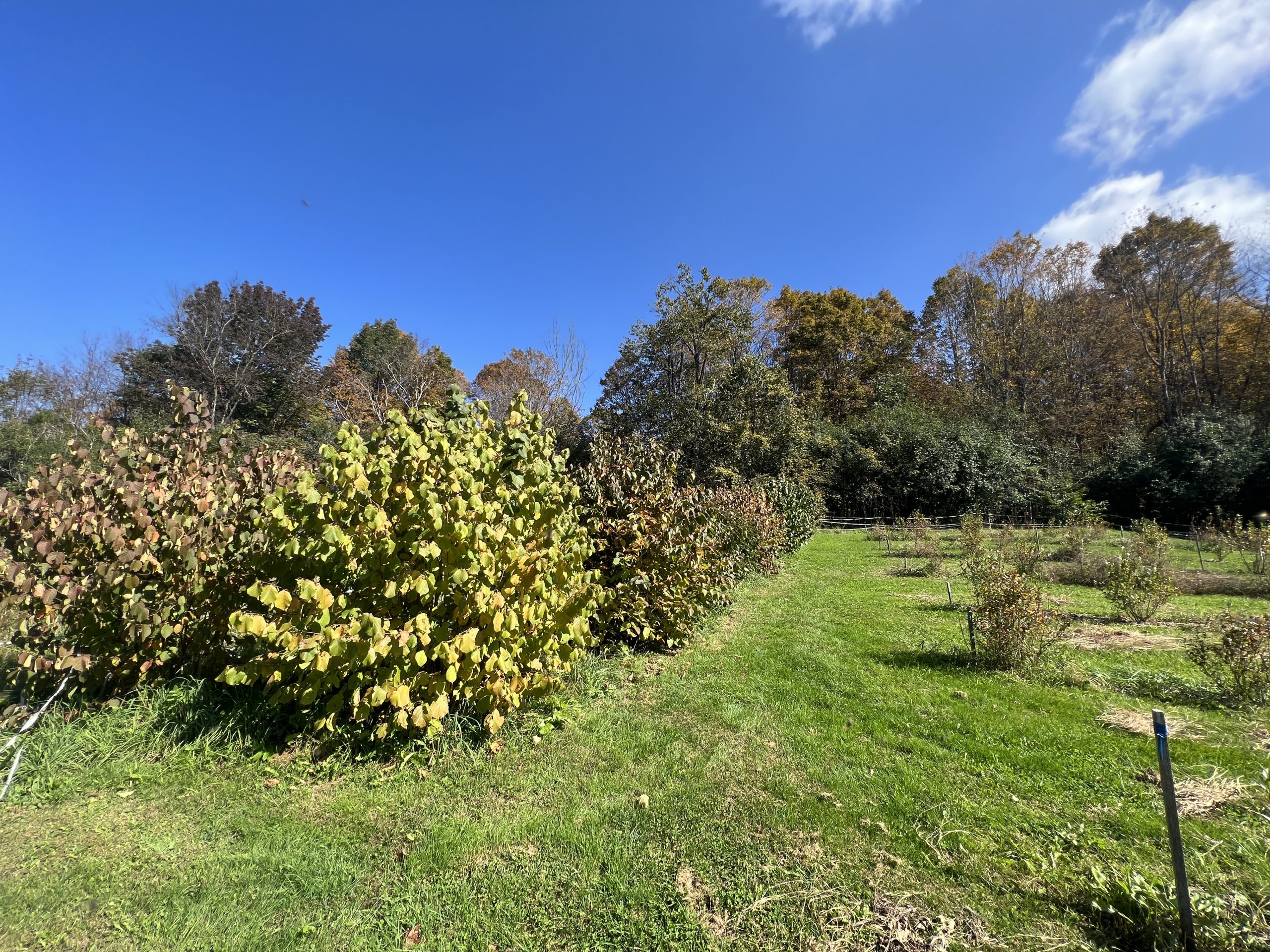
I’ll just grab a basket and figure it out later.
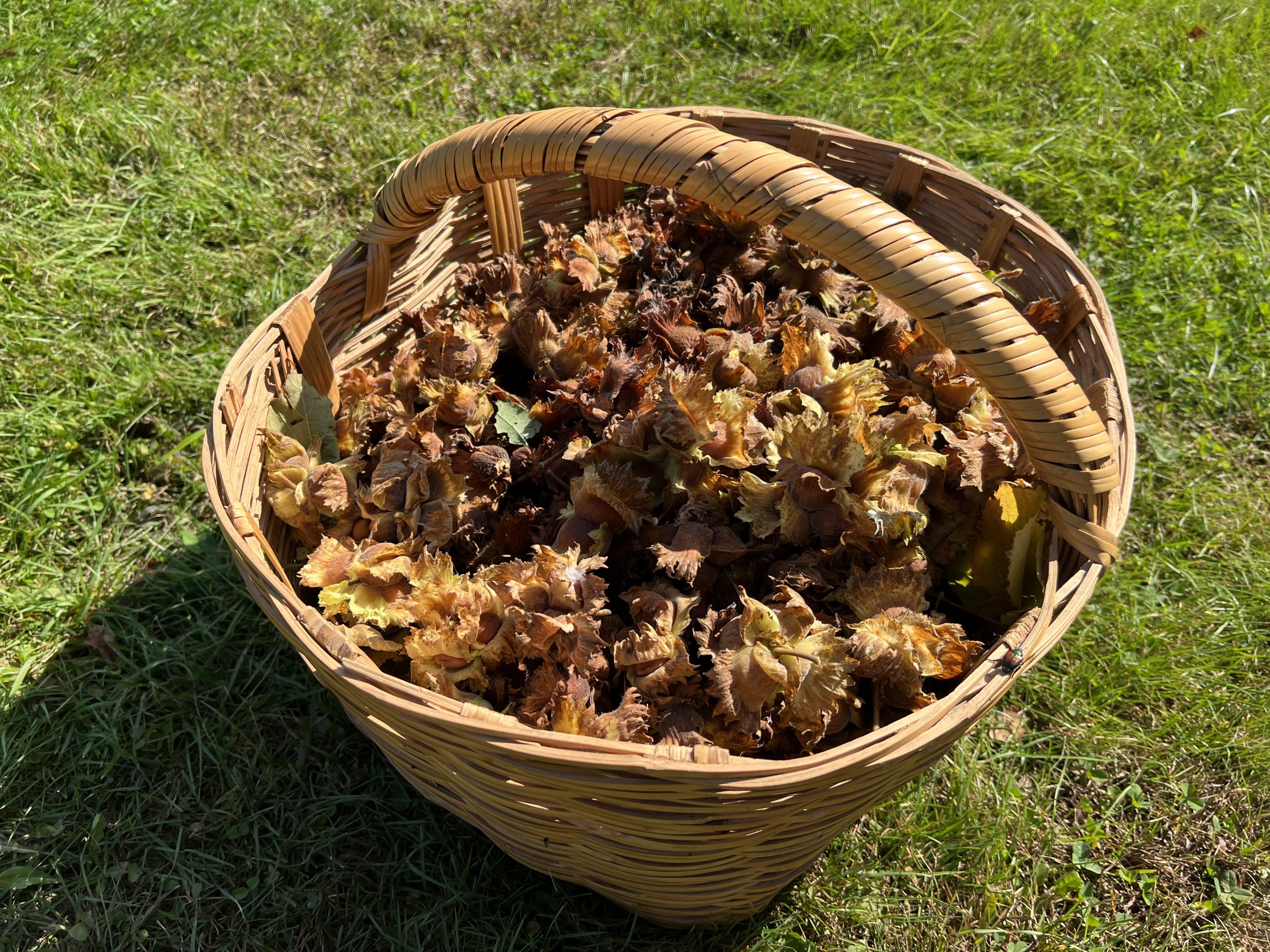
It’s the second time we have a bear rip open the chicken coop and decimate the flock.

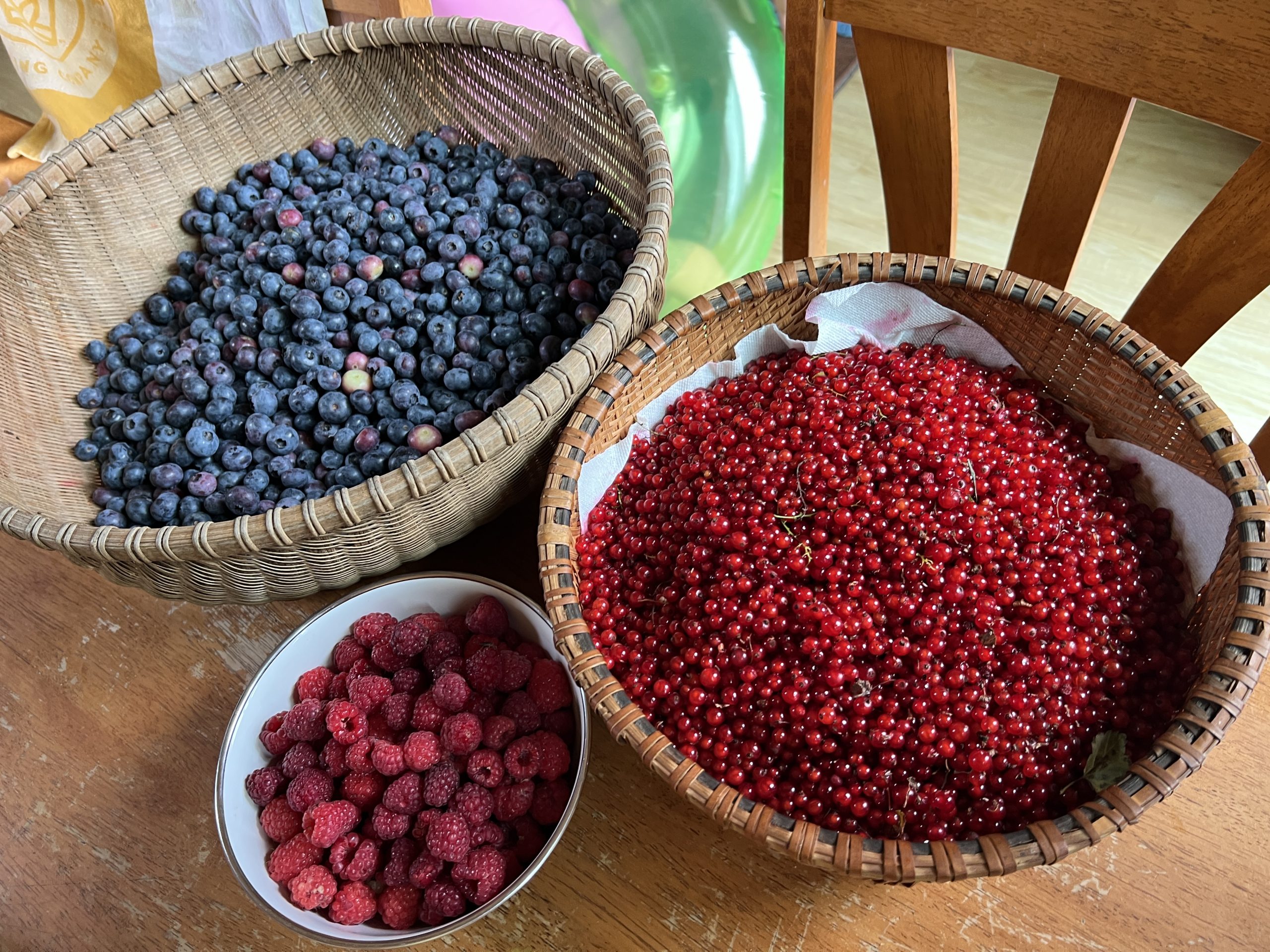
It’s that time of the year we go raid the orchard every day for desert. We could sell some, especially since the price of berries in stores is insane, but that’d be work so we’d rather gift them to friends. It gives them excuses to come over :).
I had never eaten berries until I just couldn’t, it’s so nice to enjoy them without restraint. They also taste much better fresh off the plant. As with maple syrup, producing large quantities of something drastically changes the way you get to enjoy it. I’m not worried about there not being enough for others, or thinking about the expense of it. You can just chug down as many as is enjoyable without afterthought. I’m more worried about making sure the excess doesn’t go to waste.
The chickens clean up the berries that fell on the ground. Sometimes they pick direct from the plants, but not enough to make a dent.
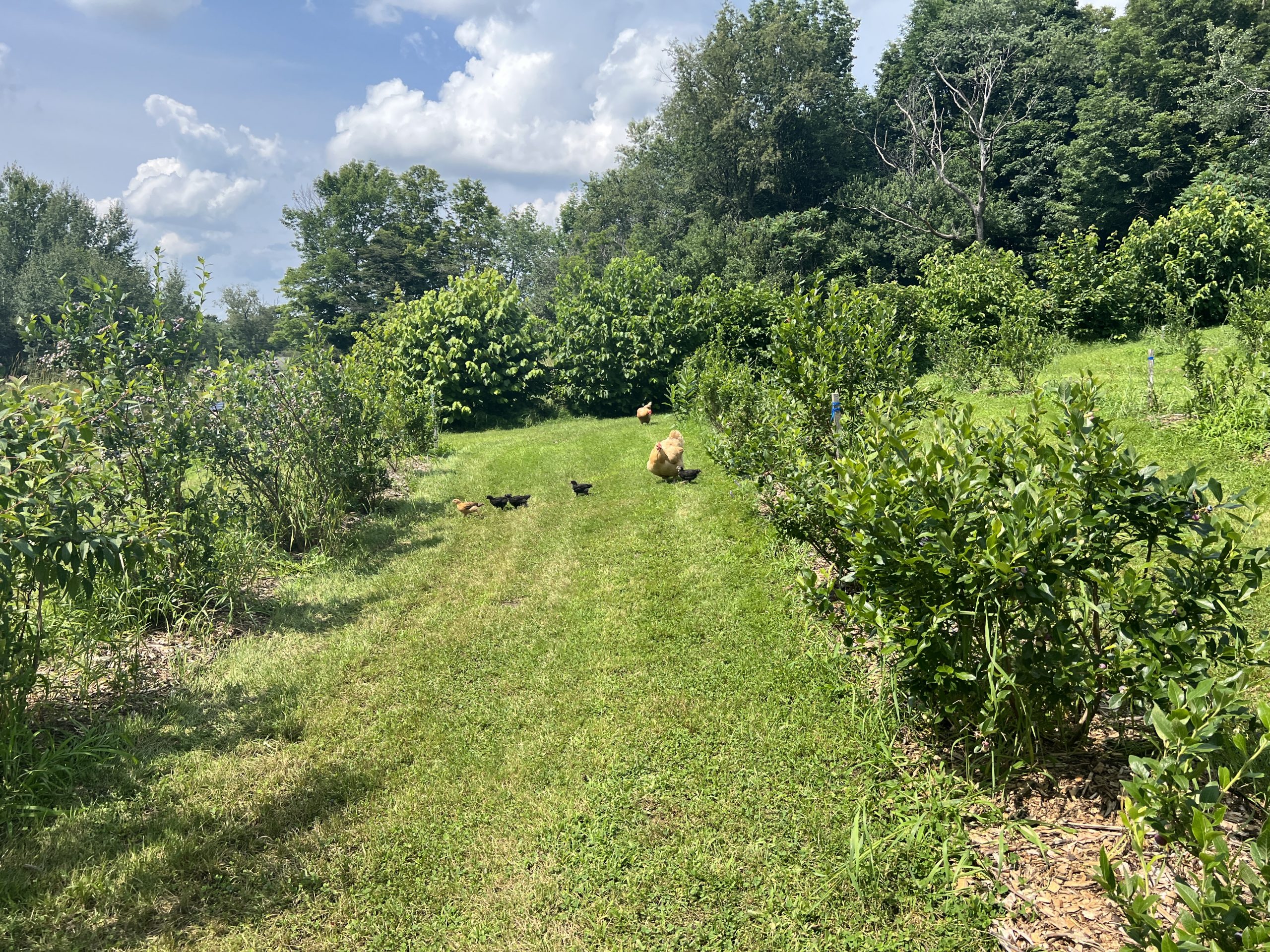
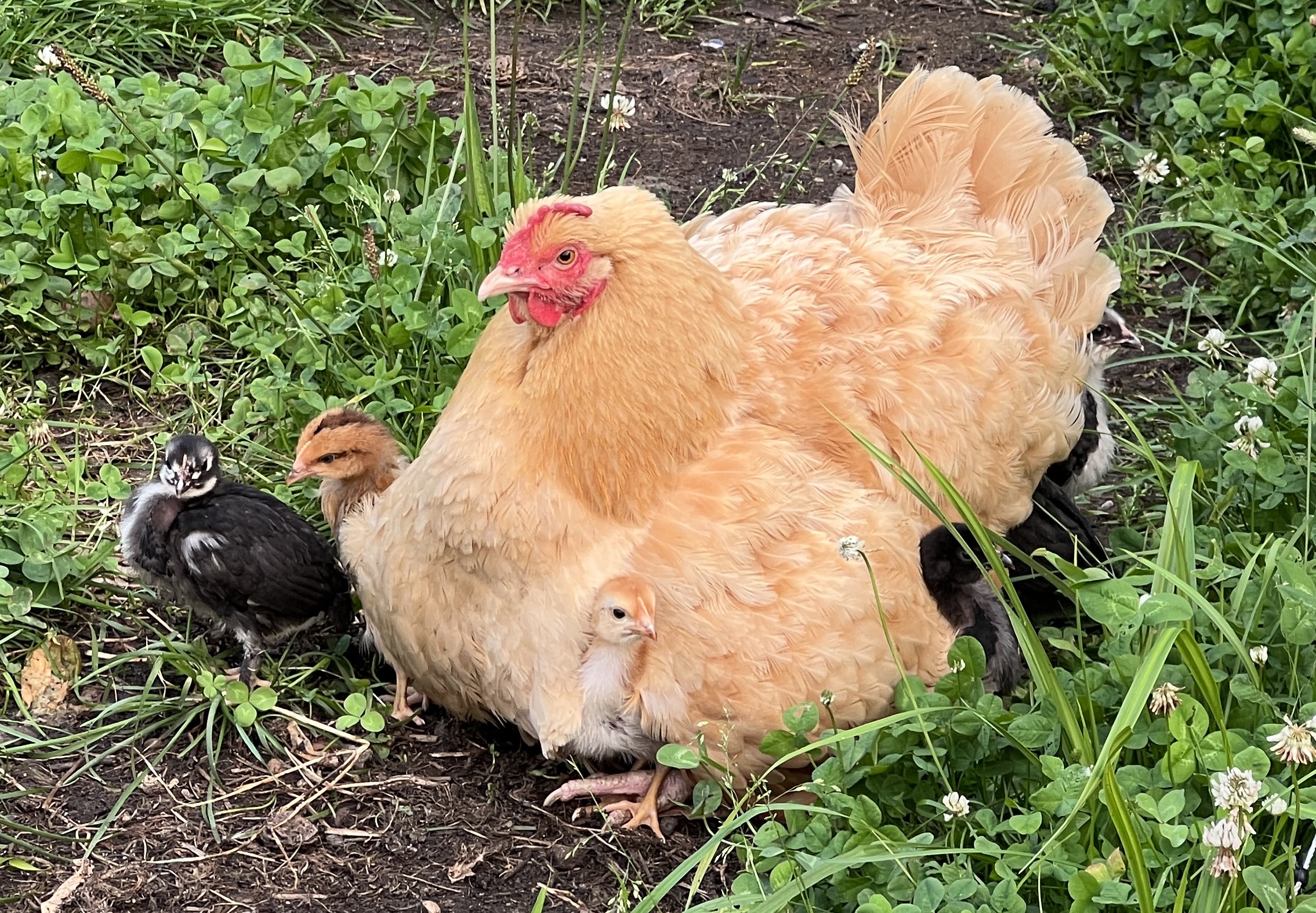
We integrated mama chicken and her chicks with the rest of the flock. It went extremely well, I’m not sure what’s different from last time.